
Market Report · July 15, 2026

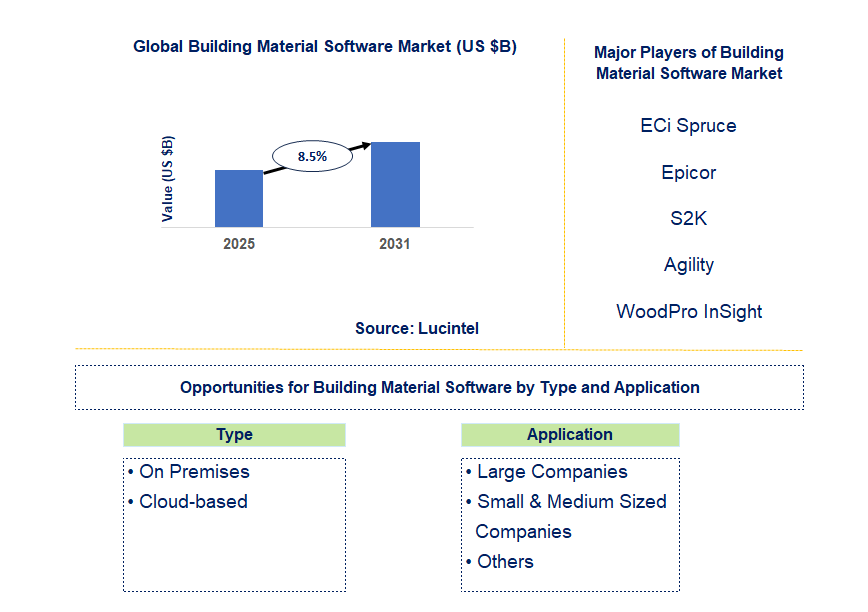
Key data points: The growth forecast = 8.5% annually for the next 7 years. Scroll below to get more insights. This market report covers trends, opportunities and forecasts in building material software market to 2031 by type (on premises and cloud-based), application (large companies, small & medium sized companies, and others), and region (North America, Europe, Asia Pacific, and the Rest of the World)
We'll send your sample report shortly.
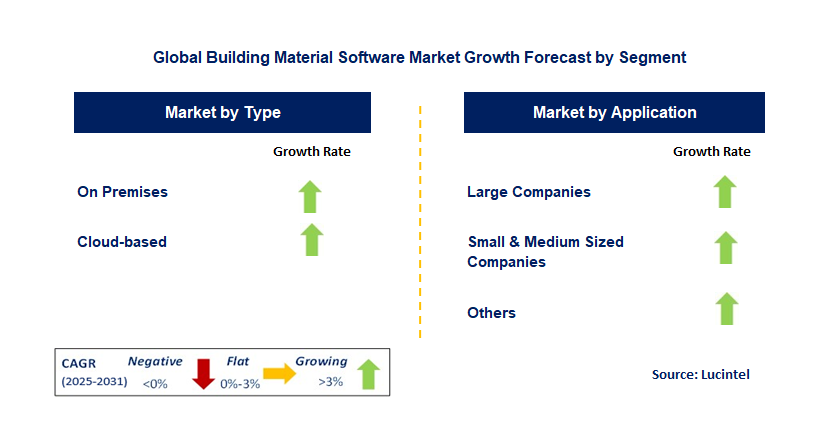
• Lucintel forecasts that, within the type category, cloud-based is expected to witness higher growth over the forecast period.
• Within the application category, small & medium sized company is expected to witness higher growth.
• In terms of region, APAC is expected to witness the highest growth over the forecast period. Gain valuable insights for your business decisions with our comprehensive 150+ page report. Sample figures with some insights are shown below.
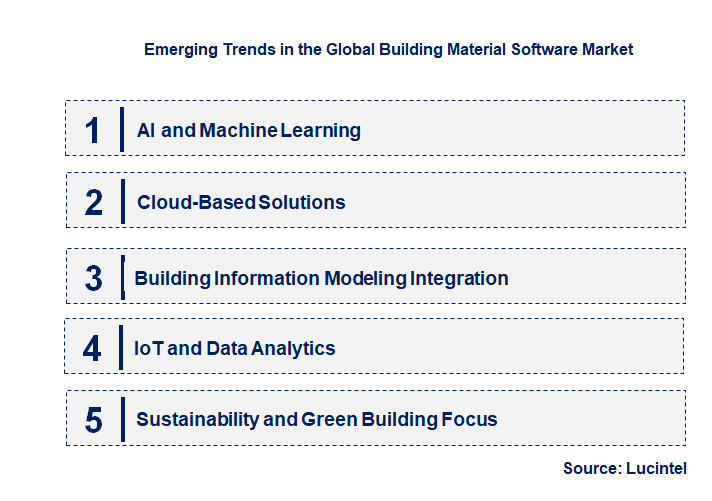
• AI and Machine Learning: AI and machine learning are increasingly integrated into building material software for predictive analytics, quality control, and optimized material selection. These technologies enable better decision-making by analyzing vast datasets, identifying potential risks, and improving workflows, leading to higher quality materials and reduced waste.
• Cloud-Based Solutions: Cloud-based software offers enhanced accessibility, scalability, and collaboration for building material management. This allows real-time data sharing and seamless communication among project stakeholders, facilitating remote work and improving overall project efficiency, especially for distributed teams.
• Building Information Modeling Integration: BIM’s role extends beyond design, integrating with material management software to provide a holistic view of the project. This integration allows for detailed material quantification, cost analysis, and clash detection, minimizing errors, reducing rework, and optimizing material procurement throughout the project lifecycle.
• IoT and Data Analytics: The Internet of Things (IoT) enables real-time data collection from various points in the material supply chain, which is then analyzed to provide actionable insights. This helps in tracking material movement, monitoring inventory levels, and predicting maintenance needs, leading to improved resource allocation and reduced operational delays.
• Sustainability and Green Building Focus: Software is now incorporating features to support sustainable practices, including tracking the environmental footprint of materials, optimizing material use to reduce waste, and facilitating the selection of eco-friendly alternatives. This trend aligns with global efforts to reduce the construction industry’s carbon emissions. These trends are profoundly reshaping the building material software market by fostering greater interoperability, enhancing data-driven decision-making, and promoting sustainable practices. They are moving the industry towards a more integrated, intelligent, and environmentally conscious future, ultimately improving project outcomes and efficiency.
• Enhanced BIM capabilities: Recent developments focus on extending BIM’s reach to encompass more aspects of building material management. This includes sophisticated material libraries, automated material take-offs, and seamless integration with procurement and supply chain software, enabling a more accurate and efficient material planning process.
• Rise of Cloud-based Platforms: The shift to cloud-based platforms is a major development, offering unprecedented flexibility and accessibility. These platforms allow real-time collaboration among geographically dispersed teams, centralize project data, and provide scalable solutions, reducing the need for extensive on-premise infrastructure and IT management.
• Integration of AI and Machine Learning: AI and machine learning are increasingly embedded in building material software for advanced analytics, predictive modeling, and automation. This enables tasks such as demand forecasting, identifying optimal material combinations for performance and cost, and automated quality checks, leading to smarter material utilization.
• Focus on Supply Chain Management (SCM) Software: There’s a growing emphasis on dedicated SCM software tailored for building materials. These solutions help in optimizing logistics, tracking shipments in real-time, managing inventory more effectively, and improving supplier relationships, addressing common issues like material shortages and delivery delays.
• Development of Sustainable Material Solutions: Software is now being developed to specifically support sustainable building practices. This includes tools for calculating the embodied carbon of materials, assessing their environmental impact, and facilitating the selection and tracking of green building materials, aligning with the industry’s push towards Net Zero. These developments are collectively transforming the building material software market by making it more integrated, intelligent, and responsive to the evolving demands of the construction sector. They are critical in improving project delivery, cost efficiency, and environmental performance across the globe.
• Project Management Software: Growth opportunities lie in integrating material-specific functionalities within project management software. This includes advanced scheduling based on material availability, automated material procurement triggers, and real-time tracking of material delivery and usage on-site, leading to improved project timelines and reduced material waste.
• Inventory and Warehouse Management: Significant growth can be found in developing specialized inventory and warehouse management software for building materials. Features such as predictive analytics for stock levels, optimized storage solutions, and integration with RFID or IoT for real-time tracking can minimize holding costs and prevent material shortages.
• Building Information Modeling for Material Specification: Expanding BIM’s capabilities to offer more detailed material specification and performance data presents a strong opportunity. This includes incorporating material sustainability metrics, cost variations based on suppliers, and simulating material behavior under different conditions, aiding architects and engineers in informed material choices.
• Supply Chain Optimization and Logistics: There’s a substantial opportunity in developing software that optimizes the entire building material supply chain. This involves end-to-end visibility from manufacturer to job site, route optimization for deliveries, and real-time communication platforms between suppliers, transporters, and contractors, ensuring timely material flow.
• Quality Control and Compliance Software: Growth lies in software solutions that ensure building material quality and compliance with industry standards and regulations. This could involve digital inspection tools, automated testing result integration, and tracking material certifications, minimizing risks associated with substandard materials and improving overall project quality. These strategic growth opportunities are reshaping the building material software market by pushing for more integrated, data-driven, and specialized solutions. They are crucial for enhancing operational efficiency, reducing costs, and enabling the construction industry to meet increasingly stringent demands for quality and sustainability
• ECi Spruce
• Epicor
• S2K
• Agility
• WoodPro InSight
• Kerridge
• MRPEasy
• Accolent
• NetSuite
• Ponderosa
• On Premises
• Cloud-based
• Large Companies
• Small & Medium Sized Companies
• Others
• North America
• Europe
• Asia Pacific
• The Rest of the World
• United States: The U.S. market is rapidly adopting cloud-based Building Information Modeling (BIM) solutions and project management software. A strong focus on digital transformation and integration of AI and IoT for enhanced data analytics and predictive capabilities is observed, aiming for improved project efficiency and reduced costs.
• China: China’s building material software market is experiencing significant growth, fueled by massive infrastructure investments and urbanization. There’s a strong push for digital solutions to manage large-scale projects, with increasing adoption of domestically developed software and a focus on integrating AI for defect detection and quality control.
• Germany: Germany is witnessing a strong drive towards digital transformation in construction, with a focus on efficiency and productivity. Government initiatives and established players like SAP and Autodesk are popularizing cloud-based solutions for integrated construction management, emphasizing sustainability and advanced analytics.
• India: India’s market is characterized by rapid urbanization and significant infrastructure development, driving demand for advanced software solutions. There’s a growing adoption of digital tools to streamline project management, improve efficiency, and meet the demands of a booming real estate sector, with a focus on cost-effectiveness.
• Japan: Japan’s building material software market is seeing increased adoption of digital technologies to enhance construction quality and efficiency. A key trend is the integration of BIM with modular construction and prefabrication to maintain project schedules and budgets, along with a focus on advanced design and project visualization tools.


• ECi Spruce
• Epicor
• S2K
• Agility
• WoodPro InSight
• Kerridge
• MRPEasy
• Accolent
• NetSuite
• Ponderosa Q5. Which building material software market segment will be the largest in future? Answer: Lucintel forecasts that, within the type category, cloud-based is expected to witness higher growth over the forecast period. Q6. In building material software market, which region is expected to be the largest in next 5 years? Answer: In terms of region, APAC is expected to witness the highest growth over the forecast period. Q7. Do we receive customization in this report? Answer: Yes, Lucintel provides 10% customization without any additional cost.


Choose a license that fits your team. Instant PDF delivery.
Prices exclude taxes. Instant delivery. Custom licensing available on request.
Market Report · July 15, 2026
Market Report · June 26, 2026
Market Report · June 24, 2026
Trusted partner for strategic intelligence and business growth


Receive a complimentary market analysis tailored to your industry. Our analysts will identify key growth opportunities and competitive dynamics specific to your business.

Market size, growth rate, and key trend analysis for your specific sector.

Top competitor positioning and market share analysis.

Strategic recommendations backed by data-driven insights.
Get curated market intelligence and competitive moves straight to your inbox.
By subscribing, you agree to receive our monthly insights. Unsubscribe anytime.
Receive a complimentary market analysis tailored to your industry. Our analysts will identify key growth opportunities and competitive dynamics specific to your business.
Market size, growth rate, and key trend analysis for your specific sector.
Top competitor positioning and market share analysis.
Strategic recommendations backed by data-driven insights.
Get curated market intelligence, emerging trends, and competitive moves straight to your inbox each month.
By subscribing, you agree to receive our monthly insights. Unsubscribe anytime.
We'll send your sample report shortly.