
Market Report · July 29, 2026

Key data points: The growth forecast = 5.3% annually for the next 7 years. Scroll below to get more insights. This market report covers trends, opportunities and forecasts in broadband polarizer market to 2031 by type (below 3mm, 3-10mm, and more than 10mm), application (optical instrument, electronic, and others), and region (North America, Europe, Asia Pacific, and the Rest of the World)
We'll send your sample report shortly.
• Lucintel forecasts that, within the type category, 3-10mm is expected to witness the highest growth over the forecast period.
• Within the application category, electronic is expected to witness higher growth.
• In terms of region, APAC is expected to witness the highest growth over the forecast period. Gain valuable insights for your business decisions with our comprehensive 150+ page report. Sample figures with some insights are shown below.
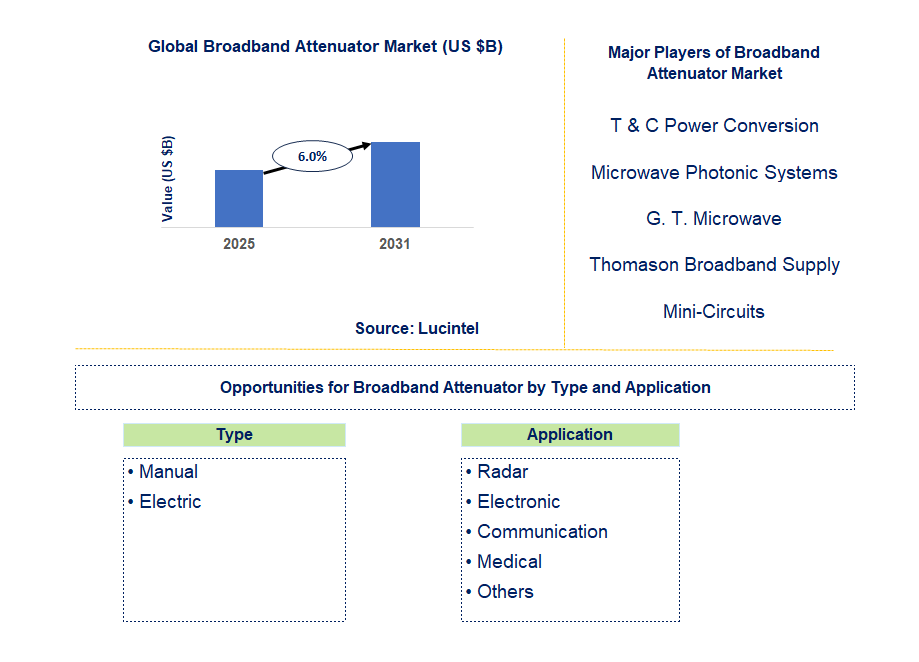
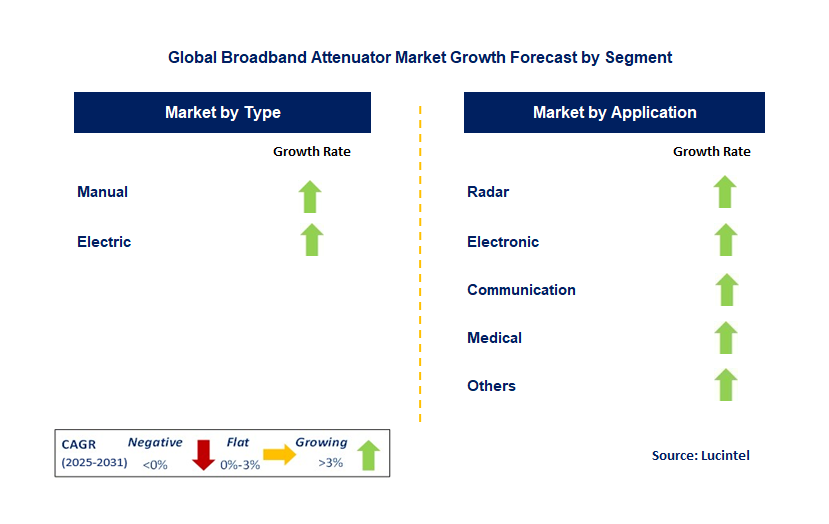
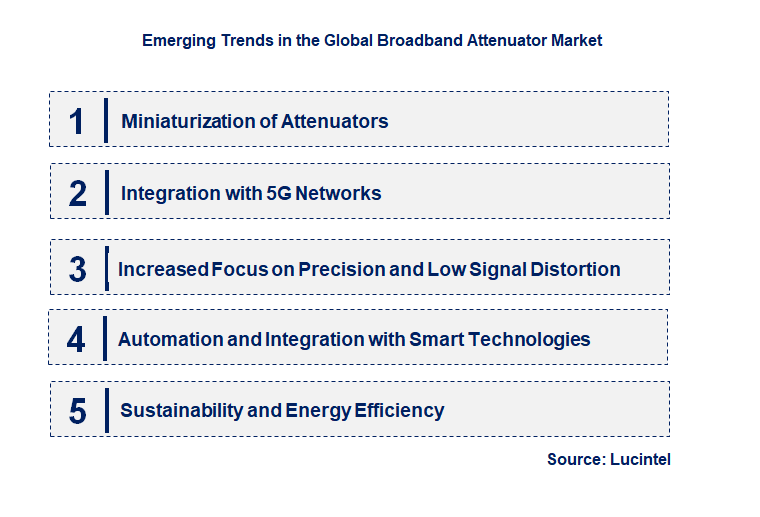
• Increased Demand for 5G and Telecommunications Applications: As 5G networks are being deployed worldwide, the demand for broadband polarizers in telecommunications is rising. Broadband polarizers play a crucial role in managing light signals for high-speed data transmission, which is vital for 5G communication systems. The ability to handle high-frequency signals with minimal distortion makes these polarizers essential for ensuring efficient data transmission. This trend is expected to drive substantial growth in the broadband polarizer market, particularly in countries with advanced 5G infrastructure, such as the United States, China, and Japan.
• Advancements in Metamaterials for Polarization Control: The development of metamaterials is significantly impacting the broadband polarizer market. These artificial materials, which can manipulate electromagnetic waves in unique ways, are being increasingly used to design more efficient and compact polarizers. Metamaterials offer enhanced polarization control across a broader spectrum of wavelengths, improving the performance and bandwidth of broadband polarizers. This trend is expected to lead to the development of next-generation polarizers that are smaller, more efficient, and capable of handling a wider range of frequencies, benefiting sectors like telecommunications, defense, and imaging.
• Miniaturization of Optical Components: The trend toward miniaturization is shaping the broadband polarizer market. As demand grows for smaller, more efficient optical components in consumer electronics, wearable devices, and communications systems, broadband polarizers are being designed to meet these needs. Miniaturized polarizers enable the development of compact, high-performance devices without compromising on optical quality. This trend is particularly important in industries like telecommunications, where small form-factor components are critical for integrating optical systems into mobile devices, sensors, and other compact technologies.
• Integration into Quantum Computing and Sensing Applications: Broadband polarizers are increasingly being integrated into quantum computing and quantum sensing applications, where high-precision polarization control is essential. The rise of quantum technologies is driving demand for highly efficient polarizers that can operate across a broad spectrum while maintaining high fidelity. In quantum computing, polarizers are used to control qubits and optical signals, while in sensing applications, they are employed in interferometry and other advanced techniques. As the field of quantum technology continues to grow, the demand for specialized broadband polarizers is expected to increase.
• Focus on Sustainable and Energy-Efficient Technologies: As industries increasingly prioritize sustainability, there is a growing demand for energy-efficient optical components, including broadband polarizers. Polarizers that reduce energy loss and improve optical transmission are being developed to meet these sustainability goals. In applications such as telecommunications and imaging, energy-efficient polarizers help reduce power consumption and improve overall system performance. This trend reflects the broader industry push for greener technologies, and manufacturers that focus on producing energy-efficient polarizers will likely see a competitive advantage in the market. The broadband polarizer market is being shaped by several key trends, including the rise of 5G, advancements in metamaterials, miniaturization of optical components, integration into quantum technologies, and a focus on sustainability. These trends are driving innovation and expanding the scope of applications for broadband polarizers. As demand for more efficient and high-performance optical components grows, these trends will continue to reshape the market, presenting new opportunities for manufacturers and industries alike.
• Development of Metamaterial-Based Broadband Polarizers: The introduction of metamaterials to broadband polarizers is one of the most significant recent developments. With their unique ability to manipulate electromagnetic waves, metamaterials enable polarizers to offer broader bandwidth and enhanced polarization control. These polarizers are more efficient and can be used in various applications, including telecommunications and defense. The shift towards metamaterials is driving innovation in the broadband polarizer market as manufacturers develop new polarizers with improved optical performance and smaller form factors.
• Advancements in Polarizer Materials for High-Frequency Applications: Recent advancements in polarizer materials have focused on improving performance at higher frequencies, which is crucial for applications like 5G communication and satellite systems. Materials like silicon nitride and gallium nitride are being explored to produce broadband polarizers that can operate efficiently at higher frequencies while maintaining low losses. These advancements are helping to meet the growing demand for high-performance polarizers capable of handling the challenges of next-generation communication systems.
• Miniaturization of Broadband Polarizers for Consumer Electronics: As consumer electronics continue to shrink in size, the demand for miniaturized broadband polarizers is increasing. Polarizers designed for mobile devices, wearables, and other compact electronics must maintain high performance while being smaller and more energy-efficient. Recent developments in the miniaturization of broadband polarizers are making it possible to integrate these components into the next generation of consumer devices without compromising on optical quality. This trend is enhancing the performance of optical systems in mobile phones, wearables, and other consumer technologies.
• Improvement in Polarizer Efficiency for Quantum Technologies: The increasing integration of broadband polarizers into quantum technologies is driving significant research into improving their efficiency and performance. Quantum computers, sensors, and communication systems require high-precision polarization control across a broad spectrum. Recent developments in polarizer design, such as the use of novel materials and more advanced fabrication techniques, are enabling higher-performance polarizers for quantum applications. These advancements are expected to support the growth of quantum technologies, where precise optical components are critical to their success.
• Focus on Sustainability and Energy Efficiency in Manufacturing: The trend toward sustainability in manufacturing is influencing the development of energy-efficient broadband polarizers. Companies are increasingly focused on producing polarizers that reduce power consumption, minimize waste, and have a lower environmental impact. New materials and fabrication methods are being developed to produce polarizers that are not only high-performing but also more sustainable. This focus on energy efficiency and sustainability is reshaping the broadband polarizer market as manufacturers respond to growing demand for environmentally friendly products. Recent developments in the broadband polarizer market are driven by innovations in materials, miniaturization, and efficiency improvements across various sectors. As technologies like 5G, quantum computing, and consumer electronics continue to evolve, the broadband polarizer market will continue to innovate and expand to meet the growing demand for high-performance optical components.
• Telecommunications Infrastructure and 5G Networks: With the global expansion of 5G networks, there is a significant opportunity for broadband polarizers to be integrated into telecommunications infrastructure. These polarizers play a crucial role in optimizing signal transmission for high-speed, low-latency communication systems. As 5G networks continue to grow, demand for advanced optical components will increase, offering manufacturers the opportunity to develop high-performance polarizers tailored for 5G applications.
• Quantum Computing and Sensing Applications: The rapid development of quantum technologies presents a lucrative opportunity for broadband polarizers. These polarizers are essential for controlling light in quantum computers, quantum sensors, and communication systems. As quantum technology advances, the need for specialized polarizers with high precision and efficiency will grow, creating new opportunities for innovation and market growth in this emerging sector.
• Consumer Electronics and Wearables: The miniaturization of consumer electronics and wearable devices presents an opportunity for manufacturers to develop compact, high-performance broadband polarizers. These components are essential for managing light in advanced optical systems used in mobile phones, smart glasses, and other devices. As demand for smaller, more efficient devices grows, so too does the demand for miniaturized broadband polarizers, offering significant growth potential in the consumer electronics market.
• Defense and Aerospace Systems: Broadband polarizers are critical for advanced defense and aerospace applications, such as satellite communication, radar systems, and imaging systems. With increasing investments in defense and aerospace technologies, there is a growing demand for high-precision optical components. Manufacturers focusing on developing rugged, high-performance polarizers tailored for these sectors can tap into lucrative growth opportunities in this field.
• Sustainable Optical Components for Energy-Efficient Systems: As industries prioritize sustainability and energy efficiency, there is a growing demand for energy-efficient broadband polarizers. These polarizers can help reduce energy consumption in telecommunications, industrial, and consumer electronics applications. Manufacturers that focus on creating sustainable, energy-efficient polarizers will be well-positioned to capitalize on the growing emphasis on environmental responsibility and green technologies. Strategic growth opportunities in the broadband polarizer market span across several industries, including telecommunications, quantum technologies, consumer electronics, defense, and sustainability. Manufacturers that focus on these areas will be able to capitalize on the rising demand for high-performance, energy-efficient, and compact optical components, driving significant growth in the broadband polarizer market.
• Edmund Optics
• Thorlabs
• Moxtek
• Meadowlark Optics
• Eksma Optics
• Focktek
• Sichuan Le Laite Technology
• Beijing Zolix
• Alphalas
• Bonphot Optoelectronics
• Below 3mm
• 3-10mm
• More than 10mm
• Optical Instrument
• Electronic
• Others
• North America
• Europe
• Asia Pacific
• The Rest of the World
• United States: The United States has been a leader in the development and innovation of broadband polarizers, largely driven by advancements in defense, telecommunications, and scientific research sectors. The demand for high-performance optical components for imaging and communication systems has fueled the growth of the broadband polarizer market. U.S. companies are investing in cutting-edge research to improve polarizer efficiency, bandwidth, and durability. The increasing adoption of broadband polarizers in 5G communication systems, as well as aerospace and defense applications, is further driving market growth. Furthermore, the U.S. has strong R&D efforts aimed at developing next-generation materials, such as metamaterials, for broadband polarization.
• China: China is rapidly advancing in the broadband polarizer market, driven by its growing telecommunications infrastructure and the increasing demand for high-quality optical components in consumer electronics and defense applications. The country’s significant investments in 5G technology and optical communications have created substantial demand for broadband polarizers. Chinese manufacturers are also focusing on producing cost-effective, high-performance polarizers for various applications, from scientific research to industrial use. The country’s growing capabilities in material science and manufacturing have enhanced the quality and affordability of broadband polarizers, contributing to the global competitiveness of Chinese companies in this field.
• Germany: Germany has a well-established reputation in the field of optics and photonics, and the broadband polarizer market is no exception. The country’s industrial base, especially in the automotive, telecommunications, and defense sectors, has contributed to the growing demand for high-precision optical components. German manufacturers are focusing on the development of broadband polarizers that offer high efficiency and are tailored for use in advanced applications such as high-resolution imaging, spectroscopy, and laser systems. Additionally, Germany’s emphasis on research and development in photonics and material science, including work on novel polarization methods, is expected to further propel the growth of the broadband polarizer market in the coming years.
• India: India is witnessing rapid growth in the broadband polarizer market, driven by the expansion of its telecommunications, defense, and scientific research sectors. The growing demand for optical components in various applications, such as spectroscopy, sensing, and communication, is fueling market development. Indian manufacturers are increasingly focused on producing broadband polarizers that are both cost-effective and high-performance, addressing the needs of domestic and international markets. With significant investments in 5G and satellite communications, India is expected to see continued growth in the broadband polarizer market, with a focus on developing advanced, miniaturized optical components for emerging technologies.
• Japan: Japan is a significant player in the broadband polarizer market, particularly in sectors like telecommunications, consumer electronics, and research. Japanese companies are at the forefront of developing cutting-edge optical components, including high-precision broadband polarizers for a variety of applications. The country’s advanced research initiatives in photonics, coupled with its strong manufacturing capabilities, are driving innovation in this market. Japan is also investing heavily in materials science, particularly in the development of polarizers with higher optical efficiency and broader bandwidths. As demand for optical components in telecommunications, medical imaging, and scientific research grows, Japan’s market for broadband polarizers is expected to continue expanding.


• Edmund Optics
• Thorlabs
• Moxtek
• Meadowlark Optics
• Eksma Optics
• Focktek
• Sichuan Le Laite Technology
• Beijing Zolix
• Alphalas
• Bonphot Optoelectronics Q5. Which broadband polarizer market segment will be the largest in future? Answer: Lucintel forecasts that, within the type category, 3-10mm is expected to witness the highest growth over the forecast period. Q6. In broadband polarizer market, which region is expected to be the largest in next 5 years? Answer: In terms of region, APAC is expected to witness the highest growth over the forecast period. Q7. Do we receive customization in this report? Answer: Yes, Lucintel provides 10% customization without any additional cost.


Choose a license that fits your team. Instant PDF delivery.
Prices exclude taxes. Instant delivery. Custom licensing available on request.
Market Report · July 29, 2026
Market Report · July 20, 2026
Market Report · July 20, 2026
Trusted partner for strategic intelligence and business growth


Receive a complimentary market analysis tailored to your industry. Our analysts will identify key growth opportunities and competitive dynamics specific to your business.

Market size, growth rate, and key trend analysis for your specific sector.

Top competitor positioning and market share analysis.

Strategic recommendations backed by data-driven insights.
Get curated market intelligence and competitive moves straight to your inbox.
By subscribing, you agree to receive our monthly insights. Unsubscribe anytime.
Receive a complimentary market analysis tailored to your industry. Our analysts will identify key growth opportunities and competitive dynamics specific to your business.
Market size, growth rate, and key trend analysis for your specific sector.
Top competitor positioning and market share analysis.
Strategic recommendations backed by data-driven insights.
Get curated market intelligence, emerging trends, and competitive moves straight to your inbox each month.
By subscribing, you agree to receive our monthly insights. Unsubscribe anytime.
We'll send your sample report shortly.