
Market Report · May 18, 2026

This market report covers trends, opportunities, and forecasts in the global brine concentration market to 2031 by technology (high efficiency reverse osmosis (hero), closed circuit desalination (ccd), vertical tube falling film (vtff), mechanical vapor compression (mvc), and others), application (coal-to-chemicals, food & beverages, minerals & mining, oil and gases, pulp and paper, steel & textiles, power, and others), and region (North America, Europe, Asia Pacific, and the Rest of the World)
We'll send your sample report shortly.
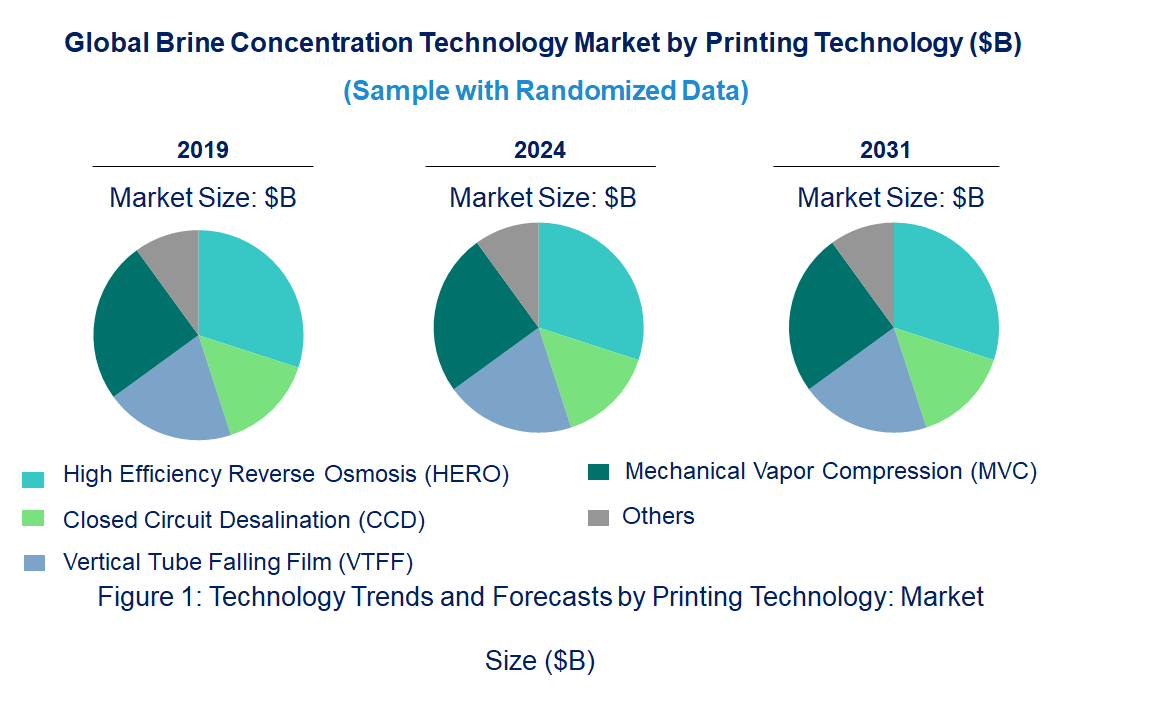
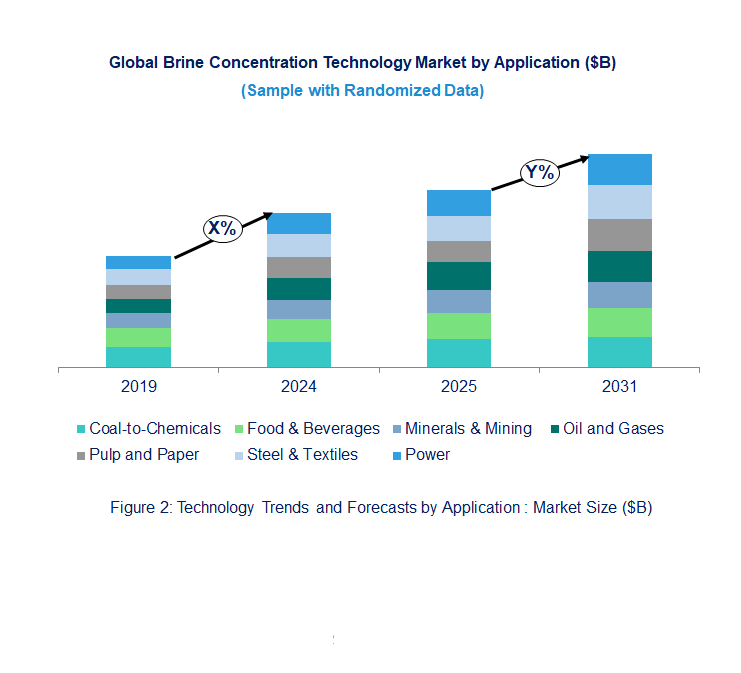
• Focus on Energy Efficiency: There is an increasing focus on efficiency-based technologies like high-efficiency reverse osmosis (HERO) that consume less energy, reducing carbon footprints and lowering overall operating costs.
• Membrane Technology Improvements: New and more advanced membranes are improving the efficiency and longevity of brine treatment systems, leading to lower operational costs and better desalination rates.
• AI and IoT Integration: The integration of AI and the internet of things (IoT) will enable real-time monitoring, predictive maintenance, and optimization of brine concentration processes.
• Sustainability and Waste Reduction: Companies are adopting methods like closed circuit desalination (CCD) to recycle and minimize brine waste, converting it into useful by-products and improving sustainability.
• Hybrid System Development: There is an increasing adoption of hybrid systems that combine various technologies, such as Vertical Tube Falling Film (VTFF) and HERO, to enhance efficiencies in handling complex brine compositions. These trends are driving innovation, reducing environmental impact, and helping industries meet regulatory requirements while maintaining operational efficiency.
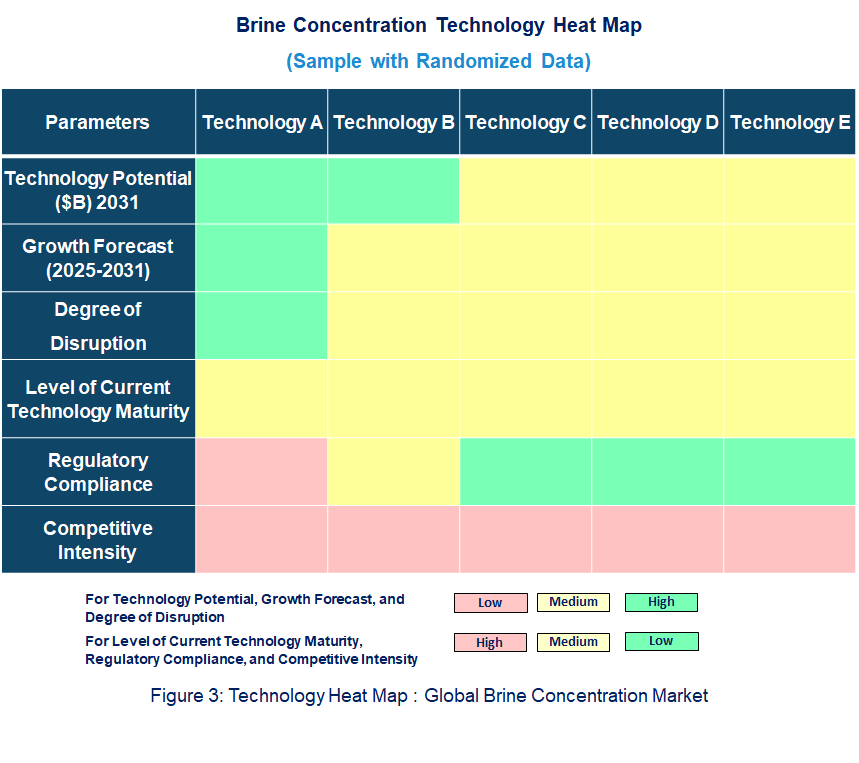
• Technology Potential: The potential of brine concentration technologies is significant. Innovations like zero liquid discharge (ZLD), forward osmosis, and electrochemical techniques aim to reduce brine volumes, recover valuable by-products (such as salts and metals), and minimize environmental harm. These technologies could revolutionize how brine is managed, turning waste into a resource.
• Degree of Disruption: The brine concentration market is ripe for disruption. Current methods like evaporation ponds and reverse osmosis are becoming outdated due to their inefficiency and environmental impact. Emerging solutions, such as membrane distillation and electrodialysis, offer lower energy consumption and more sustainable outcomes, positioning them to disrupt traditional practices.
• Technology Maturity: Some brine treatment technologies, such as reverse osmosis and evaporation, are well-established. However, newer approaches, like ZLD and electrochemical processes, are still in development or early commercial stages. These technologies need further optimization to improve efficiency and scalability.
• Regulatory Compliance: Brine disposal is subject to strict environmental regulations. In many regions, discharge into the ocean is heavily controlled to prevent ecological damage. Companies must adopt advanced, environmentally compliant technologies to meet these regulatory standards, especially in coastal areas.
• Veolia Water Technologies: Focus on improving desalination processes and water treatment technologies to enhance efficiency and sustainability in brine management.
• Evoqua Water Technologies: Advanced filtration and concentration technologies that optimize water reuse and reduce environmental impact.
• H2O Innovations: Expanded its portfolio with more energy-efficient and sustainable water treatment solutions, including reverse osmosis membranes.
• Aquatech International LLC: Developing integrated systems that combine multiple technologies, such as HERO and CCD, to increase energy savings in brine treatment.
• Koch Separation Solutions: Scaling up membrane technology for industrial applications to improve waste management and resource recovery.
• IDE Technologies: Innovating hybrid desalination solutions to improve brine concentration, lowering energy input, and increase efficiency.
• Saltworks Technologies: Zero Liquid Discharge (ZLD) and brine concentration technologies that reduce waste streams and ensure both environmental and economic sustainability.
• Samco Technologies: Developing reverse osmosis systems to treat and recover high-strength brine, improving process efficiency.
• Gradiant: Improving the scalability and efficiency of brine treatment systems, focusing on energy recovery technologies for multi-industry brine management. These innovations are contributing toward more energy-efficient, sustainable, and cost-effective brine concentration methods.
• Growing Freshwater Demand: The expanding global demand for freshwater is driving the need for more efficient brine concentration technologies.
• Regulatory Pressure: Stricter environmental regulations are accelerating the adoption of sustainable brine management technologies.
• Technological Advancements: New and improved technologies are enabling companies to meet both operational and sustainability targets. Challenges in the brine concentration market include:
• High Energy Consumption: Energy-intensive brine concentration processes remain a challenge, although newer technologies are addressing this issue.
• Wastewater Disposal Challenges: Managing concentrated brine disposal has been a challenge, but recycling and resource recovery are increasingly being recognized as effective solutions. These drivers and challenges are transforming the market, fostering technological innovation, and promoting sustainability efforts across the industry.
• Veolia Water Technologies
• Evoqua Water Technologies
• H2O Innovations
• Aquatech International LLC
• Koch Separation Solutions
• IDE Technologies
• Technology Readiness and Key Applications: HERO is highly mature and widely adopted in desalination, with applications across large-scale water treatment plants. CCD is still evolving but shows potential in niche applications with significant energy recovery needs. VTFF is emerging as an alternative for high-salinity and small-scale systems but faces challenges in widespread adoption due to cost and system complexity. MVC is mature and applied in industries with high energy needs, offering strong potential for brine concentration in industrial processes. Technologies like electrodialysis and membrane distillation are in the research or early commercial stages but promise significant environmental benefits. Regulatory compliance remains crucial for all technologies, particularly regarding discharge limits and waste minimization strategies, driving continuous innovation.
• Competitive Intensity and Regulatory Compliance: Technologies like HERO, CCD, and MVC are competing intensely as they aim to dominate the brine concentration market with energy-efficient and cost-effective solutions. HERO’s advancements in efficiency make it highly competitive in desalination, while CCD’s energy-recovery features provide a unique value proposition. VTFF is becoming a preferred choice due to its smaller footprint and energy savings, but its adoption is limited. MVC is under regulatory scrutiny due to its energy-intensive nature, despite offering better operational economics in certain scenarios. Regulatory compliance across all technologies is critical, with stringent standards for brine disposal, particularly in coastal and freshwater discharge regulations, prompting innovation toward environmentally friendly solutions such as ZLD.
• Disruption Potential of Brine Concentration Technologies: High-efficiency reverse osmosis (HERO) offers significant disruption by improving energy efficiency, reducing operational costs, and achieving higher water recovery rates, which could challenge traditional desalination methods. Closed circuit desalination (CCD) utilizes a closed-loop system to enhance energy recovery, offering lower environmental impacts, but it is still being optimized. Vertical tube falling film (VTFF) technology, while more energy-efficient than conventional distillation, has the potential to reduce energy costs further and offer compact solutions for brine concentration. Mechanical vapor compression (MVC) could disrupt the market by significantly reducing energy consumption during brine concentration, making it ideal for applications with high salinity brine. Other emerging technologies, like electrodialysis and membrane distillation, offer even more sustainable and cost-effective solutions, challenging conventional methods and promoting zero-liquid discharge (ZLD) strategies.
• High Efficiency Reverse Osmosis (HERO)
• Closed Circuit Desalination (CCD)
• Vertical Tube Falling Film (VTFF)
• Mechanical Vapor Compression (MVC)
• Others
• Coal-to-Chemicals
• Food & Beverages
• Minerals & Mining
• Oil and Gases
• Pulp and Paper
• Steel & Textiles
• Power
• North America
• Europe
• Asia Pacific
• The Rest of the World
• Latest Developments and Innovations in the Brine Concentration Technologies
• Companies / Ecosystems
• Strategic Opportunities by Technology Type


Choose a license that fits your team. Instant PDF delivery.
Prices exclude taxes. Instant delivery. Custom licensing available on request.
Market Report · May 18, 2026
Market Report · May 18, 2026
Market Report · May 18, 2026
Trusted partner for strategic intelligence and business growth


Receive a complimentary market analysis tailored to your industry. Our analysts will identify key growth opportunities and competitive dynamics specific to your business.

Market size, growth rate, and key trend analysis for your specific sector.

Top competitor positioning and market share analysis.

Strategic recommendations backed by data-driven insights.
Get curated market intelligence and competitive moves straight to your inbox.
By subscribing, you agree to receive our monthly insights. Unsubscribe anytime.
Receive a complimentary market analysis tailored to your industry. Our analysts will identify key growth opportunities and competitive dynamics specific to your business.
Market size, growth rate, and key trend analysis for your specific sector.
Top competitor positioning and market share analysis.
Strategic recommendations backed by data-driven insights.
Get curated market intelligence, emerging trends, and competitive moves straight to your inbox each month.
By subscribing, you agree to receive our monthly insights. Unsubscribe anytime.
We'll send your sample report shortly.