
Market Report · May 18, 2026

This market report covers trends, opportunities, and forecasts in the global bridge controller market to 2031 by technology (ci bridge controllers, usb bridge controllers, ethernet bridge controllers, and others), end use (oems and aftermarket), and region (North America, Europe, Asia Pacific, and the Rest of the World)
We'll send your sample report shortly.
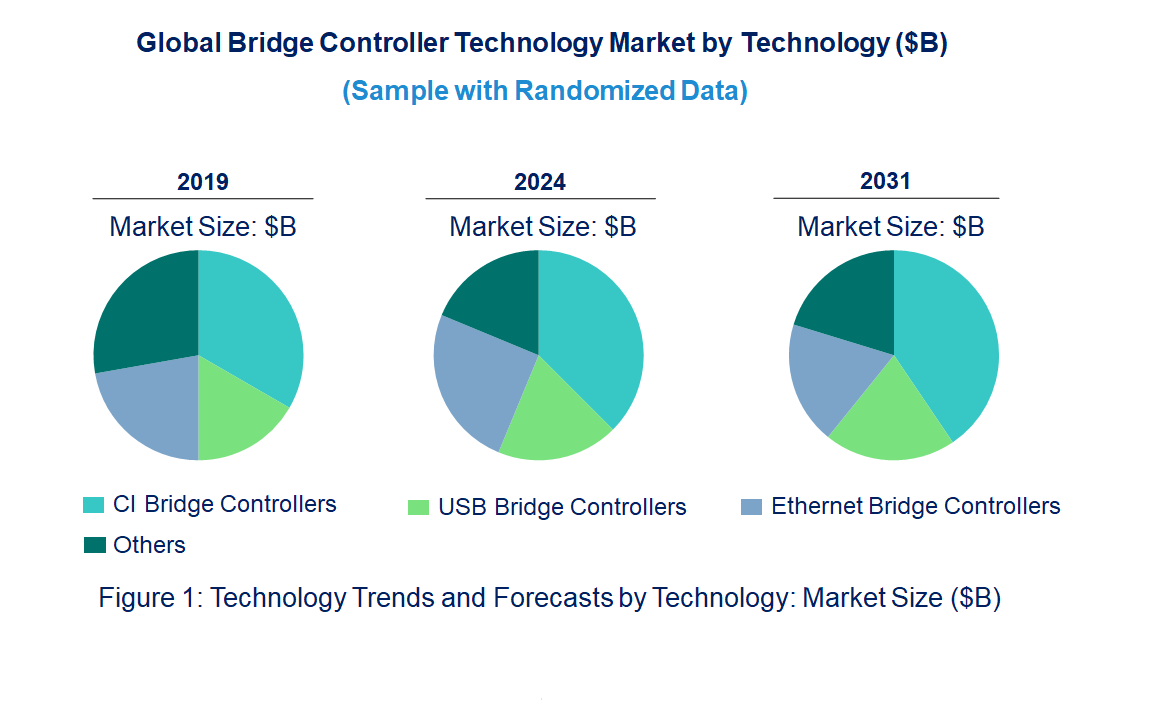
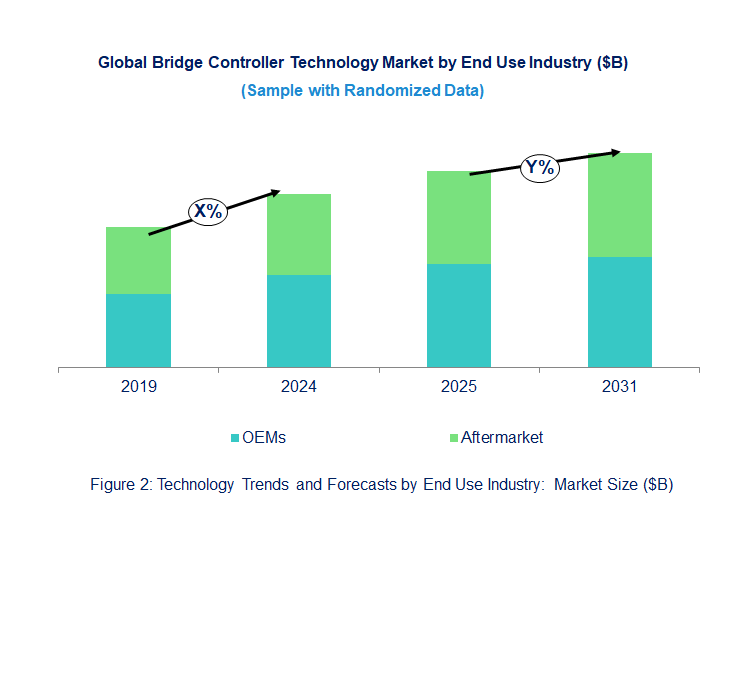
• Towards Ethernet Connectivity: With more and more industries using high-performing communication systems, the usage of Ethernet bridge controllers is increasing. Due to high bandwidth, reliability, and support for long-distance communication, a significant number of applications, including industrial automation, automotive networking, and data centers, will require Ethernet connectivity.
• Higher Adoption of USB 3.0 and 4.0: As the need for faster data transfer continues to rise, USB bridge controllers are now being developed to work with higher versions such as USB 3.0 and 4.0. These technologies offer faster data transfer rates, better power delivery, and wider compatibility, making them more prevalent in consumer electronics and portable devices.
• Wireless Connectivity Integration: The trend of wireless communication is impacting the bridge controller market as the integration of Wi-Fi and Bluetooth connectivity into bridge controllers allows for wireless data transmission, eliminating the restrictions of physical cables. This supports the development of smarter, more connected devices, especially in IoT applications.
• Miniaturization and Low Power Consumption: As devices are miniaturized, bridge controllers are becoming smaller and more energy-efficient. Low power consumption is a key requirement, especially for battery-powered devices and mobile electronics, making power-efficient bridge controllers essential in modern designs.
• Automotive Industry Demand for Advanced Connectivity: The automotive sector is increasingly adopting bridge controllers for in-vehicle communication networks, especially for applications like infotainment systems, ADAS (Advanced Driver Assistance Systems), and autonomous vehicles. Ethernet and USB bridge controllers are crucial for facilitating high-speed data exchange and connectivity in these advanced automotive systems. These emerging trends in the bridge controller market show a significant shift toward faster, more reliable communication technologies such as Ethernet and advanced USB interfaces. The increasing demand for wireless connectivity, low power consumption, and the adoption of more sophisticated automotive networks are also driving the development of bridge controllers with enhanced capabilities and efficiency.
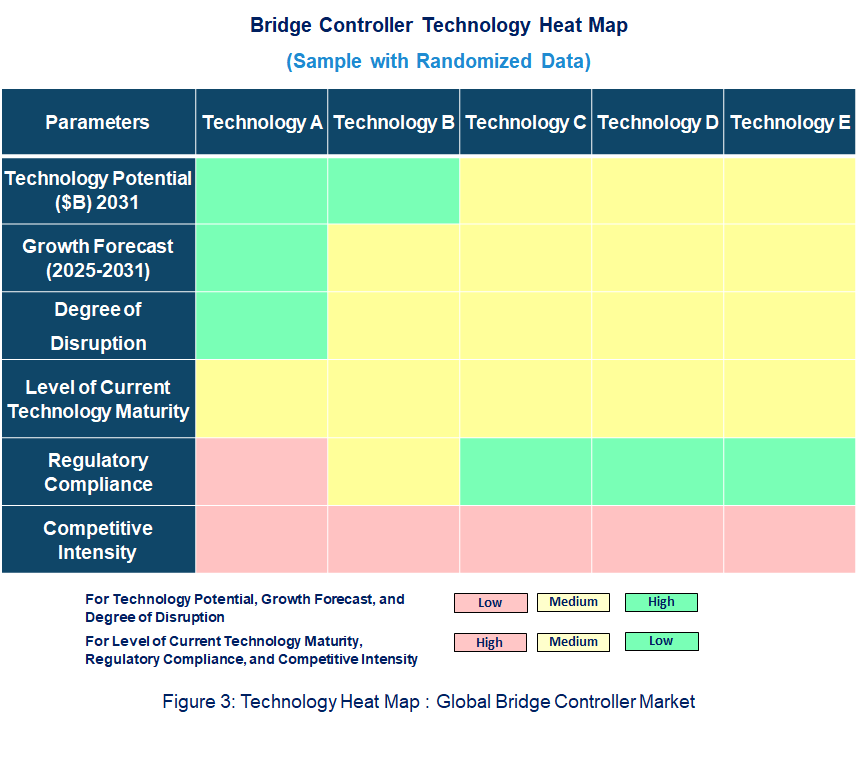
• Technology Potential: Bridge controllers have significant potential, particularly in developing industries such as electric vehicles (EVs), renewable energy, and industrial automation, which require better power management systems. This technology enhances power conversion efficiency, minimizes energy loss, and improves the stability of high-power applications. Recent materials, including wide-bandgap semiconductors like silicon carbide and gallium nitride, further enhance functionality by offering higher performance, improved switching speeds, and better heat management.
• Degree of Disruption: The disruption from bridge controllers is moderate, as they have been in use in power electronics for decades. However, ongoing innovation with wide-bandgap semiconductors and digital control continues to enhance their capabilities and support more compact, efficient power systems that could disrupt industries like EVs and renewable energy.
• Technology Maturity: Bridge controller technology is mature, with widespread use in various sectors. However, ongoing research and development in semiconductor materials and digital control strategies are pushing the boundaries of performance.
• Regulatory Compliance: Bridge controllers must comply with global standards such as UL (Underwriters Laboratories) for safety, RoHS (Restriction of Hazardous Substances) for material restrictions, and CE certification for product safety and environmental standards. These certifications ensure that the controllers meet industry regulations.
• Texas Instruments Inc.: Texas Instruments introduced several advanced bridge controllers for high-speed communication in industrial applications. Its solutions emphasize low latency and reliable data transmission in automotive and automation systems, becoming a significant player in Ethernet and USB bridge controller markets.
• Analog Devices Inc.: Analog Devices has continued to expand its bridge controller portfolio with the introduction of advanced Ethernet bridge controllers. These solutions support high bandwidth and are optimized for industrial control systems and automotive networks, meeting the increasing demand for robust, low-latency communication in connected devices.
• NXP Semiconductors N.V.: NXP has been focusing on the development of USB 3.0 and 4.0 bridge controllers that enable faster data transfer speeds as well as improved power delivery. Their solutions target the consumer electronics market, where high-speed data transfer and energy efficiency are critical.
• Microchip Technology Inc.: Microchip has introduced highly integrated bridge controllers that support both USB and Ethernet protocols, providing versatility for industrial and consumer applications. Their solutions meet the growing need for reliable, low-power connectivity in IoT devices and automotive systems.
• STMicroelectronics N.V.: STMicroelectronics focuses on Ethernet bridge controllers to support the growing demand for high-speed data transmission in the industrial automation and automotive sectors. Its products support secure and stable communication for a wide range of connected systems.
• Infineon Technologies AG: Infineon has strengthened its bridge controller offerings by developing solutions that combine both USB and Ethernet connectivity. Their controllers are optimized for automotive and industrial applications, where high-performance communication is critical for the proper functioning of smart systems and IoT infrastructure.
• Renesas Electronics Corporation: Renesas has developed a series of advanced USB and Ethernet bridge controllers for consumer electronics, automotive, and industrial applications. Their products enable seamless data transfer and support the integration of smart connectivity features in modern devices.
• ON Semiconductor Corporation: ON Semiconductor has expanded its portfolio of USB and Ethernet bridge controllers with low-power solutions for IoT and automotive applications. Their controllers aim to meet the need for reliable data exchange in smart home devices and connected vehicles.
• Maxim Integrated Products Inc.: Maxim Integrated launched USB bridge controllers designed for fast data transfer and low latency in consumer electronics and industrial applications. Its emphasis on energy-efficient designs also relates to the trend toward power-conscious solutions in portable and battery-powered devices.
• Cypress Semiconductor Corporation: Cypress has expanded its offering of bridge controllers for USB 3.0 and Ethernet applications, particularly in automotive and industrial markets. Their solutions aim to meet the demand for high-speed, low-latency communication in connected systems. The key players in the bridge controller market, including Texas Instruments, NXP, and Microchip Technology, are looking to enhance performance, integration, and power efficiency in their solutions. This has led to innovative products that can support faster data transfer, lower power consumption, and more flexible communication standards such as USB and Ethernet.
• High-Speed Communication: The increased need for high-speed data transfer in automotive, industrial, and consumer electronics is driving the need for advanced bridge controllers. The demand for Ethernet and USB bridge controllers can fulfill the requirement for faster and more reliable data communication.
• IoT and Smart Devices: The proliferation of IoT devices and smart systems is creating a demand for efficient bridge controllers. These controllers enable seamless communication between different devices in IoT, thus enabling interconnected smart homes, cities, and industries.
• Automotive Industry: The automotive industry is shifting toward advanced connectivity. In particular, the focus on ADAS, infotainment, and electric vehicle technologies has increased the need for reliable bridge controllers. USB and Ethernet-based controllers are becoming increasingly important for in-vehicle communication networks.
• Technological Progression in Bridge Controller Capacities: Continuous developments in bridge controller technologies, like the addition of high-speed USB and Ethernet interfaces, have led to their progressive use across various sectors. These improvements facilitate more efficient and reliable communication by complex systems. Challenges in the bridge controller market include:
• Multiple Standard Integration Complexity: A bridge controller may support many standards, such as USB and Ethernet. Integrating different communication standards into a single device is complex. Compatibility of all the protocols and effective communication between them pose challenges for manufacturers.
• High Cost of Advanced Bridge Controllers: Advanced bridge controllers, especially those that support USB 3.0/4.0 and Ethernet protocols, are generally more expensive than their traditional counterparts. The high cost of such components can act as a barrier to mass adoption, especially in cost-sensitive applications.
• Competition from Alternative Connectivity Solutions: Even though USB and Ethernet bridge controllers are popular, other connectivity solutions, such as wireless communication protocols like Wi-Fi and Bluetooth, are competing with them. This competition may restrict the growth of wired bridge controller solutions. The bridge controller market is driven by the need for high-speed communication, the growth of IoT, and the automotive industry’s demand for advanced connectivity. However, challenges such as integration complexity, high costs, and competition from alternative connectivity solutions need to be addressed for sustained growth in the market.
• Texas Instruments Inc.
• Analog Devices Inc.
• NXP Semiconductors N.V.
• Microchip Technology Inc.
• STMicroelectronics N.V.
• Infineon Technologies AG
• Technology Readiness by Type: CI Bridge Controllers are well-established and highly ready for industrial and consumer electronics applications, providing critical circuit interconnections with mature technology. USB Bridge Controllers are widely adopted in consumer devices, with high readiness for integration in peripherals, smartphones, and IoT devices. Ethernet Bridge Controllers are extensively used in networking and enterprise environments, offering solid readiness for data-intensive applications. Emerging bridge technologies, like wireless or optical, are in varying stages of readiness, with some showing potential to disrupt traditional wired solutions. The competitive level is high for USB and Ethernet controllers due to their widespread use, while CI controllers remain dominant in industrial applications. Regulatory compliance ensures these controllers meet global safety, data integrity, and performance standards across all industries.
• Competitive Intensity and Regulatory Compliance: The bridge controller market experiences high competitive intensity, with CI, USB, Ethernet, and other controllers targeting different application segments. CI Bridge Controllers are integral to industrial applications, while USB and Ethernet Bridge Controllers dominate the consumer electronics and networking markets. Companies compete on speed, power efficiency, and integration with other systems. Regulatory compliance is essential, as bridge controllers must adhere to safety standards (like UL certification), electromagnetic interference (EMI) regulations, and communication protocols (e.g., USB and Ethernet standards). As industries demand higher performance, lower latency, and better energy efficiency, meeting these regulatory requirements is crucial to maintaining competitiveness in the market.
• Disruption Potential of Different Technologies: CI Bridge Controllers, USB Bridge Controllers, Ethernet Bridge Controllers, and other types of bridge controllers each have unique disruption potentials in the market. CI Bridge Controllers are critical for interconnecting different circuits in industrial and consumer electronics, providing high-speed communication with reliability. USB Bridge Controllers enable seamless connections between various devices, playing a key role in consumer electronics, IoT, and computing. Ethernet Bridge Controllers, essential for networked communication, are central to industrial and enterprise applications, offering high data throughput and low latency. Other bridge technologies, like wireless or optical, are emerging, offering innovative solutions to reduce wiring complexity and increase data speed, potentially disrupting the existing market by offering greater flexibility and performance.
• CI Bridge Controllers
• USB Bridge Controllers
• Ethernet Bridge Controllers
• Others
• OEMs
• Aftermarket
• North America
• Europe
• Asia Pacific
• The Rest of the World
• Latest Developments and Innovations in the Bridge Controller Technologies
• Companies / Ecosystems
• Strategic Opportunities by Technology Type


Choose a license that fits your team. Instant PDF delivery.
Prices exclude taxes. Instant delivery. Custom licensing available on request.
Market Report · May 18, 2026
Market Report · May 18, 2026
Market Report · May 18, 2026
Trusted partner for strategic intelligence and business growth


Receive a complimentary market analysis tailored to your industry. Our analysts will identify key growth opportunities and competitive dynamics specific to your business.

Market size, growth rate, and key trend analysis for your specific sector.

Top competitor positioning and market share analysis.

Strategic recommendations backed by data-driven insights.
Get curated market intelligence and competitive moves straight to your inbox.
By subscribing, you agree to receive our monthly insights. Unsubscribe anytime.
Receive a complimentary market analysis tailored to your industry. Our analysts will identify key growth opportunities and competitive dynamics specific to your business.
Market size, growth rate, and key trend analysis for your specific sector.
Top competitor positioning and market share analysis.
Strategic recommendations backed by data-driven insights.
Get curated market intelligence, emerging trends, and competitive moves straight to your inbox each month.
By subscribing, you agree to receive our monthly insights. Unsubscribe anytime.
We'll send your sample report shortly.