
Market Report · July 15, 2026

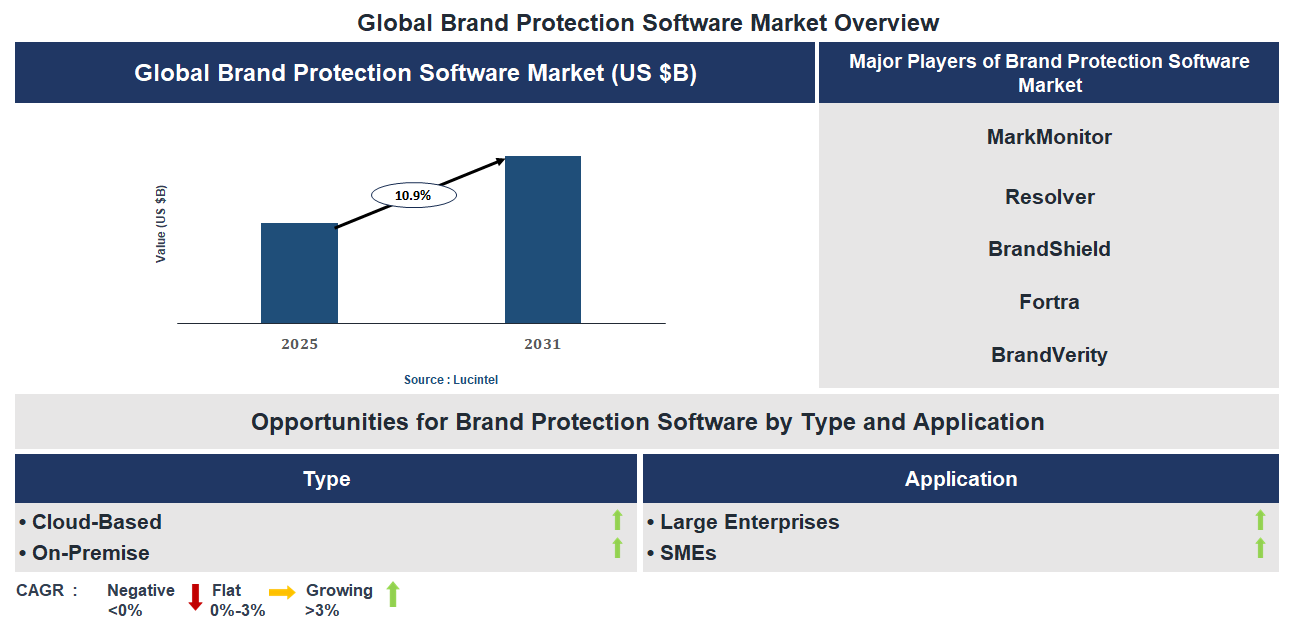
Key data points: The growth forecast = 10.9% annually for the next 7 years. Scroll below to get more insights. This market report covers trends, opportunities and forecasts in brand protection software market to 2031 by type (cloud-based and on-premise), application (large enterprises and SMEs), and region (North America, Europe, Asia Pacific, and the Rest of the World)
We'll send your sample report shortly.
• Lucintel forecasts that, within the type category, cloud-based is expected to witness higher growth over the forecast period.
• Within the application category, SME is expected to witness higher growth.
• In terms of region, APAC is expected to witness the highest growth over the forecast period. Gain valuable insights for your business decisions with our comprehensive 150+ page report. Sample figures with some insights are shown below.
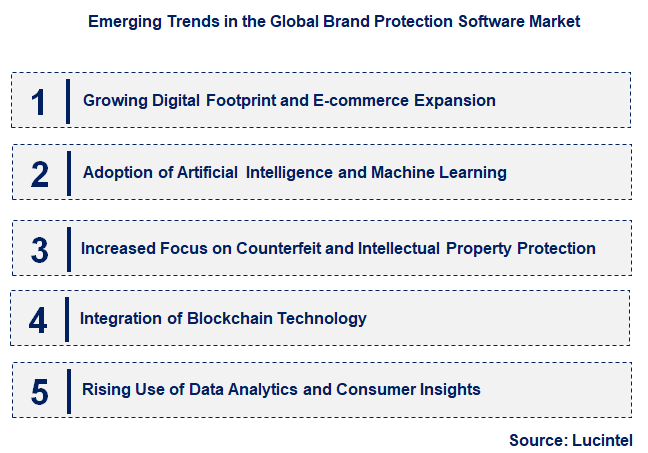
• Growing Digital Footprint and E-commerce Expansion: As brands expand their online presence and e-commerce sales increase, the risk of brand infringement and counterfeit activities also rises. Companies are investing in advanced brand protection software to monitor digital channels, detect unauthorized use of trademarks, and prevent counterfeit sales. This trend enhances brand integrity and consumer trust while reducing revenue losses. The proliferation of online marketplaces and social media platforms necessitates real-time monitoring and swift action, making digital footprint management a core component of brand protection strategies.
• Adoption of Artificial Intelligence and Machine Learning: AI and ML technologies are transforming brand protection by enabling automated, accurate, and real-time detection of infringements. These tools analyze vast amounts of data across multiple channels to identify suspicious activities, counterfeit products, or unauthorized use of trademarks. The impact is significant, as it reduces manual effort, accelerates response times, and improves detection accuracy. AI-driven solutions also adapt to evolving threats, providing brands with proactive defense mechanisms that evolve with the threat landscape.
• Increased Focus on Counterfeit and Intellectual Property Protection: Counterfeit products and IP theft remain major concerns for brands worldwide. Market players are investing in specialized software that can identify counterfeit listings, unauthorized use of trademarks, and IP infringements across online and offline channels. This trend helps brands protect their revenue, reputation, and consumer safety. Enhanced IP protection tools also facilitate legal actions and enforcement, creating a more secure environment for innovation and brand growth.
• Integration of Blockchain Technology: Blockchain is emerging as a powerful tool for brand protection by providing transparent, tamper-proof records of product authenticity and ownership. Brands are leveraging blockchain to authenticate products, track supply chains, and prevent counterfeiting. This technology enhances consumer confidence and simplifies verification processes. Its decentralized nature ensures data integrity, making it difficult for counterfeiters to manipulate records, thus strengthening overall brand security.
• Rising Use of Data Analytics and Consumer Insights: Advanced data analytics enable brands to monitor consumer behavior, detect suspicious activities, and identify potential threats early. By analyzing patterns and trends, companies can proactively address vulnerabilities and tailor their protection strategies. This trend improves overall market intelligence, allowing brands to respond swiftly to emerging risks and maintain a competitive edge. The integration of consumer insights into brand protection efforts enhances effectiveness and fosters stronger brand-consumer relationships. In summary, these emerging trends are fundamentally reshaping the brand protection software market by making brand safeguarding more proactive, technologically advanced, and integrated with digital innovations. As brands face increasing threats in a rapidly evolving digital landscape, adopting these trends will be essential for maintaining brand integrity, consumer trust, and market competitiveness.
• Rising Adoption of AI and Machine Learning: The integration of AI and machine learning into brand protection software enhances threat detection accuracy and speed. These technologies enable real-time monitoring of online platforms, social media, and marketplaces for counterfeit products, piracy, and brand infringements. As a result, companies can respond swiftly to threats, reducing financial losses and reputational damage. The adoption of AI-driven solutions is expected to continue growing, making brand protection more proactive and efficient.
• Expansion of E-commerce and Digital Platforms: The rapid growth of e-commerce and digital channels has increased opportunities for brand infringement and counterfeit sales. Companies are increasingly deploying brand protection software to monitor online marketplaces, social media, and websites. This expansion has led to more sophisticated anti-counterfeiting measures, including automated takedown requests and digital watermarking. The market is witnessing a surge in demand for solutions that can effectively manage the complexities of online brand enforcement.
• Regulatory Changes and Intellectual Property Laws: Evolving legal frameworks and stricter intellectual property laws across regions are influencing the market. Companies are compelled to adopt advanced brand protection tools to ensure compliance and enforce their rights effectively. These legal developments are driving innovation in software features, such as automated infringement detection and legal reporting tools, to help brands navigate complex regulatory environments and protect their assets globally.
• Increasing Investment and Strategic Partnerships: Major technology firms and brand protection providers are investing heavily in R&D and forming strategic alliances. These collaborations aim to develop comprehensive, integrated solutions that combine various protection methods, including digital rights management, anti-counterfeiting, and anti-piracy. Increased investment accelerates product innovation and expands market reach, making brand protection software more accessible and effective for diverse industries.
• Growing Awareness and Market Penetration: As awareness of brand protection importance rises among businesses, especially SMEs, market penetration is expanding. Educational initiatives, industry conferences, and regulatory pressures are encouraging companies to adopt these solutions. The market is witnessing a shift from reactive to proactive brand protection strategies, with more organizations recognizing the value of investing in comprehensive software to safeguard their brand identity and customer trust. In summary, these developments are significantly impacting the brand protection software market by making solutions more intelligent, comprehensive, and accessible. The integration of advanced technologies, expanding online threats, and evolving legal landscapes are driving innovation and adoption. Consequently, the market is becoming more dynamic, with increased competition and a focus on tailored, scalable solutions that meet diverse business needs. This evolution ultimately enhances brand security, reduces infringement risks, and supports sustainable growth in a digitally connected world.
• E-commerce Platform Monitoring: Enhances brand integrity by detecting counterfeit listings and unauthorized sellers, reducing revenue loss and consumer trust issues. This application is crucial as online sales channels expand, providing brands with real-time alerts and enforcement capabilities to maintain control over their digital presence.
• Intellectual Property Management: Streamlines the registration, tracking, and enforcement of trademarks and patents. This growth opportunity helps companies protect their innovations efficiently, reducing legal costs and preventing infringement, thereby strengthening their market position.
• Social Media Monitoring: Enables brands to track mentions, detect counterfeit activities, and manage reputation risks across social platforms. As social media becomes a primary marketing channel, this application offers real-time insights, allowing brands to swiftly address threats and maintain consumer trust.
• Anti-Counterfeiting Solutions: Focuses on identifying and eliminating counterfeit products in supply chains and retail outlets. This opportunity reduces revenue losses, enhances consumer safety, and preserves brand value by deploying advanced authentication technologies like RFID and blockchain.
• Digital Rights Management (DRM): Protects digital content such as videos, music, and software from unauthorized distribution and piracy. As digital content consumption surges, DRM solutions ensure revenue protection and uphold intellectual property rights in the digital ecosystem. In summary, these growth opportunities are significantly impacting the brand protection software market by enabling brands to adopt more proactive, comprehensive, and technologically advanced strategies. They facilitate better detection, enforcement, and management of brand assets across diverse digital and physical channels, fostering increased market resilience and consumer confidence. As these applications evolve, they will continue to drive market expansion and innovation, offering competitive advantages to forward-thinking companies.
• Increasing Incidence of Counterfeiting and Brand Infringement: The rise in counterfeit products and brand infringement cases globally has significantly propelled the demand for brand protection software. Companies seek advanced solutions to monitor, detect, and combat counterfeit activities across online and offline channels. The proliferation of e-commerce platforms and social media has made it easier for counterfeiters to target brands, necessitating sophisticated software tools to safeguard brand reputation and revenue. This growing threat landscape compels brands to invest in comprehensive protection strategies, fueling market growth.
• Growing Adoption of E-commerce and Digital Platforms: The exponential growth of e-commerce and digital platforms has expanded the reach of brands but also increased vulnerabilities to brand misuse and infringement. Companies are increasingly deploying brand protection software to monitor online marketplaces, social media, and websites for unauthorized use of trademarks and counterfeit listings. The need for real-time monitoring and enforcement has become critical, driving demand for automated and scalable solutions. This trend is expected to continue as digital commerce expands, further boosting the market.
• Technological Advancements in AI and Machine Learning: The integration of artificial intelligence (AI) and machine learning (ML) into brand protection software has revolutionized the industry. These technologies enable more accurate detection of counterfeit products, brand infringements, and malicious online activities through pattern recognition and predictive analytics. AI-powered tools can analyze vast amounts of data quickly, providing brands with actionable insights and faster response times. The continuous evolution of these technologies enhances the effectiveness of protection solutions, making them indispensable for brands seeking proactive defense mechanisms.
• Increasing Regulatory and Legal Pressures: Governments and regulatory bodies worldwide are implementing stricter laws and policies related to intellectual property rights, online security, and counterfeit prevention. Companies are compelled to comply with these regulations by adopting advanced brand protection software that facilitates legal enforcement and reporting. The regulatory landscape encourages innovation in protection tools and emphasizes the importance of compliance, thereby driving market growth. Companies that proactively align with these regulations can mitigate legal risks and protect their brand assets more effectively.
• Rising Awareness and Corporate Responsibility: There is a growing awareness among companies about the importance of brand integrity and corporate responsibility. Organizations are investing in brand protection software not only to prevent financial losses but also to maintain consumer trust and brand reputation. This increased focus on ethical practices and brand authenticity encourages the adoption of sophisticated protection solutions. As companies recognize the long-term benefits of safeguarding their brand assets, market demand continues to rise, fostering innovation and competitive growth. The challenges in the brand protection software market are:
• Technological Complexity and Integration Issues: Implementing advanced brand protection solutions often involves complex integration with existing IT infrastructure and e-commerce platforms. Compatibility issues, data privacy concerns, and the need for specialized technical expertise can hinder deployment. Smaller organizations may lack the resources or knowledge to effectively implement these solutions, limiting market penetration. Additionally, rapid technological changes require continuous updates and maintenance, which can be resource-intensive and pose operational challenges for companies.
• High Implementation and Maintenance Costs: The deployment of sophisticated brand protection software can be expensive, involving significant initial investment and ongoing operational costs. Small and medium-sized enterprises (SMEs) may find these costs prohibitive, restricting their ability to adopt such solutions. Furthermore, maintaining and updating the software to keep pace with evolving threats requires dedicated resources, which can strain budgets. These financial barriers can slow down market growth and limit access to advanced protection tools for smaller players.
• Regulatory Uncertainty and Varying Global Standards: The global nature of brand protection involves navigating diverse legal and regulatory environments. Inconsistent regulations across countries can create compliance challenges and increase legal risks. Uncertainty regarding future regulatory changes may also impact investment decisions and software development strategies. Companies may hesitate to adopt new solutions without clear regulatory guidance, which can impede market expansion and innovation. Harmonizing standards and providing clear legal frameworks are essential to overcoming these barriers. In summary, the brand protection software market is driven by increasing threats from counterfeiting, digital expansion, technological innovations, regulatory pressures, and heightened corporate awareness. However, technological complexity, high costs, and regulatory uncertainties pose significant challenges. These factors collectively influence the pace and scope of market growth. While opportunities for innovation and expansion are substantial, addressing these challenges is crucial for sustainable development. Overall, the markets future will depend on how effectively stakeholders can leverage technological advancements and navigate regulatory landscapes to provide accessible, efficient, and compliant brand protection solutions.
• MarkMonitor
• Resolver
• BrandShield
• Fortra
• BrandVerity
• Tracer
• Hubstream
• Wiser
• Corsearch
• Red Points Solutions
• Cloud-Based
• On-Premise
• Large Enterprises
• SMEs
• North America
• Europe
• Asia Pacific
• The Rest of the World
• United States: The US market has seen rapid adoption of AI-powered brand protection tools, with major companies investing heavily in automated monitoring systems. E-commerce platforms like Amazon and eBay have strengthened their anti-counterfeiting measures, collaborating with software providers. Regulatory initiatives, such as the Trademark Modernization Act, have further supported brand protection efforts. Additionally, startups focusing on blockchain-based brand authentication are gaining traction, enhancing transparency and security for consumers and brands alike.
• China: China has emerged as a key player in the brand protection software market, driven by a surge in counterfeit goods and online piracy. The government has implemented stricter enforcement policies and partnered with technology firms to develop advanced monitoring solutions. Chinese companies are increasingly adopting AI and big data analytics to track counterfeit activities across social media and e-commerce sites. The market also benefits from domestic innovation, with several local firms offering cost-effective, tailored brand protection services to meet the growing demand.
• Germany: Germanys market is characterized by a focus on high-quality, sophisticated brand protection solutions, especially within the luxury and automotive sectors. Companies are integrating AI and image recognition technologies to monitor online marketplaces and social media platforms. The European Union’s strict regulations on intellectual property rights enforcement have spurred investments in advanced software. German firms are also collaborating with international partners to develop comprehensive, cross-border brand protection strategies, emphasizing data privacy and compliance.
• India: The Indian market is witnessing rapid growth due to expanding e-commerce and increasing brand awareness. Local companies are adopting cloud-based and AI-driven solutions to combat counterfeiting and unauthorized distribution. Government initiatives, such as the National IPR Policy, have encouraged the adoption of brand protection tools. Startups are innovating with mobile-based monitoring applications to reach small and medium-sized enterprises. The market is expected to continue expanding as brands seek affordable, scalable solutions to safeguard their reputation in a competitive environment.
• Japan: Japans market emphasizes technological innovation and stringent enforcement of intellectual property rights. Companies are leveraging AI, machine learning, and blockchain to enhance brand monitoring and authentication processes. The government has introduced policies to support digital IP protection, fostering a conducive environment for market growth. Japanese firms are also focusing on integrating brand protection software with supply chain management systems to prevent counterfeit infiltration. The market is characterized by a high level of technological sophistication and a focus on protecting high-value brands in sectors like electronics and luxury goods.


• MarkMonitor
• Resolver
• BrandShield
• Fortra
• BrandVerity
• Tracer
• Hubstream
• Wiser
• Corsearch
• Red Points Solutions Q5. Which brand protection software market segment will be the largest in future? Answer: Lucintel forecasts that, within the type category, cloud-based is expected to witness higher growth over the forecast period. Q6. In brand protection software market, which region is expected to be the largest in next 5 years? Answer: In terms of region, APAC is expected to witness the highest growth over the forecast period. Q7. Do we receive customization in this report? Answer: Yes, Lucintel provides 10% customization without any additional cost.


Choose a license that fits your team. Instant PDF delivery.
Prices exclude taxes. Instant delivery. Custom licensing available on request.
Market Report · July 15, 2026
Market Report · June 26, 2026
Market Report · June 24, 2026
Trusted partner for strategic intelligence and business growth


Receive a complimentary market analysis tailored to your industry. Our analysts will identify key growth opportunities and competitive dynamics specific to your business.

Market size, growth rate, and key trend analysis for your specific sector.

Top competitor positioning and market share analysis.

Strategic recommendations backed by data-driven insights.
Get curated market intelligence and competitive moves straight to your inbox.
By subscribing, you agree to receive our monthly insights. Unsubscribe anytime.
Receive a complimentary market analysis tailored to your industry. Our analysts will identify key growth opportunities and competitive dynamics specific to your business.
Market size, growth rate, and key trend analysis for your specific sector.
Top competitor positioning and market share analysis.
Strategic recommendations backed by data-driven insights.
Get curated market intelligence, emerging trends, and competitive moves straight to your inbox each month.
By subscribing, you agree to receive our monthly insights. Unsubscribe anytime.
We'll send your sample report shortly.