
Market Report · May 16, 2026

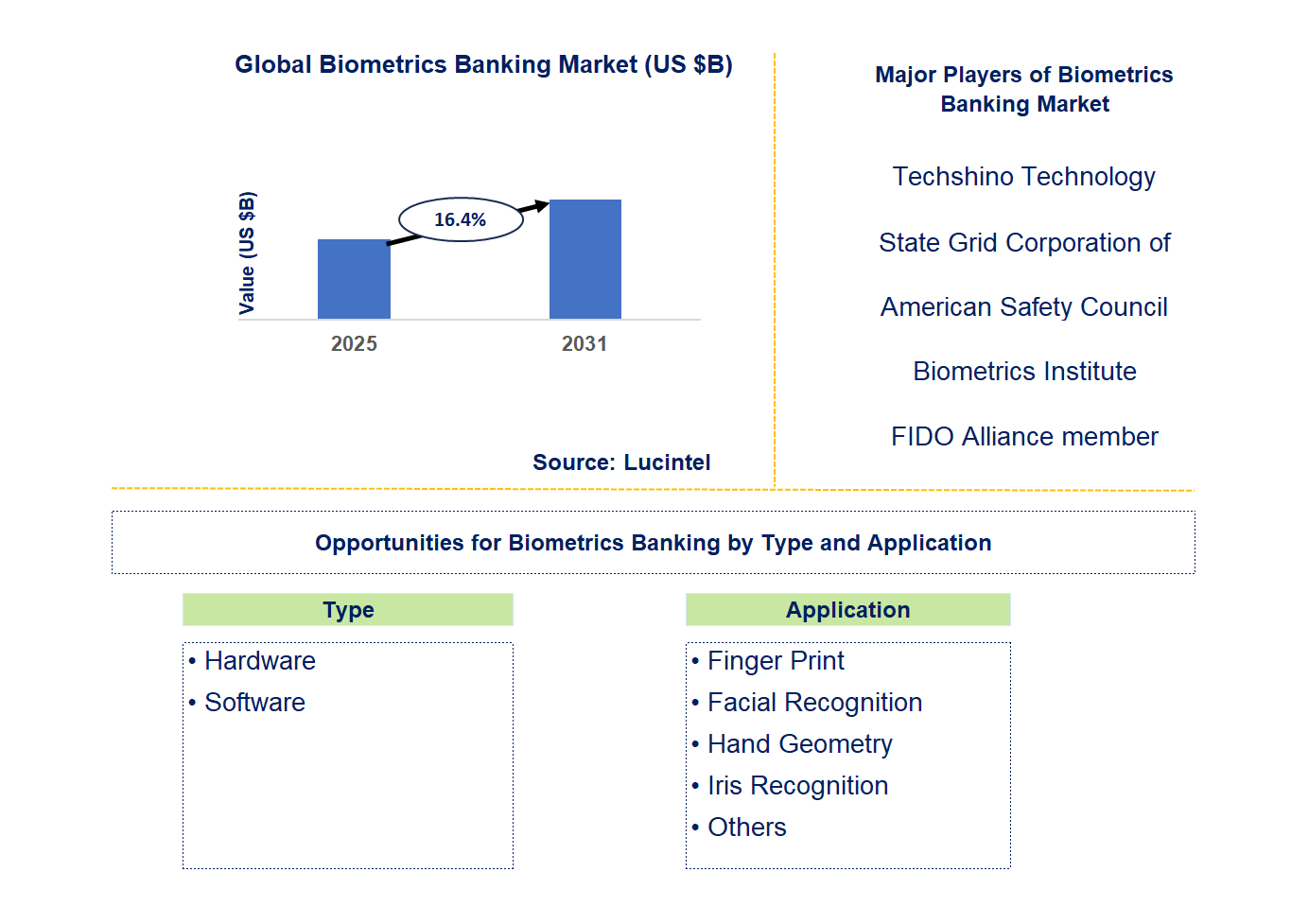
Key data points: The growth forecast = 16.4% annually for the next 7 years. Scroll below to get more insights. This market report covers Trends, opportunity and forecast in biometrics banking market to 2031 by type (hardware and software), application (finger print, facial recognition, hand geometry, iris recognition, and others), and region (North America, Europe, Asia Pacific, and the Rest of the World)
We'll send your sample report shortly.
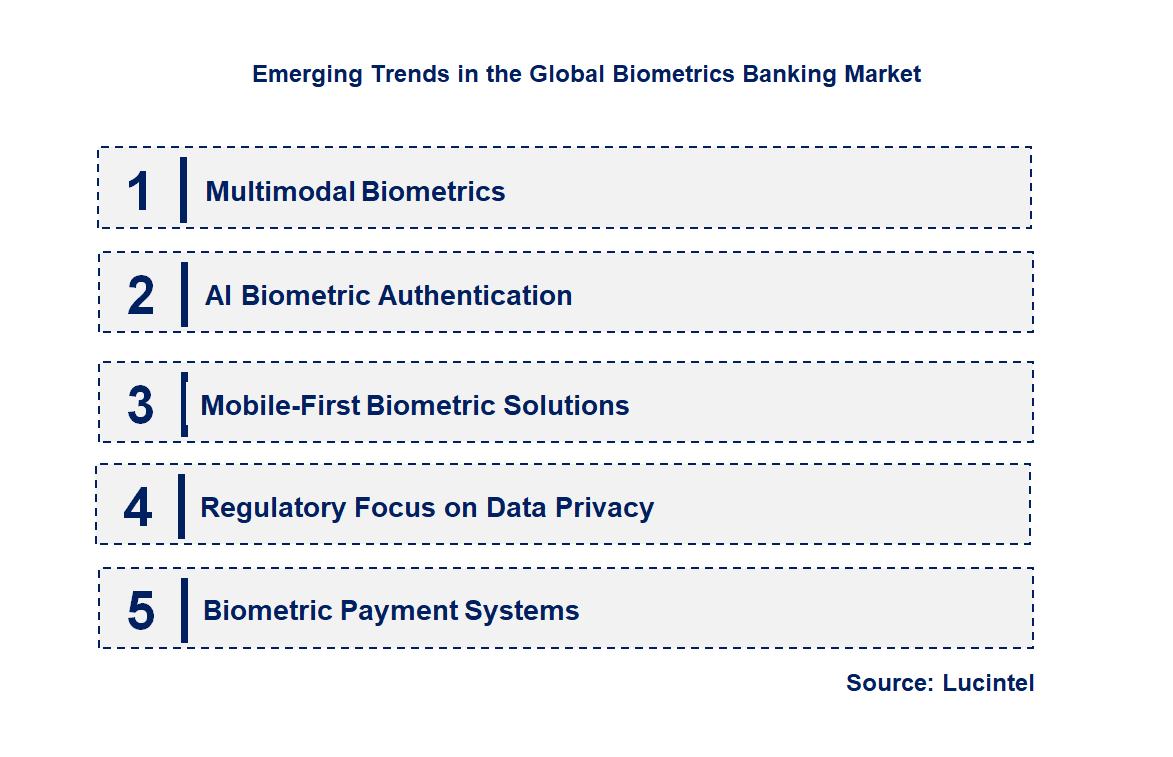
• Multimodal Biometrics: With multiple biometric modalities like fingerprint, face, voice, and iris recognition, integration of these multiple biometric modalities is very common nowadays. This technology is used by banks for improved security, to reduce fraud, and create a more convenient user experience. Combining various types of biometric data, financial institutions can ensure the authentication process is both highly accurate and difficult to bypass, hence the key trend in the biometrics banking market.
• AI Biometric Authentication: AI is playing a critical role in improving biometric authentication systems. By using AI algorithms, banks can analyze biometric data more efficiently, thus enabling faster and more accurate verification. AI also helps in detecting anomalies or fraudulent activity, which increases the overall security of banking systems. As AI continues to advance, its integration into biometric banking solutions will drive innovation in fraud detection and customer service.
• Mobile-First Biometric Solutions: With increasing reliance on smartphones for banking, mobile-first biometric solutions are the dominant trend. Fingerprint and facial recognition technologies have become a norm in mobile banking apps, where users can authenticate their transactions easily and securely. The trend is likely to increase further as more people embrace mobile banking due to its convenience and ease of use, especially in emerging markets where smartphone penetration is increasing.
• Regulatory Focus on Data Privacy: There is a heightened regulatory focus on data privacy with the increased adoption of biometrics in banking. Countries are increasingly imposing stricter laws and guidelines in terms of data protection to make sure that biometric data being used by the banks is safe and transparently handled. This makes financial institutions invest more in secure data storage and encryption technology while building confidence among consumers on biometric-based banking solutions.
• Biometric Payment Systems: Biometric payment systems including biometric-enabled ATMs and POS terminals are fast coming to be increasingly accepted. With an increase in consumer acceptance, more consumers than ever before today seek seamless and password-free experiences using biometric authentication. Therefore, the general growth in acceptance is creating greater awareness towards using biometrics throughout the range of banking services with implications to remodel future digital payment modes to safer, friendlier, and far superior payment channels to those prevalent currently. New trends are emerging that are transforming biometrics banking as it brings high security, offers better user experience, and provides broader acceptance in biometric authentication technologies. AI, multimodal biometrics, and mobile-first solutions integrated with financial institutions increase innovation and push the market higher. Consumer trust in biometric solution will further accelerate with regulatory moves related to data privacy.
• Increased Usage of Fingerprint and Facial Recognition Technologies: Banks have used fingerprint and facial recognition technologies increasingly for security reasons and to ease the process of authentication. Many banks are incorporating such biometric methods into their mobile banking apps and ATM systems for easier, faster, and secure login procedures. This trend marks a giant leap toward customer experiences that rely on biometrics instead of passwords and PINs, which can easily be hacked and forged.
• Introduction of Voice and Iris Recognition: Banks are expanding their biometric authentication options by incorporating voice and iris recognition technologies. Voice recognition is gaining popularity in voice banking systems, where customers can perform transactions using voice commands. Iris recognition, known for its high level of accuracy, is being implemented in specific markets to provide an additional layer of security for high-value transactions or sensitive financial activities.
• Partnerships and Collaborations with Tech Companies: Most banks are collaborating with technology companies to integrate advanced biometric solutions into their systems. The focus of such partnerships is on combining biometrics with AI and machine learning algorithms to create more robust authentication mechanisms. Working with tech companies allows financial institutions to tap into cutting-edge biometric solutions, thus improving fraud detection capabilities and ensuring that their systems stay ahead of emerging cyber threats.
• Integration with Digital Payment Systems: Biometrics is increasingly being integrated with digital payment systems, enabling consumers to authenticate payments without the need for a card or traditional PIN. This is particularly evident in mobile payments, where facial recognition or fingerprint scanning is used to approve transactions. This development is part of a broader trend toward frictionless, secure payment methods and is transforming how consumers interact with financial services.
• Higher Investment in Biometric Security Solutions: Rising concerns about cyber fraud and threats have led to heavy investment in biometric security solutions by financial institutions. Investments are being done to improve the ability to detect fraud, reduce identity theft, and enhance the overall security of transactions between banks. As the market for biometric technology expands, so does the emphasis on investing in secure biometric solutions that satisfy both customer demands and regulatory compliances. Recent developments indicate that the biometrics banking market is maturing at a very rapid pace. More sophisticated biometric solutions, such as voice and iris recognition, reflect the increasing demand for secure, convenient, and efficient banking experiences. Financial institutions and tech companies are increasingly collaborating to innovate, and investments in biometric security are transforming the future of banking.
• Mobile Banking Applications: Mobile banking is one of the growth areas in the biometrics banking market. As more and more people use their smartphones for routine banking, financial institutions are able to provide biometric authentication features, like fingerprint and facial recognition, in mobile applications. Security is enhanced while providing a smooth user experience; this will be a catalyst to adoption and usage of mobile banking services.
• Digital Payment Systems: As digital payment systems grow, the requirement of biometric authentication on the payment system is becoming a prime necessity. Banks can exploit this by initiating biometric-enabled payment systems on ATMs, on POS terminals, and e-commerce sites. Thus, it will move financial institutions forward to offer secure and password less transactions, improving safety and ease for the customers while making the uptake of digital payment more attractive.
• Fraud Prevention and Risk Management: Integration of Biometric Technology into fraud prevention and risk management is a great growth opportunity. Biometrics will provide banks with the ability to identify fraudulent activities, verify identities, and secure the clearance of transactions. Banks can reduce losses and protect their customers from identity theft and other security breaches by applying biometric authentication in conjunction with AI-powered fraud detection.
• Customer Identity Verification for Remote Banking: With the growth in remote banking, there is a big demand for efficient and secure identity verification systems. Biometrics, for example, with facial recognition and fingerprint scanning, provide a good solution for remotely verifying customers. This is a growth opportunity for banks to enhance their digital services, especially when it comes to opening accounts online, loan applications, and other types of remote transactions.
• Interoperability with Government Identification Schemes: Banks can integrate biometric identification systems used by governments across regions, especially in countries that have such a system to offer seamless authentication for banking services. For example, in India, banks already make use of Aadhaar-based biometric authentication to verify their customers. The interoperability offers improved security and facilitates easier process while promoting greater financial inclusion among people in these underserved regions. Such strategic growth opportunities show how enormous the potential of biometric banking is in revolutionizing the financial services industry. Financial institutions will be able to improve security, increase customer satisfaction, and be better prepared to counter emerging threats in the digital banking landscape through embracing biometric technology in mobile banking, digital payments, fraud prevention, remote banking, and identity verification.
• Techshino Technology
• State Grid Corporation of China
• American Safety Council
• Biometrics Institute
• FIDO Alliance member
• Digital Persona
• BPI Connected Identification
• Ample trails
• Diebold
• Aulich
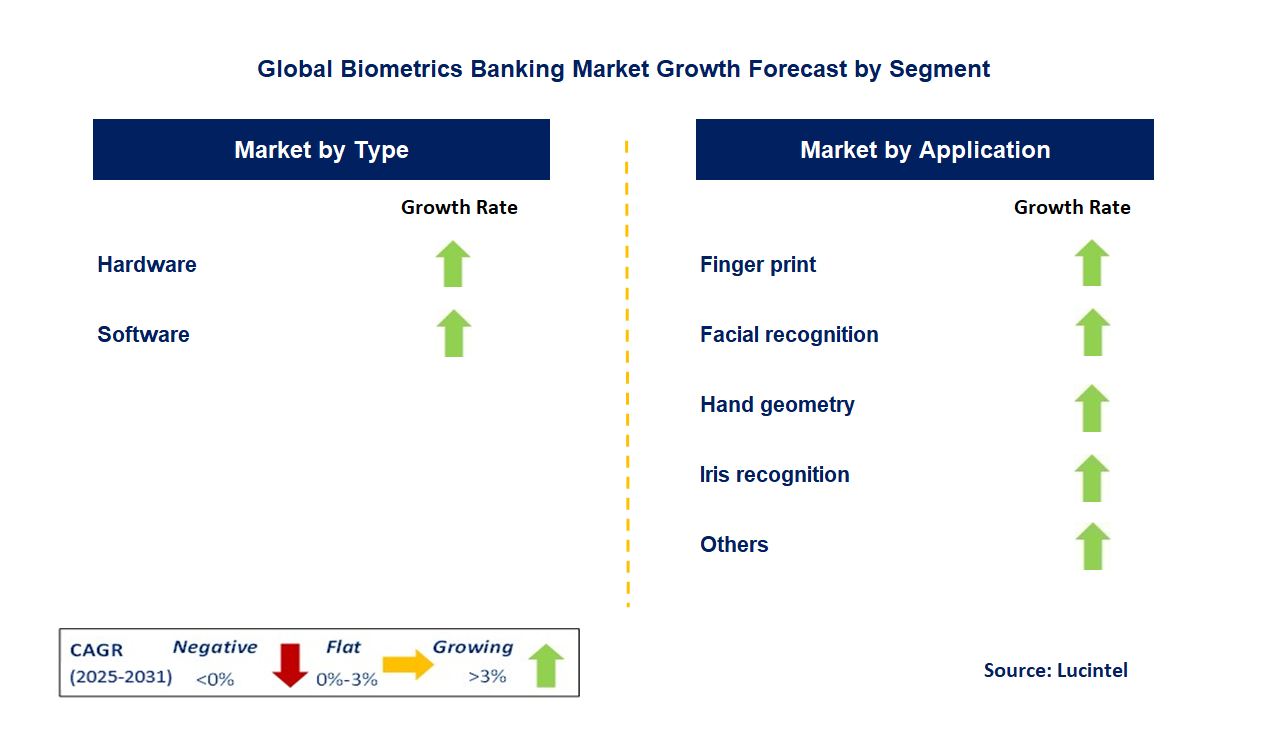
• Hardware
• Software
• Finger Print
• Facial Recognition
• Hand Geometry
• Iris Recognition
• Others
• North America
• Europe
• Asia Pacific
• The Rest of the World
• United States: In the United States, significant progress has been made regarding biometrics banking market, with some of the biggest banks adopting biometric authentication for mobile banking applications. Security and streamlined customer experience are mainly emphasized in fingerprint recognition and facial recognition technology. Financial institutions also invest in multimodal biometric solutions, where various identification methods are used in combination. Regulation bodies have started focusing on defining guidelines to ensure protection of biometric data to build trust with consumers. As the market matures, it is expected that the U.S. will be at the forefront of innovative biometric authentication solutions, especially in mobile and online banking.
• China: China has been one of the leaders in biometric banking, with a wide application of facial recognition and fingerprint scanning in both physical and digital banking. Major banks and payment platforms in the region have increasingly been integrating biometric authentication systems to make security more convenient to their users. The Chinese government has actively supported the development of biometric solutions while creating a framework to ensure privacy data protection. As consumer adoption grows, there is also an increasing focus on integrating biometric solutions with AI and big data analytics to offer personalized banking services and improve risk management.
• Germany: In Germany, biometric banking solutions are being rolled out cautiously, with a focus on enhancing security in compliance with stringent European Union privacy regulations, such as GDPR. German banks have introduced fingerprint and facial recognition systems, especially for mobile banking apps and ATM access. The adoption rate has been slower compared to other countries, but there is a strong emphasis on the reliability and security of biometric systems, ensuring that they meet high standards for data protection. Future developments may see greater integration with contactless payments, and banks are exploring innovative ways to improve the user experience through biometrics.
• India: In India, the biometric banking market is expanding rapidly due to the widespread use of Aadhaar, a government-issued identification system that includes biometric data. Banks are increasingly using fingerprint and iris scanning for both customer identification and verification processes. The Indian Government has supported the use of biometrics in banking with financial inclusion in rural areas. Biometric authentication was also integrated in the development of mobile banking, but concerns about privacy and data security have obligated regulators to strengthen data protection frameworks as adoption increases.
• Japan: Japan has been at the front line, being one of the first to adopt biometric technology, particularly in banking and financial services. For instance, Japan's largest banks include facial and fingerprint recognition systems when accessing online and in-branch services. Driven by this high-tech culture, embracing biometrics happened quickly among young and adult consumers. Furthermore, the Japanese government has reinforced biometric adoption through strategic initiatives to enhance security and combat fraud. Japan will push forward with the use of multimodal biometrics, which combine several methods of authentication to better achieve enhancement of security while ensuring convenience to users across banking channels.


• Techshino Technology
• State Grid Corporation of China
• American Safety Council
• Biometrics Institute
• FIDO Alliance member
• Digital Persona
• BPI Connected Identification
• Ample trails
• Diebold
• Aulich Q5. Which biometrics banking market segment will be the largest in future? Answer: Lucintel forecasts that software is expected to witness higher growth over the forecast period. Q6. In biometrics banking market, which region is expected to be the largest in next 5 years? Answer: APAC is expected to witness the highest growth over the forecast period. Q7. Do we receive customization in this report? Answer: Yes, Lucintel provides 10% customization without any additional cost.


Choose a license that fits your team. Instant PDF delivery.
Prices exclude taxes. Instant delivery. Custom licensing available on request.
Market Report · May 16, 2026
Market Report · September 4, 2025
Market Report · June 11, 2025
Trusted partner for strategic intelligence and business growth


Receive a complimentary market analysis tailored to your industry. Our analysts will identify key growth opportunities and competitive dynamics specific to your business.

Market size, growth rate, and key trend analysis for your specific sector.

Top competitor positioning and market share analysis.

Strategic recommendations backed by data-driven insights.
Get curated market intelligence and competitive moves straight to your inbox.
By subscribing, you agree to receive our monthly insights. Unsubscribe anytime.
Receive a complimentary market analysis tailored to your industry. Our analysts will identify key growth opportunities and competitive dynamics specific to your business.
Market size, growth rate, and key trend analysis for your specific sector.
Top competitor positioning and market share analysis.
Strategic recommendations backed by data-driven insights.
Get curated market intelligence, emerging trends, and competitive moves straight to your inbox each month.
By subscribing, you agree to receive our monthly insights. Unsubscribe anytime.
We'll send your sample report shortly.