
Market Report · July 15, 2026

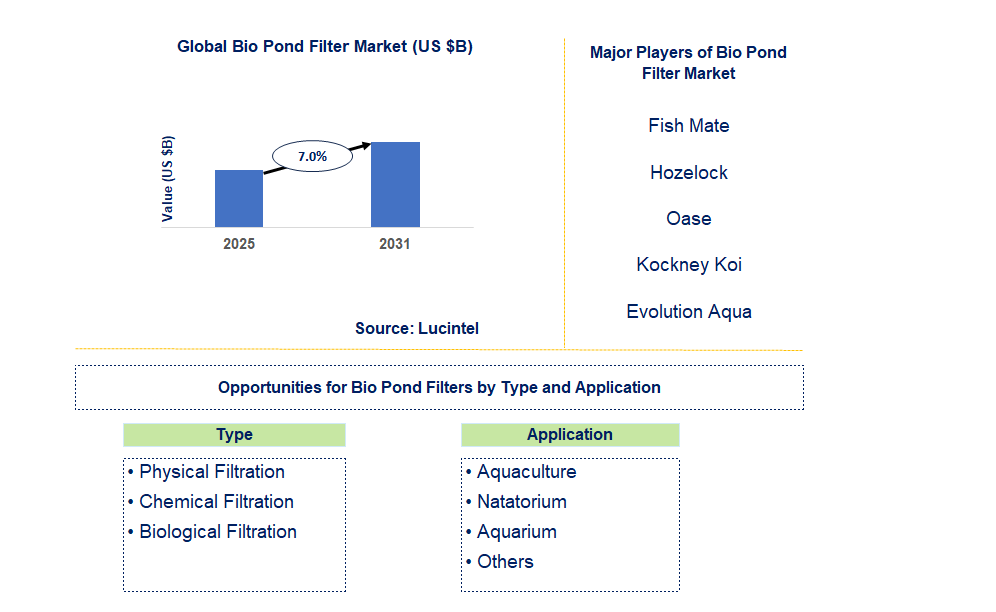
Key data points: The growth forecast = 7.0% annually for the next 7 years. Scroll below to get more insights. This market report covers trends, opportunities and forecasts in bio pond filter market to 2031 by type (physical filtration, chemical filtration, and biological filtration), application (aquaculture, natatorium, aquarium, and others), and region (North America, Europe, Asia Pacific, and the Rest of the World)
We'll send your sample report shortly.
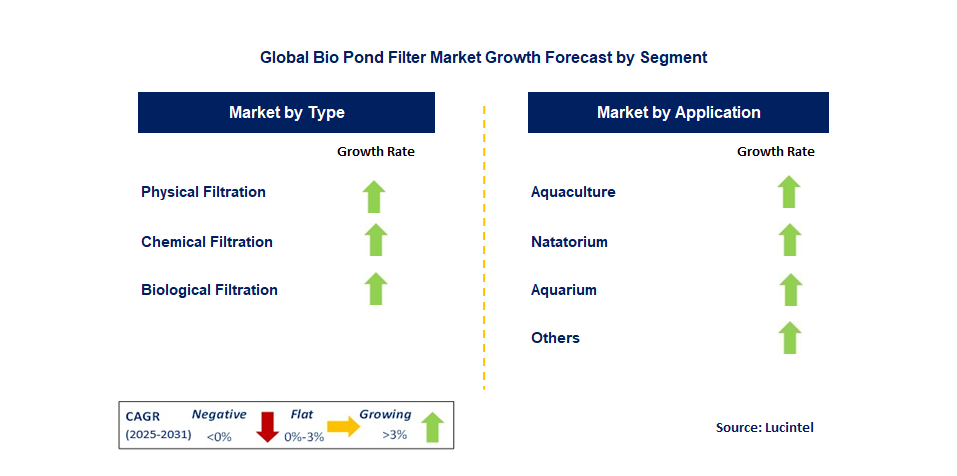
• Lucintel forecasts that, within the type category, biological filtration is expected to witness the highest growth over the forecast period.
• Within the application category, aquaculture is expected to witness the highest growth.
• In terms of region, APAC is expected to witness the highest growth over the forecast period. Gain valuable insights for your business decisions with our comprehensive 150+ page report. Sample figures with some insights are shown below.
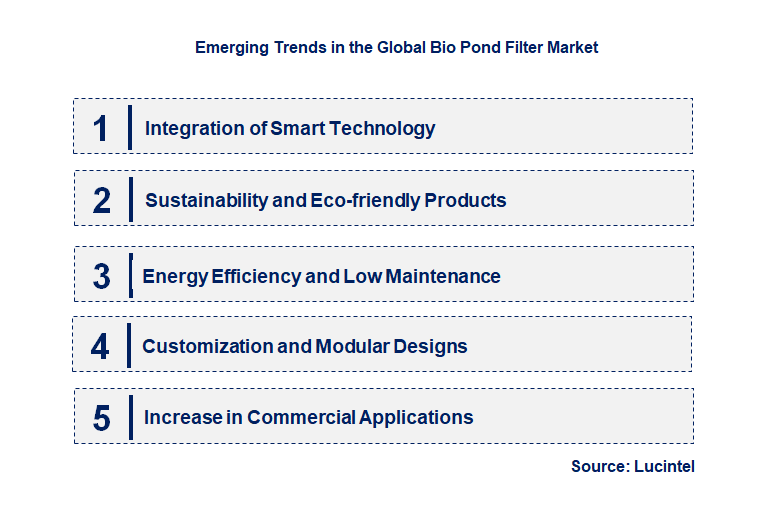
• Integration of Smart Technology: Smart technology, such as IoT-enabled sensors and automated systems, is increasingly being integrated into bio pond filters. These systems allow for real-time monitoring and remote control of water quality, ensuring that the filtration system is functioning optimally. Smart filters can detect changes in water quality and adjust filtration processes automatically, reducing the need for manual intervention. This trend is especially popular in large ponds and commercial applications, where constant monitoring is required.
• Sustainability and Eco-friendly Products: As environmental awareness grows, there is an increasing demand for bio pond filters that use sustainable and eco-friendly materials. Filters made from biodegradable components or renewable resources are gaining traction. Manufacturers are focusing on creating products that have minimal environmental impact, reduce energy consumption, and promote water conservation. The shift toward sustainability is being driven by both consumer preference and regulatory policies that encourage greener alternatives.
• Energy Efficiency and Low Maintenance: The trend toward energy-efficient and low-maintenance bio pond filters is becoming more prominent. Consumers are looking for filtration systems that provide high performance with minimal energy consumption and require less frequent maintenance. Innovations in filter design are leading to the creation of systems that are more durable, cost-effective, and easier to maintain, which in turn drives consumer adoption. This trend is particularly important in markets where consumers are looking for long-term solutions with low operating costs.
• Customization and Modular Designs: There is an increasing trend toward customizable and modular bio pond filters, allowing consumers to tailor filtration systems based on the size and specific needs of their ponds. Modular systems provide flexibility for both small and large ponds and allow users to easily upgrade or add components as needed. This trend is gaining popularity among both residential and commercial customers who require more personalized solutions for water filtration.
• Increase in Commercial Applications: Bio pond filters are increasingly being adopted in commercial settings, including aquaculture, resorts, and municipal water management systems. As businesses focus more on sustainability and efficient water management, bio pond filters are seen as an ideal solution for maintaining healthy water ecosystems. The use of bio pond filters in aquaculture helps to maintain water quality, which is critical for the health of aquatic life. Commercial adoption is also driven by the need to comply with environmental regulations related to water quality. These emerging trends in the bio pond filter market are reshaping the industry by focusing on innovation, sustainability, and customization. The integration of smart technology, energy efficiency, and eco-friendly products is leading to more effective and accessible filtration solutions, while the rise in commercial applications and modular designs is expanding market opportunities. These trends reflect a shift toward more intelligent, cost-effective, and environmentally responsible solutions.
• Advancements in Biological Filtration Technology: Biological filtration technology has made significant strides, with new filters that enhance the growth of beneficial bacteria to help break down organic waste in the water. This improves water clarity and promotes healthier aquatic ecosystems. Innovations in biological filters now include more efficient materials and processes that allow for quicker breakdown of contaminants, which is essential for maintaining clear and healthy pond water.
• Improved Energy Efficiency: New designs and materials are improving the energy efficiency of bio pond filters. These energy-efficient systems use less power while providing better filtration performance, making them more affordable for consumers in the long run. Advances in pump and filtration system design, as well as the use of solar-powered systems, are contributing to the reduction in energy consumption, appealing to environmentally conscious consumers.
• Development of Multi-Stage Filtration Systems: Manufacturers are increasingly developing multi-stage filtration systems that combine biological, mechanical, and chemical filtration to address a wider range of water quality issues. These multi-stage systems provide more comprehensive water purification, improving overall pond health by removing a broader spectrum of contaminants. This development is especially beneficial for large or complex ponds that require higher filtration capacities.
• Introduction of UV Sterilization: UV sterilization technology is being integrated into bio pond filters to eliminate harmful pathogens, algae, and bacteria that can affect water quality. UV light works to disinfect the water, providing an additional layer of purification. This technology is particularly effective in improving the clarity of pond water and reducing the risk of disease in aquatic life, making it a valuable addition to bio pond filter systems.
• Increase in Smart Pond Filters: The rise in IoT-enabled and smart bio pond filters is revolutionizing the market. These systems can automatically adjust filtration processes based on real-time data, optimizing water quality and reducing the need for manual intervention. Smart filters also allow for remote monitoring and control, providing convenience and efficiency for pond owners, particularly in large-scale or commercial applications. These key developments in the bio pond filter market are driving improvements in water filtration, energy efficiency, and overall performance. Technological advancements in biological filtration, multi-stage systems, and UV sterilization are enhancing the effectiveness of bio pond filters. Meanwhile, the rise of smart technology is making maintenance easier and more efficient, leading to greater market adoption and growth.
• Residential Ponds and Water Gardens: The residential market for bio pond filters is growing due to the increasing popularity of backyard ponds and water gardens. Homeowners are seeking eco-friendly and low-maintenance solutions to keep their pond water clean and clear. Bio pond filters that offer efficient filtration and easy installation are gaining traction in this sector. Companies can tap into this growth by offering affordable, user-friendly systems.
• Commercial and Industrial Applications: Bio pond filters are increasingly being adopted in commercial and industrial applications, including aquaculture, resorts, and water management systems. Businesses are looking for sustainable and cost-effective solutions to maintain water quality in their facilities. The demand for bio pond filters in these sectors is expected to increase as industries focus on sustainability and complying with environmental regulations.
• Aquaculture and Fisheries: In the aquaculture industry, maintaining healthy water quality is essential for the survival and growth of aquatic life. Bio pond filters are critical in improving water quality by removing contaminants and promoting the health of fish and other aquatic species. With the increasing demand for sustainable seafood, aquaculture farms are investing in advanced bio pond filtration systems to improve their operations.
• Urban Water Management: With the rapid growth of urban areas, there is a need for efficient water management systems. Bio pond filters can play a key role in managing stormwater and treating wastewater in urban environments. These filters help maintain water quality in ponds, lakes, and other water bodies, contributing to improved urban sustainability and biodiversity. The increasing focus on green infrastructure and water conservation presents a growth opportunity in this area.
• DIY and Eco-Conscious Consumers: The rise of eco-conscious consumers and the DIY trend is creating a growing market for bio pond filters designed for easy installation and low maintenance. These consumers are looking for sustainable products that align with their environmental values. By offering products that are affordable, easy to use, and effective, manufacturers can cater to the growing demand for DIY pond filtration solutions. The bio pond filter market is expanding across several key applications, driven by rising demand for sustainable, efficient, and cost-effective filtration solutions. Growth opportunities in residential ponds, commercial applications, aquaculture, urban water management, and DIY solutions are reshaping the market, with manufacturers focusing on technological innovations and environmentally friendly products to meet the evolving needs of consumers and industries.
• Fish Mate
• Hozelock
• Oase
• Kockney Koi
• Evolution Aqua
• Argonide
• Fluval
• Haley Manufacturing
• Pond Boss
• Deepwater Koi Innovations
• Physical Filtration
• Chemical Filtration
• Biological Filtration
• Aquaculture
• Natatorium
• Aquarium
• Others
• North America
• Europe
• Asia Pacific
• The Rest of the World
• United States: In the United States, the bio pond filter market has been expanding rapidly, driven by increased interest in sustainable water management and the growing popularity of backyard ponds and water gardens. Many manufacturers are focusing on developing filters that are not only efficient but also environmentally friendly, using renewable materials and energy-efficient designs. Additionally, the U.S. market has seen a rise in DIY pond filtration systems, with consumers seeking more affordable and easy-to-install solutions. Companies are also investing heavily in research to improve the longevity and effectiveness of bio pond filters.
• China: China’s bio pond filter market is experiencing substantial growth, fueled by the country’s expanding urbanization and demand for water management systems in both residential and commercial spaces. The Chinese government has been encouraging environmental sustainability, and as a result, more people are adopting bio pond filters for their water gardens and aquaculture farms. Additionally, there has been an increase in the adoption of smart bio pond filters equipped with IoT sensors, allowing for real-time monitoring of water quality. These advancements help in reducing manual intervention and improving water filtration efficiency.
• Germany: In Germany, the bio pond filter market is seeing significant innovations in filtration technologies, particularly with a focus on biological filtration and sustainability. The German market is highly regulated, with a strong emphasis on eco-friendly solutions. As a result, German manufacturers are developing bio pond filters that use natural materials and processes to ensure water purity while minimizing the environmental impact. Additionally, many filters now integrate UV light technology to enhance water clarity and reduce harmful pathogens. The market is also being driven by the demand for water features in both private homes and commercial spaces.
• India: The Indian bio pond filter market is evolving rapidly due to growing awareness of the importance of water conservation and the rise in popularity of ornamental ponds in urban and rural areas. Bio pond filters are being adopted for their low maintenance and energy-efficient features. With a focus on cost-effective and sustainable solutions, Indian manufacturers are developing bio pond filters that cater to the local market’s needs. Additionally, the government’s initiatives to promote green spaces and water management systems are contributing to the market's growth, particularly in urban centers where water conservation is a pressing issue.
• Japan: The Japanese bio pond filter market is characterized by a strong emphasis on technological innovation and high-quality filtration systems. Japanese consumers are highly focused on maintaining clean and clear water in their ponds, which has led to the development of advanced bio pond filters. These filters are often integrated with cutting-edge technology, such as IoT-enabled systems allowing real-time monitoring and adjustments. Japan’s focus on preserving natural ecosystems has led to increased demand for sustainable bio pond filters, which offer efficient and eco-friendly solutions for residential and commercial applications.


• Fish Mate
• Hozelock
• Oase
• Kockney Koi
• Evolution Aqua
• Argonide
• Fluval
• Haley Manufacturing
• Pond Boss
• Deepwater Koi Innovations Q5. Which bio pond filter market segment will be the largest in future? Answer: Lucintel forecasts that, within the type category, biological filtration is expected to witness the highest growth over the forecast period. Q6. In bio pond filter market, which region is expected to be the largest in next 5 years? Answer: In terms of region, APAC is expected to witness the highest growth over the forecast period. Q7. Do we receive customization in this report? Answer: Yes, Lucintel provides 10% customization without any additional cost.


Choose a license that fits your team. Instant PDF delivery.
Prices exclude taxes. Instant delivery. Custom licensing available on request.
Market Report · July 15, 2026
Market Report · May 18, 2026
Market Report · May 18, 2026
Trusted partner for strategic intelligence and business growth


Receive a complimentary market analysis tailored to your industry. Our analysts will identify key growth opportunities and competitive dynamics specific to your business.

Market size, growth rate, and key trend analysis for your specific sector.

Top competitor positioning and market share analysis.

Strategic recommendations backed by data-driven insights.
Get curated market intelligence and competitive moves straight to your inbox.
By subscribing, you agree to receive our monthly insights. Unsubscribe anytime.
Receive a complimentary market analysis tailored to your industry. Our analysts will identify key growth opportunities and competitive dynamics specific to your business.
Market size, growth rate, and key trend analysis for your specific sector.
Top competitor positioning and market share analysis.
Strategic recommendations backed by data-driven insights.
Get curated market intelligence, emerging trends, and competitive moves straight to your inbox each month.
By subscribing, you agree to receive our monthly insights. Unsubscribe anytime.
We'll send your sample report shortly.