
Market Report · July 15, 2026

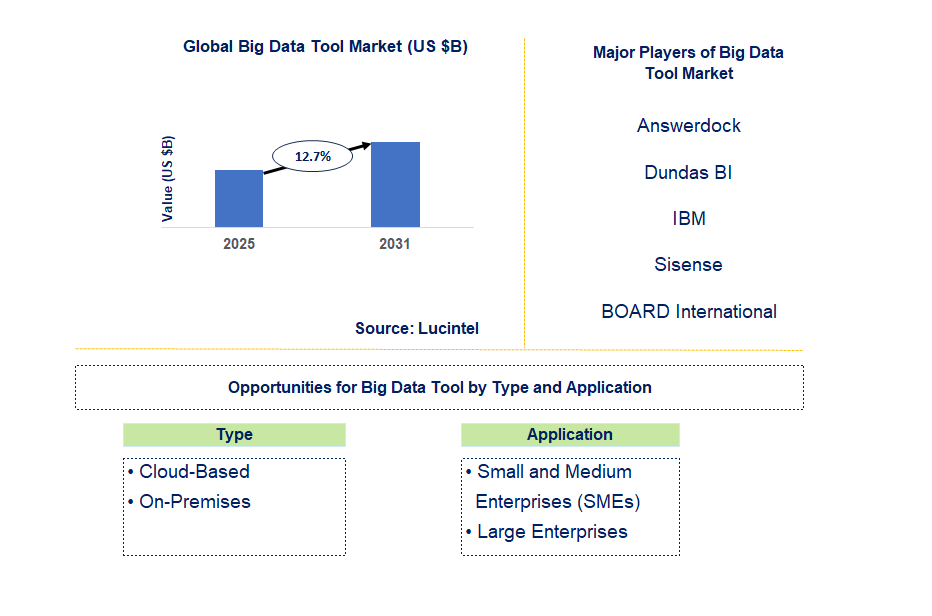
Key data points: The growth forecast = 12.7% annually for the next 7 years. Scroll below to get more insights. This market report covers Trends, opportunity and forecast in big data tool market to 2031 by type (cloud-based and on-premises), application (small and medium enterprises (SMEs) and large enterprises), and region (North America, Europe, Asia Pacific, and the Rest of the World)
We'll send your sample report shortly.
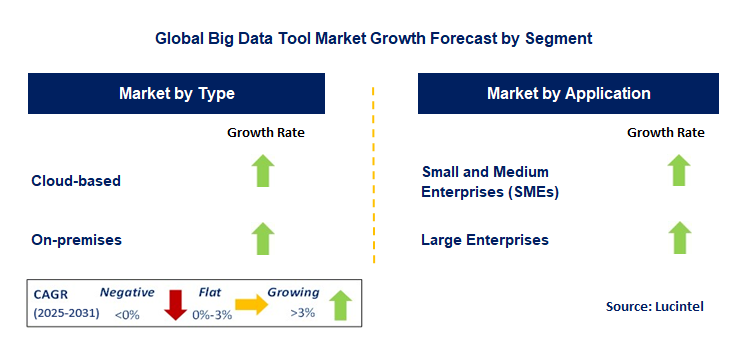
• Lucintel forecasts that, within the type category, cloud-based is expected to witness higher growth over the forecast period.
• Within the application category, small and medium enterprise (SMEs) is expected to witness higher growth.
• In terms of region, APAC is expected to witness the highest growth over the forecast period. Gain valuable insights for your business decisions with our comprehensive 150+ page report. Sample figures with some insights are shown below.
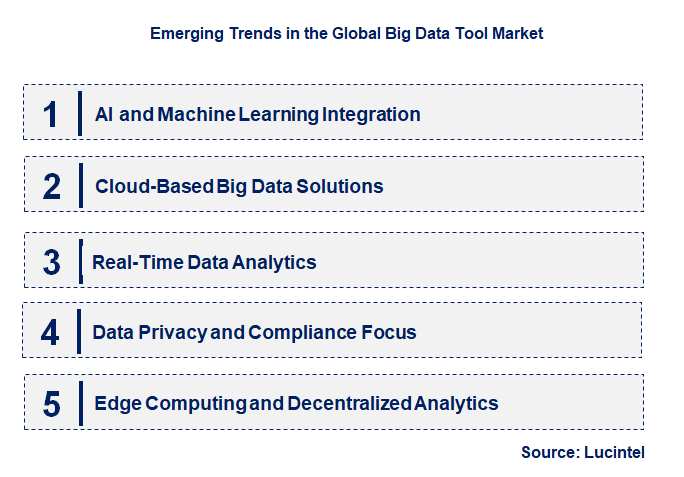
• AI and Machine Learning Integration: The integration of artificial intelligence (AI) and machine learning (ML) into big data tools is enhancing predictive analytics capabilities. AI and ML algorithms can sift through vast amounts of data to uncover patterns, trends, and insights that would otherwise be undetectable. This integration is enabling businesses to automate data analysis, improve decision-making processes, and predict future outcomes more accurately. The trend is particularly important in sectors like finance, healthcare, and manufacturing, where rapid, data-driven insights are critical for maintaining competitiveness.
• Cloud-Based Big Data Solutions: Cloud computing has revolutionized the big data tool market by providing scalable, cost-effective solutions for data storage, processing, and analytics. Cloud-based tools allow businesses to store and access large datasets without investing heavily in on-premise infrastructure. This trend is enabling companies to leverage Big Data solutions more efficiently, reduce capital expenditures, and focus on core business functions. With the growth of cloud platforms such as AWS, Microsoft Azure, and Google Cloud, the adoption of big data tools is becoming more widespread across various industries, promoting greater agility and flexibility.
• Real-Time Data Analytics: Real-time data analytics has emerged as a crucial trend as businesses demand immediate insights to drive quick decision-making. big data tools are increasingly equipped to process and analyze data in real-time, enabling organizations to respond to changing conditions or emerging opportunities rapidly. This trend is particularly beneficial for industries like retail, e-commerce, finance, and supply chain management, where real-time data is crucial for personalized customer experiences, risk management, and operational efficiency. Real-time capabilities enhance competitiveness by allowing businesses to be proactive rather than reactive in their operations.
• Data Privacy and Compliance Focus: With the increasing importance of data privacy regulations, such as GDPR and CCPA, big data tools are evolving to meet stringent compliance and security requirements. Businesses are prioritizing solutions that offer robust data protection, encryption, and audit capabilities to safeguard sensitive information. The growing focus on privacy is driving the development of more secure big data tools that facilitate transparent data handling practices. This trend is particularly significant in industries such as finance, healthcare, and public services, where maintaining compliance with data privacy laws is a critical concern.
• Edge Computing and Decentralized Analytics: As the volume of data generated by IoT devices and sensors increases, edge computing is becoming a key trend in the big data tool market. Edge computing allows data to be processed closer to where it is generated, reducing latency and bandwidth costs. This trend drives the development of big data tools capable of handling decentralized data processing. By enabling faster decision-making and reducing the strain on centralized cloud systems, edge computing is enhancing the efficiency of real-time applications in manufacturing, transportation, and smart cities. The big data tool market is being reshaped by these emerging trends that focus on automation, real-time processing, AI integration, and data privacy. Cloud computing and edge analytics are also making big data tools more accessible and efficient, allowing businesses to scale and process data at unprecedented speeds. These trends not only drive technological advancements but also provide businesses with the tools necessary to remain competitive in an increasingly data-driven world. As these trends continue to evolve, they will further integrate Big Data solutions into the core operations of companies across industries.
• AI and Machine Learning Integration: AI and machine learning (ML) integration in big data tools is enhancing automation, predictive analytics, and pattern recognition. By embedding these advanced algorithms, tools can analyze complex data sets and identify trends or anomalies without human intervention. This development has accelerated decision-making processes, especially in industries like healthcare, finance, and retail, where timely insights are crucial. It allows businesses to move beyond simple descriptive analytics and incorporate predictive and prescriptive analytics, driving more effective and forward-looking strategies.
• Cloud-Native Data Tools: Cloud-native big data tools are becoming increasingly popular as organizations shift away from on-premise infrastructure. Cloud solutions provide scalable, flexible, and cost-effective storage and computing power to manage large volumes of data. Platforms like Amazon Web Services (AWS), Microsoft Azure, and Google Cloud have introduced specialized Big Data services that offer seamless integration with other cloud-based tools, supporting real-time data processing, storage, and analysis. This development is particularly beneficial for businesses that require elasticity in their data management and processing capabilities, enabling them to scale operations efficiently.
• Real-Time Data Analytics: The growing need for immediate insights has led to the rapid development of real-time data analytics capabilities. Tools now allow organizations to process data as it is generated, enabling quick decision-making. Industries such as e-commerce, financial services, and logistics are increasingly relying on real-time analytics for tasks like personalized customer experiences, fraud detection, and inventory management. Real-time analytics not only improves operational efficiency but also enhances customer engagement by enabling timely responses to changing market conditions or consumer behavior.
• Data Privacy and Compliance Solutions: As data privacy regulations like GDPR and CCPA become more stringent, big data tools have evolved to prioritize compliance and security. New tools incorporate built-in privacy features such as data encryption, access controls, and audit trails, ensuring organizations meet regulatory requirements while handling sensitive data. These developments have increased demand for secure, privacy-focused data solutions, especially in highly regulated industries like finance, healthcare, and government. Businesses are now able to balance data-driven insights with the need to protect user privacy and maintain trust.
• Advanced Data Visualization Tools: The demand for better data visualization capabilities has led to the development of more sophisticated, interactive, and user-friendly tools. New Big Data visualization platforms allow organizations to present complex data in visually appealing and easily digestible formats, enabling stakeholders to understand key insights quickly. These tools provide customizable dashboards, real-time reports, and interactive charts that facilitate decision-making at all levels of an organization. The improved ability to visualize data not only enhances reporting efficiency but also encourages data-driven culture across organizations. Recent developments in the big data tool market are redefining how organizations handle and derive value from data. The integration of AI and ML is boosting analytics capabilities, while cloud-native tools offer scalability and flexibility. Real-time analytics, along with enhanced privacy and compliance features, are helping businesses make faster, more secure decisions. Advanced data visualization is improving the communication of insights across the enterprise. Together, these developments are not only enhancing operational efficiency but also enabling businesses to navigate the data-driven future better. The result is a more integrated, insightful, and secure approach to Big Data analytics.
• Customer Analytics and Personalization: Customer-centric strategies are growing, and they present a significant opportunity for big data tools in customer analytics and personalization. By analyzing large volumes of customer data, businesses can gain insights into behavior, preferences, and purchasing patterns. big data tools enable the development of targeted marketing campaigns, personalized experiences, and tailored product offerings. This application helps companies enhance customer engagement, improve retention rates, and increase conversion. Leveraging Big Data for deeper customer insights is a powerful growth driver, particularly for retail, e-commerce, and financial services.
• Supply Chain Optimization: big data tools are increasingly used for supply chain optimization, providing real-time insights into inventory management, demand forecasting, and logistics. By analyzing data from multiple sources, businesses can identify inefficiencies, optimize delivery routes, reduce costs, and enhance the customer experience. Predictive analytics powered by Big Data helps companies proactively manage disruptions, avoid stockouts, and streamline operations. This growth opportunity is critical for industries like manufacturing, retail, and logistics, where supply chain efficiency directly impacts profitability and customer satisfaction.
• Predictive Maintenance in Manufacturing: Predictive maintenance, driven by big data tools, offers a transformative opportunity in manufacturing industries. By continuously monitoring equipment performance through IoT sensors and analyzing historical data, companies can predict when machines are likely to fail and perform maintenance before costly breakdowns occur. This proactive approach reduces downtime, lowers repair costs, and extends the lifespan of assets. Industries like automotive, aerospace, and energy are seeing significant benefits from predictive maintenance, making it a key growth area for big data tools in improving operational efficiency and reducing maintenance costs.
• Fraud Detection and Risk Management: The rise in digital transactions has amplified the need for advanced fraud detection and risk management solutions. big data tools are essential in analyzing vast amounts of transaction data in real time to identify fraudulent activity, detect anomalies, and assess risk. By leveraging machine learning and AI, big data tools can recognize patterns indicative of fraud and prevent financial losses. This growth opportunity is particularly vital in sectors like banking, insurance, and e-commerce, where security and risk management are top priorities.
• Healthcare Data Analytics: Healthcare is one of the fastest-growing sectors for big data tools, driven by the need to analyze vast amounts of patient data, medical records, and research data. big data tools enable healthcare providers to improve patient outcomes by identifying trends in treatment effectiveness, predicting patient risks, and optimizing resource allocation. Additionally, Big Data can facilitate personalized medicine, where treatment plans are tailored to individual patient profiles based on data analysis. This opportunity is especially impactful for health providers, pharmaceutical companies, and medical researchers seeking to enhance healthcare delivery through data-driven insights. The big data tool market is poised for growth across multiple applications, each of which offers distinct opportunities. From customer analytics and supply chain optimization to predictive maintenance, fraud detection, and healthcare, businesses across industries are recognizing the value of Big Data in transforming operations, enhancing decision-making, and improving customer experiences. These growth opportunities reflect the increasing reliance on data-driven strategies and solutions, with big data tools playing a central role in enabling smarter, more efficient operations. As these applications continue to evolve, big data tools will be at the heart of innovation across various sectors.
• Answerdock
• Dundas BI
• IBM
• Sisense
• BOARD International
• Birst
• Domo
• ClicData
• Izenda
• Yellowfin
• Cloud-Based
• On-Premises
• Small And Medium Enterprises (Smes)
• Large Enterprises
• North America
• Europe
• Asia Pacific
• The Rest of the World
• United States: In the United States, the big data tool market continues to grow as enterprises across sectors seek to leverage data for strategic advantage. The adoption of cloud-based solutions is accelerating, with companies increasingly turning to platforms like AWS, Microsoft Azure, and Google Cloud for scalability and flexibility. AI and machine learning integration with big data tools are also growing, enabling real-time analytics and predictive insights. The U.S. is also witnessing significant investments in data security and privacy-focused big data tools, as data protection regulations such as GDPR and CCPA have heightened the need for secure data handling solutions.
• China: China is investing heavily in big data tools as part of its national strategy to become a leader in AI and data-driven industries. The government has fostered an environment conducive to Big Data development by promoting initiatives like the "Made in China 2025" plan. Chinese companies are increasingly leveraging homegrown big data tools to process and analyze vast amounts of data generated by sectors like e-commerce, finance, and manufacturing. Additionally, cloud computing and AI-driven analytics are becoming core components of many Chinese enterprises' Big Data strategies, driving innovation and improving operational efficiencies.
• Germany: The German big data tool market is growing, particularly within its robust manufacturing, automotive, and financial services sectors. The adoption of Industry 4.0 initiatives, aimed at digitalizing manufacturing processes, is fueling the demand for advanced big data tools capable of real-time data collection, analysis, and predictive maintenance. Additionally, Germany's focus on data sovereignty and compliance with strict EU regulations like GDPR has led to developing more secure and transparent Big Data solutions. Local software companies are increasingly creating specialized tools that cater to the specific needs of the European market, focusing on privacy and regulatory compliance.
• India: The Indian big data tool market is gaining momentum as more companies, especially in the IT and e-commerce sectors, seek to capitalize on data-driven insights. The rise of cloud computing and the push for digital transformation across industries are key drivers of this growth. Indian companies are increasingly using open-source big data tools like Hadoop and Apache Spark, which provide cost-effective solutions for handling massive datasets. Additionally, the government's "Digital India" initiative is fostering the adoption of big data tools in public services, healthcare, and education, leading to more innovative solutions for various sectors across the country.
• Japan: Japan is a leader in adopting big data tools, particularly in its high-tech manufacturing, automotive, and healthcare industries. Japanese enterprises are leveraging big data tools to drive automation, improve supply chain management, and enhance product quality through predictive analytics. The country's focus on robotics and AI integration in manufacturing processes has spurred the demand for advanced Big Data solutions. Additionally, Japan's commitment to data-driven healthcare improvements has led to the adoption of tools that enable large-scale medical data analysis, ultimately driving innovations in patient care, diagnosis, and treatment outcomes.


• Answerdock
• Dundas BI
• IBM
• Sisense
• BOARD International
• Birst
• Domo
• ClicData
• Izenda
• Yellowfin Q5. Which big data tool market segment will be the largest in future? Answer: Lucintel forecasts that cloud-based is expected to witness higher growth over the forecast period. Q6. In big data tool market, which region is expected to be the largest in next 5 years? Answer: APAC is expected to witness the highest growth over the forecast period. Q7. Do we receive customization in this report? Answer: Yes, Lucintel provides 10% customization without any additional cost.


Choose a license that fits your team. Instant PDF delivery.
Prices exclude taxes. Instant delivery. Custom licensing available on request.
Market Report · July 15, 2026
Market Report · June 26, 2026
Market Report · June 24, 2026
Trusted partner for strategic intelligence and business growth


Receive a complimentary market analysis tailored to your industry. Our analysts will identify key growth opportunities and competitive dynamics specific to your business.

Market size, growth rate, and key trend analysis for your specific sector.

Top competitor positioning and market share analysis.

Strategic recommendations backed by data-driven insights.
Get curated market intelligence and competitive moves straight to your inbox.
By subscribing, you agree to receive our monthly insights. Unsubscribe anytime.
Receive a complimentary market analysis tailored to your industry. Our analysts will identify key growth opportunities and competitive dynamics specific to your business.
Market size, growth rate, and key trend analysis for your specific sector.
Top competitor positioning and market share analysis.
Strategic recommendations backed by data-driven insights.
Get curated market intelligence, emerging trends, and competitive moves straight to your inbox each month.
By subscribing, you agree to receive our monthly insights. Unsubscribe anytime.
We'll send your sample report shortly.