
Market Report · July 24, 2026

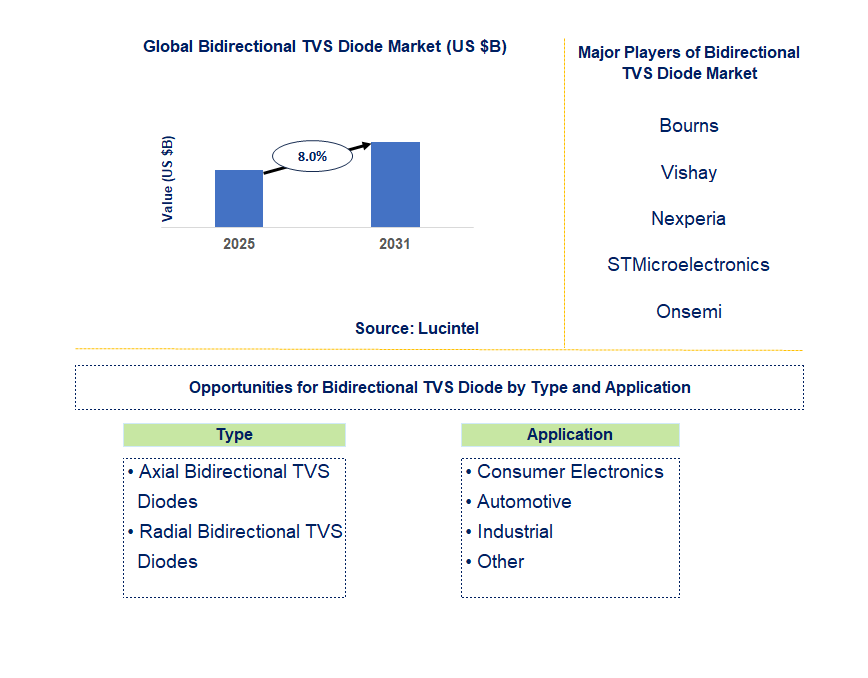
Key data points: The growth forecast = 8.0% annually for the next 7 years. Scroll below to get more insights. This market report covers trends, opportunities and forecasts in bidirectional TVS diode market to 2031 by type (axial bidirectional TVS diodes and radial bidirectional TVS diodes), application (consumer electronics, automotive, industrial, and other), and region (North America, Europe, Asia Pacific, and the Rest of the World)
We'll send your sample report shortly.
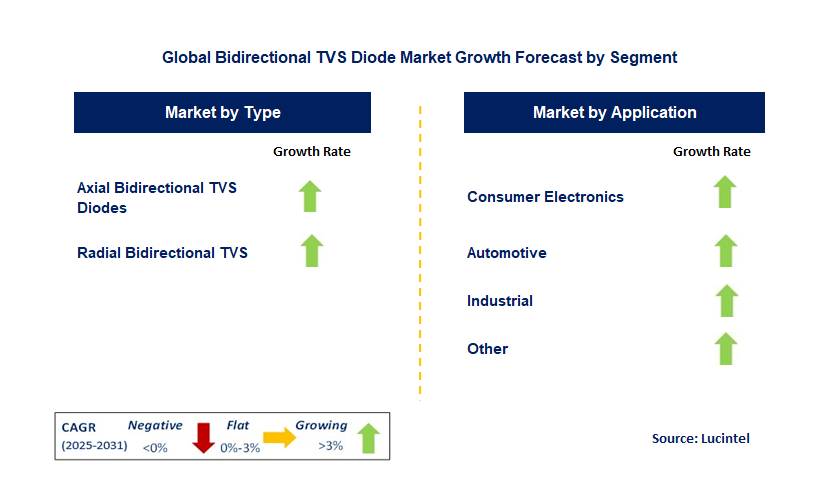
• Lucintel forecasts that, within the type category, radial bidirectional TVS diodes are expected to witness higher growth over the forecast period due to versatile, easier integration, high-performance, and widespread applications.
• Within the application category, consumer electronics will remain the largest segment due to high volume, rapid innovation, and widespread global demand.
• In terms of region, APAC is expected to witness the highest growth over the forecast period due to the rapid adoption of automotive and electronics technologies. Gain valuable insights for your business decisions with our comprehensive 150+ page report. Sample figures with some insights are shown below.
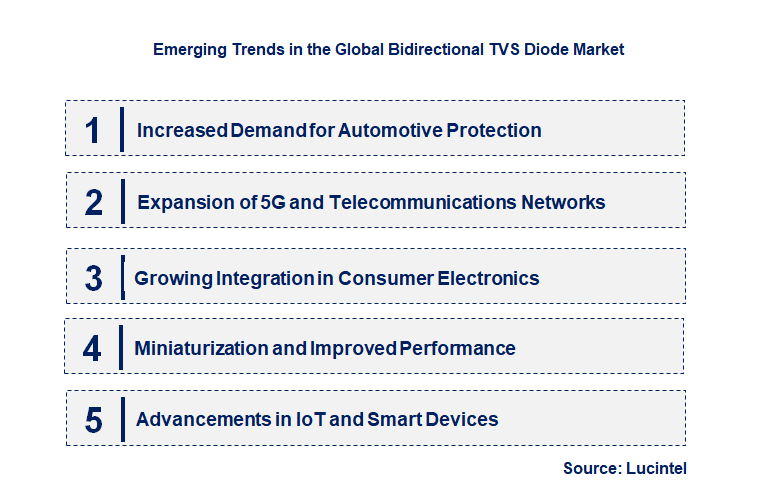
• Increased Demand for Automotive Protection Components: The automotive industry’s rapid evolution, particularly with the rise of electric and autonomous vehicles, is driving the demand for advanced protection components, including bidirectional TVS diodes. These diodes are used to protect onboard electronics from transient voltage spikes that could disrupt critical systems such as infotainment, navigation, and advanced driver assistance systems (ADAS). With growing concerns about vehicle safety, TVS diodes are becoming integral to automotive electronics, especially in electric vehicles, which have more complex electrical systems and are more vulnerable to voltage surges.
• Expansion of 5G and Telecommunications Networks: The global rollout of 5G networks and the growing need for high-speed data transmission are fueling the demand for bidirectional TVS diodes. As 5G technology requires higher frequencies and faster data rates, protecting communication equipment from voltage transients becomes essential. TVS diodes are used to safeguard sensitive components such as antennas, modems, and routers from lightning strikes, electrostatic discharge (ESD), and other transient voltage spikes. The expansion of telecommunications infrastructure worldwide, including in emerging markets, continues to drive market growth.
• Growing Integration in Consumer Electronics: Bidirectional TVS diodes are increasingly being integrated into consumer electronics such as smartphones, tablets, and home appliances. These diodes protect electronic devices from voltage spikes caused by power surges, lightning strikes, or electrical faults. As the electronics market continues to grow, especially in emerging economies, the demand for TVS diodes is expanding, particularly for high-end devices that require sophisticated protection to ensure reliability and longevity. Increased consumer demand for smart devices and wearables will also further boost the need for TVS diodes.
• Miniaturization and Improved Performance: A significant trend in the TVS diode market is the push towards miniaturization and improving performance while maintaining or reducing costs. As electronics become more compact and efficient, the need for smaller, higher-performance TVS diodes that can protect smaller components and devices has risen. Innovations in semiconductor manufacturing processes and the development of new materials are driving these advancements. The miniaturization trend is especially important in industries like consumer electronics, automotive, and medical devices, where space is at a premium.
• Advancements in IoT and Smart Devices: The rapid expansion of the Internet of Things (IoT) is another key driver of the bidirectional TVS diode market. As IoT devices become more widespread in applications such as smart homes, industrial automation, and healthcare, the need for efficient voltage protection solutions increases. TVS diodes play a critical role in safeguarding sensitive IoT components from power surges and electrical faults. With more devices being interconnected and relying on stable power supplies, the demand for bidirectional TVS diodes is expected to grow as part of the broader IoT ecosystem. These emerging trends underscore the expanding role of bidirectional TVS diodes in protecting electronic systems across various industries. As automotive, telecommunications, consumer electronics, and IoT sectors continue to evolve, the demand for TVS diodes will rise, particularly in high-growth regions such as Asia-Pacific. Manufacturers will need to innovate continuously, focusing on miniaturization, cost efficiency, and performance to meet the increasing protection needs of modern electronic systems.
• Growth in the Electric Vehicle (EV) Market: The global increase in electric vehicle (EV) production has significantly impacted the bidirectional TVS diode market. EVs require protection for their sensitive electrical components from voltage spikes, especially in high-power systems like battery management and charging infrastructure. TVS diodes are used extensively in protecting EV electronics, and as EV adoption continues to rise, demand for TVS diodes will further increase, creating growth opportunities in the automotive sector.
• Increased Adoption of 5G Networks: The rollout of 5G networks has led to an increase in demand for bidirectional TVS diodes to protect communication equipment from voltage surges. As the number of connected devices and data traffic increases, so does the need for reliable protection components in telecommunication infrastructure. Bidirectional TVS diodes are essential in safeguarding communication systems that operate in high-speed, high-frequency environments, and as 5G networks continue to expand globally, demand for these diodes will continue to rise.
• Advancements in Semiconductor Technology: Advances in semiconductor technology have led to the development of smaller, more efficient bidirectional TVS diodes. Manufacturers are utilizing new materials and fabrication techniques to produce diodes that offer higher performance in smaller packages, allowing for better protection in compact devices like smartphones, wearables, and IoT sensors. This has made bidirectional TVS diodes more accessible across various industries, contributing to market expansion.
• Regulatory Standards and Safety Requirements: Stricter regulatory standards for electronic products, particularly in automotive and consumer electronics, have pushed manufacturers to use bidirectional TVS diodes to ensure product safety. For instance, automotive safety standards are becoming more stringent, necessitating the integration of protection components in all new vehicles. Similarly, consumer electronics are increasingly required to comply with safety regulations that mandate the use of TVS diodes to prevent damage from power surges.
• Rise of IoT Applications: The rapid expansion of IoT devices has led to an increased need for robust protection solutions. IoT devices are often deployed in outdoor environments or industrial settings, where they are vulnerable to power surges caused by weather conditions, equipment malfunctions, or grid failures. Bidirectional TVS diodes play a key role in safeguarding these devices, and as IoT applications continue to grow, the demand for TVS diodes in this sector is expected to increase significantly. These developments highlight the growing role of bidirectional TVS diodes in protecting electronic systems across multiple sectors. As electric vehicles, 5G networks, IoT devices, and consumer electronics continue to evolve, the need for robust protection solutions will only increase, driving further growth in the market for bidirectional TVS diodes.
• Automotive Sector: The automotive sector, particularly with the rise of electric vehicles (EVs) and autonomous vehicles, represents a significant growth opportunity for bidirectional TVS diodes. As vehicles become more electrified and integrated with complex electronic systems, the need for reliable protection against transient voltages is growing. TVS diodes are used to protect critical systems in vehicles, including infotainment, powertrains, and ADAS. As the automotive industry continues to innovate, the demand for TVS diodes will expand, providing ample opportunities for market growth.
• Telecommunications and 5G Networks: The global expansion of 5G networks presents a key growth opportunity for the bidirectional TVS diode market. These diodes are essential in protecting high-speed communication systems from voltage surges, particularly in critical components like base stations, antennas, and routers. With the increasing deployment of 5G infrastructure worldwide, demand for bidirectional TVS diodes will continue to rise, creating significant opportunities for manufacturers to capitalize on the growing telecommunications market.
• Consumer Electronics: Consumer electronics, including smartphones, wearables, and smart home devices, represent a growing segment for bidirectional TVS diodes. As devices become more connected and complex, the need for protection against voltage spikes and electrostatic discharge (ESD) is becoming more crucial. TVS diodes help ensure that electronic components remain safe from transient voltage events, contributing to device reliability and longevity. With the increasing adoption of smart devices, the demand for bidirectional TVS diodes in this sector will continue to rise.
• Industrial Automation: Industrial automation is another key growth sector for bidirectional TVS diodes. As industries like manufacturing, robotics, and energy production continue to evolve, there is an increasing need for protection solutions for sensitive electronics used in control systems, sensors, and automation equipment. TVS diodes are critical in safeguarding these components from power surges and voltage spikes, ensuring smooth operation in industrial environments. With ongoing advancements in automation technology, the demand for protection solutions like TVS diodes will increase in the coming years.
• Internet of Things (IoT): The growing Internet of Things (IoT) market presents a valuable opportunity for the bidirectional TVS diode industry. IoT devices are deployed across a wide range of applications, from smart homes to industrial IoT systems. These devices are often exposed to power surges and transient voltages that could cause damage. TVS diodes provide an essential layer of protection, and as the IoT market continues to grow, so too will the demand for bidirectional TVS diodes in these applications. These growth opportunities across automotive, telecommunications, consumer electronics, industrial automation, and IoT sectors are contributing to the expansion of the global bidirectional TVS diode market. As industries evolve and require enhanced protection for increasingly sophisticated electronic systems, the demand for TVS diodes will continue to rise, driving innovation and growth in the market.
• Bourns
• Vishay
• Nexperia
• STMicroelectronics
• Onsemi
• Axial Bidirectional TVS Diodes
• Radial Bidirectional TVS Diodes
• Consumer Electronics
• Automotive
• Industrial
• Other
• North America
• Europe
• Asia Pacific
• The Rest of the World
• United States: In the United States, the demand for bidirectional TVS diodes has surged, primarily driven by the need for electronic protection in sectors like automotive, telecommunications, and industrial electronics. Technological advancements in the automotive industry, particularly in electric vehicles (EVs) and autonomous vehicles, have created a strong demand for robust protection solutions for onboard electronic systems. Additionally, the growing adoption of 5G networks and data centers in the U.S. has further expanded the need for TVS diodes to prevent damage from voltage spikes in high-speed communication systems. The market is also being influenced by new regulatory standards that mandate the use of TVS diodes in certain applications.
• China: China has become a significant player in the global TVS diode market, with increasing investments in semiconductor manufacturing and electronic component production. The country’s robust electronics manufacturing industry has driven demand for bidirectional TVS diodes in consumer electronics, automotive electronics, and industrial applications. Furthermore, the growing trend of electric vehicles (EVs) and renewable energy systems in China has further boosted the demand for protection components like TVS diodes. The Chinese government's support for the development of high-tech industries and the implementation of stricter regulations related to electronic component safety is expected to drive continued growth in this market.
• Germany: Germany, a leader in industrial automation, automotive technology, and telecommunications, has witnessed substantial growth in the bidirectional TVS diode market. As a global hub for automotive innovation, particularly with the rise of electric and autonomous vehicles, Germany has seen a rising demand for TVS diodes to protect sensitive electronic systems from transient voltage spikes. The industrial sector's increasing reliance on robotics and automation, as well as the growing emphasis on renewable energy and power systems, has led to a surge in demand for TVS diodes in Germany. Additionally, stricter European Union regulations on electronic device safety are contributing to market expansion.
• India: India's growing electronics industry and increasing adoption of renewable energy sources have contributed to the expansion of the bidirectional TVS diode market. The automotive sector, including both traditional and electric vehicles, is a key driver as manufacturers seek to protect increasingly complex electronic systems from voltage surges. India's expanding telecommunications infrastructure, particularly the rollout of 5G networks, is another factor driving demand. With a focus on enhancing manufacturing capabilities through initiatives like "Make in India," the country is positioning itself as an emerging leader in the global electronics market, with bidirectional TVS diodes playing an important role in product safety.
• Japan: Japan has long been at the forefront of technological advancements, and the demand for bidirectional TVS diodes in the country is primarily driven by sectors such as consumer electronics, automotive, and telecommunications. The growing complexity of electronic systems in electric vehicles, renewable energy solutions, and 5G infrastructure has increased the need for TVS diodes that protect sensitive components from transient voltage. Additionally, Japan's strong regulatory framework for electronics safety ensures that TVS diodes are widely used in various applications. The country continues to innovate in semiconductor technologies, which further supports the growth of the bidirectional TVS diode market.


• Bourns
• Vishay
• Nexperia
• STMicroelectronics
• Onsemi Q5. Which bidirectional TVS diode market segment will be the largest in future? Answer: Lucintel forecasts that, within the type category, radial bidirectional TVS diodes are expected to witness higher growth over the forecast period due to versatile, easier integration, high-performance, and widespread applications. Q6. In bidirectional TVS diode market, which region is expected to be the largest in next 5 years? Answer: In terms of region, APAC is expected to witness the highest growth over the forecast period due to the rapid adoption of automotive and electronics technologies. Q7. Do we receive customization in this report? Answer: Yes, Lucintel provides 10% customization without any additional cost.


Choose a license that fits your team. Instant PDF delivery.
Prices exclude taxes. Instant delivery. Custom licensing available on request.
Market Report · July 24, 2026
Market Report · July 20, 2026
Market Report · July 20, 2026
Trusted partner for strategic intelligence and business growth


Receive a complimentary market analysis tailored to your industry. Our analysts will identify key growth opportunities and competitive dynamics specific to your business.

Market size, growth rate, and key trend analysis for your specific sector.

Top competitor positioning and market share analysis.

Strategic recommendations backed by data-driven insights.
Get curated market intelligence and competitive moves straight to your inbox.
By subscribing, you agree to receive our monthly insights. Unsubscribe anytime.
Receive a complimentary market analysis tailored to your industry. Our analysts will identify key growth opportunities and competitive dynamics specific to your business.
Market size, growth rate, and key trend analysis for your specific sector.
Top competitor positioning and market share analysis.
Strategic recommendations backed by data-driven insights.
Get curated market intelligence, emerging trends, and competitive moves straight to your inbox each month.
By subscribing, you agree to receive our monthly insights. Unsubscribe anytime.
We'll send your sample report shortly.