
Market Report · July 20, 2026

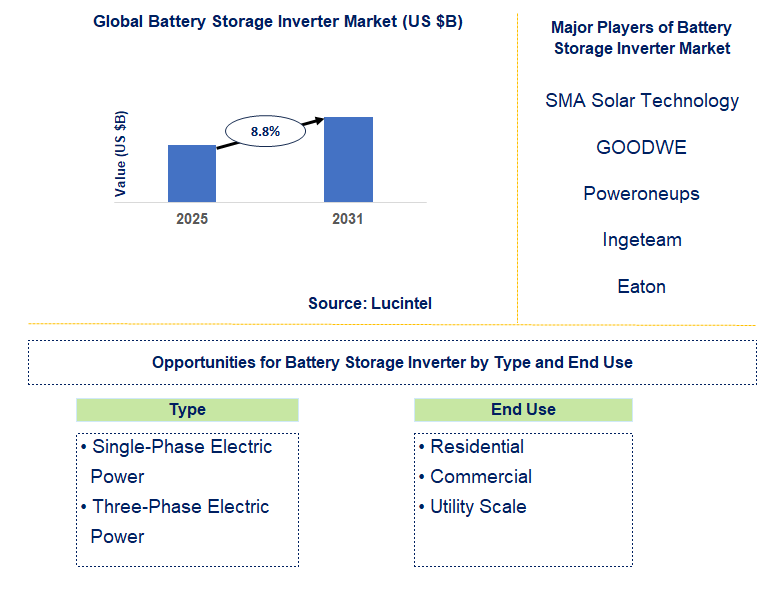
Key data points: The growth forecast = 8.8% annually for the next 7 years. Scroll below to get more insights. This market report covers Trends, opportunities and forecasts in battery storage inverter market to 2031 by type (single-phase electric power and three-phase electric power), end use (residential, commercial, and utility scale ), and region (North America, Europe, Asia Pacific, and the Rest of the World)
We'll send your sample report shortly.
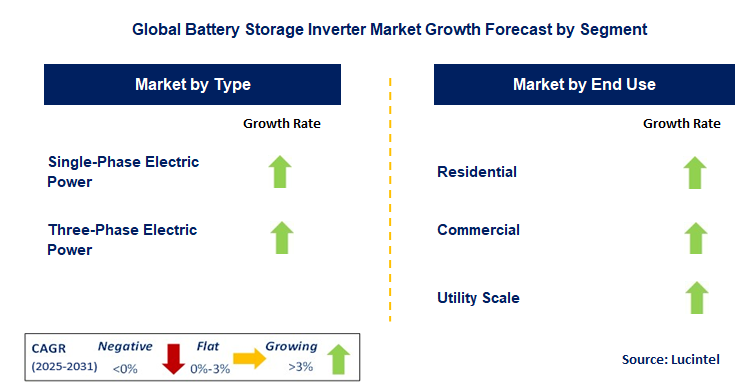
• Lucintel forecasts that, within the type category, three-phase electric power is expected to witness higher growth over the forecast period.
• Within the end use category, utility scale is expected to witness the highest growth.
• In terms of region, APAC is expected to witness the highest growth over the forecast period.
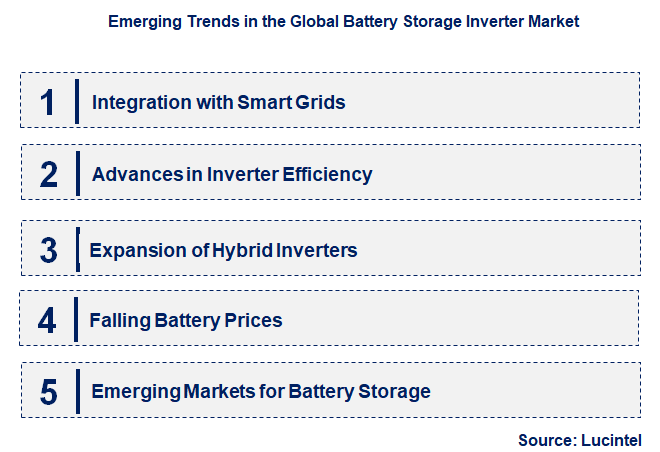
• Integration with Smart Grids: Smart grid integration enables battery storage systems to interact dynamically with power grids. Through advanced inverters, the battery storage system becomes more efficient at balancing energy supply and demand. The systems facilitate two-way communication between battery storage and grids, supporting real-time energy management, enhanced grid stability, and more efficient load distribution. The integration enhances the overall efficiency of energy systems and guarantees dependable power supply even during power outages.
• Advances in Inverter Efficiency: One of the most prominent trends in the battery storage inverter market is the ongoing development of inverter efficiency. Advanced inverters are more and more able to extract a greater proportion of energy in batteries and put it to practical use, limiting losses and making the overall system more efficient. As technology in inverters continues to improve, producers are concentrating on optimizing the process of energy conversion in order to minimize the cost of operation to consumers and the longevity of both inverters and batteries.
• Expansion of Hybrid Inverters: Hybrid inverters, which combine solar inverters and battery storage inverters in a single product, are increasing their popularity in the market. These inverters minimize installation complexity and costs as they combine various systems into one product. Hybrid inverters have more advanced energy management features such as load shifting and peak shaving making them suitable for residential and commercial applications, and this trend is likely to prevail as the demand for both solar and energy storage solutions increases.
• Falling Battery Prices: One of the key trends that have an impact on the battery storage inverter market is the falling cost of battery storage systems, especially lithium-ion batteries. As battery prices decline, energy storage becomes more economical for household and commercial consumers. This is opening the door for increased access to energy storage systems, fueling market expansion. With decreasing costs of batteries, the economic viability of combining battery storage with renewable energy systems also rises, further driving the shift toward clean energy technologies.
• Emerging Markets for Battery Storage: Developed countries have pioneered the use of battery storage systems, but emerging economies in Africa and Asia are experiencing an increase in the demand for energy storage technology. This is attributed to the requirement for access to electricity and the need for off-grid and rural electrification. In these regions, affordable storage technologies are being created to enhance energy access and decarbonize, driving the global expansion of the Battery Storage Inverter market. These new trends within the battery storage inverter market are transforming the energy storage landscape. The inclusion of smart grids, inverter efficiency improvements, expansion of hybrid inverters, decreasing battery costs, and development of new markets are all contributing to the implementation of energy storage systems. With these trends emerging, the global battery storage inverter market is expected to observe higher adoption levels, leading towards a more resilient and sustainable future for energy.
• Inverter Efficiency Improvement: Modern development in inverter efficiency has also made the system more energy efficient. Inverters today utilize more energy stored in batteries as useful power and less as wastage, improving the overall lifetime of the system. This is accomplished with better materials and algorithms used in the software, improving the process of energy conversion to make it as efficient as possible. This is beneficial to the consumer, saving them energy cost and making their energy storage unit more dependable.
• Growth in Hybrid Inverter Systems: Hybrid inverters, which provide both solar and battery storage capabilities, have been gaining popularity. Hybrid inverters provide combined solutions that are easier to install and maintain, in contrast to standalone separate inverters for solar and battery systems. Hybrid inverters are especially suited for residential and commercial applications where space and cost efficiency are vital. This has made it easier to integrate renewable energy with energy storage, propelling the market.
• Smart Inverter Expansion: Smart inverters, which possess advanced features like grid communication, remote monitoring, and automated energy management, are becoming the norm in the market. These inverters enable users to maximize the efficiency of their energy systems by regulating energy flow and tracking usage patterns. The growth of smart inverters follows the wider trend of smart grid integration, where the energy storage system is a key component of grid stabilization and energy management.
• Policy and Regulatory Support: Government in important markets such as the United States, China, and Germany have implemented positive policies that favor the uptake of battery storage systems. Such policies entail tax rebates, grants, and renewable energy goals that help lower the price of energy storage solutions. Regulation support is equally important to guarantee that emerging energy storage technologies have safety and performance standards, boost innovation, and propel market development.
• Enhanced Industrial Investment: Influenced by regulations, there is an escalating influx of industrial investment in battery storage and inverter technology. Organizations are channeling more investment in research and development to develop these systems towards increased efficiency and cost affordability. Increased partnerships among inverter providers and energy storage companies are stimulating the innovation in combined solutions that will contribute towards additional market development. Recent advancements in the battery storage inverter market, like improvement in inverter efficiency, expansion of hybrid systems, increase in smart inverters, government support, and augmented industrial investment, are changing the game. These advancements are fueling the integration of energy storage systems across the world and propelling the shift towards green energy solutions.
• Residential Energy Storage: Residential is a huge opportunity for growth, fueled by the growth of solar energy systems in the home and growing consumer interest in energy self-sufficiency. Homeowners are increasingly using battery storage systems to save solar energy for future use, lowering the cost of electricity and improving energy security. Residential energy storage market will grow even more as the cost comes down and more incentives are announced.
• Industrial and Commercial Use: The industrial and commercial market are also ready to grow, with companies looking to cut energy costs. These companies can save money on electricity bills through battery storage inverters by shifting energy usage from peak to off-peak hours. Warehouse and factory settings are becoming common places where commercial-scale installations have battery storage included to enhance energy efficiency and adopt renewable energy sources.
• Electric Vehicle Integration: As the EV market expands, there is ample scope for battery storage inverters to be integrated into EV charging infrastructure. Battery storage can control the energy draw from EV chargers, softening the grid and allowing renewable energy sources to be used more efficiently. V2G technology, which enables EV batteries to feed power back to the grid, also provides further support to integrate energy storage into the transport sector.
• Off-Grid and Rural Uses: In off-grid regions, especially in the developing world, battery storage inverters offer a cost-effective and secure means of electricity access. Off-grid locations typically do not have steady grid infrastructure, so battery storage becomes a viable option for rural settlements and isolated areas. The declining cost of battery storage technology is creating new business opportunities in off-grid markets, providing access to clean, reliable power.
• Renewable Integration and Grid Stabilization: The battery storage inverters serve as a key function for grid stabilization by regulating the fluctuations between energy supply and demand. With increasing integration of renewable sources into national grids, battery storage systems can be used to smooth variability with backup power during low renewable output periods. This is a large opportunity for large-scale battery storage system development, especially in those countries with ambitious renewable energy targets. The battery storage inverter market offers varied growth opportunities across a number of applications such as residential storage, commercial energy management, EV integration, off-grid solutions, and grid stabilization. With the increasing demand for clean energy solutions, these opportunities will keep fueling innovation and market growth.
• SMA Solar Technology
• GOODWE
• Poweroneups
• Ingeteam
• Eaton
• SUNGROW
• SolaX Power
• Sensata Technologies
• Guangdong Zhicheng Champion Group
• KACO new energy
• Single-Phase Electric Power
• Three-Phase Electric Power
• Residential
• Commercial
• Utility Scale
• North America
• Europe
• Asia Pacific
• The Rest of the World
• United States: The U.S. market is experiencing robust growth fueled by growing demand for residential solar energy systems and large-scale grid integration projects. The federal government has launched a number of incentives, such as tax credits, to encourage the use of battery storage systems. Advances in smart inverters, like higher efficiency and enhanced monitoring capabilities, are also fueling market growth. Further, advances in energy storage capacity are driving mass adoption of residential battery storage systems.
• China: China still leads the world in Battery Storage Inverter demand, motivated largely by the aggressive renewable energy policies. One of the leading manufacturers of solar inverters worldwide, China is driving the global growth of high-efficiency and cost-effective battery storage inverters. Government promotion of energy storage initiatives in China and the rising development of electric vehicle infrastructure have accelerated the market demand for comprehensive battery storage systems. China's market is also influenced by rising industrial investments in clean energy technologies and developments in grid-connected storage systems.
• Germany: Germany is still one of the leaders in the battery storage inverter market, thanks to its ambitious energy transition strategy, or "Evergreened." Germany's government remains a supporter of both commercial and residential battery storage systems, which contribute to grid stability and energy sovereignty. Additionally, advancements in hybrid inverters that blend solar and battery storage systems are propelling more growth. The emphasis is on increasing the penetration of renewable energy sources to provide stability for the national grid.
• India: In India, the market for battery storage inverters is growing at a fast pace, largely because of the country's growing emphasis on solar power and energy access in rural regions. The government's ambitious renewable energy policies, including 500 GW of non-fossil fuel capacity by 2030, are driving demand for energy storage systems. Also, advances in cost-efficient storage solutions are supporting the growth of the market, with an emphasis on minimizing the exorbitant cost of battery storage for businesses and consumers.
• Japan: Japan is leading quite aggressively in the market for battery storage inverter, especially with the advanced technology industry as well as the emphasis on energy resilience. Its penchant for energy storage following the 2011 Fukushima nuclear meltdown has seen a rise in energy storage adoption in both commercial and residential uses. The strong push by Japan towards energy storage technologies like advanced lithium-ion battery inverters is contributing to grid stability and more use of renewable energy.


• SMA Solar Technology
• GOODWE
• Poweroneups
• Ingeteam
• Eaton
• SUNGROW
• SolaX Power
• Sensata Technologies
• Guangdong Zhicheng Champion Group
• KACO new energy Q5. Which battery storage inverter market segment will be the largest in future? Answer: Lucintel forecasts that, within the type category, three-phase electric power is expected to witness higher growth over the forecast period. Q6. In battery storage inverter market, which region is expected to be the largest in next 5 years? Answer: In terms of region, APAC is expected to witness the highest growth over the forecast period. Q7. Do we receive customization in this report? Answer: Yes, Lucintel provides 10% customization without any additional cost.


Choose a license that fits your team. Instant PDF delivery.
Prices exclude taxes. Instant delivery. Custom licensing available on request.
Market Report · July 20, 2026
Market Report · July 20, 2026
Market Report · July 20, 2026
Trusted partner for strategic intelligence and business growth


Receive a complimentary market analysis tailored to your industry. Our analysts will identify key growth opportunities and competitive dynamics specific to your business.

Market size, growth rate, and key trend analysis for your specific sector.

Top competitor positioning and market share analysis.

Strategic recommendations backed by data-driven insights.
Get curated market intelligence and competitive moves straight to your inbox.
By subscribing, you agree to receive our monthly insights. Unsubscribe anytime.
Receive a complimentary market analysis tailored to your industry. Our analysts will identify key growth opportunities and competitive dynamics specific to your business.
Market size, growth rate, and key trend analysis for your specific sector.
Top competitor positioning and market share analysis.
Strategic recommendations backed by data-driven insights.
Get curated market intelligence, emerging trends, and competitive moves straight to your inbox each month.
By subscribing, you agree to receive our monthly insights. Unsubscribe anytime.
We'll send your sample report shortly.