
Market Report · May 18, 2026

This market report covers trends, opportunities, and forecasts in the global battery non destructive testing market to 2031 by technology (large and small & medium), application (mechanical engineering, automotive industry, aerospace, oil and gas, and others), and region (North America, Europe, Asia Pacific, and the Rest of the World)
We'll send your sample report shortly.
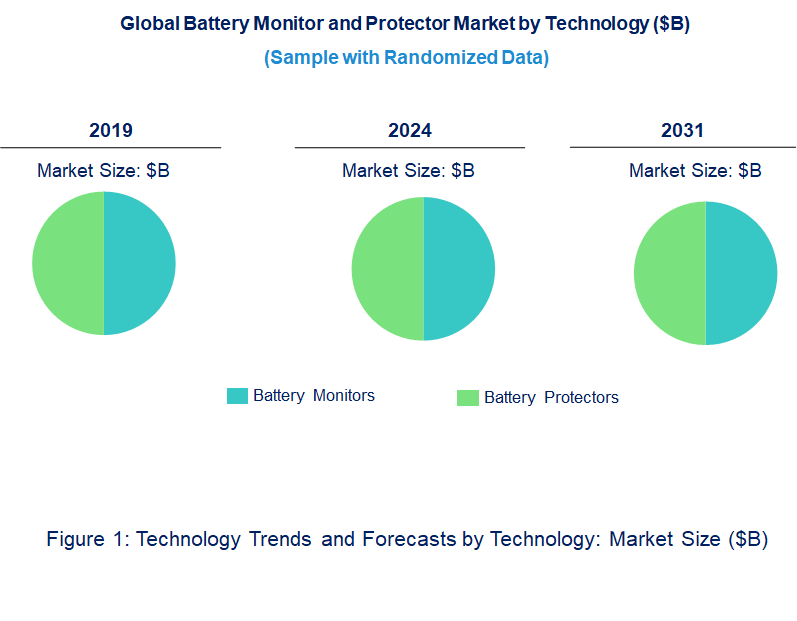
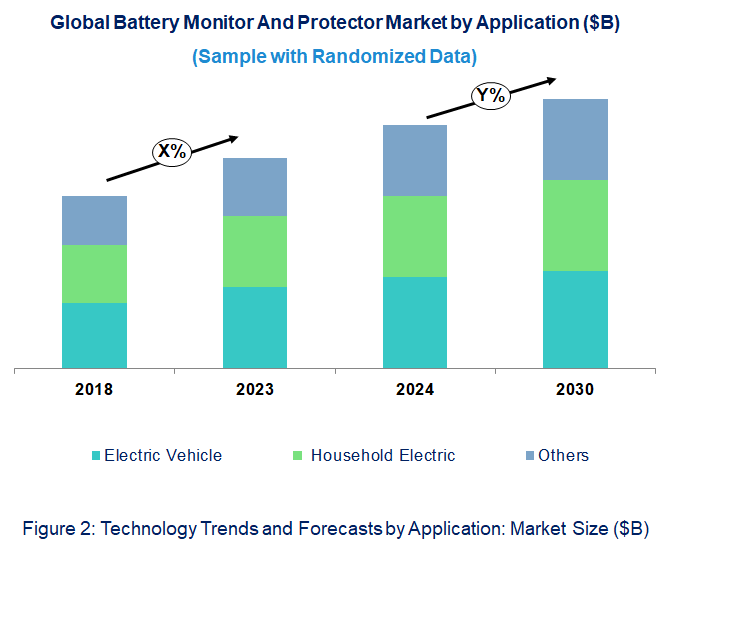
• Integration of Artificial Intelligence (AI) and Machine Learning (ML): The use of AI and ML in battery NDT allows for real-time data analysis, anomaly detection, and predictive maintenance. These technologies enhance the efficiency and accuracy of testing by automatically identifying issues that might be missed by traditional methods, leading to reduced downtime and improved battery performance.
• Increased Use of Eddy Current Testing: Eddy current testing is gaining popularity due to its non-invasive nature and ability to detect defects such as cracks or corrosion in batteries. This method allows for faster inspections, offering higher precision and reducing the need for costly battery disassembly, thus making it an ideal choice for industries focusing on safety.
• Thermal Imaging and Infrared Testing: Thermal imaging and infrared testing are becoming increasingly important in detecting temperature anomalies in batteries, which can indicate internal defects or malfunctions. This technology allows for quick, non-invasive analysis, providing critical data to prevent overheating and optimize battery lifespan.
• Portable and In-Situ Testing Systems: There is a growing demand for portable NDT systems that can perform in-situ testing on batteries in real-time, eliminating the need for costly and time-consuming battery removal for testing. This trend is particularly useful in automotive and industrial applications where battery performance monitoring is crucial for maintaining operational efficiency.
• Battery Testing for Electric Vehicles (EVs): As the electric vehicle market continues to grow, battery NDT technology is becoming increasingly important for ensuring the safety, performance, and longevity of EV batteries. The need for regular inspections to assess battery health, detect any internal damage, and predict failures is driving demand for advanced NDT technologies. These emerging trends in the Battery NDT Market are significantly transforming the way batteries are tested, offering faster, more accurate, and cost-effective solutions for industries relying on high-performance batteries. The integration of AI, machine learning, and advanced testing methods is improving the reliability and safety of battery systems, enhancing their performance, and supporting the continued growth of industries like automotive, aerospace, and energy.
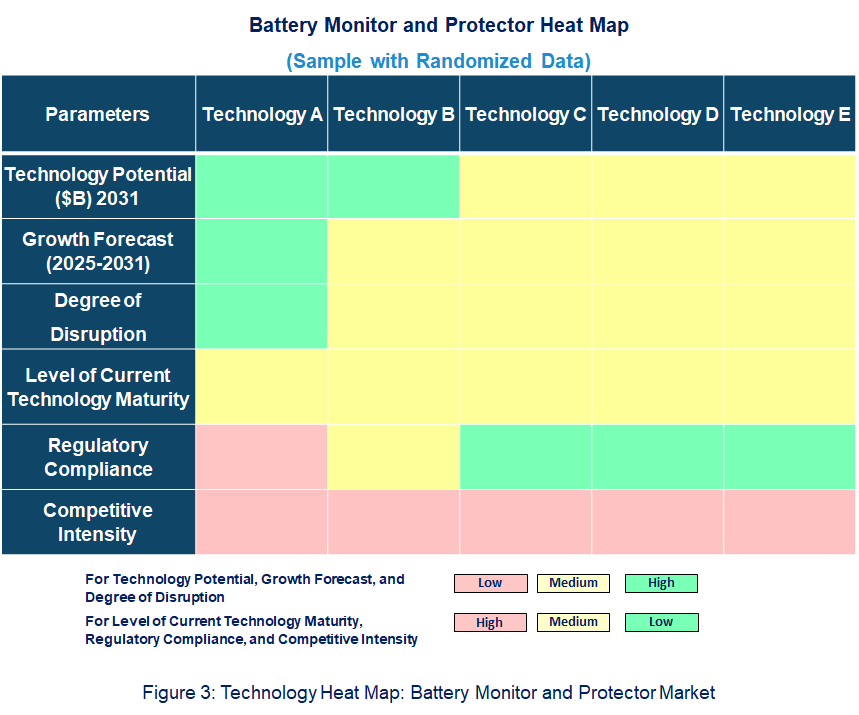
• Potential in Technology: The technology potential of battery non-destructive testing (NDT) is significant, driven by the increasing demand for battery safety, performance, and longevity across various industries, including automotive, aerospace, and energy. Battery NDT technologies, such as X-ray, ultrasonic testing, eddy current testing, and infrared thermography, hold the potential to enhance the detection of internal defects, monitor battery health in real-time, and predict failures before they occur. This is particularly crucial for applications in electric vehicles (EVs), where battery performance is critical to overall safety and efficiency.
• Degree of Disruption: The degree of disruption within the Battery NDT market is moderate to high. Advanced NDT methods like AI-based analysis and in-situ testing are transforming traditional inspection processes by offering faster, more accurate results, significantly reducing the need for manual inspection. These disruptions are expected to replace conventional testing methods over time, enabling more efficient and reliable battery management.
• Current Technology Maturity Level: The level of maturity varies across different NDT technologies. Conventional methods such as X-ray and ultrasonic testing are well-established, while newer techniques, including AI-powered analysis and portable in-situ systems, are still evolving.
• Regulatory Compliance: Regulatory compliance is critical, especially in high-risk sectors such as automotive and aerospace. Battery NDT technologies must comply with industry-specific standards like ISO 9001, FAA regulations, and other safety standards to ensure reliability and safety in critical applications.
• Airline Support Baltic: Airline Support Baltic has expanded its NDT services to include advanced battery testing solutions for the aerospace sector. Their focus on improving battery safety and reliability through precision testing methods aims to enhance the performance and longevity of aviation batteries, crucial for the safety of electric aircraft and drones.
• DNV: DNV has been investing in the development of battery certification and testing standards. Their latest advancements in NDT for battery systems aim to provide better safety assessments and predictive maintenance solutions. DNV’s focus on regulatory compliance and standards enhances the reliability of battery systems in high-risk industries like automotive and aerospace.
• Excillum: Excillum has introduced high-resolution X-ray imaging systems for the analysis of lithium-ion batteries. Their cutting-edge technology provides in-depth internal battery structure analysis, allowing for early detection of defects such as cracks, voids, and internal short circuits, improving the safety and reliability of batteries used in electric vehicles and consumer electronics.
• Fraunhofer IKTS: Fraunhofer IKTS has made significant strides in developing ultrasonic and thermographic NDT methods for battery testing. Their research focuses on improving non-invasive inspection methods for high-performance battery systems, offering enhanced diagnostic capabilities for applications in energy storage and electric vehicle industries.
• Intertek: Intertek has introduced advanced eddy current testing and X-ray inspection technologies for the battery sector. These developments enable faster and more reliable testing of battery integrity, supporting battery manufacturers in improving quality control and ensuring the safety of their products for industries such as automotive and aerospace.
• Kratos Analytical: Kratos Analytical has integrated advanced surface analysis technologies with NDT methods for battery testing. Their focus on surface characterization provides deeper insights into battery material degradation, enabling more accurate predictions of battery life cycles, especially in the automotive and renewable energy sectors.
• Novonix: Novonix has been advancing its NDT solutions for battery testing by incorporating high-precision diagnostics and electrochemical analysis tools. Their cutting-edge technology allows for the detailed assessment of battery cell performance, driving the development of high-performance batteries for electric vehicles and grid storage applications. These developments reflect the growing importance of NDT in ensuring battery safety, efficiency, and longevity. As key players continue to innovate and enhance their testing capabilities, the Battery NDT Market is set to play a critical role in the advancement of energy storage systems, especially in electric vehicles and renewable energy applications.
• Rising Demand for Electric Vehicles (EVs): As electric vehicle adoption increases, so does the need for reliable, long-lasting batteries. NDT ensures that batteries meet safety standards, improving EV reliability and reducing potential risks associated with battery failures, which boosts the market for NDT solutions.
• Expansion of Renewable Energy Systems: The growing reliance on renewable energy and energy storage solutions requires high-performance batteries. NDT helps in ensuring that batteries used in solar or wind energy storage systems maintain their capacity and performance over time, driving demand for accurate and reliable testing technologies.
• Technological Advancements in Battery Systems: As battery technology continues to evolve, there is a need for advanced NDT methods that can handle more complex battery designs and materials. The development of better NDT technologies, such as X-ray and ultrasonic testing, creates opportunities for innovation in the market.
• Safety Regulations and Standards: With stricter safety regulations and certification requirements for battery systems, industries like automotive and aerospace are adopting NDT solutions to meet these standards. This regulatory push is increasing demand for testing services that ensure batteries meet high safety and reliability criteria.
• Cost Reduction in NDT Technologies: As the costs associated with NDT technology decrease, more battery manufacturers can adopt these testing solutions, driving market growth. Lower costs make it easier for smaller manufacturers and industries to implement effective NDT strategies, widening the overall market. Challenges:
• High Initial Investment Costs: The cost of implementing advanced NDT technologies can be prohibitive for smaller battery manufacturers, limiting the widespread adoption of these solutions. High setup costs may restrict the growth of the market, particularly in emerging regions.
• Complexity of Battery Structures: Modern battery designs are becoming increasingly complex, making it challenging to effectively apply NDT methods. The advanced technology required to inspect next-generation batteries, such as solid-state batteries, can strain existing NDT methods, creating barriers to adoption.
• Limited Standardization: The lack of industry-wide standardization for battery testing techniques and metrics can slow down market growth. A lack of clear, universally accepted guidelines hampers the development of consistent testing protocols, leading to discrepancies in results and lower reliability. The Battery NDT Market is expanding rapidly, driven by the growing demand for electric vehicles, renewable energy storage, and stringent safety standards. Technological advancements and the reduction in NDT costs are key factors that are helping to push the market forward. However, challenges such as high initial costs and the complexity of modern battery designs must be overcome to fully realize the market's potential. As demand for safer, more efficient
• Airline Support Baltic
• DNV
• Excillum
• Fraunhofer IKTS
• Intertek
• Kratos Analytical
• Technology Readiness by Technology Type (Large, Small, and Medium) for battery non-destructive testing market: Large technologies like X-ray and computed tomography are mature and widely used for high-resolution inspections in aerospace and automotive. They are regulatory-compliant but costly. Small and medium technologies, such as ultrasonic and acoustic emission testing, are more adaptable and gaining traction due to lower costs. These technologies are ready for widespread integration but may face challenges in meeting high-end quality standards. Their adoption is expected to grow in applications like electric vehicles and energy storage.
• Competitive Intensity and Regulatory Compliance of Different Technologies (Large, Small, and Medium) for battery non-destructive testing market: Competitive intensity is high across all technology types. Large systems, such as X-ray and CT, dominate the high-end testing market, while smaller technologies like ultrasonic testing face competition from several vendors. Regulatory compliance is critical for large systems, especially in regulated industries like automotive and aerospace. Smaller systems also require safety and operational standards, but face less stringent regulations. Both large and small systems must comply with safety protocols like ISO and FAA, particularly for critical applications.
• Disruption Potential of Different Technologies (Large, Small, and Medium) for battery non-destructive testing market: The disruption potential varies across technology scales. Large technologies like industrial X-ray and computed tomography offer high precision but are costly, limiting adoption. Small and medium-sized solutions, such as ultrasonic testing and acoustic emission, are cost-effective and flexible, providing reliable testing. These smaller technologies could disrupt the market by offering real-time and on-site testing, making NDT more accessible. However, large technologies still dominate in high-resolution testing. Small and medium systems are expected to drive growth and innovation in the market.
• Large
• Small and Medium
• Mechanical Engineering
• Automotive Industry
• Aerospace
• Oil and Gas
• Others
• North America
• Europe
• Asia Pacific
• The Rest of the World
• Latest Developments and Innovations in the Battery Non Destructive Testing Technologies
• Companies / Ecosystems
• Strategic Opportunities by Technology Type


Choose a license that fits your team. Instant PDF delivery.
Prices exclude taxes. Instant delivery. Custom licensing available on request.
Market Report · May 18, 2026
Market Report · May 18, 2026
Market Report · May 18, 2026
Trusted partner for strategic intelligence and business growth


Receive a complimentary market analysis tailored to your industry. Our analysts will identify key growth opportunities and competitive dynamics specific to your business.

Market size, growth rate, and key trend analysis for your specific sector.

Top competitor positioning and market share analysis.

Strategic recommendations backed by data-driven insights.
Get curated market intelligence and competitive moves straight to your inbox.
By subscribing, you agree to receive our monthly insights. Unsubscribe anytime.
Receive a complimentary market analysis tailored to your industry. Our analysts will identify key growth opportunities and competitive dynamics specific to your business.
Market size, growth rate, and key trend analysis for your specific sector.
Top competitor positioning and market share analysis.
Strategic recommendations backed by data-driven insights.
Get curated market intelligence, emerging trends, and competitive moves straight to your inbox each month.
By subscribing, you agree to receive our monthly insights. Unsubscribe anytime.
We'll send your sample report shortly.