
Market Report · July 24, 2026

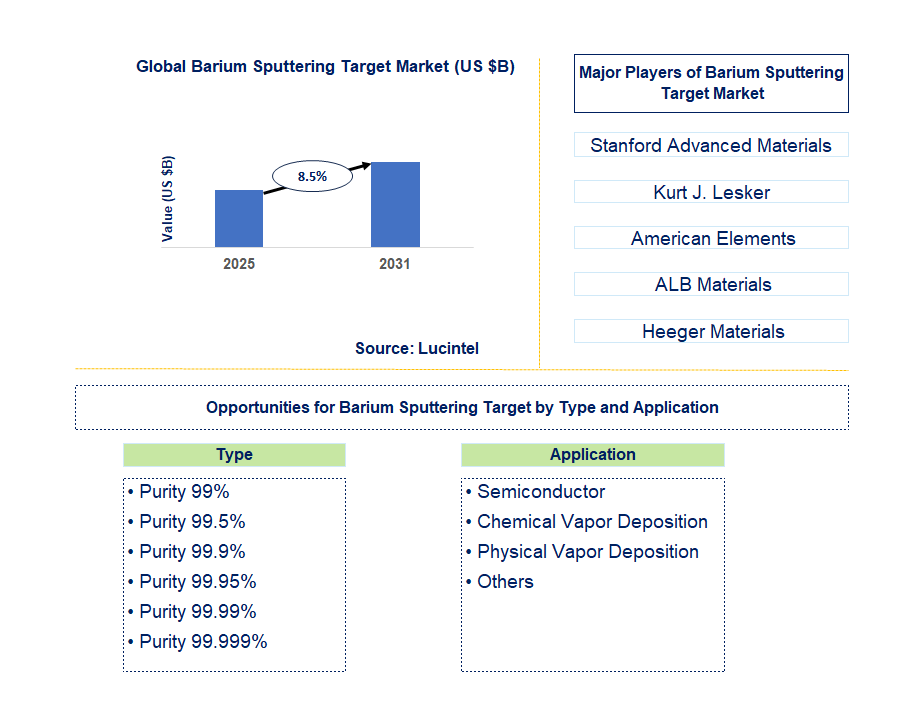
Key data points: The growth forecast = 8.5% annually for the next 7 years. Scroll below to get more insights. This market report covers Trends, opportunity and forecast in barium sputtering target market to 2031 by type (purity 99%, purity 99.5%, purity 99.9%, purity 99.95%, purity 99.99%, and purity 99.999%), application (semiconductor, chemical vapor deposition, physical vapor deposition, and others), and region (North America, Europe, Asia Pacific, and the Rest of the World)
We'll send your sample report shortly.
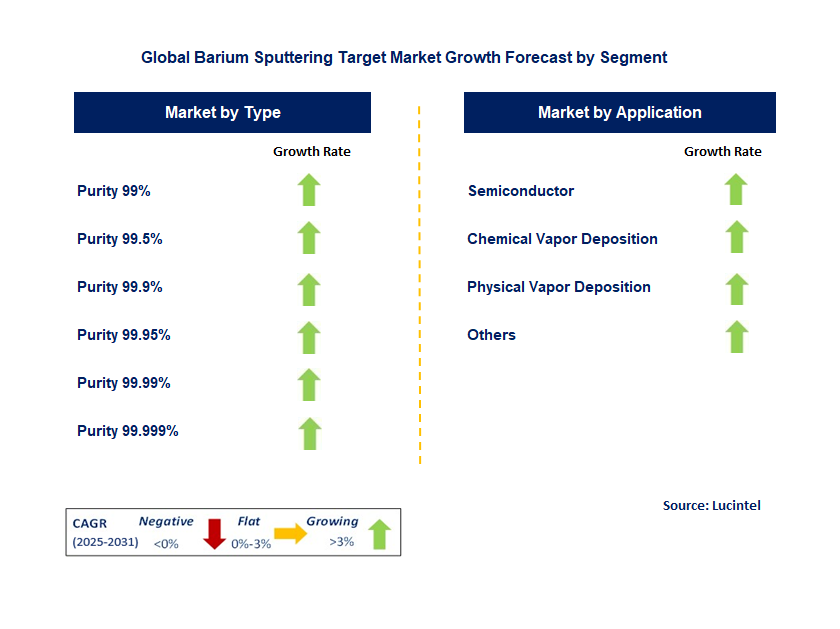
• Lucintel forecasts that, within the type category, purity 99.9% is expected to witness the highest growth over the forecast period due to the required performance specifications without the higher costs associated with ultra-pure materials.
• Within the application category, semiconductor is expected to witness the highest growth due to increasing need for miniaturized, high-performance component.
• In terms of region, APAC is expected to witness the highest growth over the forecast period due to semiconductor, solar, optical industries' dominance. Gain valuable insights for your business decisions with our comprehensive 150+ page report. Sample figures with some insights are shown below.
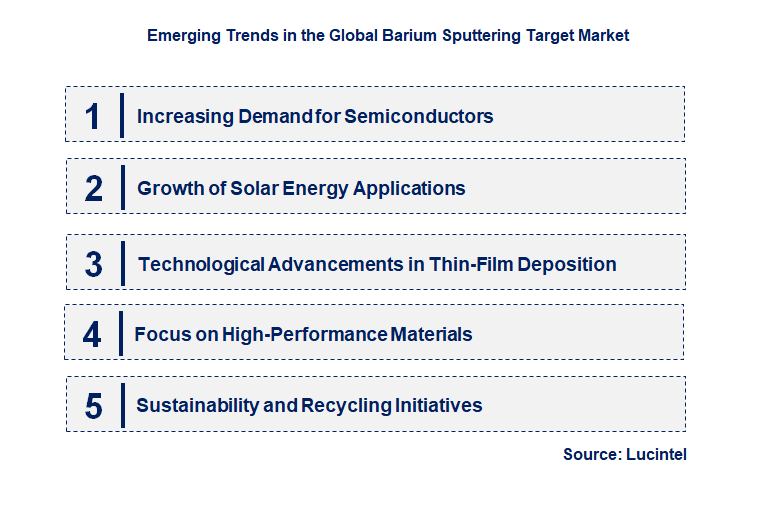
• Increasing Demand for Semiconductors: The rising demand for semiconductors, especially in consumer electronics, telecommunications, and IoT applications, is one of the primary factors driving the need for barium sputtering targets. As semiconductor devices become smaller, faster, and more efficient, the demand for high-quality thin films in semiconductor fabrication is growing. This requires the use of barium sputtering targets to create thin-film layers for transistors, capacitors, and other semiconductor components.
• Growth of Solar Energy Applications: With the global shift toward renewable energy, the demand for thin-film photovoltaic (PV) cells is increasing, and barium sputtering targets are essential in their production. Barium-based materials are used in creating thin films for PV cells, which offer a cost-effective solution for solar energy generation. This trend is being further accelerated by government incentives and the growing adoption of green technologies, positioning solar power as a key driver for the barium sputtering target market.
• Technological Advancements in Thin-Film Deposition: Ongoing innovations in sputtering technology and thin-film deposition processes are driving the demand for higher-purity barium sputtering targets. New deposition methods are allowing manufacturers to produce more efficient, uniform, and high-quality thin films in a variety of applications, including semiconductors, optics, and solar energy. These advancements are making barium sputtering targets more effective in producing high-performance materials for modern electronic devices and renewable energy systems.
• Focus on High-Performance Materials: As industries continue to demand high-performance electronic devices and energy-efficient solutions, the need for high-quality barium sputtering targets is increasing. Research into materials science is leading to the development of more advanced barium-based materials with improved purity and performance. These high-performance materials are essential for creating thinner, more efficient films that improve the functionality and reliability of devices in sectors like telecommunications, aerospace, and consumer electronics.
• Sustainability and Recycling Initiatives: As the global economy focuses on sustainability, there is an increased push to recycle and reuse materials like barium in sputtering targets. Manufacturers are exploring ways to improve the recycling of barium sputtering targets, reducing the environmental impact of their production and promoting a circular economy. This trend is expected to grow as environmental regulations tighten and industries look for more sustainable solutions in the production of electronic devices and renewable energy systems. These emerging trends rising semiconductor demand, growth in solar energy applications, technological advancements in thin-film deposition, focus on high-performance materials, and sustainability efforts are reshaping the barium sputtering target market. As industries demand more advanced materials for electronic, energy, and industrial applications, these trends will continue to drive market growth and innovation in the coming years.
• Expansion in Semiconductor Industry: The semiconductor industry is a major consumer of barium sputtering targets, with increasing demand for thin-film deposition in microelectronics. As the push for miniaturization and higher performance in electronic devices grows, barium sputtering targets are becoming more critical for the production of semiconductors. Advances in semiconductor technology, such as the development of 5G and IoT devices, are driving the need for these materials.
• Advancements in Thin-Film Photovoltaics: The demand for barium sputtering targets in thin-film photovoltaics is growing rapidly as more countries invest in solar energy. Barium sputtering targets are essential in the production of thin-film solar cells, which are gaining popularity due to their cost-effectiveness and efficiency in energy conversion. Innovations in PV technology are increasing the demand for these targets, positioning them as a key component in the renewable energy sector.
• Increase in R&D Investment: Research and development in materials science have led to the creation of high-purity barium sputtering targets, improving their efficiency and application range. Higher-quality targets are essential for creating high-performance thin films used in a variety of industries, including electronics, telecommunications, and solar energy. The increase in R&D investment is fostering innovations that are expanding the market for barium sputtering targets.
• Growth in Renewable Energy Markets: The global shift toward renewable energy sources, particularly solar and wind power, has driven the demand for barium sputtering targets used in solar cell production. As countries adopt green energy solutions, the need for thin-film PV cells is increasing, boosting the demand for barium-based materials. This development is part of a broader trend toward sustainable technologies and energy-efficient solutions.
• Sustainability Efforts in Manufacturing: There is growing interest in making the production of barium sputtering targets more sustainable. Manufacturers are exploring ways to reduce waste, improve recycling processes, and lower the environmental impact of barium sputtering target production. These efforts are aligned with the broader push for sustainability in the electronics and renewable energy sectors. These developments growth in the semiconductor industry, advancements in thin-film photovoltaics, increased R&D investment, growth in renewable energy markets, and sustainability efforts are shaping the future of the global barium sputtering target market. These factors are expected to drive innovation and growth in the industry, positioning barium sputtering targets as a critical component in the production of advanced electronic devices and renewable energy solutions.
• Semiconductor Industry: The growing demand for semiconductors presents a major opportunity for barium sputtering target manufacturers. As semiconductor fabrication becomes more complex and devices become smaller, the need for high-purity sputtering targets increases. Barium sputtering targets are used in the production of thin films for semiconductor components like transistors, capacitors, and resistors, making this a lucrative market segment.
• Solar Energy Applications: The expansion of the solar energy market presents a significant growth opportunity for barium sputtering targets. Thin-film photovoltaics, which use barium-based materials in their production, are gaining popularity due to their cost-effectiveness and efficiency. As countries invest more in renewable energy solutions, the demand for barium sputtering targets in solar energy production is expected to increase significantly.
• Consumer Electronics Market: The increasing demand for smaller, faster, and more efficient consumer electronics is driving the need for barium sputtering targets. These targets are used in the production of thin films for components like displays, capacitors, and batteries. As the consumer electronics market continues to grow, particularly in emerging economies, the demand for barium sputtering targets will likely rise.
• Optical Coatings: Barium sputtering targets are essential in the production of thin films for optical coatings, which are used in applications such as lenses, mirrors, and display screens. The growing demand for advanced optical devices, particularly in the telecommunications and defense industries, offers a significant growth opportunity for barium sputtering target manufacturers.
• Recycling and Sustainability: As sustainability becomes a top priority, the recycling of barium sputtering targets is gaining attention. By improving recycling processes and reducing waste, manufacturers can meet the growing demand for sustainable materials while reducing the environmental impact of their production. This opportunity aligns with the broader shift toward circular economies and sustainable manufacturing practices. The barium sputtering target market offers numerous growth opportunities across various applications, including semiconductors, solar energy, consumer electronics, optical coatings, and sustainability initiatives. By capitalizing on these opportunities, manufacturers can position themselves for success in the growing market for advanced materials used in electronic, energy, and optical applications.
• Stanford Advanced Materials
• Kurt J. Lesker
• American Elements
• ALB Materials
• Heeger Materials
• Purity 99%
• Purity 99.5%
• Purity 99.9%
• Purity 99.95%
• Purity 99.99%
• Purity 99.999%
• Semiconductor
• Chemical Vapor Deposition
• Physical Vapor Deposition
• Others
• North America
• Europe
• Asia Pacific
• The Rest of the World
• United States: In the United States, the barium sputtering target market is largely driven by the growing demand from the semiconductor and photovoltaic sectors. The rise in semiconductor fabrication and the adoption of advanced materials for thin-film deposition in electronic devices have heightened the need for barium sputtering targets. U.S.-based manufacturers are also focused on enhancing the purity and quality of barium targets to meet the growing requirements of the electronics and energy industries. Additionally, the ongoing push for clean energy solutions and the expansion of solar energy infrastructure have further amplified the demand for barium sputtering targets in thin-film solar panel production.
• China: China is a major player in the global barium sputtering target market, with rapid expansion in electronics, telecommunications, and solar energy industries. The country's strong focus on becoming a leader in semiconductor production has significantly contributed to the increased demand for barium sputtering targets, particularly in the deposition of thin films for semiconductor components. Furthermore, China’s investment in renewable energy, especially solar power, is another driving factor, as barium sputtering targets are used in the manufacturing of thin-film solar cells. The government’s policies encouraging the adoption of clean energy technologies have positioned China as a key contributor to the global barium sputtering target market.
• Germany: Germany’s barium sputtering target market is closely linked to its robust industrial base in electronics, automotive, and renewable energy sectors. As demand for advanced electronics and energy-efficient systems grows, there is an increasing need for barium sputtering targets in applications like semiconductor production, optical coatings, and thin-film photovoltaics. Germany's commitment to the energy transition and the adoption of sustainable technologies has led to a rise in demand for barium sputtering targets used in thin-film solar cells and other energy-efficient systems. The country’s advanced R&D efforts in materials science have also contributed to the development of higher-quality barium sputtering targets for diverse applications.
• India: India’s barium sputtering target market is growing, driven by the expansion of its electronics and renewable energy sectors. As India accelerates its focus on solar power generation, the demand for barium sputtering targets in the production of thin-film solar cells has increased significantly. Additionally, the burgeoning electronics industry, with a focus on consumer electronics and telecommunications, is driving the need for barium sputtering targets used in semiconductor manufacturing and thin-film deposition. India’s growing manufacturing base and increased focus on clean energy solutions have created a favorable environment for the growth of the barium sputtering target market.
• Japan: Japan continues to be a key player in the barium sputtering target market, with its strong industrial and technological base. The country's focus on semiconductor production, advanced electronics, and renewable energy technologies has contributed to the growth of the market. Barium sputtering targets are used in semiconductor manufacturing for thin-film deposition, and Japan’s high-quality standards have spurred innovation in the development of more efficient and pure barium targets. The government’s push for clean energy, particularly solar power, has also increased the demand for barium sputtering targets used in thin-film solar cells. Japan's investment in R&D has further strengthened its position in the global market.


• Stanford Advanced Materials
• Kurt J. Lesker
• American Elements
• ALB Materials
• Heeger Materials Q5. Which barium sputtering target market segment will be the largest in future? Answer: Lucintel forecasts that purity 99.9% is expected to witness the highest growth over the forecast period due to the required performance specifications without the higher costs associated with ultra-pure materials. Q6. In barium sputtering target market, which region is expected to be the largest in next 5 years? Answer: APAC is expected to witness the highest growth over the forecast period due to semiconductor, solar, optical industries' dominance. Q7. Do we receive customization in this report? Answer: Yes, Lucintel provides 10% customization without any additional cost.


Choose a license that fits your team. Instant PDF delivery.
Prices exclude taxes. Instant delivery. Custom licensing available on request.
Market Report · July 24, 2026
Market Report · July 20, 2026
Market Report · July 20, 2026
Trusted partner for strategic intelligence and business growth


Receive a complimentary market analysis tailored to your industry. Our analysts will identify key growth opportunities and competitive dynamics specific to your business.

Market size, growth rate, and key trend analysis for your specific sector.

Top competitor positioning and market share analysis.

Strategic recommendations backed by data-driven insights.
Get curated market intelligence and competitive moves straight to your inbox.
By subscribing, you agree to receive our monthly insights. Unsubscribe anytime.
Receive a complimentary market analysis tailored to your industry. Our analysts will identify key growth opportunities and competitive dynamics specific to your business.
Market size, growth rate, and key trend analysis for your specific sector.
Top competitor positioning and market share analysis.
Strategic recommendations backed by data-driven insights.
Get curated market intelligence, emerging trends, and competitive moves straight to your inbox each month.
By subscribing, you agree to receive our monthly insights. Unsubscribe anytime.
We'll send your sample report shortly.