
Market Report · May 18, 2026

This market report covers trends, opportunities, and forecasts in the global automotive audio dsp chipset market to 2031 by technology (2d audio processing, 3d audio processing, and surround sound processing), application (passanger vehicles, commercial vehicles, electric vehicles, and autonomous vehicles), and region (North America, Europe, Asia Pacific, and the Rest of the World)
We'll send your sample report shortly.
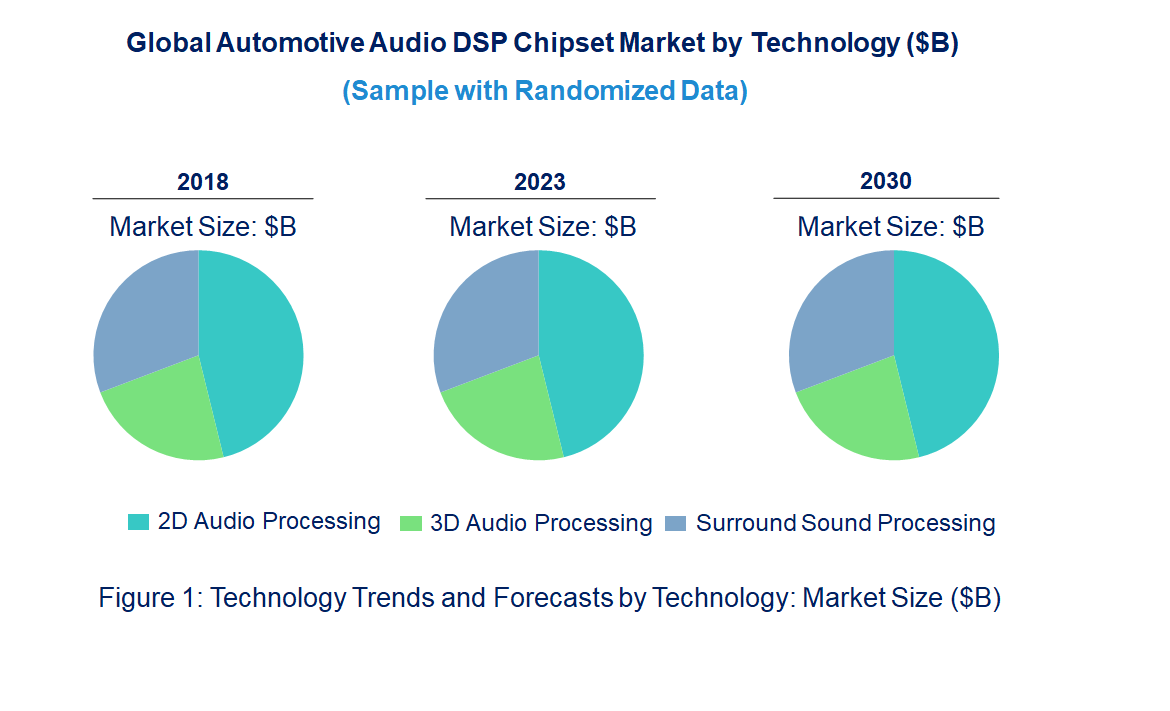
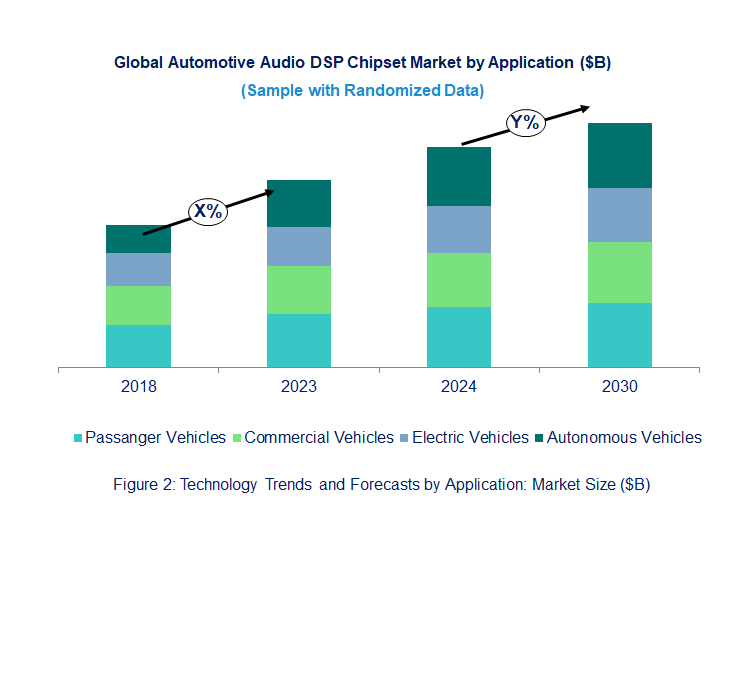
• Shift to 3D and Immersive Audio Processing: Automotive audio systems are moving beyond traditional stereo and surround sound to immersive audio technologies like 3D audio processing. This trend is driven by consumers' growing desire for high-fidelity, spatial sound experiences. Advanced DSP chipsets enable dynamic and three-dimensional sound reproduction, creating an enhanced auditory environment within the vehicle. This is particularly impactful in premium and luxury vehicles, where audio systems are becoming a significant aspect of the overall driving experience.
• Integration of AI and Machine Learning for Real-time Audio Optimization: AI-powered DSP chipsets are revolutionizing automotive audio systems by optimizing audio in real-time based on various environmental factors such as road noise, engine sounds, and passenger preferences. Machine learning algorithms allow the system to learn from users’ audio preferences and automatically adjust audio settings, enhancing personalization and improving sound quality. This trend is not only improving the listening experience but also reducing manual adjustments by users.
• Increased Demand for Noise Cancellation Technologies: With the growing emphasis on quieter, more comfortable cabins, automotive audio DSP chipsets are increasingly incorporating advanced noise cancellation technologies. Active noise cancellation (ANC) algorithms, powered by DSPs, help mitigate external noise from the road, engine, or other vehicles, resulting in a more pleasant listening environment. This trend is particularly prevalent in electric vehicles (EVs), where cabin noise tends to be more noticeable due to the absence of an internal combustion engine.
• Shift Toward More Customizable and Personalized Audio Systems: Automakers are integrating DSP chipsets that allow for more customizable and personalized audio systems in their vehicles. With features like personalized sound profiles and custom equalizer settings, consumers can tailor the audio experience to their preferences. This trend is especially important in the premium vehicle segment, where consumers expect greater control over their in-car audio experience. Additionally, multi-zone audio capabilities are becoming more popular, allowing different passengers to enjoy different audio settings within the same vehicle.
• Integration with Connectivity Standards and Smart Features: As vehicles become smarter, the need for seamless integration with connectivity standards such as Android Auto, Apple CarPlay, and Bluetooth has intensified. DSP chipsets are increasingly being designed to support these standards, providing seamless audio streaming and improving integration with mobile devices and cloud-based services. This integration is crucial in enhancing the infotainment experience, enabling better connectivity between the vehicle's audio system and the driver’s personal devices. The automotive audio DSP chipset market is undergoing significant transformation due to the increasing demand for immersive, high-quality audio experiences and the growing complexity of modern vehicles. The trends of 3D audio processing, AI-based audio optimization, noise cancellation, personalized systems, and improved connectivity are reshaping the market and driving innovation. As vehicles continue to evolve toward smarter, more connected, and quieter designs, automotive audio DSP chipsets will play a crucial role in enhancing the in-car experience and meeting the expectations of today’s tech-savvy consumers.
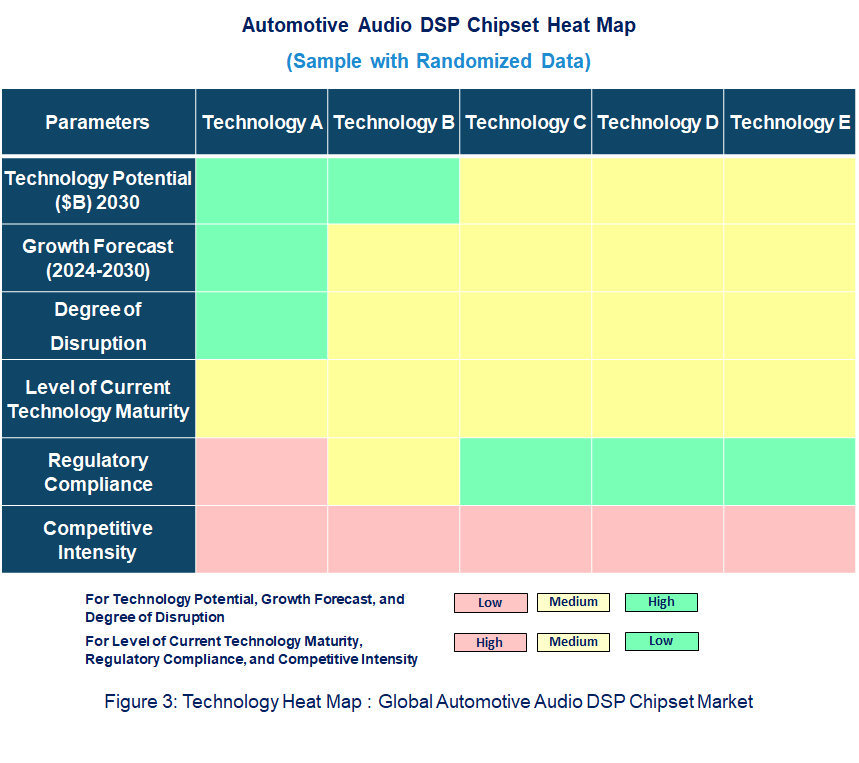
• Technology Potential: The technology potential in the automotive audio DSP chipset market is vast, driven by the increasing consumer demand for high-quality, immersive audio experiences. With the advent of advanced processing techniques such as 3D audio, spatial sound, and AI-based optimization, DSP chipsets are enhancing the audio performance of vehicles. The integration of machine learning and real-time audio adjustments based on environmental factors presents exciting opportunities for creating personalized audio systems. As automotive audio systems evolve, the potential for continuous innovation remains high, particularly with the rise of electric and autonomous vehicles.
• Degree of Disruption: The degree of disruption in the automotive audio DSP chipset market is considerable. The shift from traditional audio systems to advanced digital audio processing technologies is transforming how sound is delivered in vehicles. Innovations such as noise cancellation, 3D audio, and AI-driven sound customization are disrupting the status quo by providing more immersive, high-fidelity audio experiences. Moreover, the integration of automotive audio systems with smart features like voice assistants and real-time connectivity is reshaping the traditional car audio setup, making it more interactive and dynamic.
• Level of Current Technology Maturity: Current technology maturity in the automotive audio DSP chipset market is relatively advanced, with many leading-edge technologies already implemented in premium vehicles. DSP chipsets supporting 3D audio, surround sound, and noise cancellation have become standard in luxury cars. However, some emerging features, such as AI-powered sound customization and adaptive noise control, are still being fine-tuned and are less widespread. While major automakers and audio companies have adopted these technologies, there are still opportunities for growth as these technologies mature and become more mainstream.
• Regulatory Compliance: Regulatory compliance is a critical factor in the automotive audio DSP chipset market, particularly concerning safety and electromagnetic compatibility. DSP chipsets must adhere to strict industry standards to ensure that they operate safely within vehicles without interfering with other critical systems. Additionally, as vehicle systems become more interconnected, data privacy and security regulations must be considered, particularly in vehicles with smart, connected audio systems. As the market continues to evolve, compliance with environmental standards and noise regulations also becomes more important, especially with the rise of electric vehicles where cabin noise is more noticeable.
• Aries Electronics: Aries Electronics has been providing a range of electronic components, including connectors and interconnects, which are essential for automotive audio systems. Their products support the integration of DSP chipsets by ensuring reliable signal transmission within the vehicle's audio infrastructure.
• Enplas Corporation: Enplas Corporation specializes in precision plastic components, contributing to the automotive audio sector by offering durable and lightweight enclosures for DSP chipsets. These enclosures help in reducing electromagnetic interference and enhancing the overall performance of in-car audio systems.
• Loranger International Corporation: Loranger International Corporation manufactures high-quality loudspeakers and transducers used in automotive audio systems. Their products are designed to work seamlessly with DSP chipsets, delivering clear and dynamic sound reproduction within the vehicle cabin.
• Mill-Max Mfg. Corp.: Mill-Max Mfg. Corp. produces precision-machined interconnects and connectors that are crucial for establishing secure and stable connections between DSP chipsets and other audio components. Their products ensure minimal signal loss and contribute to the reliability of automotive audio systems.
• Molex LLC: Molex LLC offers a variety of interconnect solutions, including connectors and cable assemblies, that facilitate the integration of DSP chipsets into automotive audio systems. Their products are designed to meet the stringent requirements of the automotive industry, ensuring durability and performance. These developments highlight the ongoing efforts within the automotive audio DSP chipset market to enhance audio quality, system integration, and overall vehicle performance.
• Increasing Consumer Demand for High-Quality Audio: Consumers are seeking premium audio experiences in vehicles, driving automakers to integrate advanced DSP chipsets that deliver superior sound quality and customization options.
• Growth in Connected Car Technology: The rise of smart vehicles equipped with advanced infotainment systems and connectivity features necessitates the use of sophisticated DSP chipsets to process and manage audio signals effectively.
• Expansion of the EV Industry: Electric vehicles (EVs) often come equipped with advanced audio systems, creating a demand for efficient DSP chipsets that can operate with minimal power consumption while delivering high-quality audio. Challenges:
• High Cost of Advanced DSPs: The development and integration of advanced DSP chipsets involve significant costs, which can be a barrier for automakers, especially those targeting budget-friendly vehicle segments.
• Complex Integration Challenges: Integrating DSP chipsets into existing vehicle architectures requires specialized expertise and compatibility with various infotainment systems, posing technical challenges for manufacturers.
• Supply Chain Disruptions: Global semiconductor shortages and raw material price fluctuations impact DSP manufacturing and availability, affecting the timely delivery of components to automakers.
• Texas Instruments
• Intel
• Analog Devices
• Infineon
• Nxp Semiconductors
• Technology Readiness by Technology Type: 2D audio processing is highly mature and widely used in standard automotive systems, with broad market acceptance and low regulatory challenges. 3D audio processing is rapidly maturing, especially in premium vehicles, with a growing competitive landscape as automakers demand more immersive experiences. Surround sound is still critical for high-end applications but faces disruption as 3D audio technology evolves, requiring compliance with vehicle noise regulations and enhancing the auditory experience in quiet EV cabins.
• Competitive Intensity and Regulatory Compliance: The competitive intensity between 2D audio processing, 3D audio processing, and surround sound processing is growing, with 3D audio gaining traction in high-end segments. Surround sound still dominates premium vehicles, but 3D audio is quickly surpassing it. Regulatory compliance ensures safety, electromagnetic compatibility, and noise control, particularly for electric vehicles where cabin sound quality is vital. These regulations drive the need for innovation and quality in DSP chipsets.
• Disruption Potential of Different Technologies: The disruption potential of 2D audio processing, 3D audio processing, and surround sound processing in the automotive audio DSP chipset market is substantial. 2D audio remains standard but is being increasingly replaced by 3D audio, offering immersive, spatial sound. Surround sound systems are evolving into dynamic 3D formats, enabling richer audio experiences in both premium and electric vehicles, where quieter cabins demand enhanced auditory solutions, pushing the market toward more innovative and immersive sound technologies.
• 2D Audio Processing
• 3D Audio Processing
• Surround Sound Processing
• Passanger Vehicles
• Commercial Vehicles
• Electric Vehicles
• Autonomous Vehicles
• North America
• Europe
• Asia Pacific
• The Rest of the World
• Latest Developments and Innovations in the Automotive Audio DSP Chipset Technologies
• Companies / Ecosystems
• Strategic Opportunities by Technology Type


Choose a license that fits your team. Instant PDF delivery.
Prices exclude taxes. Instant delivery. Custom licensing available on request.
Market Report · May 18, 2026
Market Report · May 18, 2026
Market Report · May 18, 2026
Trusted partner for strategic intelligence and business growth


Receive a complimentary market analysis tailored to your industry. Our analysts will identify key growth opportunities and competitive dynamics specific to your business.

Market size, growth rate, and key trend analysis for your specific sector.

Top competitor positioning and market share analysis.

Strategic recommendations backed by data-driven insights.
Get curated market intelligence and competitive moves straight to your inbox.
By subscribing, you agree to receive our monthly insights. Unsubscribe anytime.
Receive a complimentary market analysis tailored to your industry. Our analysts will identify key growth opportunities and competitive dynamics specific to your business.
Market size, growth rate, and key trend analysis for your specific sector.
Top competitor positioning and market share analysis.
Strategic recommendations backed by data-driven insights.
Get curated market intelligence, emerging trends, and competitive moves straight to your inbox each month.
By subscribing, you agree to receive our monthly insights. Unsubscribe anytime.
We'll send your sample report shortly.