
Market Report · July 31, 2026

Key data points: The market growth forecast = 7% annually next 7 years. Scroll below to get more insights. This market report covers trends, opportunities, and forecast in the global automotive ACC system market to 2030 by vehicle type (large car, suv and crossover, mid-size car, and compact/mpv/pick-up), technology (radar, lidar, and sensor fusion), end user (oem and aftermarket), and region (North America, Europe, Asia Pacific, and the Rest of the World)
We'll send your sample report shortly.
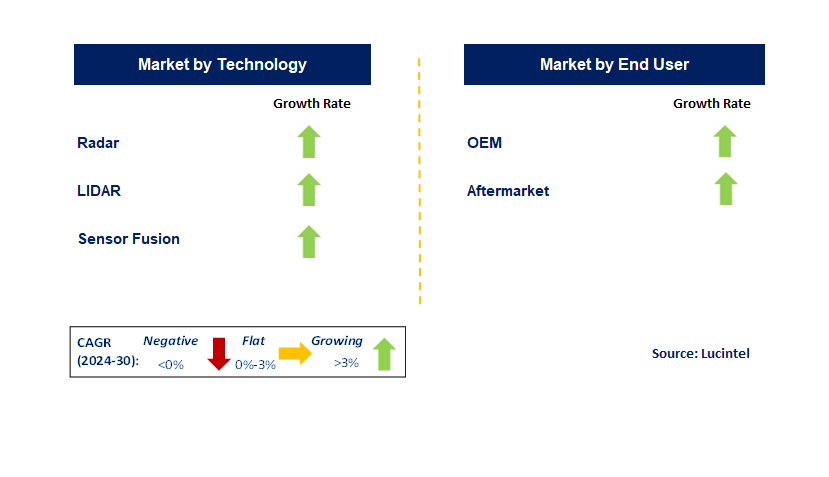
• Lucintel forecasts that radar will remain the largest segment over the forecast period.
• Within this market, large car is expected to witness the highest growth.
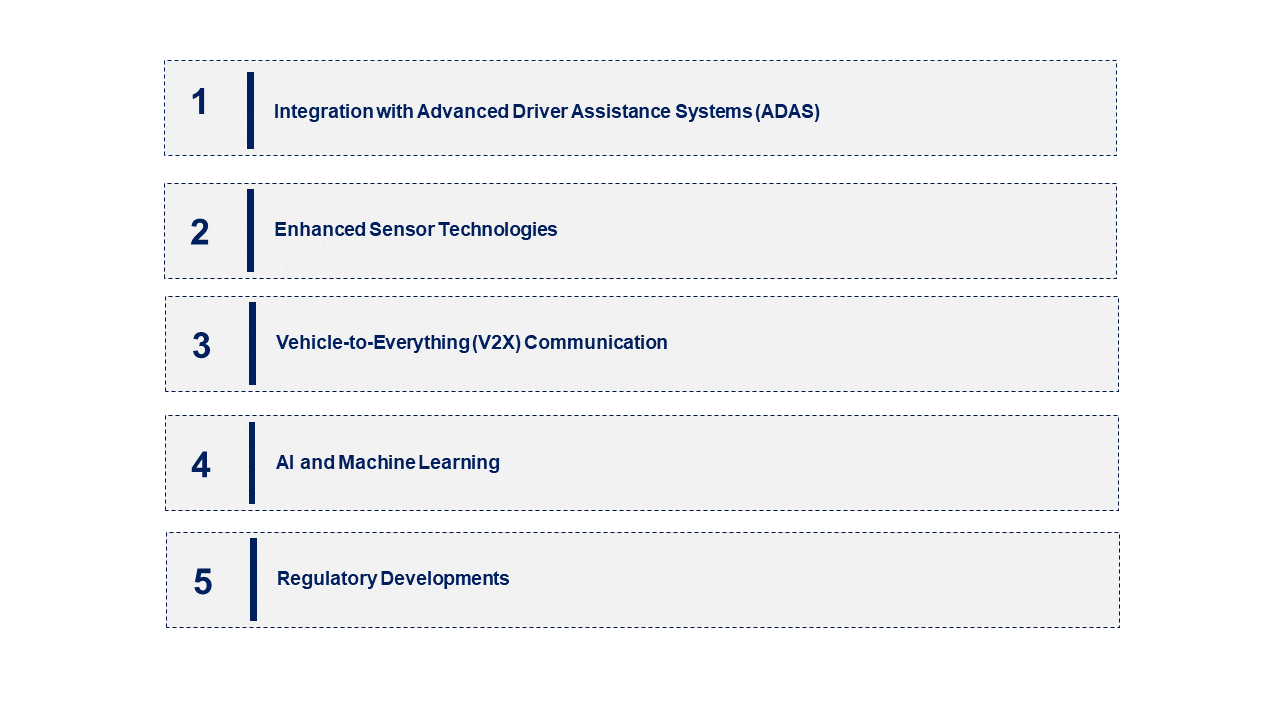
• Integration with Advanced Driver Assistance Systems (ADAS): Besides, ACC systems are increasingly being integrated with other ADAS technologies such as lane keeping assist, automatic emergency braking, and traffic sign recognition. This integration improves general vehicle safety and driver convenience.
• Enhanced Sensor Technologies: Furthermore, sensor technology used by ACC systems is continuously evolving including radar sensors, lidar sensors and camera-based sensors among others. Also, the use of improved sensor fusion techniques makes it easier for these systems to detect surrounding vehicles and obstacles more ACCurately leading to better performance reliability.
• Vehicle-to-Everything (V2X) Communication: Moreover, recent developments have seen some ACC systems employ V2X communication technologies that enable cars work closely together with infrastructure (V2I) or even share information with other vehicles on road(V2V). Thus better collaboration for driving strategies ensuring situational awareness improvement as well as traffic flow management has been achieved through this means of communication.
• AI and Machine Learning: Additionally, connection between artificial intelligence (AI) algorithms and machine-learning technologies allows ACC systems to adjust to various driving conditions while gaining knowledge from real-world data. For this reason, this property limits are predictive capabilities by bringing within reach all time that is needed for them to respond much faster thus enhancing the overall performance of the system.
• Regulatory Developments: Also on the same note, authorities from around the world have started applying regulations or guidelines related to ADAS and self-driving cars including adaptive cruise control (ACC) ones. This ensures innovation compliance with safety requirements at a global scale for all companies dealing in automotive industry.
• Energy Efficiency and Fuel Economy: Also worth mentioning is that advanced cruise control systems are designed to optimize vehicle speed and ACCeleration patterns thereby improving fuel efficiency and reducing emissions. This fact is consistent with global sustainability goals as well as regulatory requirements across the globe.
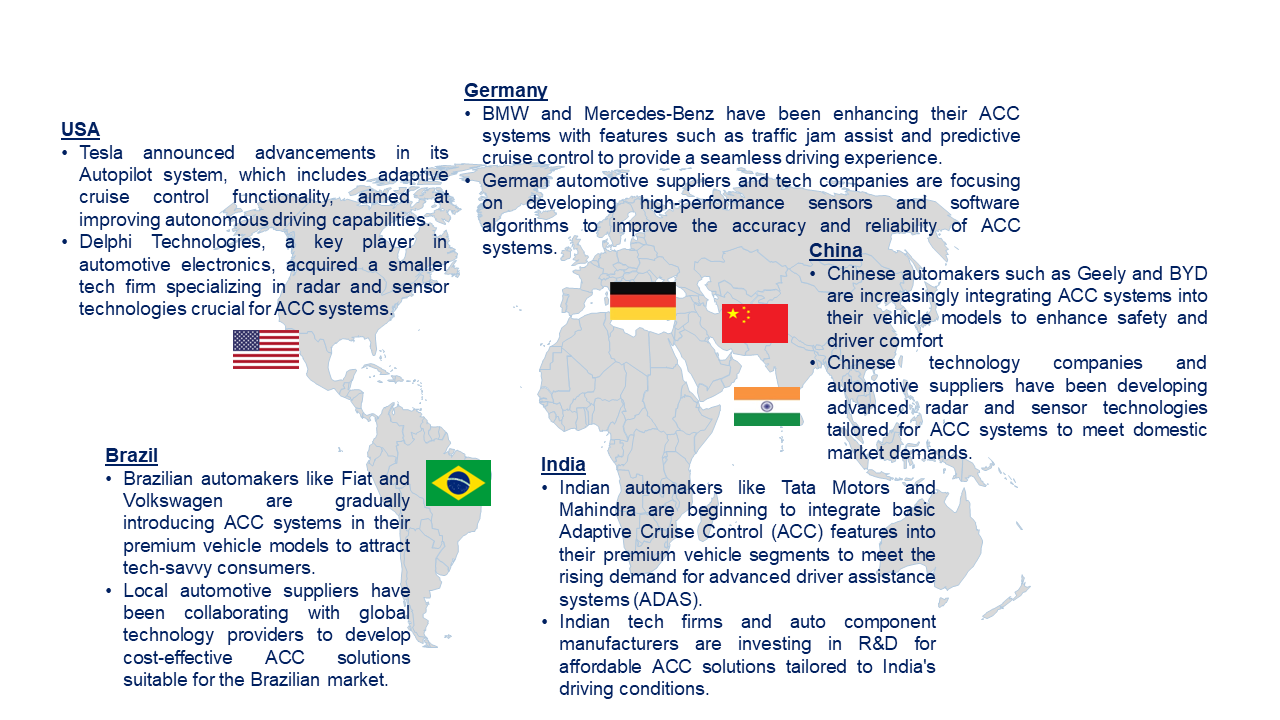
• Hydro's Expansion in Automotive Aluminum: Hydro, a global integrated aluminum company, expanded its automotive aluminum production capacity to meet increasing demand from the automotive sector.
• Constellium's Advanced Aluminum Solutions: Constellium, another prominent player in aluminum solutions, introduced new advanced aluminum solutions aimed at lightweighting and enhancing vehicle performance.
• Alcoa's Innovations in Aluminum Manufacturing: Alcoa, a leading producer of aluminum, showcased advancements in aluminum manufacturing technologies specifically targeted at automotive applications.
• Technological Progress and Combination: There is a major growth opportunity for the integration of ACC systems in advanced driver-assistance systems (ADAS) and autonomous driving technologies. Improved sensor technologies such as radar, LiDAR, and camera systems drive the ACCuracy and reliability of the ACCs more making them appealing to car makers and consumers as well. Besides, artificial intelligence advances and machine learning can enhance predictive capabilities of ACC systems leading to smooth driving experience.
• Regulatory Drive towards Safety: In order to improve road safety, governments worldwide are increasingly mandating that ADAS functions like ACC be included in new vehicles. European Union’s General Safety Regulation among others have pushed automakers towards adoption of ACCs for their automobiles. Adherence with these regulations is not only safety but also opens up huge market opportunities for suppliers of ACC system.
• Growing Consumers’ Need for both Safety and Convenience: The increase attention by customers on safety and convenience features in vehicles has led to the rise in automobile demand. The demand for ACC systems is escalating due to their combined effects of improved security together with ease while driving . Auto mobile manufactures incorporating their cars with those provided will lure many safety aware consumers hence improves their competitive advantage.
• Electric Cars and Autonomous Vehicles: Opportunities are enormous for ACCS due to emergence of electric vehicle (EV) as well as gradual shift toward autonomous driving technology. EV manufacturers differentiate their products through integrating advanced driver assistance features such as ACC . Again, it should be noted that autonomous driving technologies heavily rely on these cruise control devices since they provide important functionalities in terms of safe distance keeping and speed maintenance respectively .
• Aftermarket Opportunities: ACC systems aftermarkets provide another business opportunity. Once the maturity stage for this technology is reached meaning it has become cheaper to fit ACC systems to existing vehicles, then a new market segment emerges for retrofitting purposes. Reliable though cost-effective suppliers of aftermarket solutions stand a chance to exploit the huge population of non-ACC factory-installed cars.
• Safety and Convenience: One of the main benefits of ACC is that it helps enhance road safety by adjusting the speed of a vehicle in order to maintain the safe distance between it and the one ahead. Such function reduces chances of ACCidents and makes drivers feel comfortable when driving for long distances or when they are stuck in traffic.
• Growing Demand for Autonomous Features: Today’s customers increasingly want vehicles with sophisticated driver-assist systems such as ACC, which mirror a shift towards self-driving and semi-autonomous technologies.
• Regulatory Support: Some governments including regulatory bodies across different regions have started mandating that automobiles have some safety features like ACC so as to reduce ACCidents on roads.
• Technological Advancements: The increased improvement in sensor technology, radar systems, and machine learning algorithms has made ACC more ACCurate and reliable hence its adoption by many consumers as well as car manufacturers.
• Fuel Efficiency: Moreover, this mechanism optimizes vehicle speed thereby curbing unnecessary ACCeleration and braking. ACCordingly, it promotes improved fuel efficiency thus reduced emissions which all line up with global environmental regulations along with consumer preferences. Challenges in the global automoitve ACC system:
• High Cost: It may be noted that there is a high initial cost of implementing these systems into cars that can put off price conscious buyers thus making wide spread ACCeptance difficult especially within developing economies.
• Complexity of Integration: Chukwu (2013) further observes that integrating other ADAS functions with ACC is also complex since it needs advanced engineering skills together with software integration thus adding on development costs plus timeframes involved.
• Consumer Awareness and ACCeptance: Unfamiliarity or ignorance among various individuals regarding what this system has to offer might slow down its use despite its potential advantages in enhancing safety while at the same time increasing convenience for drivers’ comfort.
• Reliability and Performance: This means that if sensors fail to meet certain performance standards then there will be problems associated with reliability/ effectiveness of such gadgets. Besides, any deviations from required ACCuracy thresholds could compromise the dependability and efficiency of such systems.
• Legal and Regulatory Challenges: However, different regions have their own regulations and standards regarding ACC’s legal aspect that may create obstacles to automakers who desire to enter global markets for their products while adhering to local legislations. In spite of the safety and convenience benefits offered by the automotive ACC system, its adoption is restrained due to costly aspects and difficulties of combination. For future growth and ACCeptance, these are some issues that need a delicate balance between motivations and obstacles towards introduction of ACC technology into cars.
• ZF TRW Automotive Holdings
• Delphi Automotive
• Continental AG
• Robert Bosch
• Denso Corporation
• Magna International
• Autoliv These companies have established themselves as leaders in the automotive ACC system industry, with extensive product portfolios, global presence, and strong research and development capabilities. They continually strive to enhance their market positions through strategic partnerships, mergers and acquisitions, and product innovations. The market share dynamics within the carbon fiber market are evolving, with the entry of new players and the emergence of innovative automotive ACC system technologies. Additionally, collaborations between material suppliers, manufacturers, and end-users are fostering technological advancements and expanding market opportunities.
• Large Car
• Suv And Crossover
• Mid-Size Car
• Compact/Mpv/Pick-Up
• Radar
• Lidar
• Sensor Fusion
• Oem
• Aftermarket
• North America
• Europe
• Asia Pacific
• ZF TRW Automotive Holdings
• Delphi Automotive
• Continental AG
• Robert Bosch
• Denso Corporation
• Magna International
• Autoliv Q5. Which automotive ACC system market segment will be the largest in future? Answer: Lucintel forecasts that radar will remain the largest segment over the forecast period. Q6. In automotive ACC system market, which region is expected to be the largest in next 5 years? Answer: APAC will remain the largest region over the forecast period. Q7. Do we receive customization in this report? Answer: Yes, Lucintel provides 10% customization without any additional cost.


Choose a license that fits your team. Instant PDF delivery.
Prices exclude taxes. Instant delivery. Custom licensing available on request.
Market Report · July 31, 2026
Market Report · July 31, 2026
Market Report · July 31, 2026
Trusted partner for strategic intelligence and business growth


Receive a complimentary market analysis tailored to your industry. Our analysts will identify key growth opportunities and competitive dynamics specific to your business.

Market size, growth rate, and key trend analysis for your specific sector.

Top competitor positioning and market share analysis.

Strategic recommendations backed by data-driven insights.
Get curated market intelligence and competitive moves straight to your inbox.
By subscribing, you agree to receive our monthly insights. Unsubscribe anytime.
Receive a complimentary market analysis tailored to your industry. Our analysts will identify key growth opportunities and competitive dynamics specific to your business.
Market size, growth rate, and key trend analysis for your specific sector.
Top competitor positioning and market share analysis.
Strategic recommendations backed by data-driven insights.
Get curated market intelligence, emerging trends, and competitive moves straight to your inbox each month.
By subscribing, you agree to receive our monthly insights. Unsubscribe anytime.
We'll send your sample report shortly.