
Market Report · July 13, 2026

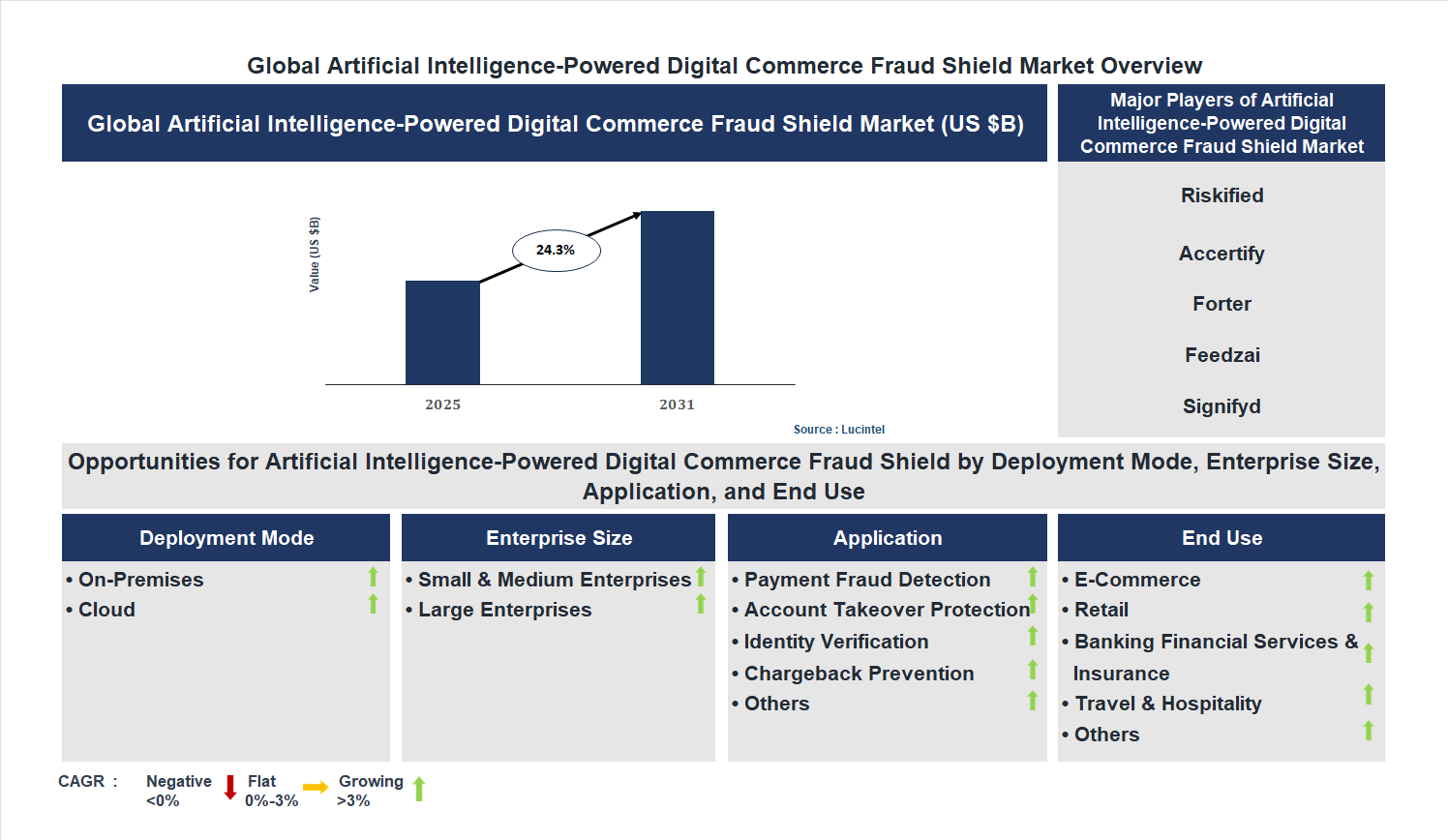
Key data points: The growth forecast = 24.3% annually for the next 7 years. Scroll below to get more insights. This market report covers trends, opportunities and forecasts in artificial intelligence-powered digital commerce fraud shield market to 2031 by deployment mode (on-premises and cloud), enterprise size (small & medium enterprises and large enterprises), application (payment fraud detection, account takeover protection, identity verification, chargeback prevention, and others), end use (e-commerce, retail, banking financial services & insurance, travel & hospitality, and others), and region (North America, Europe, Asia Pacific, and the Rest of the World)
We'll send your sample report shortly.
• Lucintel forecasts that, within the deployment mode category, cloud is expected to witness higher growth over the forecast period.
• Within the end use category, e-commerce is expected to witness the highest growth.
• In terms of region, APAC is expected to witness the highest growth over the forecast period. Gain valuable insights for your business decisions with our comprehensive 150+ page report. Sample figures with some insights are shown below.
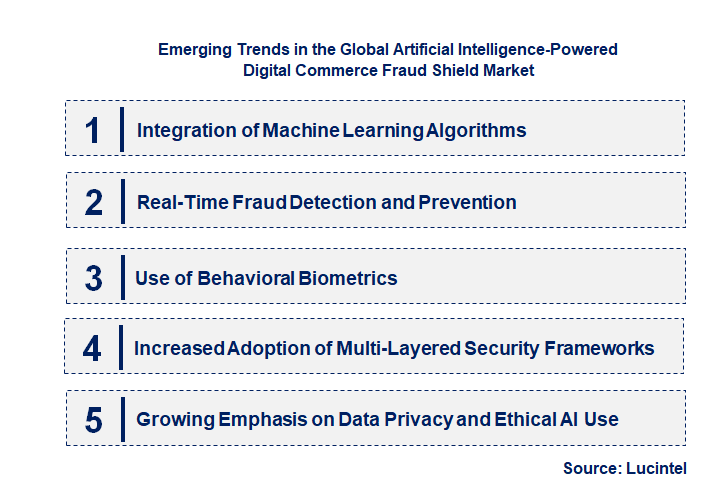
• Integration of Machine Learning Algorithms: The market is increasingly adopting machine learning to enhance fraud detection accuracy. These algorithms analyze vast amounts of transaction data to identify patterns and anomalies indicative of fraudulent activity. Continuous learning allows systems to adapt to new fraud tactics, reducing false positives and improving response times. This integration results in smarter, more efficient fraud prevention that evolves with emerging threats, providing businesses with a competitive edge in safeguarding digital transactions.
• Real-Time Fraud Detection and Prevention: There is a significant shift toward real-time monitoring systems that identify and block fraudulent transactions instantly. AI-powered solutions analyze transactions as they occur, enabling immediate action to prevent losses. This trend improves customer experience by reducing false declines and delays, while also minimizing financial risks for merchants. The ability to respond swiftly to threats is crucial in a landscape where cybercriminals employ increasingly sophisticated tactics, making real-time detection a vital component of modern digital commerce security.
• Use of Behavioral Biometrics: Behavioral biometrics is gaining prominence as a non-intrusive method to verify user identities based on behavioral patterns such as typing rhythm, mouse movements, and device handling. AI systems analyze these behaviors continuously during transactions, providing an additional layer of security without disrupting user experience. This trend enhances fraud detection accuracy, especially in cases of account takeover and identity theft, and helps build trust with consumers by offering seamless, secure interactions.
• Increased Adoption of Multi-Layered Security Frameworks: Companies are implementing multi-layered security strategies combining AI with traditional methods like two-factor authentication and device fingerprinting. This layered approach creates a robust defense against various fraud vectors. AI enhances each layer by providing intelligent analysis and adaptive responses, making it harder for fraudsters to bypass security measures. The trend reflects a comprehensive approach to digital security, balancing user convenience with rigorous protection, and is critical in addressing the evolving complexity of cyber threats.
• Growing Emphasis on Data Privacy and Ethical AI Use: As AI-driven fraud prevention relies heavily on data collection, there is a rising focus on data privacy regulations and ethical AI practices. Companies are adopting transparent data policies and ensuring compliance with standards like GDPR and CCPA. Ethical AI use involves minimizing biases and ensuring fairness in fraud detection algorithms. This trend influences market development by fostering consumer trust and regulatory compliance, which are essential for sustainable growth in the digital commerce security landscape. In summary, these trends are collectively transforming the artificial intelligence-powered digital commerce fraud shield market by making fraud detection more accurate, real-time, user-friendly, and ethically responsible. They are enabling businesses to better protect themselves and their customers while maintaining compliance with evolving regulations. As these developments continue, the market is poised for significant innovation, increased adoption, and enhanced security standards that will shape the future of digital commerce.
• Adoption of Machine Learning Algorithms: Enhanced fraud detection accuracy and real-time threat identification have improved, reducing false positives and increasing customer trust.
• Integration of Behavioral Analytics: Monitoring user behavior patterns helps identify suspicious activities more effectively, leading to quicker fraud prevention responses.
• Deployment of AI-Powered Chatbots: Customer support automation improves user experience while simultaneously flagging potential fraudulent interactions.
• Expansion of Cross-Channel Fraud Detection: Solutions now cover multiple platforms such as mobile, web, and in-store, providing comprehensive security coverage.
• Increased Investment in AI Security Solutions: Companies are allocating more resources toward AI-driven fraud prevention tools, accelerating innovation and market growth. These developments are significantly strengthening the market by providing more robust, accurate, and comprehensive fraud prevention solutions, thereby boosting consumer confidence and enabling safer digital commerce environments.
• Retail Sector: Enhanced Customer Trust and Reduced Losses : AI-powered fraud shields help retailers detect and prevent fraudulent transactions swiftly, reducing financial losses and improving customer confidence. This leads to increased sales and brand loyalty, fostering growth in the competitive retail environment.
• Banking and Financial Services: Strengthening Security Protocols : Banks leverage AI to identify suspicious activities and prevent fraud in real-time, ensuring compliance with regulations and protecting customer assets. This reduces fraud-related costs and enhances the bank's reputation.
• Payment Gateways and Digital Wallets: Seamless and Secure Transactions : AI-driven fraud detection enables smooth transaction processing while minimizing false positives. This improves user experience and encourages higher adoption of digital payment methods.
• E-commerce Platforms: Personalized Fraud Prevention Strategies : AI allows e-commerce sites to implement tailored security measures based on user behavior, reducing chargebacks and fraudulent activities. This customization boosts platform reliability and customer satisfaction.
• Cross-Border Transactions: Managing Complex Fraud Risks : AI solutions facilitate the monitoring of international transactions, addressing diverse fraud patterns across regions. This expands market reach and supports global commerce growth. In summary, these growth opportunities are significantly impacting the artificial intelligence-powered digital commerce fraud shield market by enhancing security, improving customer experience, and enabling scalable solutions across various applications. As digital transactions continue to rise, the market is poised for sustained expansion driven by innovative AI capabilities.
• Growing Digital Transaction Volumes: The surge in online shopping and digital payments has significantly increased the risk of fraud, prompting businesses to adopt AI-powered solutions for real-time detection and prevention. This expansion creates a substantial demand for advanced fraud detection systems that can handle large data volumes efficiently, ensuring secure transactions and maintaining customer trust. As e-commerce continues to grow globally, the need for robust fraud shields becomes more critical, fueling market growth.
• Advancements in AI and Machine Learning Technologies: Continuous innovations in AI algorithms and machine learning models have enhanced the accuracy and speed of fraud detection systems. These technologies enable predictive analytics, anomaly detection, and behavioral analysis, which are essential for identifying sophisticated fraud patterns. The integration of AI into digital commerce security solutions offers a competitive edge, encouraging vendors to develop more intelligent and adaptive fraud shields, thereby expanding market opportunities.
• Increasing Regulatory and Data Security Requirements: Governments and industry bodies are implementing stricter data protection and cybersecurity regulations, such as GDPR and PCI DSS. These frameworks compel digital commerce platforms to adopt advanced security measures, including AI-driven fraud detection tools, to ensure compliance. The evolving regulatory landscape drives investment in secure, compliant solutions, influencing market growth and encouraging innovation in fraud prevention technologies.
• Rising Adoption of AI-Powered Security Solutions by E-commerce Platforms: E-commerce companies are increasingly integrating AI-based fraud shields to safeguard their transactions and customer data. This adoption is driven by the need to reduce false positives, improve detection accuracy, and enhance user experience. As businesses recognize the cost savings and risk mitigation benefits, the market for AI-powered fraud prevention solutions is expanding rapidly, fostering competitive differentiation and technological development.
• Increasing Investment in Cybersecurity by Financial Institutions: Banks and financial service providers are investing heavily in AI-driven fraud detection systems to protect their digital assets and customer accounts. These investments are motivated by the rising sophistication of cyber threats and the need for real-time, scalable security solutions. The financial sector's focus on innovation accelerates market growth, encouraging the development of more advanced, AI-enabled fraud shields tailored to complex transaction environments. The challenges facing this artificial intelligence-powered digital commerce fraud shield market include:
• Rapidly Evolving Fraud Techniques: Cybercriminals continuously develop new methods to bypass security measures, making fraud detection a persistent challenge. AI systems must constantly adapt to emerging threats, requiring ongoing updates and sophisticated algorithms. Failure to keep pace can result in increased false negatives, financial losses, and reputational damage, complicating market growth and necessitating continuous innovation.
• Data Privacy and Ethical Concerns: The deployment of AI-powered fraud detection involves extensive data collection and analysis, raising privacy issues and ethical considerations. Striking a balance between effective fraud prevention and respecting user privacy is complex, often leading to regulatory scrutiny and consumer resistance. These concerns can hinder the adoption of AI solutions and impose additional compliance costs, impacting market expansion.
• High Implementation and Maintenance Costs: Developing, deploying, and maintaining advanced AI-driven fraud shields require significant financial investment and technical expertise. Small and medium-sized enterprises may find these costs prohibitive, limiting market penetration. Additionally, ongoing system updates and staff training add to operational expenses, posing challenges for widespread adoption and scalability within the market. In summary, the artificial intelligence-powered digital commerce fraud shield market is driven by technological innovations, increasing transaction volumes, and regulatory pressures, which collectively foster growth and competitiveness. However, challenges such as evolving cyber threats, privacy concerns, and high costs pose significant hurdles. The interplay of these factors will shape the market's future, demanding continuous innovation, strategic investments, and regulatory compliance to sustain growth and effectively combat digital commerce fraud.
• Riskified
• Accertify
• Forter
• Feedzai
• Signifyd
• ClearSale
• Kount
• DataDome Group
• Ravelin Technology
• Arkose Labs
• On-Premises
• Cloud
• Small & Medium Enterprises
• Large Enterprises
• Payment Fraud Detection
• Account Takeover Protection
• Identity Verification
• Chargeback Prevention
• Others
• E-Commerce
• Retail
• Banking Financial Services & Insurance
• Travel & Hospitality
• Others
• North America
• Europe
• Asia Pacific
• The Rest of the World
• United States: The US market has seen significant investments in AI-based fraud detection platforms, driven by major e-commerce players and financial institutions. Innovations include real-time transaction monitoring and biometric authentication systems. Regulatory frameworks like the FTC guidelines are encouraging adoption of advanced security measures. Several startups are emerging with cutting-edge AI solutions tailored for digital commerce fraud prevention. The US also emphasizes integrating AI with existing cybersecurity infrastructure to enhance overall transaction security and reduce false positives.
• China: China’s digital commerce sector is rapidly adopting AI-powered fraud shields, supported by government initiatives promoting AI innovation. Major tech giants like Alibaba and Tencent are deploying sophisticated AI algorithms for fraud detection, including behavioral analytics and machine learning models. The country’s focus on mobile payments and super apps has driven the development of integrated fraud prevention tools. Regulatory policies are also evolving to mandate stronger security protocols, fostering a competitive environment for AI security startups. The Chinese market emphasizes scalable, high-speed AI solutions to handle massive transaction volumes efficiently.
• Germany: Germany’s market is characterized by a focus on compliance with strict data privacy laws such as GDPR, influencing AI fraud prevention strategies. Financial institutions and e-commerce companies are investing in AI solutions that prioritize transparency and data security. Recent developments include the deployment of AI systems capable of detecting sophisticated fraud patterns while ensuring user privacy. Collaboration between tech firms and regulatory bodies is fostering innovative, compliant AI tools. The German market also emphasizes sustainable and ethical AI practices, integrating them into broader digital security frameworks.
• India: India’s rapidly growing digital economy is witnessing a surge in AI-driven fraud prevention solutions, driven by increasing smartphone penetration and digital payments. Local startups and global tech firms are deploying AI models for real-time fraud detection, especially in mobile banking and e-wallet services. Government initiatives like Digital India are promoting the adoption of secure AI-based systems. The market is also seeing increased investment in AI research and development to address unique regional challenges such as low digital literacy and diverse transaction behaviors. The focus remains on creating affordable, scalable AI solutions for widespread adoption.
• Japan: Japan’s market is advancing through the integration of AI with traditional security systems, emphasizing reliability and user trust. Major financial institutions are adopting AI-powered fraud detection tools that utilize deep learning and behavioral analytics. Recent developments include the deployment of AI systems capable of identifying complex fraud schemes and reducing false alarms. The Japanese government is supporting AI innovation through funding and regulatory support, fostering collaboration between industry and academia. The market also emphasizes privacy-preserving AI techniques to align with Japan’s strict data protection standards, ensuring secure and trustworthy digital transactions.


• Riskified
• Accertify
• Forter
• Feedzai
• Signifyd
• ClearSale
• Kount
• DataDome Group
• Ravelin Technology
• Arkose Labs Q5. Which artificial intelligence-powered digital commerce fraud shield market segment will be the largest in future? Answer: Lucintel forecasts that, within the deployment mode category, cloud is expected to witness higher growth over the forecast period. Q6. In artificial intelligence-powered digital commerce fraud shield market, which region is expected to be the largest in next 5 years? Answer: In terms of region, APAC is expected to witness the highest growth over the forecast period. Q7. Do we receive customization in this report? Answer: Yes, Lucintel provides 10% customization without any additional cost.


Choose a license that fits your team. Instant PDF delivery.
Prices exclude taxes. Instant delivery. Custom licensing available on request.
Market Report · July 13, 2026
Market Report · July 13, 2026
Market Report · July 2, 2026
Trusted partner for strategic intelligence and business growth


Receive a complimentary market analysis tailored to your industry. Our analysts will identify key growth opportunities and competitive dynamics specific to your business.

Market size, growth rate, and key trend analysis for your specific sector.

Top competitor positioning and market share analysis.

Strategic recommendations backed by data-driven insights.
Get curated market intelligence and competitive moves straight to your inbox.
By subscribing, you agree to receive our monthly insights. Unsubscribe anytime.
Receive a complimentary market analysis tailored to your industry. Our analysts will identify key growth opportunities and competitive dynamics specific to your business.
Market size, growth rate, and key trend analysis for your specific sector.
Top competitor positioning and market share analysis.
Strategic recommendations backed by data-driven insights.
Get curated market intelligence, emerging trends, and competitive moves straight to your inbox each month.
By subscribing, you agree to receive our monthly insights. Unsubscribe anytime.
We'll send your sample report shortly.