
Market Report · June 29, 2026

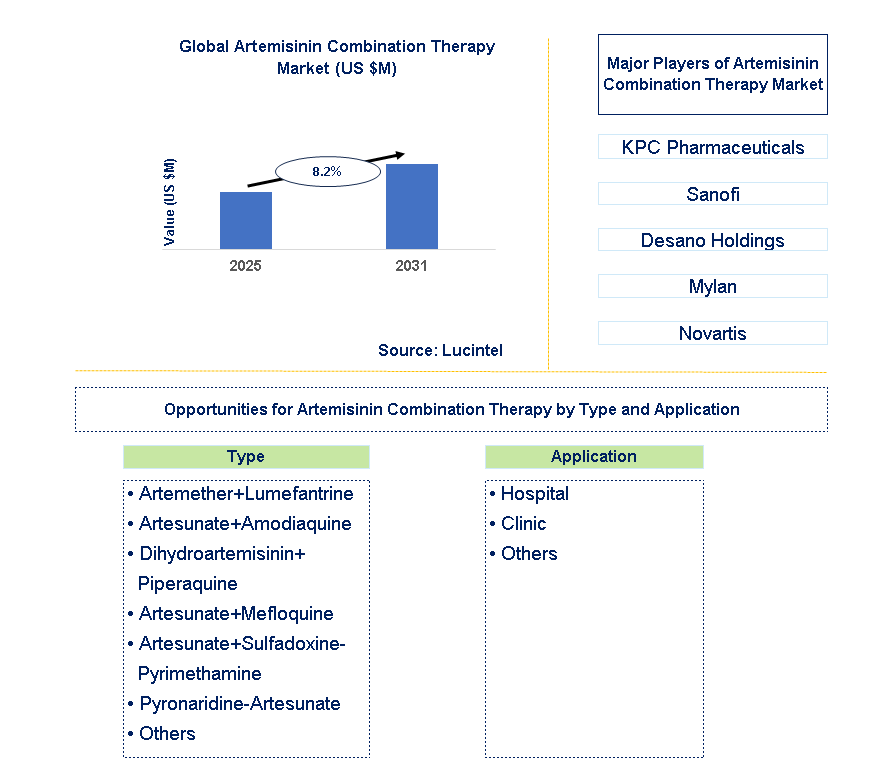
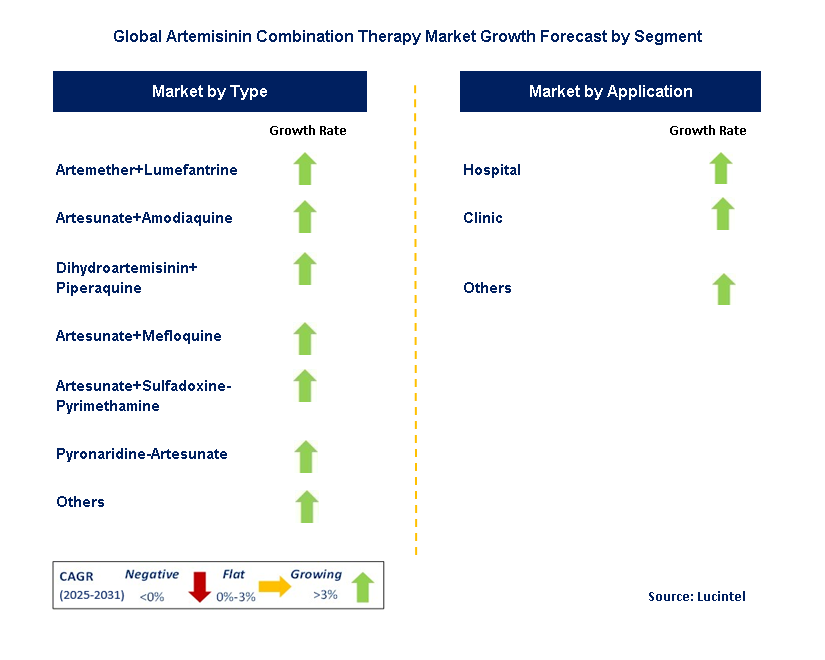
Key data points: The growth forecast = 8.2% annually for the next 7 years. Scroll below to get more insights. This market report covers Trends, opportunity and forecast in artemisinin combination therapy market to 2031 by type (artemether+lumefantrine, artesunate+amodiaquine, dihydroartemisinin+piperaquine, artesunate+mefloquine, artesunate+sulfadoxine-pyrimethamine, pyronaridine-artesunate, and others), application (hospital, clinic, and other), and region (North America, Europe, Asia Pacific, and the Rest of the World)
We'll send your sample report shortly.
• Innovation in Fixed-Dose Combinations: Fixed-dose combinations (FDCs) of artemisinin and other antimalarial drugs are gaining momentum due to their ease of use and improved patient adherence. By combining multiple drugs into a single tablet, FDCs reduce the risk of resistance and improve treatment outcomes. Pharmaceutical companies are developing more efficient FDCs with shorter treatment durations, making them highly effective for large-scale malaria control programs. This trend is expected to drive the demand for ACTs, especially in countries with high malaria transmission.
• Growing Focus on Resistance Management: As resistance to artemisinin-based therapies becomes a growing concern, researchers are focused on developing new drugs and strategies to overcome this issue. Resistance management initiatives, including new ACT combinations and alternative drugs, are becoming a significant part of the market landscape. This trend is shaping research directions, leading to innovative drug development that can preserve the efficacy of ACT therapies in regions affected by drug-resistant malaria strains, particularly in Southeast Asia and sub-Saharan Africa.
• Public-Private Partnerships: The collaboration between governments, international organizations, and private pharmaceutical companies is essential to improving ACT access in malaria-endemic regions. Public-private partnerships (PPPs) are key to ensuring the affordability and availability of ACTs in low-income countries. These partnerships have led to increased production and distribution, as well as the development of novel ACT formulations. Through PPPs, stakeholders aim to increase global supply chains, reduce costs, and expand access to ACT therapies in regions most affected by malaria.
• Advances in Delivery Mechanisms: The ACT market is witnessing advancements in drug delivery systems aimed at improving treatment efficacy and patient compliance. Innovations such as controlled-release formulations and injectable ACTs are being explored to provide more efficient dosing regimens. This trend is expected to enhance the effectiveness of ACTs, especially in areas with limited access to healthcare or where oral treatments may not be feasible. These innovations are helping to address the logistical challenges of malaria treatment delivery.
• Digital Health Integration: Digital health technologies are being integrated into malaria control programs to improve monitoring, diagnosis, and treatment adherence. Mobile health applications, telemedicine, and data analytics are increasingly used to track the effectiveness of ACT therapies in real time. Digital platforms also support patient education, increasing awareness of malaria prevention and treatment. This trend is reshaping the landscape of ACT distribution and monitoring, enhancing the global response to malaria.
The Artemisinin Combination Therapy (ACT) market is being shaped by a series of emerging trends that reflect the increasing need for innovative solutions in malaria treatment and control. Innovations like fixed-dose combinations, resistance management strategies, and digital health integration are all contributing to more effective, accessible, and sustainable treatment options. Public-private partnerships and advances in drug delivery mechanisms further enhance the scalability of ACT programs globally.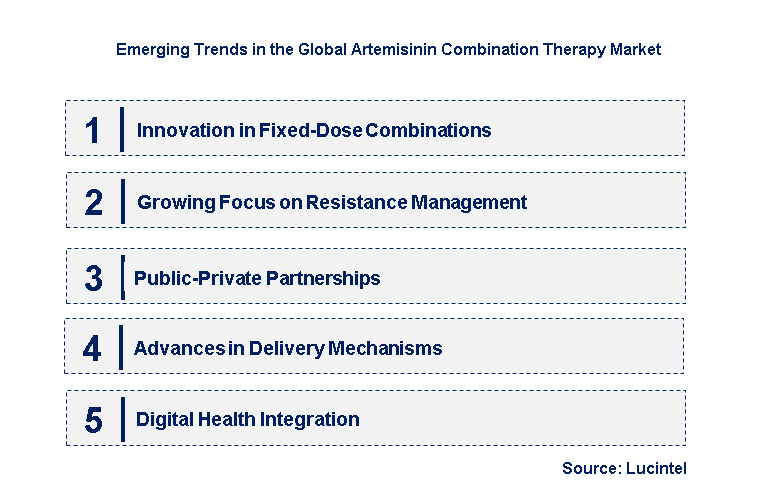
• Introduction of Novel ACT Formulations: Recent developments in the ACT market include the introduction of novel drug formulations that combine artemisinin with new partners, such as pyronaridine and tafenoquine. These new combinations are being developed to combat drug resistance and improve treatment efficacy. For example, the introduction of pyronaridine-artesunate as an alternative to traditional ACTs addresses concerns related to artemisinin resistance in Southeast Asia. These new formulations are expected to provide more durable solutions to malaria treatment.
• Expansion of Generic ACT Production: India, China, and several other countries have ramped up the production of generic ACTs, which are helping to make malaria treatment more affordable and accessible in endemic regions. The availability of affordable generic ACTs is critical to the success of malaria control programs in low-income countries. This trend is contributing to the wider distribution of ACTs, especially through government health programs, reducing the economic burden of malaria treatment.
• Enhanced Global Collaboration and Funding: Global collaborations and funding from organizations such as the Global Fund to Fight AIDS, Tuberculosis, and Malaria (GFATM) and the World Health Organization (WHO) have increased the availability of ACTs in endemic regions. These collaborations focus on scaling up the distribution of ACTs, improving healthcare infrastructure, and investing in malaria research. Enhanced funding mechanisms and partnerships have played a crucial role in increasing access to ACTs in sub-Saharan Africa and other high-burden regions.
• Increased Focus on Malaria Elimination: Several countries have committed to malaria elimination by 2030, and ACT is central to these national strategies. Countries such as China and India are advancing malaria elimination efforts by strengthening ACT supply chains, improving diagnosis and treatment coverage, and integrating ACT use into broader public health programs. These efforts are accelerating the deployment of ACTs in areas with low but persistent malaria transmission, helping to reduce malaria transmission rates and move closer to the goal of global eradication.
• Regulatory Advancements in ACT Approvals: Regulatory bodies such as the U.S. FDA and the European Medicines Agency (EMA) have recently approved new ACT combinations and formulations. These regulatory advancements streamline the approval process for ACTs, ensuring quicker access to innovative therapies. With increasing approval of new combinations and alternative drugs, the global market for ACTs is diversifying, offering more options for malaria treatment, especially in areas facing artemisinin resistance.
Recent developments in the Artemisinin Combination Therapy (ACT) market are focused on enhancing drug efficacy, accessibility, and addressing challenges like drug resistance. The introduction of novel formulations, increased generic production, and global collaborations has expanded the availability of ACTs in malaria-endemic regions. Efforts toward malaria eradication and advancements in regulatory approvals are reshaping the market, while innovations in ACT formulations are improving treatment outcomes.• Strengthening Malaria Control Programs: A significant growth opportunity lies in strengthening national malaria control programs (NMCPs) in malaria-endemic countries. ACTs play a central role in these programs, where governments are investing in mass drug administration campaigns, integrated vector management, and surveillance systems. Expanding access to ACTs through government-run distribution programs is critical to achieving the World Health Organization’s global malaria targets, particularly in regions such as sub-Saharan Africa.
• Pediatric Malaria Treatment: Pediatric malaria treatment represents a key growth opportunity, with increasing focus on formulating ACTs that are more suitable for children. Efforts are being made to improve the palatability, dosage, and safety of ACTs for pediatric patients, as this group faces higher mortality rates from malaria. The development of pediatric-friendly ACT formulations and combination therapies is expected to drive market growth in countries with high childhood malaria burden.
• Scaling Up Preventative Malaria Treatment: Preventative malaria treatment strategies, such as seasonal malaria chemoprevention (SMC), are gaining momentum. ACTs are integral to these efforts, which involve administering ACTs to individuals in malaria-endemic regions during peak transmission seasons. The scalability of these preventive programs offers significant growth potential for the ACT market, especially in areas where seasonal malaria transmission is a major concern.
• Investment in Malaria Vaccine Programs: While vaccines are not yet a complete solution, their integration with ACT treatments presents a unique growth opportunity. Malaria vaccine initiatives, such as the RTS,S/AS01 vaccine, are complementing ACTs in regions with high malaria transmission. The convergence of vaccines and ACTs creates synergies that could improve malaria control, expanding the market for ACTs and providing new channels for distribution and application.
• Expansion of Malaria Research and Development: The ongoing research into drug-resistant malaria and new therapies presents an opportunity for growth. Investment in R&D for novel ACTs, combination therapies, and alternative treatment regimens is expected to open new market avenues. As new formulations and treatments are developed, these will complement the current ACT landscape and further drive demand.
These applications collectively contribute to a comprehensive approach to malaria control, opening up avenues for growth and reinforcing global efforts to combat malaria. As these opportunities are harnessed, the ACT market is set to become a central pillar of malaria eradication initiatives.• KPC Pharmaceuticals
• Sanofi
• Desano Holdings
• Mylan
• Novartis
• Artemether+Lumefantrine
• Artesunate+Amodiaquine
• Dihydroartemisinin+Piperaquine
• Artesunate+Mefloquine
• Artesunate+Sulfadoxine-Pyrimethamine
• Pyronaridine-Artesunate
• Others
• Hospital
• Clinic
• Other
• North America
• Europe
• Asia Pacific
• The Rest of the World
• United States: The United States has seen a continued focus on supporting global malaria eradication efforts. A key development in the ACT market is the government’s investment in research and development of new drug formulations. The U.S. is also a major supplier of ACT medicines through organizations like the U.S. Agency for International Development (USAID). However, domestically, malaria cases are relatively low, so ACT demand is mainly driven by U.S.-funded international programs. The U.S. is increasingly involved in the deployment of newer ACT formulations in sub-Saharan Africa and Southeast Asia, with an emphasis on cost-effective and efficient therapies.
• China: China remains a critical player in the global ACT market. The country has significantly reduced its malaria burden, but it continues to invest heavily in malaria research. China’s advancements in manufacturing and producing artemisinin-based therapies have led to cost reductions, making ACT more accessible across Southeast Asia and sub-Saharan Africa. In addition, Chinese companies are increasingly involved in clinical trials to develop next-generation ACT treatments. The government is also focusing on integrating ACT with other public health programs to eradicate malaria by 2030, positioning China as a key hub for innovation and supply in the ACT market.
• Germany: Germany’s role in the ACT market is largely driven by its commitment to international development and malaria eradication. The country supports the global roll-out of ACT through collaborations with international organizations, including the World Health Organization (WHO). German pharmaceutical companies are also active in improving the efficacy and affordability of ACT, with investments in the development of fixed-dose combination therapies (FDCs). Furthermore, Germany is a key player in malaria research, with its scientific community focusing on the development of new ACT formulations to combat emerging resistance.
• India: India, with its large population and high malaria burden, is both a producer and a consumer of ACT. The country has focused on increasing access to ACT for its domestic population, which is critical for controlling malaria transmission. Indian pharmaceutical companies, including Cipla and Dr. Reddy’s Laboratories, play a key role in producing affordable generic ACTs, which are distributed through government programs. India is also engaged in developing more efficient and robust ACT formulations to combat drug resistance, with ongoing efforts to improve drug delivery and minimize side effects in the population.
• Japan: Japan’s involvement in the ACT market is primarily through international development and research. While domestic malaria cases are extremely low, Japan is heavily invested in global malaria eradication efforts. Japan’s pharmaceutical industry has made significant contributions to the ACT market through collaborations and research on more effective therapies. Moreover, Japan supports malaria control through organizations like the Japan International Cooperation Agency (JICA), which is focused on funding ACT distribution in malaria-endemic regions, particularly in Southeast Asia and Africa. Japan also plays a crucial role in improving malaria diagnostics and treatment protocols.


• KPC Pharmaceuticals
• Sanofi
• Desano Holdings
• Mylan
• Novartis
Q5. Which artemisinin combination therapy market segment will be the largest in future?

Choose a license that fits your team. Instant PDF delivery.
Prices exclude taxes. Instant delivery. Custom licensing available on request.
Market Report · June 29, 2026
Market Report · May 18, 2026
Trusted partner for strategic intelligence and business growth


Receive a complimentary market analysis tailored to your industry. Our analysts will identify key growth opportunities and competitive dynamics specific to your business.

Market size, growth rate, and key trend analysis for your specific sector.

Top competitor positioning and market share analysis.

Strategic recommendations backed by data-driven insights.
Get curated market intelligence and competitive moves straight to your inbox.
By subscribing, you agree to receive our monthly insights. Unsubscribe anytime.
Receive a complimentary market analysis tailored to your industry. Our analysts will identify key growth opportunities and competitive dynamics specific to your business.
Market size, growth rate, and key trend analysis for your specific sector.
Top competitor positioning and market share analysis.
Strategic recommendations backed by data-driven insights.
Get curated market intelligence, emerging trends, and competitive moves straight to your inbox each month.
By subscribing, you agree to receive our monthly insights. Unsubscribe anytime.
We'll send your sample report shortly.