
Market Report · May 18, 2026

This market report covers trends, opportunities, and forecasts in the global arduino development kit market to 2031 by technology (microcontrollers, sensors, displays, connectivity ics, power management ics, and others), end use industry (consumer electronics, automotive, industrial automation, healthcare, telecommunication, and others), and region (North America, Europe, Asia Pacific, and the Rest of the World)
We'll send your sample report shortly.
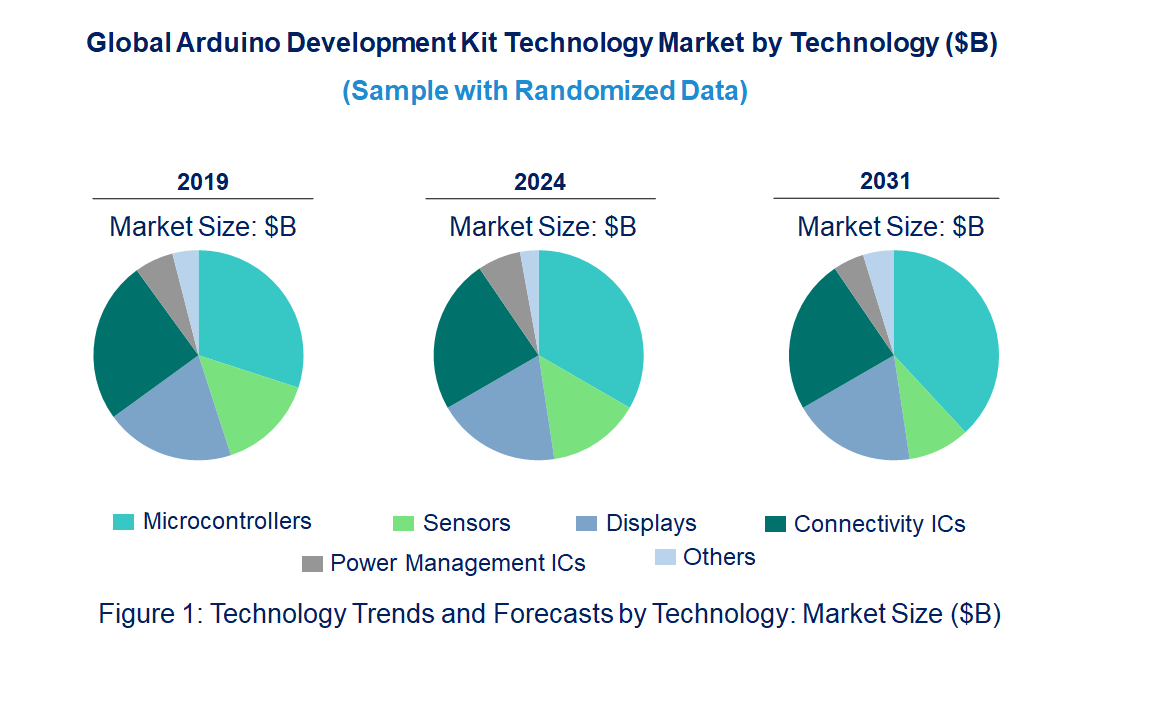
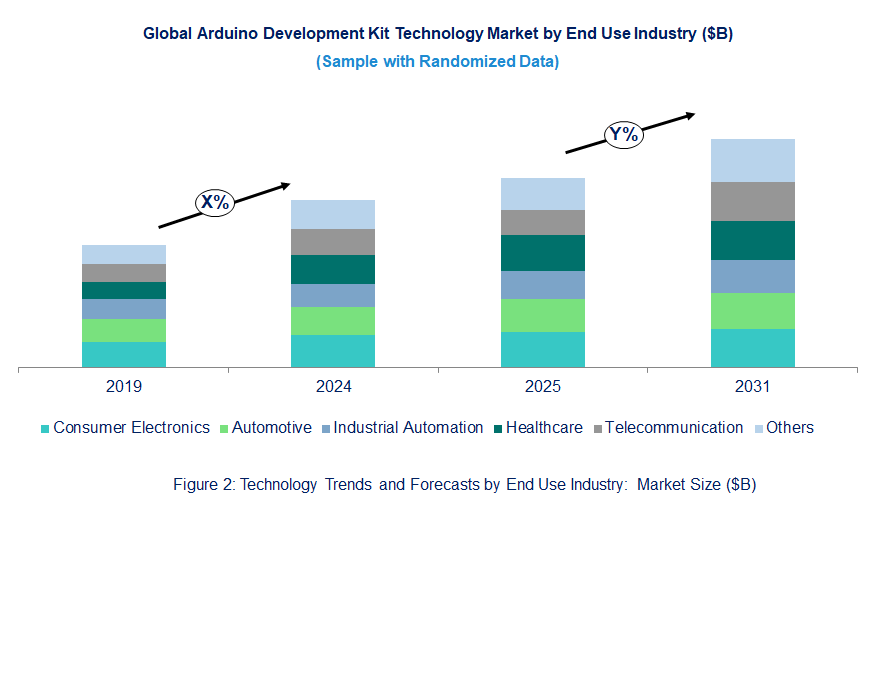
• Integration with IoT and Wireless Technologies: The Arduino environment has increasingly integrated wireless communication technologies such as Wi-Fi, Bluetooth, LoRa, and Zigbee, ensuring seamless connectivity in IoT applications. This enables the creation of remote sensing, monitoring, and control systems, increasing the use of Arduino in smart homes, industrial automation, and health monitoring systems.
• Advanced Sensor and Actuator Integration: A new trend in the use of Arduino development kits is the integration of advanced sensors and actuators. These sophisticated components allow developers to create more complex and dynamic systems, such as wearable devices, smart environments, and robotics.
• Educational Adoption and STEM Initiatives: Arduino is becoming more popular in educational environments, especially in STEM-related programs. Arduino kits are easy to use but offer robust capabilities, making them ideal for hands-on learning. This is fostering the development of young engineers and encouraging creativity among students in schools and universities.
• Specialized Kits for Specific Applications: Arduino has expanded its offerings to include specialized development kits for niche applications, such as robotics, automotive, and home automation, as the demand for tailored solutions grows. These kits come with customized components and instructions, allowing developers to quickly prototype and experiment in targeted fields.
• Better Power Management and Efficiency: As power consumption in portable and energy-saving devices increases, the adoption of advanced power management ICs and energy-efficient components in Arduino development kits is becoming more common. This allows battery-powered applications like wearables and remote sensors to run for longer periods without sacrificing performance. These emerging trends are transforming the arduino development kit market by making Arduino products more functional, accessible, and versatile. As IoT integration, advanced sensors, educational adoption, specialized applications, and power efficiency continue to evolve, Arduino kits are solidifying their position as essential tools for developers, educators, and hobbyists alike. These technological shifts are fostering innovation across industries and creating new opportunities for prototyping and experimentation.
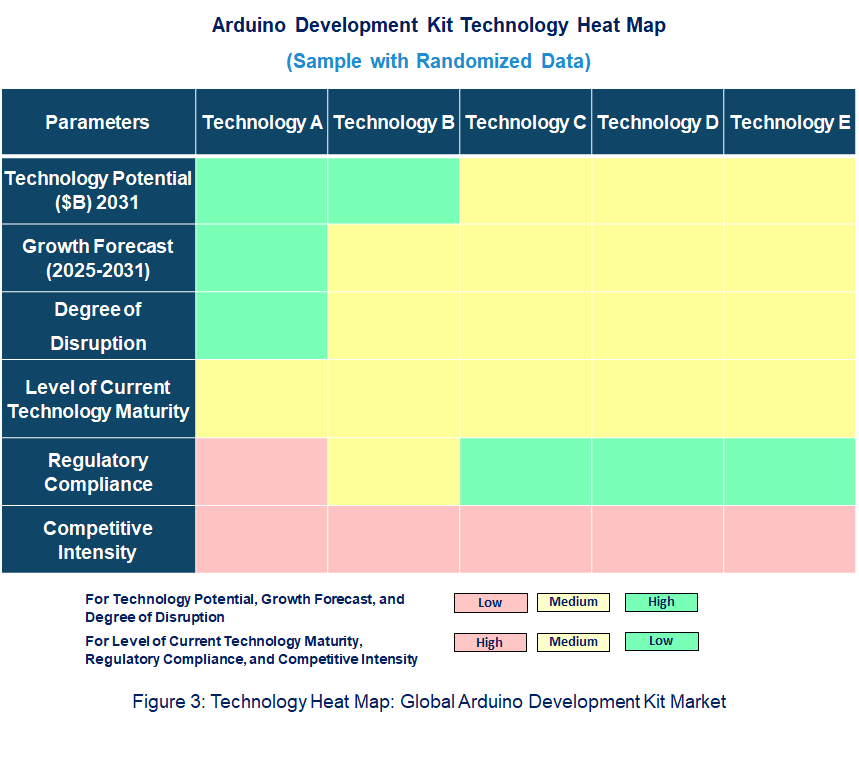
• Technology Potential: Arduino technology holds significant potential due to its versatility, low-cost entry, and adaptability. Its integration with IoT, wireless communication, and sensor technologies positions it as a key enabler for a wide range of applications, from education to industrial automation and smart homes. The innovation potential is vast, with new components and advanced functionalities continually expanding its use cases.
• Degree of Disruption: The Arduino platform has been disruptive, particularly in education and prototyping. By simplifying the development of complex systems, Arduino has made advanced technology accessible to a broader audience, including hobbyists and students. This democratization of technology has led to rapid advancements in DIY projects and grassroots innovation.
• Level of Current Technology Maturity: Arduino technology is highly mature, with a robust ecosystem of development kits, sensors, and community-driven resources. While the hardware and software are continually updated, Arduino’s open-source nature allows for rapid adoption and ongoing improvement.
• Regulatory Compliance: Arduino products generally face minimal regulatory hurdles, but as they become integrated into industrial and medical applications, adherence to relevant standards such as CE, RoHS, and UL certification will become increasingly important for ensuring safety and compliance.
• Arduino: The company remains in the major league with the introduction of boards like the Arduino Portenta H7. It is targeted at high-performance applications, featuring powerful dual-core processors suitable for industrial applications like AI and edge computing. It has also developed its cloud platform, Arduino Cloud, providing easy-to-use tools for developing IoT applications. This development enhances Arduino’s position as a comprehensive platform for both beginners and professionals.
• Adafruit: Adafruit introduced new sensors, displays, and, more specifically, microcontrollers, largely focusing on the expansion of its Feather board offering along with the CircuitPython ecosystem. These boards are ultra-portable and easy to apply when working on IoT and wearables projects. The emphasis on open-source hardware and plentiful guides has made it easier for hobbyists and educational users to engage with advanced electronics, which has led the company to expand its dominance in the maker and education markets.
• SparkFun: SparkFun’s product lines have been advanced by new Qwiic boards, which easily integrate sensors with standardized connections for I2C-based sensors. The company has designed an excellent online educational platform for tutorials, which enables users to prototype and build projects easily. SparkFun’s plug-and-play solutions make it the go-to destination for educational institutions focused on STEM programs.
• Seeed Studio: Seeed Studio has focused on the development of Seeeduino, Arduino-based projects compatible with additional GPIO pins and sensor compatibility. It has expanded its IoT ecosystem with the Wio Terminal, a powerful all-in-one device integrating display, audio, and Wi-Fi functionalities, enabling people to develop IoT applications quickly. Its push toward sustainable and eco-friendly components further emphasizes its strong position in the market.
• Microchip: Microchip has made significant progress with the SAMD family of ARM Cortex-M0+ microcontrollers, offering higher performance and lower power consumption for embedded systems. The company has also made efforts to include security in its semiconductor offerings, which is a crucial aspect in the development of secure IoT and industrial applications. As part of this initiative, Microchip is an important player in the Arduino ecosystem, offering high-quality, low-power solutions.
• NXP Semiconductors: NXP has gained traction by launching families like LPC and i.MX RT, which are strong contender for IoT and industrial control applications. The company’s focus on edge-compute features, along with security, and the growing requirement for smart appliances with reliable communication, offers more advantages to NXP. This attracts developers focused on real-time complex tasks carried out across various kinds of systems. These recent developments from key players in the arduino development kit market are helping shape the industry by offering a wide range of solutions tailored to diverse applications. From IoT to industrial automation, the continuous innovation by these companies enhances the accessibility, performance, and versatility of Arduino development kits, ensuring that the ecosystem remains a powerful tool for both education and professional use.
• Growth in IoT Applications: The rise of IoT technologies has created a significant opportunity for Arduino development kits. As industries seek affordable and scalable connectivity and data collection solutions for IoT, Arduino boards offer flexibility for rapid prototyping and agile deployment. This growth encourages wider adoption in smart homes, agriculture, and healthcare segments.
• Educational Initiatives and STEM Programs: Arduino kits are increasingly adopted in educational institutions as part of STEM (Science, Technology, Engineering, and Mathematics) curricula. Their ease of use and flexibility make them an ideal tool for hands-on learning. The integration of Arduino in schools and universities helps cultivate new generations of engineers, fostering creativity and problem-solving skills.
• Prototyping in Industrial Automation: Industrial automation and robotics are rapidly adopting Arduino kits for prototyping. The ability to quickly design, test, and iterate systems facilitates the rapid development of new products and systems. With the increasing demand for automation and intelligent systems, arduino is becoming a key tool for industrial applications. Challenges in the Arduino development kit market are:
• Cost-Effectiveness: Arduino kits are considered very affordable compared to other embedded development platforms. This low cost has helped the product gain significant adoption among hobbyists, startups, and educational institutions. Cost-effectiveness is a major factor in the market’s acceptance, especially in developing markets.
• Supply Chain Issues: While promising, Arduino development kits face supply chain issues, including component shortages and logistical challenges. These factors may delay the availability of products and disrupt the timely delivery of new kits to customers. For example, the global semiconductor shortage is one of the issues that could affect market growth.
• Competition from Other Development Platforms: Arduino faces competition from other development platforms such as Raspberry Pi, BeagleBoard, and ESP32, which offer similar capabilities for IoT, robotics, and embedded systems. Arduino must continue to innovate and differentiate itself as new alternatives emerge, threatening its market share. Growth opportunities shaping the arduino development kit market include the rise of IoT, educational adoption, and the demand for affordable and scalable prototyping solutions. The challenges include supply chain disruptions and increased competition. These opportunities and challenges are driving continuous innovation, making Arduino an indispensable tool for developers and educators.
• Arduino
• Adafruit
• SparkFun
• Seeed Studio
• Microchip
• NXP Semiconductors
• Technology Readiness by Technology Type: Microcontrollers are highly mature and are widely used in various Arduino kits for embedded systems, with strong competitive pressure from companies like Microchip and NXP Semiconductors. Sensors are becoming more advanced with better precision and integration capabilities, particularly for IoT and environmental applications, though they face some regulatory challenges in the healthcare and industrial sectors. Displays are evolving with higher resolutions and lower power consumption, ready for use in consumer electronics, wearables, and IoT devices. Connectivity ICs are crucial for seamless IoT integration, and technologies like Wi-Fi, Bluetooth, and LoRa are in widespread use, complying with global communication standards. Power management ICs are advancing in efficiency, particularly for energy-efficient and portable devices, with a focus on reducing environmental impact. Other technologies, such as custom PCBs and advanced actuators, are progressing rapidly, though they often require industry-specific regulatory compliance.
• Competitive Intensity and Regulatory Compliance: The competitive intensity in the Arduino development kit market is high, with various players introducing new solutions in microcontrollers, sensors, displays, connectivity ICs, and power management ICs. Companies like Arduino, Adafruit, and SparkFun dominate, but face competition from emerging platforms such as Raspberry Pi and ESP32. Each technology has specific regulatory compliance standards, especially for medical and automotive applications. For example, power management ICs must adhere to energy efficiency regulations, while connectivity ICs must meet global communication standards. Sensors used in healthcare require adherence to safety and data privacy regulations. These factors influence development timelines and market entry, driving innovation while ensuring products meet required safety and performance standards.
• Disruption Potential: The Arduino development kit market is significantly influenced by advancements in microcontrollers, sensors, displays, connectivity ICs, and power management ICs. Microcontrollers, with their increasing performance and energy efficiency, enable more complex and intelligent systems. Sensors are driving innovation in IoT and automation by offering higher precision and versatility, expanding their applications. Displays are enhancing user experiences, especially with the growth of portable and wearable technologies. Connectivity ICs, such as Wi-Fi, Bluetooth, and LoRa, are central to IoT, enabling real-time data transfer and communication across devices. Power management ICs are vital in improving energy efficiency and extending the lifespan of battery-operated devices. As new technologies emerge, they disrupt traditional development processes, making Arduino kits more powerful, flexible, and accessible, fostering new applications in areas like robotics, healthcare, and industrial automation.
• Microcontrollers
• Sensors
• Displays
• Connectivity ICs
• Power Management ICs
• Others
• Consumer Electronics
• Automotive
• Industrial Automation
• Healthcare
• Telecommunication
• Others
• North America
• Europe
• Asia Pacific
• The Rest of the World
• Latest Developments and Innovations in the Arduino Development Kit Technologies
• Companies / Ecosystems
• Strategic Opportunities by Technology Type


Choose a license that fits your team. Instant PDF delivery.
Prices exclude taxes. Instant delivery. Custom licensing available on request.
Market Report · May 18, 2026
Market Report · May 18, 2026
Market Report · May 18, 2026
Trusted partner for strategic intelligence and business growth


Receive a complimentary market analysis tailored to your industry. Our analysts will identify key growth opportunities and competitive dynamics specific to your business.

Market size, growth rate, and key trend analysis for your specific sector.

Top competitor positioning and market share analysis.

Strategic recommendations backed by data-driven insights.
Get curated market intelligence and competitive moves straight to your inbox.
By subscribing, you agree to receive our monthly insights. Unsubscribe anytime.
Receive a complimentary market analysis tailored to your industry. Our analysts will identify key growth opportunities and competitive dynamics specific to your business.
Market size, growth rate, and key trend analysis for your specific sector.
Top competitor positioning and market share analysis.
Strategic recommendations backed by data-driven insights.
Get curated market intelligence, emerging trends, and competitive moves straight to your inbox each month.
By subscribing, you agree to receive our monthly insights. Unsubscribe anytime.
We'll send your sample report shortly.