
Market Report · July 15, 2026

Key data points: The growth forecast = 7.2% annually for the next 7 years. Scroll below to get more insights. This market report covers trends, opportunities and forecasts in architecture design software market to 2031 by type (cloud-based and on-premises), application (buildings & facilities, electric & gas utilities, government, mapping & surveying, mining, rail & transit, roads & highways, and others), and region (North America, Europe, Asia Pacific, and the Rest of the World)
We'll send your sample report shortly.
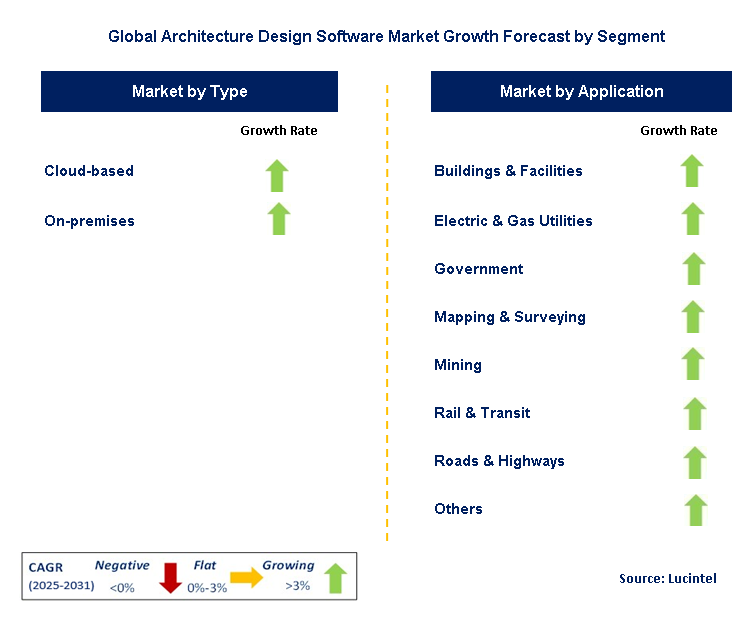
• Lucintel forecasts that, within the type category, cloud-based is expected to witness higher growth over the forecast period.
• Within the application category, building & facility is expected to witness the highest growth.
• In terms of region, North America is expected to witness the highest growth over the forecast period.
Gain valuable insights for your business decisions with our comprehensive 150+ page report. Sample figures with some insights are shown below.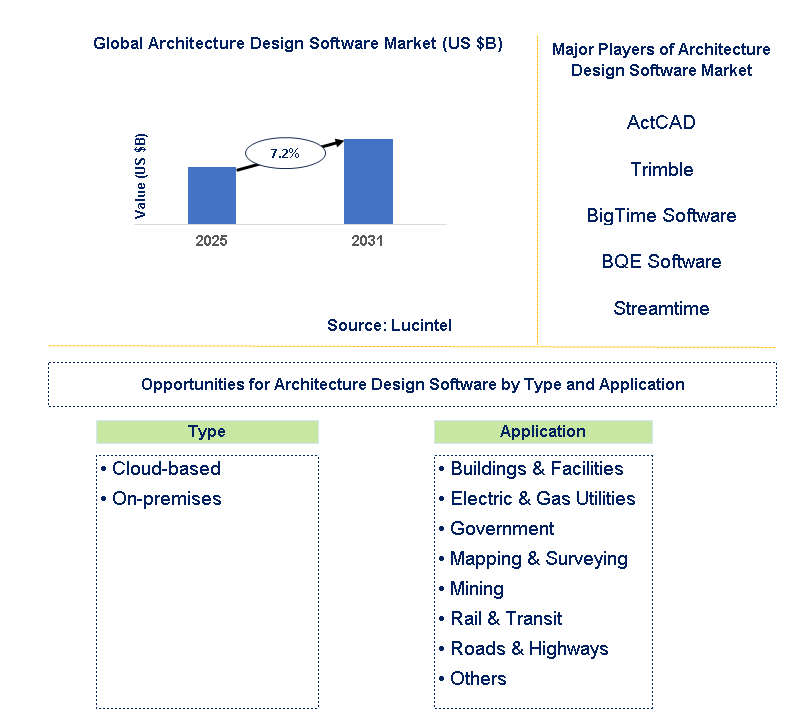
• Integration of Artificial Intelligence and Machine Learning: AI and ML are increasingly becoming an integral part of architectural design software, allowing capabilities like generative design, predictive analytics, and automated drafting. Generative design enables AI algorithms to quickly generate numerous design variations based on given parameters, optimizing performance, cost, or sustainability. AI also helps in analyzing complicated data, such as site conditions or energy use patterns, to guide design decisions and automate tedious tasks, allowing architects to concentrate on innovative problem-solving and imagination.
• Cloud-Based Collaboration Platforms: The transition to cloud-based solutions is a key trend, enabling real-time collaboration across geographically distributed design teams and stakeholders. Cloud-based platforms enable concurrent access to project files, instantaneous sharing of updates, and seamless communication, pushing beyond the limitations of traditional software. This trend improves efficiency, minimizes version control complications, and encourages an improved integrated design process, essential in the case of intricate Building Information Modeling (BIM) projects encompassing numerous disciplines from architecture through engineering and construction.
• Virtual Reality and Augmented Reality for Immersive Design: VR and AR technologies are revolutionizing design visualization and client communication. Architects are able to develop interactive virtual walkthroughs of their designs, enabling clients and stakeholders to experience suggested spaces in highly interactive and realistic ways. AR superimposes digital design models onto existing real-world environments, supporting site analysis and construction verification. The trend enhances comprehension, supports design review, and increases client participation, resulting in accelerated decision-making and reduced revisions during subsequent project phases.
• Focus on Sustainable Design and Performance Analysis: As global concern about climate change grows and environmental regulations become stricter, architectural software is adding more powerful tools for sustainable design and building performance evaluation. This includes simulating energy usage, daylighting, ventilation, and material effects directly into the design process. Software now allows architects to maximize designs for energy efficiency, apply sustainable materials, and obtain green building certifications, making environmental factors a fundamental aspect of architectural practice from the initial stages.
• Digital Twin Technology Integration: The idea of digital twins or virtual images of physical structures is picking up steam in the architecture design software industry. The phenomenon entails the development of extremely detailed digital models which are constantly fed with real-time information from the actual building throughout its operational span. Architects can leverage the digital twin functions in their software to model building performance, forecast maintenance requirements, and streamline operations years after the structure has been built. This convergence is filling the gap between design, construction, and facility management and providing a complete lifecycle solution.
These new trends are deeply transforming the architecture design software market by expanding the limits of creativity, efficiency, and collaboration. The convergence of AI, cloud platforms, and immersive technologies with a serious emphasis on sustainability and digital twins is revolutionizing architectural practice. Software is becoming smarter, more connected, and able to provide end-to-end solutions that enhance the entire lifecycle of the building, from concept to ongoing operation, thus facilitating innovation and value creation throughout the AEC ecosystem.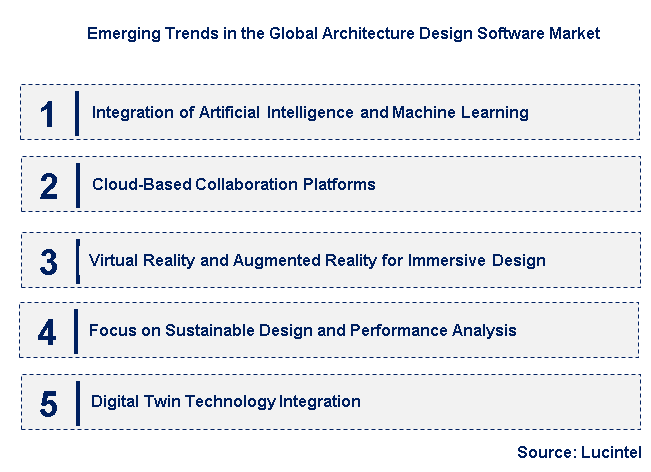
• Widespread Use of Building Information Modeling (BIM): One of the most far-reaching recent advancements is the widespread use of BIM as a core methodology. BIM software consolidates all the elements of a building project into one intelligent 3D model, allowing architects, engineers, and contractors to work in perfect synchronization. This change from 2D drafting to comprehensive 3D modeling allows for improved visualization, clash detection, quantity take-offs, and project management. Its extensive application is radically transforming project delivery, resulting in lesser errors, lower costs, and faster schedules.
• Integration of Artificial Intelligence (AI) and Generative Design: The use of AI and machine learning to support generative design has become a revolutionary advancement. AI can scrutinize large sets of data and quickly produce many different design alternatives within certain parameters, like site limitations, energy efficiency, or load-bearing requirements. This process automatically does iterative design, enabling architects to consider a much larger number of solutions in much less time, resulting in more efficient designs that may not have been possible using conventional techniques.
• Advanced Cloud-Based Collaboration Capabilities: Advances in recent times have witnessed a major improvement in cloud-based collaboration capabilities in architectural software. These systems allow co-authoring of designs in real-time, effortless data sharing, and live project update synchronization across multidisciplinary teams irrespective of their location. This creates a more efficient and nimble design process, minimizes communication silos, and enhances overall project coordination, which is imperative for intricate global and local projects both.
• Extended Visualization using Virtual and Augmented Reality (VR/AR): Advanced visualization using VR and AR technologies is a significant improvement. Architects are more and more utilizing these technologies to develop immersive experiences of buildings, enabling clients and stakeholders to "walk through" a virtual building prior to breaking ground. AR especially helps in superimposing digital models on actual construction sites for validation. This facilitates better understanding, more informed decision-making, and greatly enhances client involvement.
• Focus on Sustainable Design and Simulation Software: Current innovations represent a firm industry trend towards sustainable design, with software including increasingly advanced simulation and analysis capabilities. Designers now have the ability to conduct detailed energy performance analysis, daylight optimization, thermal comfort simulation, and material impact assessment within their own design software. This allows designers to make informed decisions reducing the environmental footprint of a building, encouraging energy efficiency, and supporting green building certifications, facilitating a more sustainable approach to architecture.
These advancements are having a deep influence on the architecture design software market by allowing design workflows to become smarter, collaborative, and integrated throughout the entire project life cycle. The movement towards BIM-based workflows, AI-based design, cloud collaboration, virtual reality visualization, and sustainability analysis is equipping architects with unparalleled tools. It results in quicker, more accurate, and eco-friendly building results, effectively transforming the future of architectural practice.• Commercial and Residential Building Design: This segment offers the biggest and most stable growth prospect. As urbanization proceeds around the world, there is a relentless need for new office buildings, shopping facilities, and residential construction. Growth strategy involves offering complete BIM-capable software that integrates the whole design-to-construction process, maximizes space utilization, and ensures easy collaboration between architects, builders, and developers. Visualization and client involvement solutions will be especially of use in this competitive industry.
• Infrastructure and Urban Planning Projects: The worldwide drive towards smart cities and strong infrastructure growth (e.g., transportation terminals, utilities, public areas) presents huge opportunity for growth. Large-scale projects demand advanced software for intricate spatial analysis, master planning, and blending of varied urban components. Strategic emphasis should be placed on software supporting large-scale data management, parametric modeling for repetitive components, and high-end simulation for environmental and traffic influence analysis, facilitating the development of sustainable and efficient urban spaces.
• Sustainable and Energy-Efficient Building Design: With mounting environmental regulations and heightened interest in sustainability, this application is a high-growth prospect. Strategic growth entails creating and incorporating sophisticated simulation tools into architecture software that facilitates accurate analysis of a building's energy efficiency, daylight, thermal comfort, and carbon impact. Software that supports architects in optimizing designs for net-zero energy buildings, renewable energy integration, and green building certifications will be in high demand.
• Renovation, Retrofit, and Adaptive Reuse Projects: With aging existing urban infrastructure, the renovation, retrofit, and adaptive reuse market is growing steadily. These jobs tend to be complex in terms of existing conditions, historic preservation, and structural changes. Strategic opportunity is in offering software with strong scanning functionality (e.g., integration with LiDAR), smart clash detection, and analysis tools for structural integrity and energy performance of existing buildings, enabling efficient and code-compliant renovations.
• Interior Design and Space Planning: The rising need for optimized and adaptive interior rooms, prompted by emerging workplace models and individualized living, presents an expanding opportunity for architectural design software. Strategic expansion targets creating intuitive software for 3D interior modeling, material choice, furniture planning optimization, and immersive visualization for clients. Solutions that are seamlessly integrated with wider architectural models and provide real-time rendering functionalities will meet the expanding demand for dynamic and adaptive interior environments.
These strategic growth prospects are having a deep effect on the architecture design software market by accelerating innovation and specialization in targeted directions. Through concentration on the distinct requirements of commercial and residential, infrastructure, sustainable, renovation, and interior design applications, software vendors are able to build solutions that are customized to achieve greater efficiency, accuracy, and project outcomes overall. This will drive market growth and make architecture design software an essential tool in all phases of the built environment lifecycle.• ActCAD
• Trimble
• BigTime Software
• BQE Software
• Streamtime
• Graphisoft
• Microspot
• Bentley Systems
• SmartDraw
• ProgeSOFT
• Cloud-based
• On-premises
• Buildings & Facilities
• Electric & Gas Utilities
• Government
• Mapping & Surveying
• Mining
• Rail & Transit
• Roads & Highways
• Others
• North America
• Europe
• Asia Pacific
• The Rest of the World
• United States: Within the United States, recent advancements in architectural design software are vastly impacted by the mass adoption of Building Information Modeling (BIM) as a best practice within the architecture, engineering, and construction (AEC) industry. There is a strong focus on incorporating AI and machine learning towards generative design, enabling architects to quickly search for optimized building layouts and site plans. Cloud platforms are emerging for greater collaboration and remote working, and virtual and augmented reality are being utilized more for interactive design presentation and client interaction, fueling visualization tool innovation.
• China: The architecture design software market in China is witnessing strong growth, fueled by high-speed urbanization and huge infrastructure initiatives. Recent trends include major investments in local software creation, frequently with a view to incorporating AI for design optimization and automation, especially for large projects of urban planning and residential developments. Increased demand exists for software that can facilitate effective project management as well as interdisciplinary work. The push for smart cities and green buildings is also impelling the use of software that can simulate energy performance and sustainable design solutions.
• Germany: Germany's architecture design software market is dominated by a strong emphasis on accuracy, productivity, and adherence to strict building regulations. Recent trends involve further improvements in BIM software, with the latter increasingly important for stakeholder participation and project efficiency. The market is showing a significant trend towards combining AI and machine learning for next-generation analytics and predictability to improve project outcomes for companies. Cloud-based technologies are gathering pace with flexible access and greater collaboration between design teams, keeping abreast with Germany's digital movement in the construction industry.
• India: The Indian architecture design software market is experiencing strong growth, fueled by growing construction activity in residential, commercial, and infrastructure segments. Recent trends indicate a high interest in the uptake of new software platforms to increase productivity, reduce project timelines, and mesh with existing staff skills. Although 2D planning and visualization software continues to enjoy popularity, there is heightened interest in 3D modeling and structural design. The market increasingly looks for cost-efficient, cloud-based offerings, especially from small and medium-sized businesses, indicating a universal acknowledgment of digital onboarding as a strategic necessity.
• Japan: The architecture design software market in Japan focuses on high-performance and long-lifecycle solutions, led by a concern for energy savings, disaster mitigation, and beauty. Recent trends include increasing demand for 3D visualization for home renovation and commercial developments, as well as increased adoption of new technologies such as augmented reality and virtual reality for interactive design experiences. Cloud-based solutions are increasingly becoming popular to simplify workflows, and AI-based design suggestions are on the rise. Demand is also on the rise for solutions that enable effective space planning and interior visualization.


• ActCAD
• Trimble
• BigTime Software
• BQE Software
• Streamtime
• Graphisoft
• Microspot
• Bentley Systems
• SmartDraw
• ProgeSOFT
Q5. Which architecture design software market segment will be the largest in future?

Choose a license that fits your team. Instant PDF delivery.
Prices exclude taxes. Instant delivery. Custom licensing available on request.
Market Report · July 15, 2026
Market Report · June 26, 2026
Market Report · June 24, 2026
Trusted partner for strategic intelligence and business growth


Receive a complimentary market analysis tailored to your industry. Our analysts will identify key growth opportunities and competitive dynamics specific to your business.

Market size, growth rate, and key trend analysis for your specific sector.

Top competitor positioning and market share analysis.

Strategic recommendations backed by data-driven insights.
Get curated market intelligence and competitive moves straight to your inbox.
By subscribing, you agree to receive our monthly insights. Unsubscribe anytime.
Receive a complimentary market analysis tailored to your industry. Our analysts will identify key growth opportunities and competitive dynamics specific to your business.
Market size, growth rate, and key trend analysis for your specific sector.
Top competitor positioning and market share analysis.
Strategic recommendations backed by data-driven insights.
Get curated market intelligence, emerging trends, and competitive moves straight to your inbox each month.
By subscribing, you agree to receive our monthly insights. Unsubscribe anytime.
We'll send your sample report shortly.