
Market Report · July 15, 2026

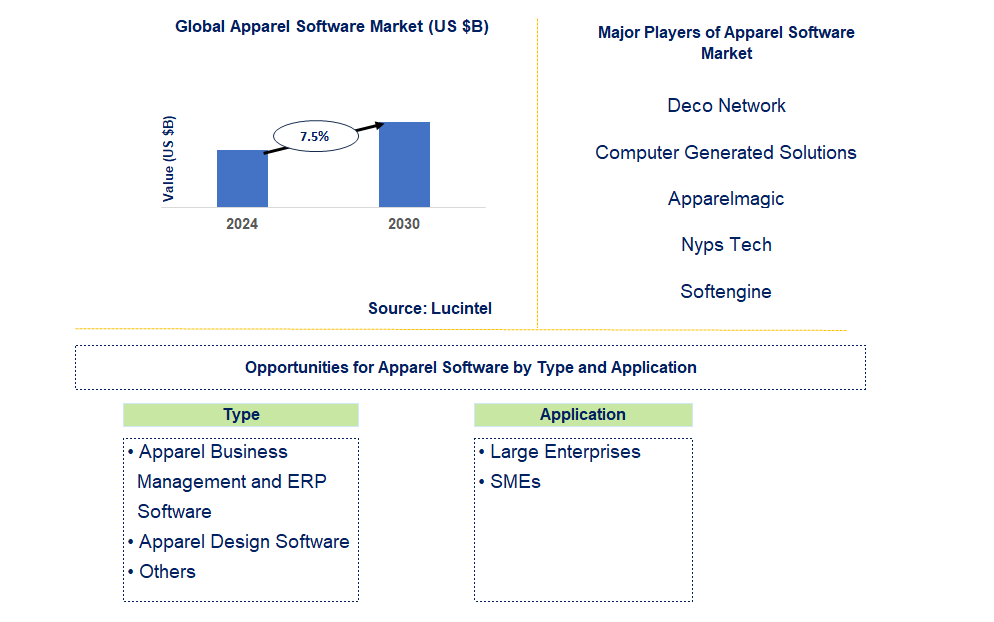
Key data points: The growth forecast = 7.5% annually for the next 7 years. Scroll below to get more insights. This market report covers Trends, opportunity and forecast in apparel software market to 2031 by type (apparel business management and ERP software, apparel design software, and others), application (large enterprises and SMEs), and region (North America, Europe, Asia Pacific, and the Rest of the World)
We'll send your sample report shortly.
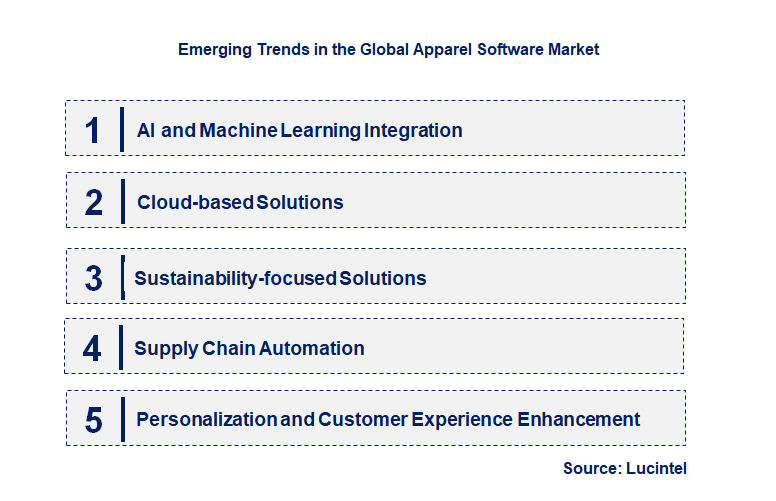
• AI and Machine Learning Integration: AI and machine learning are revolutionizing the apparel software market by improving design processes, inventory management, and trend forecasting. These technologies enable businesses to make data-driven decisions, optimize production workflows, and predict consumer preferences, which helps them stay competitive in a fast-paced market.
• Cloud-based Solutions: The shift toward cloud-based software solutions has been a key development in the apparel software market. Cloud technology offers greater flexibility, scalability, and cost efficiency for apparel companies, enabling them to easily manage their operations, collaborate globally, and store vast amounts of data securely.
• Sustainability-focused Solutions: As sustainability becomes a priority for consumers, software solutions designed to support eco-friendly practices are gaining popularity. This includes software that helps businesses track their carbon footprint, reduce waste, and ensure ethical sourcing. By integrating sustainability into their operations, apparel companies can meet consumer expectations and regulatory requirements.
• Supply Chain Automation: Automation in supply chain management is transforming the apparel industry. Software solutions that automate tasks such as order processing, inventory tracking, and logistics are helping companies improve operational efficiency, reduce human error, and ensure faster response times to market demands.
• Personalization and Customer Experience Enhancement: Apparel companies are increasingly using software tools to personalize customer experiences. From customized product recommendations to virtual fitting rooms, advanced software technologies are enhancing customer engagement, boosting loyalty, and increasing sales. These emerging trends are reshaping the apparel software market by fostering greater efficiency, sustainability, and customer engagement. With the integration of advanced technologies like AI, cloud-based solutions, and automation, apparel companies are able to streamline their operations and stay ahead of the competition. The focus on sustainability is also driving the development of software solutions that help businesses meet environmental and social expectations, while personalized customer experiences are creating new opportunities for growth and loyalty.
• Artificial Intelligence and Machine Learning Integration: AI and ML are being more and more integrated into apparel software to drive automation, enhance forecasting precision, and improve decision-making. For example, AI-driven design software can help designers create new styles and forecast trend acceptance, and ML algorithms can scan sales data to optimize inventory management and demand forecasting. This convergence enables apparel companies to react faster to changes in the market, reduce waste by more efficient inventory planning, and customize customer experiences by providing personalized product suggestions. The effect is reflected in enhanced efficiency, lower operational expenses, and enhanced customer satisfaction.
• Emergence of Cloud-Based and SaaS Solutions: The use of cloud-based and Software-as-a-Service (SaaS) solutions is becoming more prevalent in the apparel industry. These solutions provide scalability, flexibility, and accessibility, enabling companies to control their operations remotely and work better together. Cloud solutions remove the requirement for massive on-premises infrastructure, lowering IT expenditures and facilitating smoother integration with other software systems. This transition is especially valuable to small and medium-sized businesses (SMEs) that are able to tap into enterprise-grade software without incurring high upfront costs, supporting increased agility and innovation throughout the apparel value chain.
• Enhanced Focus on Supply Chain Transparency and Traceability: Growing consumer awareness regarding ethical and sustainable practices is driving the demand for greater transparency in the apparel supply chain. Recent software developments are focusing on providing end-to-end visibility, allowing businesses to track materials, production processes, and labor conditions. Technologies like blockchain and RFID are being integrated into apparel software to ensure traceability and build consumer trust. This emphasis allows businesses to show their dedication to sustainability and ethical sourcing, reduce the risks of supply chain disruption, and react well to regulatory demands.
• Creation of 3D Design and Virtual Prototyping Tools: 3D design and virtual prototyping software are transforming the apparel development process. These applications enable designers to design and visualize garments in a virtual world, minimizing the use of physical samples and speeding up time-to-market. Virtual prototyping enables quicker iterations of design, enhances cooperation among design teams, and reduces material waste and the expense of conventional sampling to a great extent. This innovation is allowing apparel firms to be more agile, responsive to fashion trends, and sustainable throughout their product development cycle.
• Omnichannel and Customer Relationship Management Integration: A smooth omnichannel experience is paramount in today's retail environment. Apparel software is becoming more integrated into CRM systems to offer a consolidated view of the customer throughout all touchpoints, such as online stores, brick-and-mortar retailing, and social media. Integration allows companies to tailor marketing campaigns, offer consistent customer service, and receive beneficial information about how customers act. By linking sales, marketing, and customer service information, apparel businesses can create more robust customer relationships, increase brand loyalty, and stimulate sales growth in all channels. All five of these major developments – the convergence of AI/ML, the emergence of cloud-based solutions, the emphasis on supply chain visibility, the evolution of 3D design software, and the convergence of omnichannel/CRM systems – are all converging to transform the Apparel Software Market. They are propelling more efficiency, sustainability, and customer focus in the industry. Fashion companies that adopt these technological innovations will be in a stronger position to handle the intricacies of the contemporary fashion environment, adapt to changing consumer needs, and attain sustainable growth in a more competitive global marketplace.
• Cloud-based Software Solutions: The demand for scalable, cost-effective, and easily accessible cloud-based software solutions is on the rise. Apparel companies can use these solutions to manage various aspects of their business, such as inventory, production, and customer data, without investing in costly on-premises infrastructure.
• AI-driven Design and Manufacturing Tools: The adoption of AI-powered design tools and manufacturing software offers apparel companies the opportunity to streamline production processes, reduce waste, and enhance product quality. These tools help businesses quickly adapt to fashion trends and optimize their supply chain management.
• Sustainability Tracking and Compliance Tools: With sustainability becoming a critical concern, software solutions that enable companies to track and report their environmental impact present a key growth opportunity. These tools help businesses comply with regulations, meet consumer demand for eco-friendly practices, and improve their brand reputation.
• E-commerce and Omnichannel Retail Solutions: The increasing popularity of online shopping presents a significant growth opportunity for apparel software solutions focused on e-commerce and omnichannel retail. These solutions enable businesses to manage their online presence, integrate physical and digital sales channels, and provide a seamless shopping experience for consumers.
• Personalization and Customer Experience Management: The growing demand for personalized shopping experiences offers opportunities for apparel software developers to create solutions that enhance customer engagement. These tools allow businesses to offer tailored recommendations, virtual fitting rooms, and personalized marketing campaigns to boost sales and customer loyalty. These growth opportunities highlight the potential for innovation and expansion within the apparel software market. By leveraging cloud technology, AI, and sustainability-focused tools, companies can drive operational efficiencies, improve customer experiences, and meet the growing demand for sustainable practices. The focus on e-commerce and personalization further reinforces the importance of digital transformation in the apparel sector, providing a roadmap for future growth and success.
• Deco Network
• Computer Generated Solutions
• Apparelmagic
• Nyps Tech
• Softengine
• Apparel Business Management and ERP Software
• Apparel Design Software
• Others
• Large Enterprises
• SMEs
• North America
• Europe
• Asia Pacific
• The Rest of the World
• United States: The apparel software market in the United States has been evolving rapidly, with a growing emphasis on cloud-based solutions. Many companies are investing in AI-driven tools for design, inventory management, and customer experience enhancements. Retailers and manufacturers are seeking more robust systems that can help streamline their operations, from production to sales. The U.S. also leads in adopting software solutions focused on sustainability and ethical sourcing, aligning with consumer demand for transparency and traceability. This development is fueling growth, offering greater efficiency and adaptability for businesses to meet shifting market demands.
• China: In China, the apparel software market has been marked by the integration of advanced technologies like AI, machine learning, and big data analytics to optimize supply chains and reduce production costs. As the world's largest apparel manufacturer, China’s companies are increasingly adopting software solutions that can handle complex logistics, forecast trends, and manage large-scale production workflows. Moreover, digital transformation in retail and the rise of e-commerce are pushing Chinese businesses to invest in more sophisticated software to stay competitive in the global market.
• Germany: The apparel software market in Germany is seeing a strong push toward innovation, especially in areas like digital design, sustainable production, and supply chain management. German companies are leveraging AI and IoT to improve manufacturing processes and reduce waste. Additionally, German retailers are focusing on improving customer engagement through integrated digital platforms. The demand for sustainable and efficient solutions has driven the adoption of software that emphasizes green technologies and automation, further enhancing operational productivity and environmental responsibility.
• India: The Indian apparel software market has witnessed significant growth, particularly in areas of supply chain management, production planning, and demand forecasting. With a large number of small and medium-sized enterprises (SMEs) in the apparel industry, India’s adoption of affordable and scalable software solutions is on the rise. The demand for automation and the integration of AI-driven software to enhance manufacturing efficiency and product quality are transforming India’s apparel sector. As digital adoption increases, companies are also focusing on creating a better digital experience for customers, especially in the online retail space.
• Japan: The Japanese apparel software market has been increasingly focusing on smart manufacturing solutions that utilize AI, robotics, and IoT to enhance operational efficiency. With the country’s reputation for technological innovation, many apparel companies are incorporating advanced software tools to optimize production, improve quality control, and reduce lead times. Japan is also at the forefront of integrating AI to predict fashion trends and manage inventory effectively. Moreover, Japan's emphasis on sustainability has led to a rise in software solutions that support eco-friendly practices, such as waste reduction and responsible sourcing.


• Deco Network
• Computer Generated Solutions
• Apparelmagic
• Nyps Tech
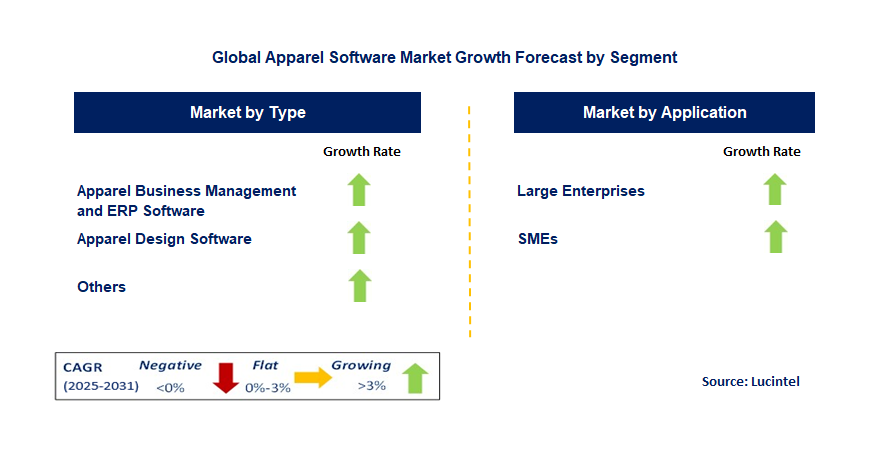
• Softengine Q5. Which apparel software market segment will be the largest in future? Answer: Lucintel forecasts that apparel business management and ERP software is expected to witness higher growth over the forecast period. Q6. In apparel software market, which region is expected to be the largest in next 5 years? Answer: APAC is expected to witness the highest growth over the forecast period. Q7. Do we receive customization in this report? Answer: Yes, Lucintel provides 10% customization without any additional cost.


Choose a license that fits your team. Instant PDF delivery.
Prices exclude taxes. Instant delivery. Custom licensing available on request.
Market Report · July 15, 2026
Market Report · June 26, 2026
Market Report · June 24, 2026
Trusted partner for strategic intelligence and business growth


Receive a complimentary market analysis tailored to your industry. Our analysts will identify key growth opportunities and competitive dynamics specific to your business.

Market size, growth rate, and key trend analysis for your specific sector.

Top competitor positioning and market share analysis.

Strategic recommendations backed by data-driven insights.
Get curated market intelligence and competitive moves straight to your inbox.
By subscribing, you agree to receive our monthly insights. Unsubscribe anytime.
Receive a complimentary market analysis tailored to your industry. Our analysts will identify key growth opportunities and competitive dynamics specific to your business.
Market size, growth rate, and key trend analysis for your specific sector.
Top competitor positioning and market share analysis.
Strategic recommendations backed by data-driven insights.
Get curated market intelligence, emerging trends, and competitive moves straight to your inbox each month.
By subscribing, you agree to receive our monthly insights. Unsubscribe anytime.
We'll send your sample report shortly.