
Market Report · July 22, 2026

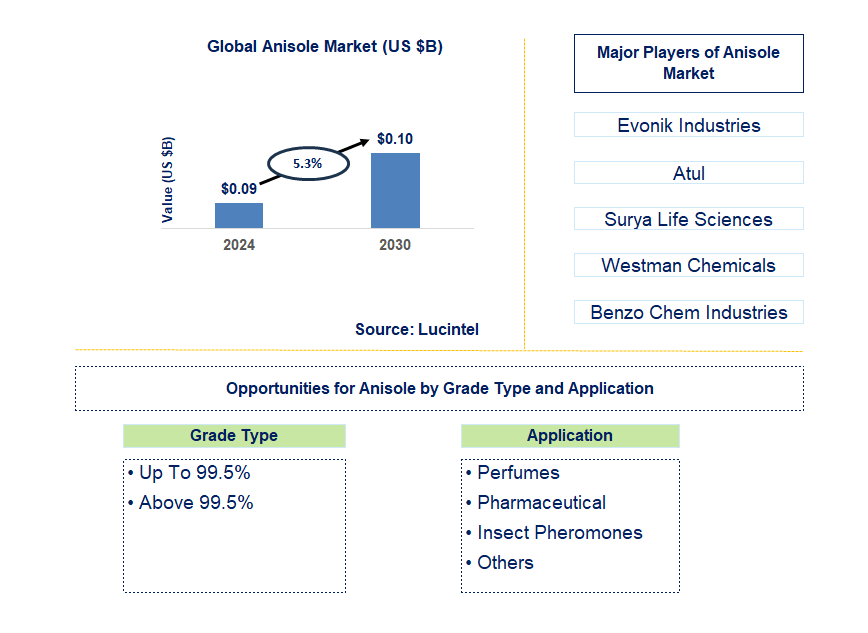
Key data points: The market size in 2030 = $0.1 billion, growth forecast = 5.3% annually for the next 6 years. Scroll below to get more insights. This market report covers trends, opportunities, and forecasts in the global anisole market to 2030 by grade type (up to 99.5% and above 99.5%), application (perfumes, pharmaceutical, insect pheromones, and others), and region (North America, Europe, Asia Pacific, and the Rest of the World)
We'll send your sample report shortly.
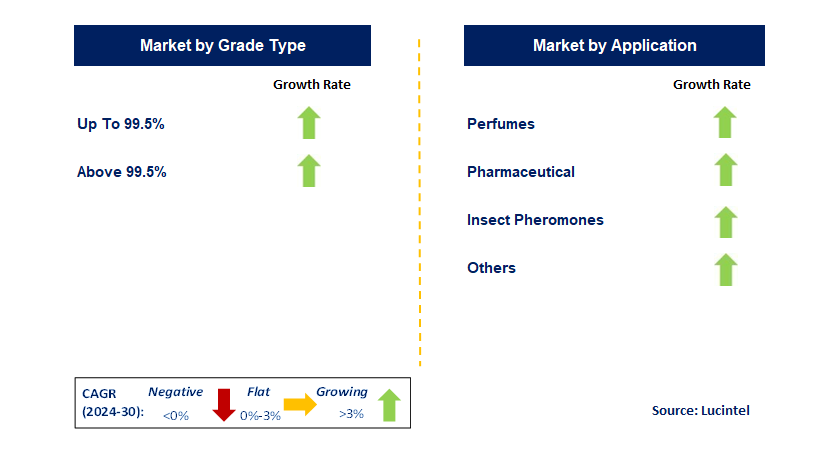
• Lucintel forecasts that, within the grade type category, up to 99.5% is expected to witness the highest growth over the forecast period due to its further addition to its extensive industrial value by acting as a solvent in a variety of chemical processes.
• Within the application category, perfumes will remain the largest segment due to increasing domestic demand, and unique properties.
• In terms of regions, North America is expected to witness the highest growth over the forecast period due to the orthodox pharmaceutical and personal care industry in the U.S. and Canada contributes to the market in the region. A more than 150-page report is developed to help in your business decisions.
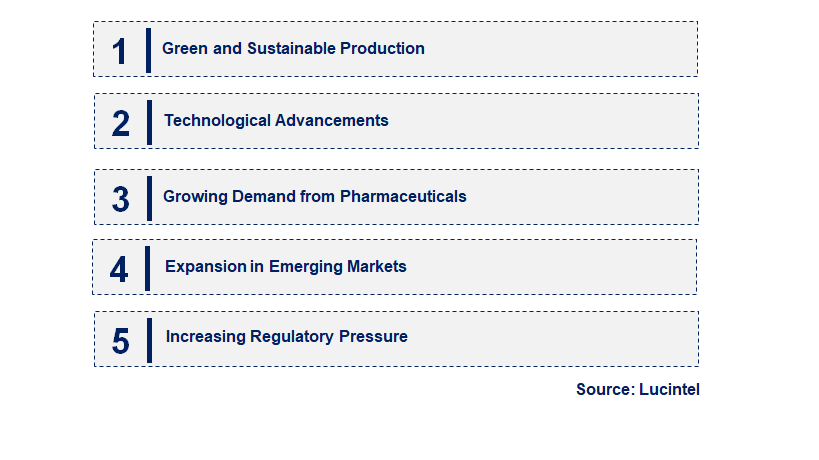
• Green and Sustainable Production: The trend towards green chemistry and sustainable production practices is gaining momentum. Companies are adopting environmentally friendly processes to reduce waste and energy consumption. This shift is driven by increasing environmental regulations and consumer demand for sustainable products. Implementing these practices not only helps with compliance but also enhances the marketability of anisole products, making them more attractive to eco-conscious consumers and businesses.
• Technological Advancements: Technological innovations are significantly impacting the anisole market. Advanced production technologies are improving efficiency, reducing costs, and enhancing product quality. Automation and process optimization are leading to higher yields and lower environmental impact. These advancements are enabling producers to meet the growing demand more effectively and stay competitive in the global market by offering higher purity and more consistent products.
• Growing Demand from Pharmaceuticals: The pharmaceutical industry’s increasing reliance on anisole for drug formulation and synthesis is driving market growth. Anisole’s role as an intermediate in the production of various pharmaceuticals has expanded, fueled by the rise in drug development and production. This trend is particularly strong in regions with advanced pharmaceutical sectors, such as the U.S., Germany, and Japan, where high-quality anisole is essential for complex drug formulations.
• Expansion in Emerging Markets: Emerging markets, particularly in Asia, are experiencing significant growth in anisole demand. Rapid industrialization and economic development in countries like China and India are boosting the consumption of anisole in various applications, including agrochemicals and personal care products. This expansion is attracting investments and driving local production capabilities, making these regions critical players in the global anisole market.
• Increasing Regulatory Pressure: Regulatory frameworks worldwide are becoming more stringent, impacting the anisole market. Regulations aimed at reducing environmental impact and ensuring product safety are compelling producers to adopt safer and more sustainable practices. Compliance with these regulations is not only necessary for market access but also serves as a competitive advantage in a market increasingly focused on environmental and health considerations. These emerging trends are reshaping the anisole market by driving technological advancements, enhancing sustainability, and expanding demand in emerging regions. As companies navigate these changes, they must adapt to new regulatory requirements, invest in innovative technologies, and address the growing focus on environmental and consumer safety. The interplay of these trends will determine the future trajectory of the anisole market, influencing production practices and market dynamics globally.
• Technological Innovations in Production: Technological innovations have led to more efficient and cost-effective production of anisole. Advanced techniques such as improved catalysts and automation have enhanced production processes, increasing yield and reducing environmental impact. These innovations are making anisole more affordable and available, supporting growth in various applications and regions.
• Shift Towards Sustainable Practices: The anisole industry is increasingly focusing on sustainability, driven by regulatory pressures and consumer demand for eco-friendly products. Companies are implementing greener production methods and reducing waste, which aligns with global sustainability goals. This shift is improving the industry's environmental footprint and making anisole products more attractive to environmentally conscious buyers.
• Expansion of Production Facilities: There has been a significant expansion in anisole production facilities, particularly in emerging markets. Investments in new plants and technology upgrades are enhancing production capacities and meeting rising demand. This expansion is helping to stabilize supply chains and improve market access in regions with growing industrial and consumer needs.
• Regulatory Changes: Recent regulatory changes have impacted the anisole market, with stricter guidelines on environmental and safety standards. Compliance with these regulations is driving industry changes, including the adoption of safer chemicals and more sustainable practices. These regulations are shaping market dynamics and influencing how companies operate and compete.
• Increased Demand from Emerging Markets: The demand for anisole is surging in emerging markets due to rapid industrialization and economic growth. Countries like China and India are experiencing increased consumption of anisole in various sectors, including pharmaceuticals and agrochemicals. This rising demand is driving global market growth and encouraging investments in local production capabilities. These key developments are transforming the anisole market by driving technological progress, fostering sustainability, expanding production capacities, and adapting to regulatory changes. The impact of these developments is creating a more dynamic and responsive market, with opportunities for growth and innovation in response to evolving industry needs and global trends.
• Pharmaceuticals: The pharmaceutical industry represents a key growth opportunity for anisole, as it is used as an intermediate in drug synthesis and formulation. Increasing R&D activities and the development of new drugs are driving demand. Anisole's role in producing active pharmaceutical ingredients (APIs) and enhancing drug efficacy is crucial, making it an attractive sector for investment and development. Pharmaceutical companies are seeking high-purity anisole to meet stringent quality standards, boosting market potential.
• Agrochemicals: Anisole's use in agrochemicals, such as pesticides and herbicides, is expanding due to rising agricultural productivity needs. It serves as an essential intermediate in the production of various agrochemical compounds. As global agriculture focuses on improving yields and sustainability, the demand for anisole in this sector is growing. Companies investing in the development of new agrochemical formulations are creating significant opportunities for anisole market growth.
• Fragrances and Flavors: The fragrance and flavor industry is a traditional yet growing application for anisole, valued for its aromatic properties. The rising demand for natural and synthetic fragrances in personal care products, household goods, and food and beverages is driving anisole consumption. Innovations in fragrance formulations and the increasing popularity of customized scent profiles present opportunities for market expansion in this sector.
• Electronics: Anisole is finding applications in the electronics industry, particularly in the production of specialty chemicals used in electronic components and manufacturing processes. The growing electronics sector, driven by advancements in technology and increasing consumer electronics usage, is creating demand for high-purity anisole. Its role in producing insulating materials and other electronic components underscores its importance and growth potential in this application.
• Specialty Chemicals: The specialty chemicals sector, including the production of various industrial and consumer chemicals, is a burgeoning area for anisole. Its use in synthesizing specialty chemicals and additives highlights its versatility. The rising demand for custom and high-performance chemicals across various industries is opening new avenues for anisole, offering growth opportunities through its application in diverse chemical formulations. These strategic growth opportunities are reshaping the anisole market by driving demand across key applications. The expansion into pharmaceuticals, agrochemicals, fragrances, electronics, and specialty chemicals reflects the compound’s versatility and growing importance in various industries. As these sectors evolve, leveraging these opportunities will be crucial for stakeholders to capitalize on market growth and innovation.
• Technological Advancements: Technological advancements in production processes are a significant driver for the anisole market. Innovations such as improved catalysts and automation have enhanced production efficiency, reduced costs, and increased output quality. These advancements facilitate higher purity levels and more consistent products, meeting the rising demand across various applications and boosting market growth.
• Rising Demand in Pharmaceuticals: The pharmaceutical sector’s increasing demand for anisole, driven by its role as an intermediate in drug synthesis, is a key market driver. The growth in drug development and production, particularly for high-value pharmaceuticals, is creating substantial demand for high-purity anisole. This trend underscores the market potential and attracts investments in production capabilities and R&D.
• Expanding Applications in Agrochemicals: Anisole’s expanding use in agrochemicals, including pesticides and herbicides, is fueling market growth. The need for effective and sustainable agricultural solutions is driving demand for anisole as a critical ingredient in agrochemical formulations. This trend is bolstered by global efforts to enhance agricultural productivity and sustainability, presenting significant growth opportunities for the market.
• Growth in Fragrance and Flavor Industry: The fragrance and flavor industry’s increasing focus on natural and synthetic ingredients is driving demand for anisole. Its use in creating diverse and high-quality scents for personal care products, household goods, and food and beverages is expanding. This sector’s growth is supported by consumer preferences for personalized and innovative fragrance options, benefiting the anisole market.
• Investments in R&D and Innovation: Investments in R&D and innovation are propelling the anisole market forward. Companies are exploring new applications and formulations, enhancing the compound’s versatility and functionality. This focus on innovation is leading to the development of novel products and applications, driving market growth and creating opportunities for technological and industrial advancements. Challenges in the anisole market are:
• Regulatory Compliance: Stricter regulatory requirements related to environmental and safety standards pose a challenge for the anisole market. Compliance with these regulations can increase production costs and necessitate changes in processes and materials. Navigating these regulatory landscapes is crucial for market players to avoid penalties and ensure continued market access.
• Environmental Concerns: Environmental concerns regarding the production and disposal of chemical compounds, including anisole, are significant challenges. The push for greener and more sustainable practices is driving the need for environmentally friendly production methods. Addressing these concerns requires investment in cleaner technologies and processes, impacting production costs and market dynamics.
• Market Volatility: Market volatility, influenced by fluctuating raw material prices and economic uncertainties, poses a challenge for the anisole market. Price fluctuations can impact profitability and disrupt supply chains, affecting market stability. Companies must adapt to these fluctuations by implementing strategies to manage costs and mitigate risks. The anisole market is shaped by various drivers and challenges that influence its growth trajectory. Technological advancements, rising demand in pharmaceuticals and agrochemicals, and investments in R&D are key drivers, while regulatory compliance, environmental concerns, and market volatility present challenges. Balancing these factors is essential for market players to capitalize on growth opportunities and navigate the complexities of the anisole market.
• Evonik Industries
• Atul
• Surya Life Sciences
• Westman Chemicals
• Benzo Chem Industries
• Up To 99.5%
• Above 99.5%
• Perfumes
• Pharmaceutical
• Insect Pheromones
• Others
• North America
• Europe
• Asia Pacific
• The Rest of the World
• United States: In the U.S., the anisole market has seen a boost due to increasing demand from the pharmaceutical and fragrance industries. The emergence of new applications in personal care products and the rise in R&D investments have accelerated market growth. Additionally, stricter environmental regulations have prompted a shift towards greener production processes. The U.S. has also witnessed a rise in domestic production capabilities, reducing reliance on imports and fostering industry innovation.
• China: China’s anisole market is expanding rapidly, driven by robust growth in the chemical and agricultural sectors. The country has become a significant player in the global supply chain, with increased production capacities and technological advancements. Government incentives for the chemical industry and investments in research and development are fueling this growth. However, the market is also facing challenges related to environmental regulations and the need for sustainable practices.
• Germany: In Germany, the anisole market is characterized by a strong focus on quality and innovation. The country’s chemical sector is investing in advanced technologies to enhance production efficiency and reduce environmental impact. There is a growing trend towards using anisole in high-value applications, such as specialty chemicals and pharmaceuticals. Germany’s stringent regulatory framework is pushing companies to adopt greener practices and improve product safety standards.
• India: India’s anisole market is experiencing growth driven by increasing demand in pharmaceuticals and agrochemicals. The country’s burgeoning chemical industry and supportive government policies are facilitating market expansion. Additionally, India is seeing an influx of foreign investments aimed at boosting production capacities and technology upgrades. However, the market is challenged by infrastructure issues and the need for improved regulatory compliance.
• Japan: Japan’s anisole market is marked by a high level of technological advancement and precision in production. The country’s chemical industry is focusing on high-quality, niche applications of anisole, particularly in electronics and pharmaceuticals. Japanese companies are investing in R&D to innovate and develop new applications for anisole. The market is also influenced by Japan’s environmental policies, which are driving the adoption of sustainable production methods.


• Evonik Industries
• Atul
• Surya Life Sciences
• Westman Chemicals
• Benzo Chem Industries Q5. Which anisole market segment will be the largest in future? Answer: Lucintel forecasts that up to 99.5% is expected to witness the highest growth over the forecast period due to its further addition to its extensive industrial value by acting as a solvent in a variety of chemical processes. Q6. In anisole market, which region is expected to be the largest in next 5 years? Answer: North America is expected to witness highest growth over the forecast period due to the orthodox pharmaceutical and personal care industry in the U.S. and Canada contributes to the market in the region. Q7. Do we receive customization in this report? Answer: Yes, Lucintel provides 10% customization without any additional cost.


Choose a license that fits your team. Instant PDF delivery.
Prices exclude taxes. Instant delivery. Custom licensing available on request.
Market Report · July 22, 2026
Market Report · July 22, 2026
Market Report · July 22, 2026
Trusted partner for strategic intelligence and business growth


Receive a complimentary market analysis tailored to your industry. Our analysts will identify key growth opportunities and competitive dynamics specific to your business.

Market size, growth rate, and key trend analysis for your specific sector.

Top competitor positioning and market share analysis.

Strategic recommendations backed by data-driven insights.
Get curated market intelligence and competitive moves straight to your inbox.
By subscribing, you agree to receive our monthly insights. Unsubscribe anytime.
Receive a complimentary market analysis tailored to your industry. Our analysts will identify key growth opportunities and competitive dynamics specific to your business.
Market size, growth rate, and key trend analysis for your specific sector.
Top competitor positioning and market share analysis.
Strategic recommendations backed by data-driven insights.
Get curated market intelligence, emerging trends, and competitive moves straight to your inbox each month.
By subscribing, you agree to receive our monthly insights. Unsubscribe anytime.
We'll send your sample report shortly.