
Market Report · July 16, 2026

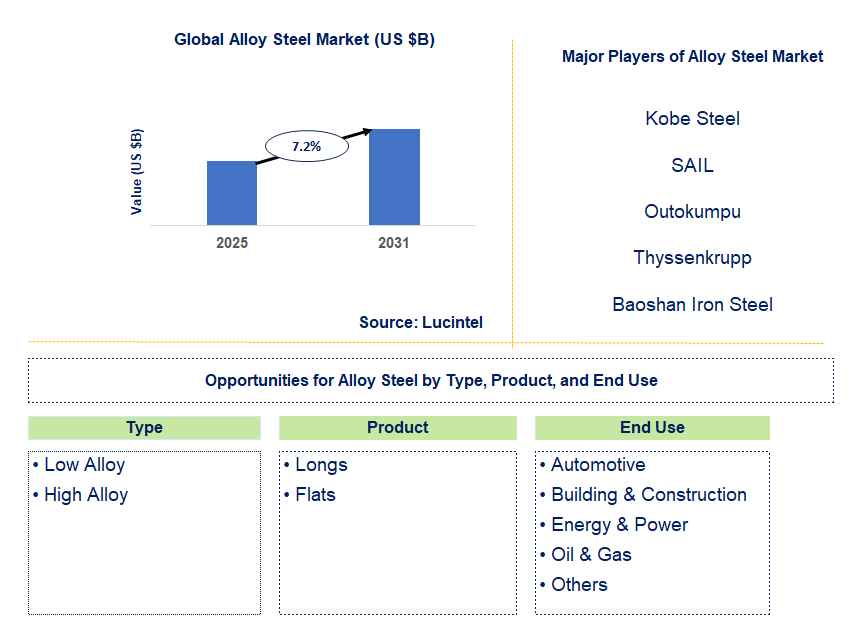
Key data points: The growth forecast = 7.2% annually for the next 7 years. Scroll below to get more insights. This market report covers trends, opportunities and forecasts in alloy steel market to 2031 by type (low alloy and high alloy), product (longs and flats), end use (automotive, building & construction, energy & power, oil & gas, and others), and region (North America, Europe, Asia Pacific, and the Rest of the World)
We'll send your sample report shortly.
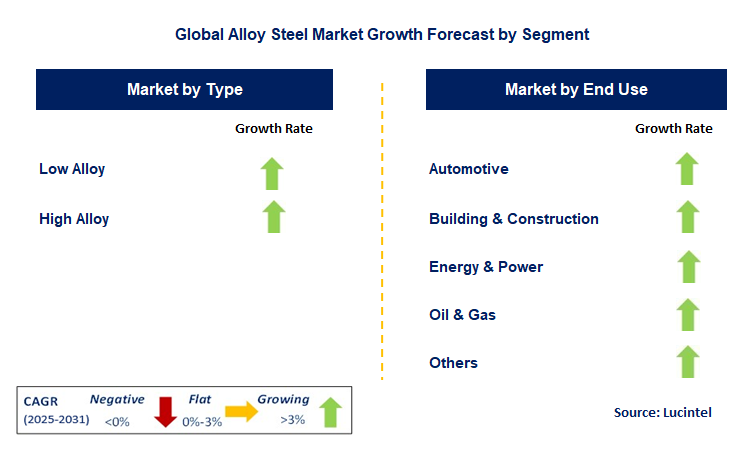
• Lucintel forecasts that, within the type category, high alloy is expected to witness higher growth over the forecast period.
• Within the end use category, automotive is expected to witness the highest growth.
• In terms of region, APAC is expected to witness the highest growth over the forecast period. Gain valuable insights for your business decisions with our comprehensive 150+ page report. Sample figures with some insights are shown below.
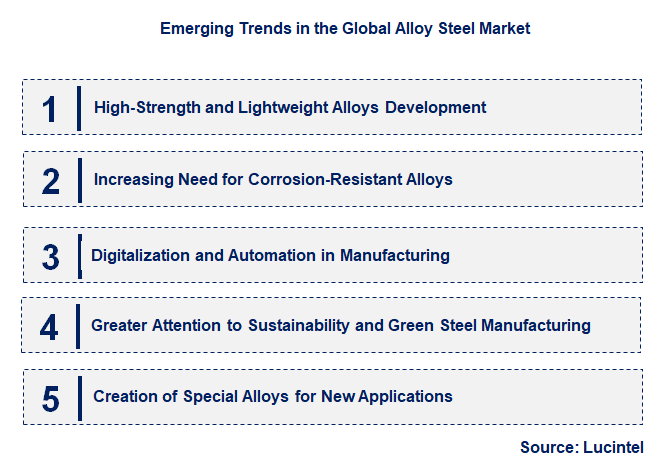
• High-Strength and Lightweight Alloys Development: The demand for alloy steels with increased strength and lower weight is on the rise. The automotive and aerospace sectors are leading this trend by concentrating on reducing emissions and improving fuel efficiency. Advanced high-strength low-alloy (HSLA) steels and other lightweight alloys need to be developed to satisfy these demands, which results in continuous research and development in material science and processing methods.
• Increasing Need for Corrosion-Resistant Alloys: Marine, chemical processing, and construction industries in harsh environments need materials that are resistant to corrosion. This is propelling the demand for high-tech corrosion-resistant alloy steels, such as stainless steels and custom alloys with a high resistance to corrosive agents. Research is ongoing to create more affordable yet higher-performing corrosion-resistant alloys to increase the life span of equipment and structures.
• Digitalization and Automation in Manufacturing: The alloy steel sector is increasingly turning to digital technologies and automation to increase efficiency, lower costs, and improve the quality of products. This involves the application of sensors, data analytics, artificial intelligence, and robotics in different phases of steel production, ranging from raw material processing to finished product handling. Digitalization helps in improved process control, predictive maintenance, and creating smart steel plants.
• Greater Attention to Sustainability and Green Steel Manufacturing: There is an increasing worldwide focus on minimizing the environmental footprint of steel manufacturing. This trend is stimulating the creation of "green steel" technologies, such as the utilization of hydrogen as a reducing agent, carbon capture and storage, and greater recycling of steel scrap. Alloy steel manufacturers are being increasingly pushed to become more sustainable in their practices to comply with regulations and customer demand for environmentally sustainable materials.
• Creation of Special Alloys for New Applications: Expansion of new industries and emerging technologies, such as renewable power (wind energy, solar), electric vehicles (battery materials), and advanced electronics, is fueling demand for specialized alloy steel with special attributes. These encompass alloys with desirable magnetic characteristics, high-temperature properties, or improved electrical conductivity. R&D is aimed at developing these bespoke alloy solutions to meet these emerging applications. These trends are coming together to remake the alloy steel market by fostering innovation in material science, reshaping manufacturing processes, and supporting sustainability. Alloy steel manufacturers‘ ability to navigate these trends will be essential for their long-term competitiveness and development.
• High-Strength Steel Grades Development: Another major development is the ongoing advancement in creating new and better high-strength steel grades. The new steels have improved strength-to-weight ratios, which make them essential for use in the automotive sector for lightweighting and enhanced safety and in construction for taller and more efficient buildings. Research continues to develop even greater strengths while retaining ductility and weldability.
• Greater Use of Electric Arc Furnaces (EAFs): There is a rising trend towards the utilization of electric arc furnaces in alloy steel manufacturing. EAFs enable a greater percentage of recycled scrap to be utilized as raw material, decreasing the use of virgin iron ore and minimizing carbon emissions over conventional blast furnace practices. This transition fits with the growing emphasis on sustainability in the steel sector.
• Growth of Digital Platforms for Steel Trading and Supply Chain Management: The market for alloy steel is experiencing the growth of digital platforms that support steel trading, enable buyers and sellers, and enhance supply chain management. Such platforms provide greater transparency, efficacy, and price discovery in the market, simplifying transactions and logistics for alloy steel products.
• Emphasize the Development of Alloys for Additive Manufacturing: Additive manufacturing or 3D printing is finding wider application for the production of complex metal parts, including parts made of alloy steels. One of the major developments has been the design and optimization of alloy steel powders for use in additive manufacturing processes to achieve the production of high-performance parts with complex geometries for aerospace, medical, and other advanced applications.
• Increased Investment in Research and Development for Sustainable Steelmaking: Alloy steel manufacturers are heavily investing in research and development to minimize the environmental impact of steel manufacturing. This incorporates exploring carbon capture and utilization technologies, the application of hydrogen as a clean energy source to steel manufacturing, and maximizing energy efficiency in production processes. These actions are enforced by regulatory pressure and increasing market demand for green steel. These emerging trends are transforming the alloy steel market by enabling material property innovations, encouraging cleaner production practices, enhancing market efficiency with digitalization, and supporting novel manufacturing approaches to niche uses.
• Automotive Sector - Lightweighting and Electric Vehicles: One of the major growth opportunities is the creation of advanced high-strength and lightweight alloy steels for the automotive sector. The former are crucial in saving weight in vehicles to enhance fuel efficiency and increase the range of electric vehicles. Developments in steel grades with high strength at reduced weight and enhanced formability will be crucial to tap this emerging demand.
• Infrastructure Development - High-Strength and Durable Steels: The current development of global infrastructure, especially among emerging economies, generates a tremendous demand for durable and high-strength alloy steels for roads, bridges, and buildings. Creating cost-competitive and high-performance steel applications for these fields, such as those with better seismic resistance and longer lifespan, is a valuable growth opportunity.
• Renewable Energy Industry - Specialty Alloys: The growth of the renewable energy industry, such as solar and wind energy, needs specialty alloy steels for products like wind turbine towers, gearboxes, and mounting structures of solar panels. Designing alloys with certain properties such as high strength, corrosion resistance, and fatigue resistance as per the needs of renewable energy products presents a viable growth prospect.
• Aerospace and Defense - High-Performance Alloys for Critical Parts: The defense and aerospace sectors require high-performance alloys with high strength, temperature tolerance, and reliability for critical parts in aircraft, space vehicles, and defense equipment. Producing advanced alloy steels with such stringent specifications, such as titanium alloys and superalloys, is a high-value growth prospect.
• Tooling and Machinery - High-Performance Tool Steels: High-performance tool steels with superior hardness, wear resistance, and toughness are needed for the tooling and machinery industries in manufacturing processes. Creating innovative tool steel grades capable of operating under severe conditions and increasing tool and machinery lifespan provides a strategic growth opportunity by enhancing productivity and minimizing end-user costs. Capturing these strategic growth opportunities demands that alloy steel manufacturers invest in innovation and R&D, work with end-use sectors to capture their unique requirements, and reformulate their manufacturing operations to address the changing needs for high-performance and environmentally friendly steel solutions.
• Kobe Steel
• SAIL
• Outokumpu
• Thyssenkrupp
• Baoshan Iron Steel
• HBIS Group
• Carpenter Technology
• POSCO
• JFE Steel
• Hyundai Steel
• Low Alloy
• High Alloy
• Longs
• Flats
• North America
• Europe
• Asia Pacific
• The Rest of the World
• United States: The United States alloy steel market has witnessed emphasis on infrastructure projects and stable demand from the automotive industry, especially for high-strength low-alloy steels. Some recent trends include investments in sophisticated manufacturing technologies to enhance efficiency and lower production costs. There is also increasing focus on the production of specialty alloys for aerospace and defense applications due to rising government expenditure. In addition, local steel producers are adjusting to trade policies and concentrating on regional supply chains.
• China: China is the world‘s largest producer and consumer of alloy steel. Recent trends are a continued shift towards higher-quality and higher-value-added alloy steel products due to the needs of advanced manufacturing and infrastructure development. Environmental regulations by the government are spurring capacity rearrangement and cleaner production practices. Chinese steel producers are also investing more in research and development to create specialist alloys for new industries such as renewable energy and electric vehicles.
• Germany: Germany‘s alloy steel market is dominated by its intense emphasis on high-quality specialty steels for the automotive, machinery, and tooling sectors. Recent trends involve the development of steel grades with enhanced performance and lower weight, especially for electric vehicles. The sector is also aggressively seeking digitalization and automation in production to increase efficiency and flexibility. Sustainability is a core theme, with reductions in carbon emissions in steel production being achieved using new technologies and green hydrogen.
• India: India‘s alloy steel market is growing rapidly due to high rates of infrastructure growth and demand from the automotive and construction industries. Recent activity involves major investment in increasing domestic production capacity to keep up with growing demand and lessening dependence on imports. There is also increasing emphasis on the manufacture of higher-grade alloy steels for specific uses in railways, defense, and power generation. Government programs encouraging manufacturing and infrastructure are further stimulating the market for alloy steel.
• Japan: Japan‘s alloy steel industry is dominated by its emphasis on high-quality and technologically sophisticated specialty steels, especially for the automotive and electronics sectors. New trends involve the creation of ultra-high-strength steels for vehicle lightweighting and advanced alloys for precision parts. Japanese steel producers are also engaged in research and development to develop innovative steel solutions for new energy technologies and to make steel production more sustainable through carbon capture and utilization technologies.


• Kobe Steel
• SAIL
• Outokumpu
• Thyssenkrupp
• Baoshan Iron Steel
• HBIS Group
• Carpenter Technology
• POSCO
• JFE Steel
• Hyundai Steel Q5. Which alloy steel market segment will be the largest in future? Answer: Lucintel forecasts that, within the type category, high alloy is expected to witness higher growth over the forecast period. Q6. In alloy steel market, which region is expected to be the largest in next 5 years? Answer: In terms of region, APAC is expected to witness the highest growth over the forecast period. Q7. Do we receive customization in this report? Answer: Yes, Lucintel provides 10% customization without any additional cost.


Choose a license that fits your team. Instant PDF delivery.
Prices exclude taxes. Instant delivery. Custom licensing available on request.
Market Report · July 16, 2026
Market Report · May 18, 2026
Market Report · May 18, 2026
Trusted partner for strategic intelligence and business growth


Receive a complimentary market analysis tailored to your industry. Our analysts will identify key growth opportunities and competitive dynamics specific to your business.

Market size, growth rate, and key trend analysis for your specific sector.

Top competitor positioning and market share analysis.

Strategic recommendations backed by data-driven insights.
Get curated market intelligence and competitive moves straight to your inbox.
By subscribing, you agree to receive our monthly insights. Unsubscribe anytime.
Receive a complimentary market analysis tailored to your industry. Our analysts will identify key growth opportunities and competitive dynamics specific to your business.
Market size, growth rate, and key trend analysis for your specific sector.
Top competitor positioning and market share analysis.
Strategic recommendations backed by data-driven insights.
Get curated market intelligence, emerging trends, and competitive moves straight to your inbox each month.
By subscribing, you agree to receive our monthly insights. Unsubscribe anytime.
We'll send your sample report shortly.