
Market Report · July 16, 2026

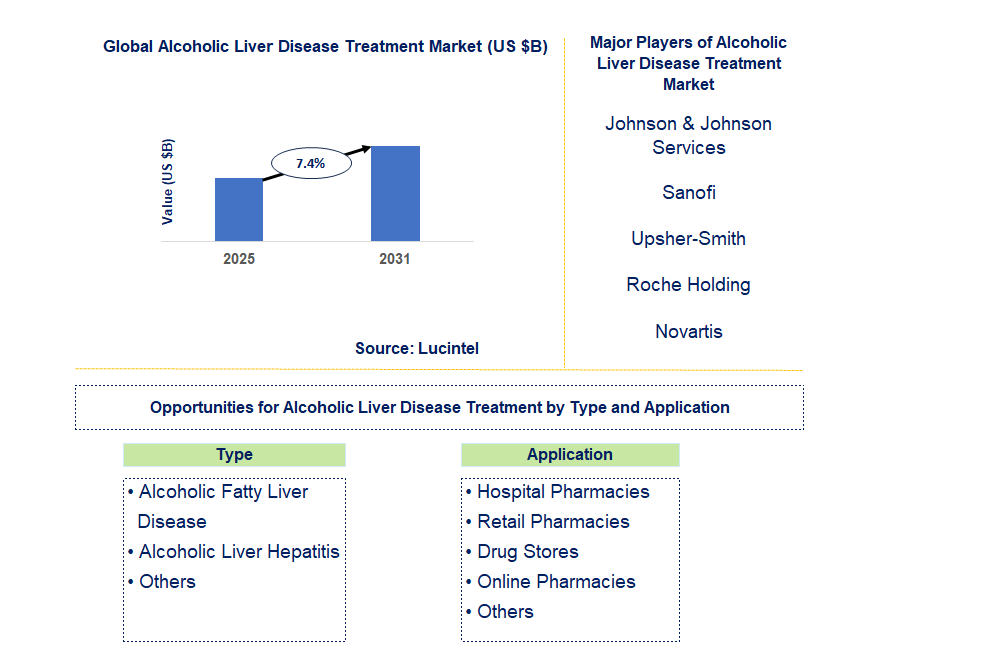
Key data points: The growth forecast = 7.4% annually for the next 7 years. Scroll below to get more insights. This market report covers trends, opportunities and forecasts in alcoholic liver disease treatment market to 2031 by type (alcoholic fatty liver disease, alcoholic liver hepatitis, and others), application (hospital pharmacies, retail pharmacies, drug stores, online pharmacies, and others), and region (North America, Europe, Asia Pacific, and the Rest of the World)
We'll send your sample report shortly.
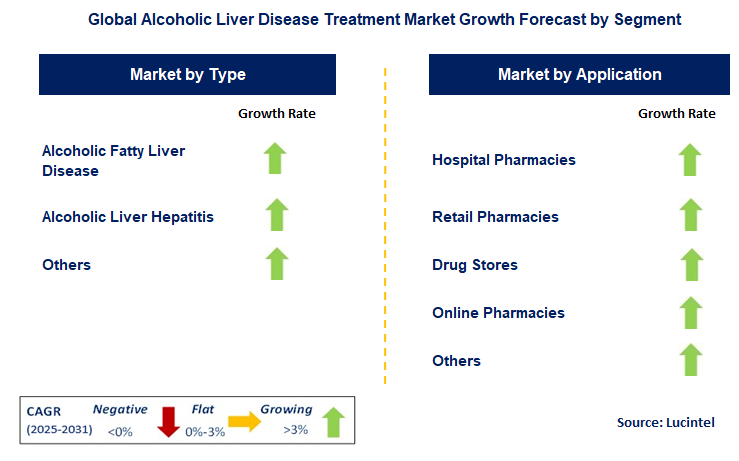
• Lucintel forecasts that, within the type category, alcoholic fatty liver disease is expected to witness higher growth over the forecast period.
• Within the application category, online pharmacy is expected to witness the highest growth.
• In terms of region, APAC is expected to witness the highest growth over the forecast period. Gain valuable insights for your business decisions with our comprehensive 150+ page report. Sample figures with some insights are shown below.
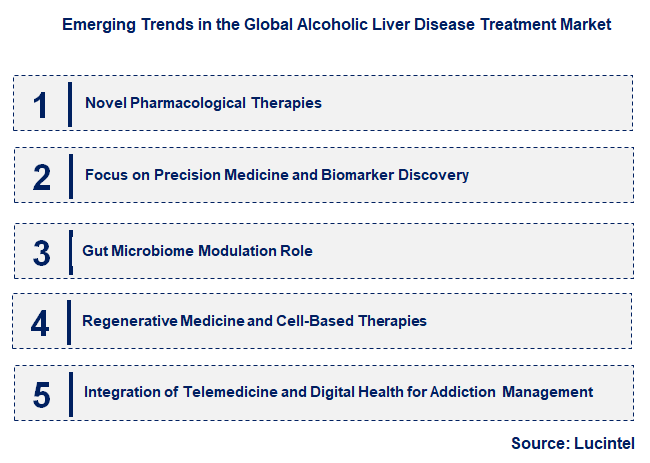
• Novel Pharmacological Therapies: This trend is characterized by extensive research and development of new drug candidates that target specifically the different pathways of ALD disease progression, including inflammation, oxidative stress, and fibrosis. Examples are anti-inflammatory drugs, antifibrotic drugs, and gut microbiota modulators. The effect is a rich pipeline of potential therapies to deliver improved outcomes for patients, especially severe alcoholic hepatitis or advanced cirrhosis, where today's treatment options are limited.
• Focus on Precision Medicine and Biomarker Discovery: One major upcoming trend is the shift towards precision or personalized treatment protocols according to a patient's genetic makeup, stage of disease, and drug response. This entails the discovery and validation of new biomarkers that can be used to forecast disease progression, severity, and patient-specific drug response. The result is more precise and efficient interventions with decreased trial-and-error therapy and fewer adverse effects, finally resulting in better patient stratification and maximized treatment regimens.
• Gut Microbiome Modulation Role: Increasing research emphasizes the central role of the gut-liver axis in ALD pathogenesis, resulting in an emerging trend towards gut microbiome modulation as a treatment strategy. These include the administration of probiotics, prebiotics, and fecal microbiota transplantation (FMT) for gut barrier restoration and attenuation of toxic bacterial products. The effect is a new area of intervention that addresses an underlying feature of ALD, holding potential for mitigating inflammation and liver damage, and enhancing the overall health of patients.
• Regenerative Medicine and Cell-Based Therapies: This direction investigates the promise of stem cell therapies, notably mesenchymal stem cells (MSCs), for enhancing liver regeneration and minimizing fibrosis in advanced ALD. These therapies seek to regenerate injured liver tissue and enhance liver function. The impact is a promising but preliminary strategy that potentially might provide a new option to liver transplantation for certain patients, overcoming the severe shortage of available donor organs and providing a more therapeutic repair for severe liver injury.
• Integration of Telemedicine and Digital Health for Addiction Management: Understanding that alcohol cessation is core to ALD treatment, a new pattern is the combination of digital health platforms, mobile applications, and telemedicine platforms for the management of alcohol use disorder (AUD). These platforms enable distant monitoring, deliver counseling, and aid in relapse prevention. The effect is increased patient participation, better compliance with abstinence schemes, and care continuity, factors essential for long-term liver health and effective ALD treatment outcomes. These new trends together are redefining the ALD treatment market by driving innovation in drug discovery, encouraging individualized strategies, investigating new therapeutic opportunities such as microbiome modulation and regenerative medicine, and optimizing supportive care through digital technologies. This comprehensive transformation is essential for managing the increasing global alcohol liver disease burden and enhancing prognosis in patients.
• Progress in Disease Pathogenesis Understanding: One of the most significant recent advances is the enhanced knowledge of the molecular and cellular pathogenesis of ALD, such as the contributions of inflammation, oxidative stress, gut dysbiosis, and immune responses. This better understanding is central to the identification of novel drug targets. The consequence is a better-informed strategy to drug discovery, where scientists can design treatments that directly halt disease progression, beyond mere broad-spectrum treatment, to more targeted approaches.
• Novel Pharmacological Therapies in Clinical Trials: There has been tremendous recent progress in the number and variety of novel pharmacological agents coming into clinical trials for all stages of ALD, especially severe alcoholic hepatitis (AH) and alcoholic steatohepatitis (ASH). Some of these include anti-inflammatory agents, antifibrotic drugs, and drugs that act on specific metabolic pathways. The effect is an expanding pipeline of promising therapies that have the potential to treat the unmet medical needs in ALD, with enhanced survival rates and delayed disease progression for patients.
• Heightened Emphasis on Gut Microbiome Interventions: Emerging advances identify the gut-liver axis as a pivotal feature of ALD, prompting heightened research and clinical trials into microbiome-modulating treatments. These range from particular probiotics, prebiotics, to even fecal microbiota transplantation (FMT) to restore a balanced gut environment. The effect is a new hope therapeutic area that attacks the root element of ALD pathogenesis, which could decrease systemic inflammation and liver injury through the restoration of gut flora balance.
• Creation of Non-Invasive Diagnostic Devices: An important recent advance is the improvement of non-invasive diagnostic techniques for the evaluation of liver fibrosis and steatosis in patients with ALD, including elastography (e.g., Fibro Scan) and enhanced imaging. These decrease the requirement for painful and invasive liver biopsies. The effect is earlier and more precise diagnosis, improved monitoring of disease progression, and increased patient compliance because of less invasive treatments, resulting in timelier and more effective treatment.
• Integration of Addiction Medicine and Integrated Patient Care: Acknowledging that abstinence is central, a newer trend is the stronger integration of addiction medicine experts and integrated support programs into ALD treatment protocols. This integrated approach links medical management with behavioral therapies and psychosocial care for alcohol use disorder (AUD). Its effect is better patient outcomes in the long term, since treating the cause of ALD (drinking alcohol) greatly maximizes the efficacy of medical treatments and minimizes the rate of relapse. These salient advancements are cumulatively affecting the ALD treatment market through a more targeted, holistic, and patient-focused approach. They are propelling the development of new therapies, advancing diagnostic functions, and incorporating vital addiction care, all working towards enhancing the prognosis and quality of life of those suffering from alcoholic liver disease.
• Early Treatment for Alcoholic Fatty Liver Disease and Alcoholic Steatohepatitis: A great strategic growth opportunity lies in creating and promoting therapies for the early forms of ALD, including AFLD and ASH, prior to fibrosis or cirrhosis. Opportunities exist in the creation of lifestyle intervention programs, nutritional supplements, and pharmacological treatments that can reverse or prevent disease progression at this reversible phase. Stress early diagnosis and chances of full recovery with prompt treatment, focusing on populations most at risk.
• Therapeutic Intervention for Severe Alcoholic Hepatitis: This is an important area of growth because severe AH has a high mortality and few effective treatments other than corticosteroids. Strategic priority should be placed on the design of new pharmacological therapies specifically addressing the extreme inflammation and immune dysregulation seen in severe AH, with the aim of enhancing short-term survival. Opportunities include accelerating clinical trials and gaining orphan drug designations because of the high unmet need.
• Alcoholic Cirrhosis and Complication Management: Strategic growth prospects lie in offering holistic management solutions for alcoholic cirrhosis patients and their complications, including ascites, variceal bleeding, and hepatic encephalopathy. These include new antifibrotic agents, portal hypertension therapies, and enhanced complication management protocols. Opportunities also lie in creating palliative care solutions and enhancing the quality of life for patients with end-stage liver disease, along with arresting further progression.
• Liver Transplantation and Post-Transplant Management in ALD: Though a last option, liver transplantation is an essential therapy for end-stage ALD. Strategic growth prospects include advancing patient selection criteria for transplant, creating therapies to minimize pre-transplant complications, and maximizing post-transplant care to avoid recurrence of ALD and manage immunosuppression. Areas for opportunity include research on artificial liver support systems and regenerative medicine to bridge patients to transplant or minimize the need for transplant.
• Integrated Alcohol Cessation and Relapse Prevention Programs: Understanding that long-term abstinence is central to ALD treatment, one of the largest strategic growth opportunities is to create and execute integrated alcohol cessation and relapse prevention programs in addition to medical therapies. It comprises pharmacological therapy for alcohol use disorder (AUD), behavioral treatments, and digital health interventions. Opportunities include collaborating with addiction experts and public health entities to deliver whole-patient care and enhance long-term outcomes through treating the root cause. These strategic growth opportunities are collectively shaping the ALD treatment market by spurring innovation along the disease continuum, from early intervention to advanced care and relapse prevention. This integrated approach is needed to meet the complex challenges of alcoholic liver disease and enhance patient prognosis worldwide.
• Johnson & Johnson Services
• Sanofi
• Upsher-Smith Laboratories
• Roche Holding
• Novartis
• GlaxoSmithKline
• Pfizer
• Alcoholic Fatty Liver Disease
• Alcoholic Liver Hepatitis
• Others
• Hospital Pharmacies
• Retail Pharmacies
• Drug Stores
• Online Pharmacies
• Others
• North America
• Europe
• Asia Pacific
• The Rest of the World
• United States: The United States market for treating ALD is experiencing increased research and development into new pharmacological treatments. With the rising rates of alcohol intake, especially among the young population, there is a critical need for efficient treatments other than corticosteroids. Some of the latest developments encompass clinical trials for anti-inflammatory drugs, microbiome modulators, and antifibrotic agents. There is also a focus on holistic models of care that incorporate medical treatment with alcohol abstinence programs and reducing the huge economic cost of hospitalization due to ALD.
• China: China is facing a major increase in ALD prevalence as a result of higher alcohol intake and lifestyle changes. Current trends in the treatment market concentrate on both Western pharmaceutical methods and the incorporation of traditional Chinese medicine (TCM). There is a growing acceleration in research and clinical trials in the development of novel drugs, mainly with large patient pools, and attempts to enhance diagnostic features to enable early detection. The government is also spending on public health campaigns to increase awareness of the risks associated with excessive alcohol consumption.
• Germany: The German market for ALD treatment is marked by a strong emphasis on high-end medical care and sophisticated research. Some of the latest trends involve ongoing searches for novel drug candidates for advanced alcoholic hepatitis and fibrosis, with a bias towards precision medicine strategies. Academic and pharma partnerships are the norm with the aim of discovering new biomarkers of disease advancement and response to treatment. Consideration is also placed upon holistic management of the patient, with addiction counseling and nutritional therapy.
• India: The ALD treatment market in India is growing strongly, led by a rising middle class, rising consumption of alcohol, and enhanced health care infrastructure. Some of the recent trends are the growing adoption of Western treatment guidelines and an emerging interest in low-cost generic versions. There is also a lot of emphasis on public health programs to reduce alcohol misuse and raise awareness about liver disease. Studies are also underway to study the efficacy of traditional herbal remedies in combination with conventional treatments for the protection of the liver.
• Japan: The Japanese market for ALD treatment places an emphasis on sophisticated diagnostic methods and a sophisticated treatment approach to patient care, frequently involving aspects of its strong public health infrastructure. Recent advances involve studies of genetic susceptibility to ALD and the characterization of very specific biomarkers for diagnosis and prognosis in early stages. Pharmaceutical firms in Japan are engaged in the creation of new hepatoprotective agents and antifibrotic medications, with an emphasis on long-term efficacy and few side effects, consistent with an overall health-aware population.


• Johnson & Johnson Services
• Sanofi
• Upsher-Smith Laboratories
• Roche Holding
• Novartis
• GlaxoSmithKline
• Pfizer Q5. Which alcoholic liver disease treatment market segment will be the largest in future? Answer: Lucintel forecasts that, within the type category, alcoholic fatty liver disease is expected to witness higher growth over the forecast period. Q6. In alcoholic liver disease treatment market, which region is expected to be the largest in next 5 years? Answer: In terms of region, APAC is expected to witness the highest growth over the forecast period. Q7. Do we receive customization in this report? Answer: Yes, Lucintel provides 10% customization without any additional cost.


Choose a license that fits your team. Instant PDF delivery.
Prices exclude taxes. Instant delivery. Custom licensing available on request.
Market Report · July 16, 2026
Market Report · July 15, 2026
Market Report · July 15, 2026
Trusted partner for strategic intelligence and business growth


Receive a complimentary market analysis tailored to your industry. Our analysts will identify key growth opportunities and competitive dynamics specific to your business.

Market size, growth rate, and key trend analysis for your specific sector.

Top competitor positioning and market share analysis.

Strategic recommendations backed by data-driven insights.
Get curated market intelligence and competitive moves straight to your inbox.
By subscribing, you agree to receive our monthly insights. Unsubscribe anytime.
Receive a complimentary market analysis tailored to your industry. Our analysts will identify key growth opportunities and competitive dynamics specific to your business.
Market size, growth rate, and key trend analysis for your specific sector.
Top competitor positioning and market share analysis.
Strategic recommendations backed by data-driven insights.
Get curated market intelligence, emerging trends, and competitive moves straight to your inbox each month.
By subscribing, you agree to receive our monthly insights. Unsubscribe anytime.
We'll send your sample report shortly.