
Market Report · July 31, 2026

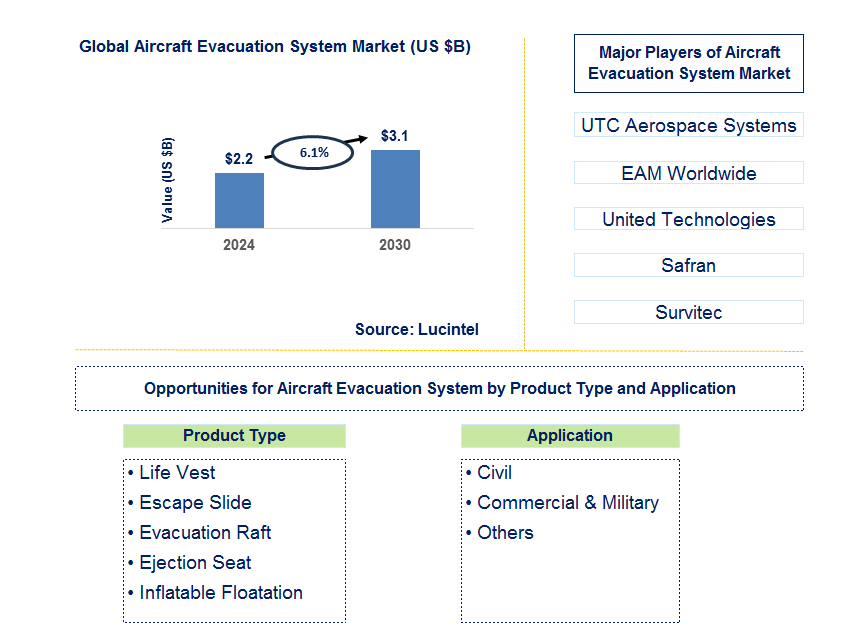
Key data points: The market size in 2030 = $3.1 billion, growth forecast = 6.1% annually next 6 years. Scroll below to get more insights. This market report covers trends, opportunities, and forecast in the global aircraft evacuation system market to 2030 by product type (life vest, escape slide, evacuation raft, ejection seat, and inflatable floatation), application (civil, commercial & military, and others), and region (North America, Europe, Asia Pacific, and the Rest of the World)
We'll send your sample report shortly.
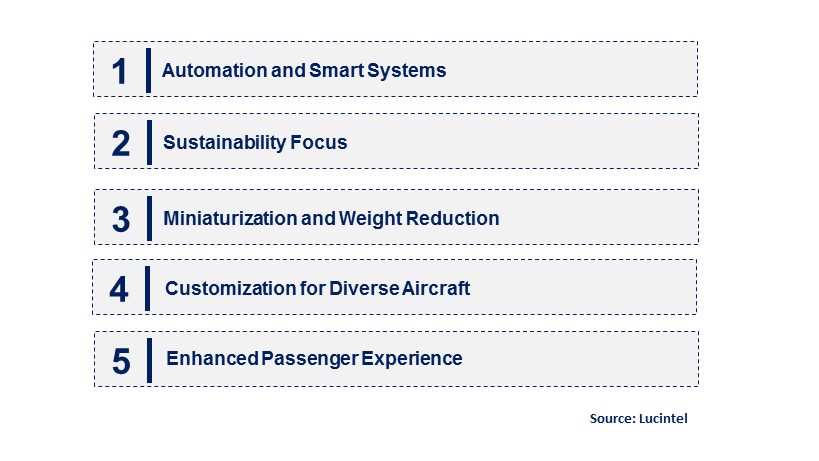
• Automation and Smart Systems: A major trend is the integration of automation and smart technologies. The use of automated systems quickens and makes evacuation processes more reliable while sensor technology and artificial intelligence (AI) enable real-time monitoring and instant deployment.
• Sustainability Focus: There has been an increasing focus on sustainable materials and processes. This includes the use of environmentally friendly materials as well as reducing environmental impact in terms of production and disposal of evacuation systems.
• Miniaturization and Weight Reduction: Reducing the size and weight of evacuation systems without compromising on safety is a growing trend. Material improvements coupled with design have resulted in smaller, lighter flight systems that make planes much more efficient.
• Customization for Diverse Aircraft Models: Making variations to emergency escape equipment to suit specific feats of various aircraft marks is also becoming common. This shift comes from an emerging demand for flexibility across different operational settings.
• Enhanced Passenger Experience: There are efforts being made to improve the usability and comfortability of evacuation systems among passengers. This entails designing systems that are less complex in their deployment process during emergencies thus enhancing general passenger’s safety. These trends are driving innovation in the Aircraft Evacuation System market leading to more advanced, sustainable, and efficient systems that cater for the changing needs in aerospace industry.
• Integration of Advanced Materials: It is an important development where advanced materials such as high strength composites or light weight alloys have been used. These materials try to improve durability while still enhancing system performance at a lower cost through reduction in mass.
• Regulatory Updates and Compliance: Manufacturers have had to innovate or upgrade their systems due to strict regulations and updated safety standards. Compliance with international aviation safety standards is becoming increasingly important, influencing product design and development.
• Partnerships and Collaborations: Joint ventures between aerospace manufacturers and safety equipment suppliers have driven innovation. Next generation evacuation systems that are more reliable and efficient have been developed through partnerships.
• Digitalization and Simulation: It is a growing trend to use digital tools or simulations in the design of evacuation systems. More refined modeling and testing using these technologies result in better system performance as well as safer operations.
• Expansion in Emerging Markets: The aerospace industry has expanded into emerging markets, especially Asia, which requires an advanced evacuation system. This includes local production as well as adjusting them for regional requirements. These recent developments are enhancing the capabilities of aircraft evacuation systems thereby making it safer, they are also driving market growth, while setting new benchmarks in the industry.
• Commercial Aviation: There is increased demand for air travel leading to need for more sophisticated escape facilities on commercial planes. Systems can be created that improve operational efficiency, reliability standards whilst still complying with international norms concerning passenger safety.
• Military Aviation: The military aviation necessitates special evacuation systems that would function under severe weather conditions. There are prospects of up growth in making more rugged, flexible and quickly deployable systems for use in the war zones.
• General Aviation: The general aviation sector including private jets and small aircraft, presents opportunities for tailored evacuation systems. These systems must be small-sized, light-weighted and easy to deploy to cater for specific needs of smaller aircrafts.
• Helicopter Evacuation Systems: Helicopters used in rescue missions and military operations require specialized evacuation systems. There is potential for growth in developing systems that can be quickly deployed in challenging environments.
• Retrofit and Upgrade Markets: The retrofit and upgrade market for older aircraft is a significant growth area. Opportunities exist in providing modern evacuation systems that can be integrated into existing aircraft, enhancing safety and compliance. These strategic growth opportunities highlight the diverse applications and increasing demand for advanced evacuation systems while pointing out the subsequent industry’s need to expand its market as well as improve technology.
• UTC Aerospace Systems
• EAM Worldwide
• United Technologies
• Safran
• Survitec
• Switlik Parachute
• Martin Baker Aircraft
• Survival Equipment Services
• Tulmar Safety Systems
• The MEL Group
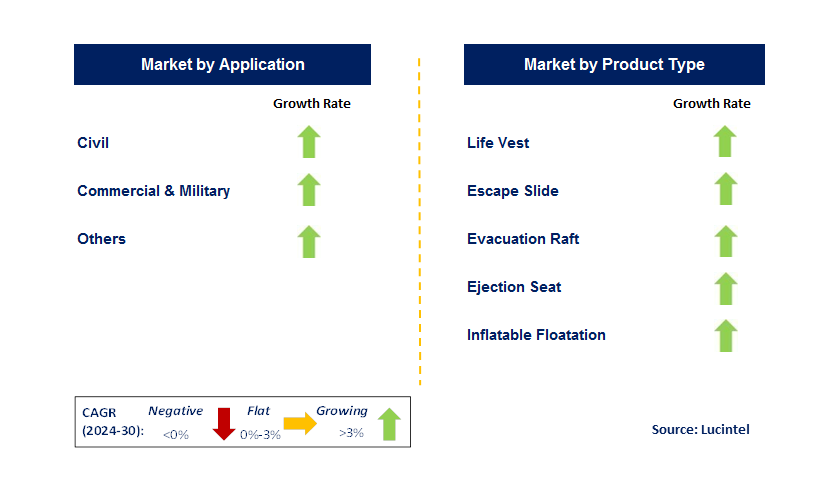
• Life Vest
• Escape Slide
• Evacuation Raft
• Ejection Seat
• Inflatable Floatation
• Civil
• Commercial & Military
• Others
• North America
• Europe
• Asia Pacific
• The Rest of the World
• United States: In the US improvements have been made towards reliability and efficiency of evacuation systems. Notable developments have been witnessed through advanced material integration and automatic system deployments. Boeing Corporation among other major players within this sector work closely with manufacturers of safety equipment to improve their emergency exits performance putting more emphasis on reducing deployments time during an emergency situation thereby enhancing passenger’s safety concerns.
• China: China has grown its aviation business fast which is reflected in recent developments in the Aircraft Evacuation System market. To this end the country is developing domestic products that will decrease reliance on foreign suppliers. Innovations include using advanced composition materials as well as smart technologies which provide real-time health services to monitor system readiness and maintenance so that it remains reliable.
• Germany: Germany is the leader in Europe and has a strong focus on sustainability and innovation for aircraft evacuation systems. These include eco-friendly materials that have been developed recently as well as digital simulations for system design and optimization. German aerospace industry is also researching on how to use 3D printing in order to come up with lightweight components of the evacuation systems, which can be produced at lower cost with less material wastage.
• India: There has been significant progress in the Aircraft Evacuation System market in India’s growing aerospace sector. The emphasis has been on partnering with international producers to enhance domestic manufacturing capabilities. In this regard, there have been recent improvements such as increased safety features within the aircraft escape equipment, coupled with customization of these emergency evacuation systems to meet specific needs of Indian carriers including adaptation of such systems into various types of planes operating within the area.
• Japan: Japan is known for its precision engineering achievements and it has made notable strides forward in the Aircraft Evacuation System market. Recently introduced technology includes more accurate sensing devices and electronic control that are deployed faster than ever before. Japanese companies are also making investment in research and development (R&D) so as to create evacuation systems which are smaller, more powerful and fit into diverse kinds of aircraft designs easily.
• UTC Aerospace Systems
• EAM Worldwide
• United Technologies
• Safran
• Survitec
• Switlik Parachute
• Martin Baker Aircraft
• Survival Equipment Services
• Tulmar Safety Systems
• The MEL Group Q6. Which aircraft evacuation system market segment will be the largest in future? Answer: Lucintel forecasts that escape slide will remain the largest segment over the forecast period. Q7. In aircraft evacuation system market, which region is expected to be the largest in next 5 years? Answer: North America will remain the largest region over the forecast period. Q8. Do we receive customization in this report? Answer: Yes, Lucintel provides 10% customization without any additional cost.


Choose a license that fits your team. Instant PDF delivery.
Prices exclude taxes. Instant delivery. Custom licensing available on request.
Market Report · July 31, 2026
Market Report · July 31, 2026
Market Report · July 31, 2026
Trusted partner for strategic intelligence and business growth


Receive a complimentary market analysis tailored to your industry. Our analysts will identify key growth opportunities and competitive dynamics specific to your business.

Market size, growth rate, and key trend analysis for your specific sector.

Top competitor positioning and market share analysis.

Strategic recommendations backed by data-driven insights.
Get curated market intelligence and competitive moves straight to your inbox.
By subscribing, you agree to receive our monthly insights. Unsubscribe anytime.
Receive a complimentary market analysis tailored to your industry. Our analysts will identify key growth opportunities and competitive dynamics specific to your business.
Market size, growth rate, and key trend analysis for your specific sector.
Top competitor positioning and market share analysis.
Strategic recommendations backed by data-driven insights.
Get curated market intelligence, emerging trends, and competitive moves straight to your inbox each month.
By subscribing, you agree to receive our monthly insights. Unsubscribe anytime.
We'll send your sample report shortly.