
Market Report · July 24, 2026

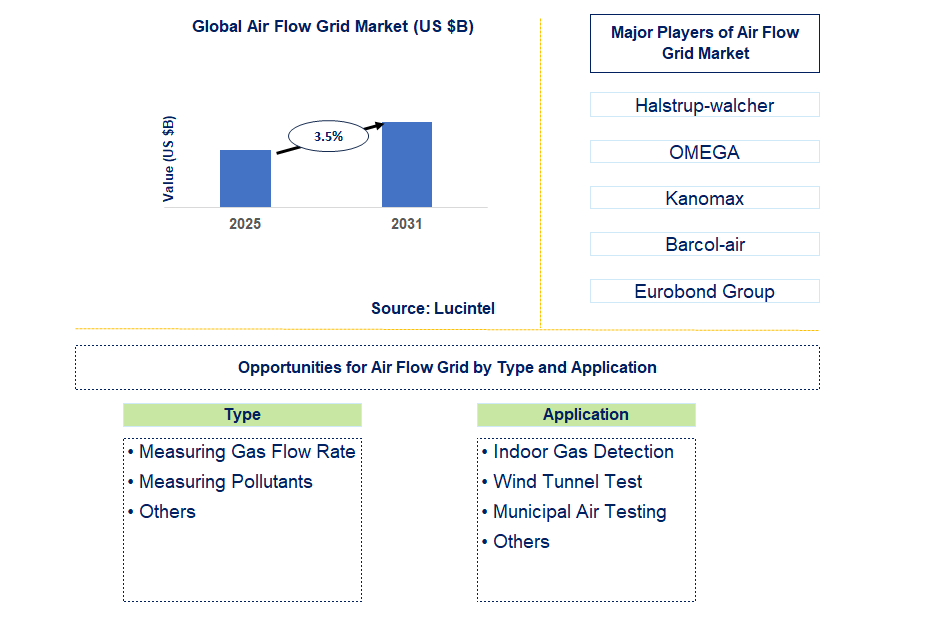
Key data points: The growth forecast = 3.5% annually for the next 7 years. Scroll below to get more insights. This market report covers Trends, opportunity and forecast in air flow grid market to 2031 by type (measuring gas flow rate, measuring pollutants, and others), application (indoor gas detection, wind tunnel test, municipal air testing, and others), and region (North America, Europe, Asia Pacific, and the Rest of the World)
We'll send your sample report shortly.
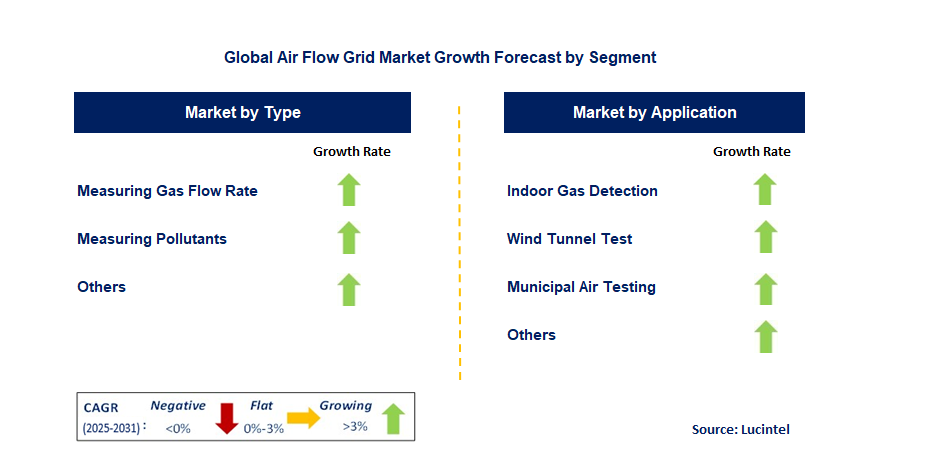
• Lucintel forecasts that, within the type category, measuring gas flow rate is expected to witness higher growth over the forecast period.
• Within the application category, wind tunnel test is expected to witness the higher growth.
• In terms of region, APAC is expected to witness the highest growth over the forecast period. Gain valuable insights for your business decisions with our comprehensive 150+ page report. Sample figures with some insights are shown below.
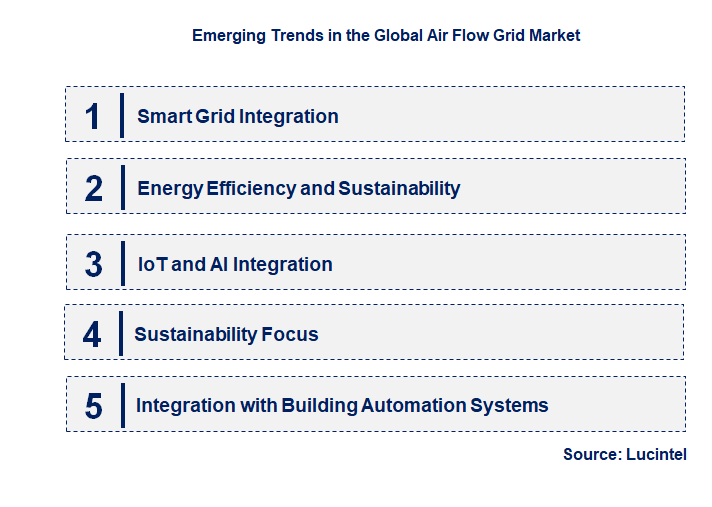
• Smart Grid Integration: Increasing adoption of smart grids in air flow systems is revolutionizing energy management. By integrating sensors, IoT, and AI, air flow grids can provide real-time monitoring and data analytics to optimize air distribution. This leads to reduced energy consumption, improved maintenance, and better control over airflow, enhancing overall system efficiency and contributing to sustainability.
• Energy Efficiency and Sustainability: Energy efficiency remains a dominant trend in the air flow grid market. With rising energy costs and environmental concerns, industries are prioritizing the development of air flow grids that optimize energy usage. This trend is pushing the adoption of advanced materials, AI-controlled systems, and renewable energy integration to reduce carbon footprints and meet stringent regulatory requirements.
• IoT and AI Integration: The integration of IoT and AI in air flow grids is driving automation and real-time optimization. Smart air flow grids can adjust based on environmental conditions, improving performance while minimizing energy waste. AI algorithms also enhance predictive maintenance, reducing operational downtime and extending the lifespan of air flow systems in both residential and industrial settings.
• Sustainability Focus: A stronger global emphasis on environmental sustainability is encouraging the development of greener air flow technologies. Governments and industries are increasingly adopting energy-efficient airflow systems, reducing greenhouse gas emissions. This trend is pushing the demand for eco-friendly materials and low-energy consumption technologies that comply with stricter environmental regulations and sustainability goals.
• Integration with Building Automation Systems: Air flow grids are increasingly being integrated into broader building automation systems. This integration allows for centralized control of air flow, lighting, and other building systems, improving energy efficiency and reducing operational costs. The trend is prevalent in commercial buildings, data centers, and industrial facilities, where optimized airflow directly impacts energy consumption and operational performance. These emerging trends are reshaping the global air flow grid market by enhancing energy efficiency, automation, and sustainability. As industries and governments invest in greener, smarter, and more efficient air flow systems, these trends are driving significant advancements that promise to optimize air distribution while contributing to environmental goals and cost savings.
• IoT Integration: The integration of IoT in air flow grid systems has been a significant development, enabling real-time monitoring and optimization. IoT sensors in air flow grids allow for precise control, enhancing operational efficiency and reducing energy consumption. This development is particularly beneficial in industrial and commercial applications, where large-scale systems require constant adjustments to maintain performance.
• AI-Based Optimization: AI-based algorithms are being increasingly applied to optimize the performance of air flow grids. These algorithms can predict and adapt air flow based on factors like temperature, humidity, and occupancy levels. AI-driven optimization helps to lower energy consumption and improve indoor air quality, which is crucial for commercial, industrial, and residential applications.
• Energy-Efficient Solutions: The market is witnessing a shift towards energy-efficient air flow systems. Companies are focusing on developing low-energy consumption systems that provide effective ventilation and air distribution. These solutions are in high demand due to rising energy costs and the need to comply with stringent environmental regulations aimed at reducing carbon footprints.
• Smart Ventilation Systems: Smart ventilation systems are becoming a major development in the air flow grid market. These systems use advanced sensors and control algorithms to adjust ventilation based on real-time air quality data. They are particularly beneficial in environments like hospitals, commercial buildings, and industrial facilities where maintaining optimal air quality is critical for health and safety.
• Green Building Integration: The integration of air flow grids in green building projects is a growing development. With the global emphasis on sustainability, more buildings are adopting energy-efficient air flow systems. These systems are designed to work with other energy-saving technologies, such as solar panels and smart lighting, to reduce the building's overall environmental impact. These recent developments are revolutionizing the global air flow grid market by enhancing energy efficiency, optimizing performance, and contributing to sustainability. As industries and governments continue to embrace these advancements, the future of air flow grids looks increasingly automated, energy-efficient, and environmentally conscious.
• Smart Cities: The rise of smart cities presents a significant growth opportunity for air flow grid systems. With a focus on energy efficiency and sustainability, smart cities require advanced air flow solutions to optimize ventilation, improve air quality, and manage energy consumption. These systems are integral to urban development, creating a large market for innovative air flow technologies.
• Industrial Automation: The industrial sector is increasingly adopting automated air flow grid systems to enhance energy efficiency and operational performance. Smart air flow solutions are being used to regulate ventilation in manufacturing plants, warehouses, and production facilities. This automation reduces energy costs, improves worker safety, and optimizes the overall functioning of industrial operations.
• HVAC Integration: The integration of air flow grids with HVAC (Heating, Ventilation, and Air Conditioning) systems presents a promising growth opportunity. By optimizing air distribution and enhancing HVAC efficiency, businesses can reduce energy consumption and operational costs. This integration is especially important in large commercial buildings, data centers, and industrial facilities where air flow management is critical.
• Residential Applications: As energy efficiency becomes a priority for homeowners, the demand for advanced air flow grid systems in residential buildings is increasing. Smart air flow grids that integrate with home automation systems offer homeowners the ability to monitor and control indoor air quality and energy consumption, driving growth in the residential sector.
• Renewable Energy Integration: Integrating air flow grids with renewable energy sources, such as solar and wind power, is a key growth opportunity. These systems can optimize air flow while utilizing clean energy, helping industries and commercial buildings reduce their carbon footprint and energy costs. This trend is gaining traction as companies look for sustainable solutions to meet green energy goals. These strategic growth opportunities are driving the expansion of the global air flow grid market. By focusing on energy efficiency, automation, and sustainable solutions, companies are tapping into new markets and meeting the evolving needs of industries, municipalities, and consumers worldwide.
• Halstrup-walcher
• OMEGA
• Kanomax
• Barcol-air
• Eurobond Group
• Measuring Gas Flow Rate
• Measuring Pollutants
• Others
• Indoor Gas Detection
• Wind Tunnel Test
• Municipal Air Testing
• Others
• North America
• Europe
• Asia Pacific
• The Rest of the World
• United States: The U.S. air flow grid market is embracing automation and IoT integration. Key advancements include the adoption of smart grid technology in HVAC systems and large-scale industrial applications, focusing on energy efficiency. Additionally, the U.S. government’s support for green building initiatives is boosting demand for more efficient air flow systems, driving innovation in airflow management solutions.
• China: China is focusing on improving air quality and reducing energy consumption through advanced air flow grid technologies. The government’s push for smart city development and green technologies is accelerating investments in air flow grid systems. China’s air flow grid market is also influenced by the country’s growing industrial sector, which demands energy-efficient and environmentally friendly airflow solutions for manufacturing and infrastructure projects.
• Germany: In Germany, the air flow grid market is benefiting from a strong emphasis on sustainability and energy efficiency. The integration of renewable energy sources, combined with Germany’s green building initiatives, is driving the demand for advanced airflow systems. Automation and real-time monitoring are being implemented to enhance the efficiency of both residential and industrial air flow grids, with a focus on reducing carbon footprints.
• India: India’s air flow grid market is expanding as the country focuses on addressing air pollution and energy inefficiencies. The Indian government is supporting the growth of smart cities, where advanced air flow systems are critical for improving air quality and energy usage. The industrial and commercial sectors are increasingly adopting efficient air flow grid solutions to meet regulatory requirements and reduce operational costs.
• Japan: Japan is at the forefront of air flow grid innovation, driven by the need for energy efficiency and environmental sustainability. Japanese companies are leading the way in developing compact, efficient air flow systems with IoT integration. The government’s emphasis on smart technologies and disaster resilience is also promoting growth in the air flow grid sector, with advanced systems being integrated into buildings and industrial facilities.


• Halstrup-walcher
• OMEGA
• Kanomax
• Barcol-air
• Eurobond Group Q5. Which air flow grid market segment will be the largest in future? Answer: Lucintel forecasts that measuring gas flow rate is expected to witness higher growth over the forecast period. Q6. In air flow grid market, which region is expected to be the largest in next 5 years? Answer: APAC is expected to witness the highest growth over the forecast period. Q7. Do we receive customization in this report? Answer: Yes, Lucintel provides 10% customization without any additional cost.


Choose a license that fits your team. Instant PDF delivery.
Prices exclude taxes. Instant delivery. Custom licensing available on request.
Market Report · July 24, 2026
Market Report · July 20, 2026
Market Report · July 20, 2026
Trusted partner for strategic intelligence and business growth


Receive a complimentary market analysis tailored to your industry. Our analysts will identify key growth opportunities and competitive dynamics specific to your business.

Market size, growth rate, and key trend analysis for your specific sector.

Top competitor positioning and market share analysis.

Strategic recommendations backed by data-driven insights.
Get curated market intelligence and competitive moves straight to your inbox.
By subscribing, you agree to receive our monthly insights. Unsubscribe anytime.
Receive a complimentary market analysis tailored to your industry. Our analysts will identify key growth opportunities and competitive dynamics specific to your business.
Market size, growth rate, and key trend analysis for your specific sector.
Top competitor positioning and market share analysis.
Strategic recommendations backed by data-driven insights.
Get curated market intelligence, emerging trends, and competitive moves straight to your inbox each month.
By subscribing, you agree to receive our monthly insights. Unsubscribe anytime.
We'll send your sample report shortly.