
Market Report · July 20, 2026

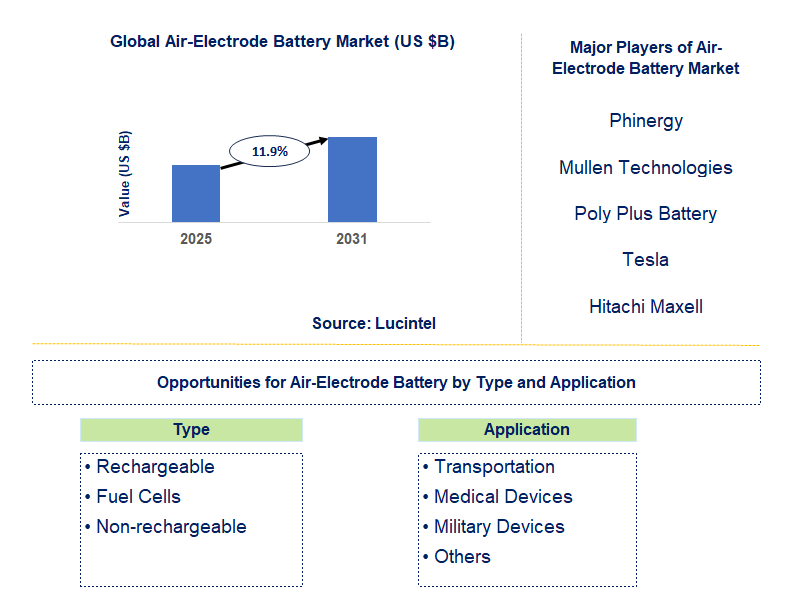
Key data points: The growth forecast = 11.9% annually for the next 7 years. Scroll below to get more insights. This market report covers Trends, opportunities and forecasts in air-electrode battery market to 2031 by type (rechargeable, fuel cells, and non-rechargeable), application (transportation, medical devices, military devices, and others), and region (North America, Europe, Asia Pacific, and the Rest of the World)
We'll send your sample report shortly.
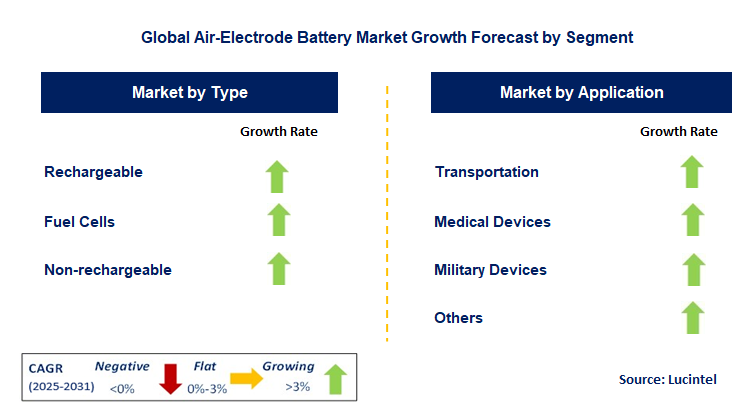
• Lucintel forecasts that, within the type category, rechargeable is expected to witness the highest growth over the forecast period due to the rising demand for reusable energy storage systems.
• Within the application category, transportation is expected to witness the highest growth due to the growing adoption of electric vehicles.
• In terms of region, APAC is expected to witness the highest growth over the forecast period due to the growing adoption of renewable energy.
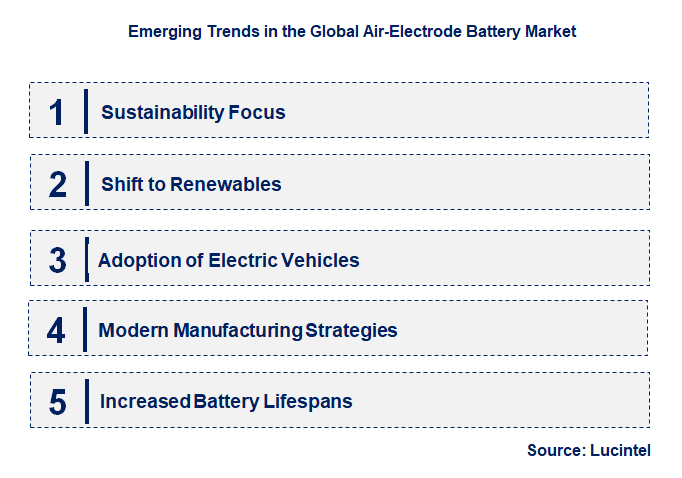
• Sustainability Focus: Emphasis on sustainability is showing a notable increase which is changing the battery technology development cycle. Traditionally perceived as more ecological due to their materials and design, air-electrode batteries are gaining interest. They use less scarce materials when compared to conventional batteries and can be fabricated with much more abundant resources. The effort put by governments in creating solutions aimed at clean energy results in covering the global needs sustainability. This, in turn, calls for the usage of sustainable energy storage technologies, like air-electrode batteries.
• Shift to Renewables: Batteries with air electrodes are beginning to be used within renewable energy systems, especially for grid level energy storage. These batteries could prolong energy storage over long hours making them perfect for mitigating renewable sources such as equipment used in wind or solar energy production. They provide long-term energy storage that can contribute to “leveling” supply and demand conditions while improving the efficiency of renewable energy grids. Their operation can boost the shift toward clean energy.
• Adoption of Electric Vehicles: The rising demand for electric vehicles is prodding the development of air electrodes batteries. These batteries boast further enhanced energy density and the possibility of prolonging the driving range of EVs. Also, the other factors causing the movement in the direction of air electrode batteries are their light weight and lower cost. With the increasing number of EV manufacturers, there are competition among all manufacturers to provide the best in the market batteries. Air electrode batteries is an answer to this competition.
• Modern Manufacturing Strategies: Improvement in manufacturing techniques is aiding in the lowering of the cost and increasing the scalability of air-electrode batteries. Automation and better electrode fabrication, along with material science advancements, greatly contribute to the affordability of air-electrode batteries. When these manufacturing strategies reach their peak efficiency, mass production of air-electrode batteries will be possible, which will ultimately result in further expansion of the market and its commercialization.
• Increased Battery Lifespans: Like most advanced technologies, air-electrode batteries have the advantage of having energy life cycles that are greater compared to previous technologies used in traditional batteries. Scientists are working on making air electrode batteries tougher, which will allow for many charge and discharge cycles with insignificant deterioration of the battery. An extended battery lifespan is valuable for grid storage and electric vehicles, as they become more affordable, adding to the overall appeal of the technology. The shift toward air-electrode batteries will redefine energy storage, especially with innovations centered on sustainability, integration with renewable energy, and improvements in manufacturing. The need for clean energy storage solutions continues to rise globally, which is why air-electrode batteries alongside the shift towards these technologies is crucial in meeting this demand.
• Innovations in Power Density: Improvements in power density is one of the most important changes in the air-electrode batteries market. Advances in scientific research have been able to achieve a higher rate of stored energy useable for electric vehicles and grid storage systems. Higher energy density has an additional useful effect of lowering the size of air-electrode batteries while extending the period over which energy can be stored. This is a game changing breakthrough which air-electrode batteries. This enhancement can help air-electrode batteries compete in the same market domain with lithium-ion technologies.
• Decrease in Manufacturing Cost: The cost of manufacturing air-electrode batteries is being reduced significantly, making their market penetration easier. Increased use of automated production systems and optimization of production materials will both contribute to lowering the price of air-electrode batteries. This lower cost makes these batteries more feasible for widespread use in electric vehicles, energy storage systems, and other applications. Lower production costs could result in wider adoption and boost market growth.
• Extended Battery Lifespan: Another key advancement has been in improving the lifespan of air-electrode batteries. New advanced materials along with new designs of electrodes have enabled batteries that can endure a larger number of charge/discharge cycles. A longer lifespan is vital in applications like grid storage and electric vehicles where the batteries need frequent replacements at expensive prices. This advancement enables air-electrode batteries to be used as economical energy storage systems for the long haul.
• Solid-State Air-Electrode Batteries: The solid-state air-electrode battery is a new zenith of innovation in the market. It is expected to provide enhanced safety, energy density, and life cycle compared to conventional liquid-based air-electrode systems. Researchers have encountered problems in manufacturing and scaling solid-state batteries, but their use in electric vehicles, consumer electronics, and large-scale energy storage systems makes them highly desirable.
• Development and Investment Funding: More air-electrode battery related investments are driving R&D activity. Both governments and private businesses are earmarking funding to propel that technology forward. This is propelling industry breakthroughs related to battery capabilities, production rate, and operational expenses. With increased investment funding, air-electrode batteries should capture a larger percentage of the market and allow for multiple new applications in various sectors. Surely, continuing innovation like this will make air-electrode batteries an essential technology for sustainable energy systems due to their low cost and easy manufacturability. These strategies will change the performance features of such batteries, leading to widespread use in various industries.
• Electric Vehicles: The electric vehicle industry is a prime candidate for growth of air-electrode batteries. As the adoption of electric vehicles continues to rise around the world, there is an increased demand for more efficient batteries. Increasing energy density per production cost, longer driving ranges, and lower production costs of air electrode batteries makes it is well suited to these requirements. Companies focusing on incorporating air electrode technology into EVs stand to gain a lot from this emerging market.
• Grid-Scale Energy Storage: These batteries are also are well suited for large scale energy storage, especially in conjunction with intermittent renewable energy sources like wind and solar. In addition, air-electrode batteries provide long duration storage solutions, ensuring that excess energy generated during peak production times can be stored and used when demand is high. This application provides a major growth opportunity for air electrode batteries as more and more governments and corporations increase their spend on renewable energy infrastructure.
• Portable Electronics: The most advanced air-electrode batteries represent a new hope in portable electronics. Increased reliance on smartphones, laptops, and wearable devices translates to demand for newer and more powerful batteries, and air-electrode batteries can outperform other options in energy density and longevity. This market is particularly appealing considering that consumers seek devices that require longer durations between charges along with quicker charging possibilities.
• Off-Grid Energy Systems: Air-electrode batteries present unique opportunities for developed and developing countries by enabling off-grid energy systems. Such systems are becoming more popular in areas that do not have easy access to centralized energy grids. Air-electrode batteries can capture energy from solar and wind sources, allowing power to be routed to remote and underserved locations. These off-grid applications offer new opportunities for developed and developing regions.
• Marine and Aerospace Applications: Air-electric batteries also represent emerging opportunities in marine and aerospace applications. These sectors demand solutions for high-efficiency energy storage for electric boats, aircraft, and drones. The high energy density coupled with lightweight characteristics of air-electrode batteries makes them suitable for these applications resulting in growth opportunities in these niche markets. The air-electrode battery market provides opportunities for growth in various applications. With technological advancement, there will be greater use of air-electrode batteries in air- electrode batteries, and this will contribute to market growth, as well as the innovation of more efficient and sustainable energy storage units.
• Phinergy
• Mullen Technologies
• Poly Plus Battery Company
• Tesla
• Hitachi Maxell
• Volkswagen
• Sanyo Electric
• BASF Global
• Panasonic Corporation
• LG Chem
• Rechargeable
• Fuel Cells
• Non-rechargeable
• Transportation
• Medical Devices
• Military Devices
• Others
• North America
• Europe
• Asia Pacific
• The Rest of the World
• United States: There are great changes currently being made in the United States on the development of air-electrode battery technology, especially in the R and D aspects. Many firms and colleges are engaged in incremental innovations related to the energy density, efficiency, and life span of the air-electrode batteries, which can positively impact the EV and renewable energy markets. Integration of all these batteries into large stationary energy storage systems is being attempted by companies such as ESS Inc. They show the possibility for long-duration storage. Furthermore, the collaboration of academic partners with technical companies is boosting the marketing of these batteries. Clean energy storage technology is being actively supported by the government through research and development expenditures.
• China: In a bid to solidify its stance on the world stage, China is working tirelessly towards advancing air-electrode battery technologies. Chinese companies are looking to improve the efficacy of these batteries for electric vehicles and grid storage. Industry leaders, CATL and BYD, are pouring resources into R&D efforts in attempts to create more energy dense and lower cost batteries. Also, China is trying to expand its manufacturing capacity, which would help lower production costs and broaden the adoption of these technologies. The innovation in air-electrode battery technologies is also fueled by the country’s commitment to clean energy and electric vehicle adoption.
• Germany: With strong partnerships between industry leaders and research institutions, Germany has become one of the first countries to spearhead the development of air-electrode battery technologies. Siemens and Fraunhofer Institute are working to improve the functionality of air-electrode batteries for grid storage and EV use. The German government is also funding proposals directed towards increasing sustainable energy storage. In addition, there has been considerable investment into battery research due to rising green energy initiatives from the European Union. The existing electric vehicle market in Germany is also very keen on these batteries being integrated into their vehicles.
• India: There is a surging demand for air-electrode batteries in India due to a rise in the clean energy and EV technology sectors, however, the industry is still emerging. Indian businesses and educational institutions are trying to create low cost and effective air electrode batteries to be utilized for electric vehicles and storing energy from renewable sources. Tata Motors is one of the few companies that is looking into how these technologies can be used in electric vehicles. Other newer companies are primarily focused on improving battery capacity with respect to renewable energy. With the government having a push towards electric mobility, India is sure to make strides towards development in the upcoming years.
• Japan: Numerous innovative steps have been taken in Japan for the development of air-electrode batteries focusing on energy storage systems for electric vehicles and renewable energy sources. Notably, Japanese corporations like Panasonic are developing air electrode batteries for electric cars with the hope of improving efficiency and cost effectiveness. The existence of strong policy frameworks lays a foundation for fostering sustainability and green technologies in Japan increasing the pace of innovation in air electrode battery technology. Also, the country is seeking to improve energy efficiency through the integration of smart grid systems and the use of air electrode batteries. The government is expected to fund further advancements over the following years to promote clean energy technologies.


• Phinergy
• Mullen Technologies
• Poly Plus Battery Company
• Tesla
• Hitachi Maxell
• Volkswagen
• Sanyo Electric
• BASF Global
• Panasonic Corporation
• LG Chem Q5. Which air-electrode battery market segment will be the largest in future? Answer: Lucintel forecasts that, within the type category, rechargeable is expected to witness the highest growth over the forecast period due to the rising demand for reusable energy storage systems. Q6. In air-electrode battery market, which region is expected to be the largest in next 5 years? Answer: In terms of region, APAC is expected to witness the highest growth over the forecast period due to the growing adoption of renewable energy. Q7. Do we receive customization in this report? Answer: Yes, Lucintel provides 10% customization without any additional cost.


Choose a license that fits your team. Instant PDF delivery.
Prices exclude taxes. Instant delivery. Custom licensing available on request.
Market Report · July 20, 2026
Market Report · July 20, 2026
Market Report · July 20, 2026
Trusted partner for strategic intelligence and business growth


Receive a complimentary market analysis tailored to your industry. Our analysts will identify key growth opportunities and competitive dynamics specific to your business.

Market size, growth rate, and key trend analysis for your specific sector.

Top competitor positioning and market share analysis.

Strategic recommendations backed by data-driven insights.
Get curated market intelligence and competitive moves straight to your inbox.
By subscribing, you agree to receive our monthly insights. Unsubscribe anytime.
Receive a complimentary market analysis tailored to your industry. Our analysts will identify key growth opportunities and competitive dynamics specific to your business.
Market size, growth rate, and key trend analysis for your specific sector.
Top competitor positioning and market share analysis.
Strategic recommendations backed by data-driven insights.
Get curated market intelligence, emerging trends, and competitive moves straight to your inbox each month.
By subscribing, you agree to receive our monthly insights. Unsubscribe anytime.
We'll send your sample report shortly.