
Market Report · July 13, 2026

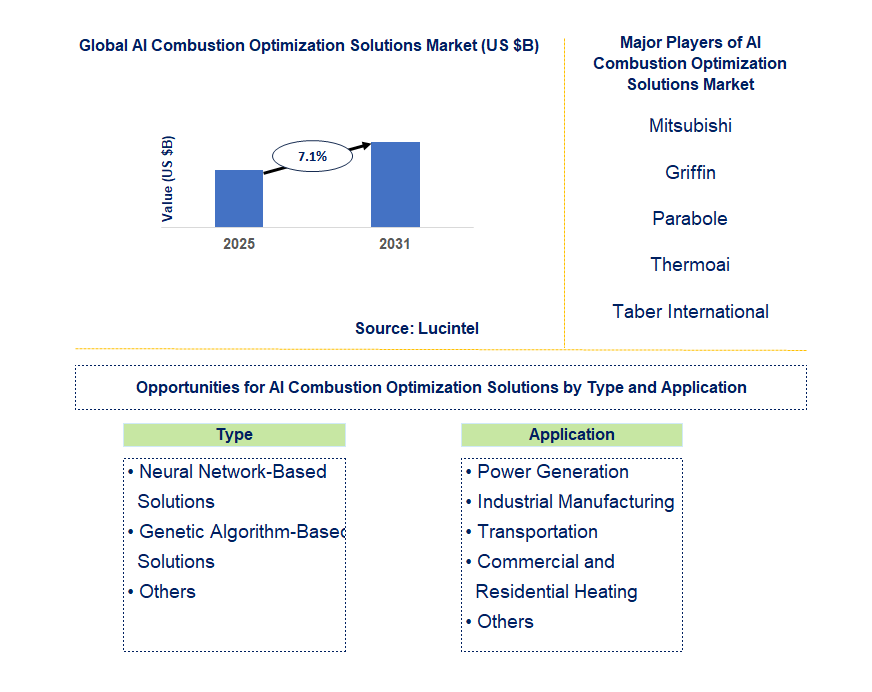
Key data points: The growth forecast = 7.1% annually for the next 7 years. Scroll below to get more insights. This market report covers Trends, opportunities and forecasts in AI combustion optimization solutions market to 2031 by type (neural network-based solutions, genetic algorithm-based solutions, and others), application (power generation, industrial manufacturing, transportation, commercial and residential heating, and others), and region (North America, Europe, Asia Pacific, and the Rest of the World)
We'll send your sample report shortly.
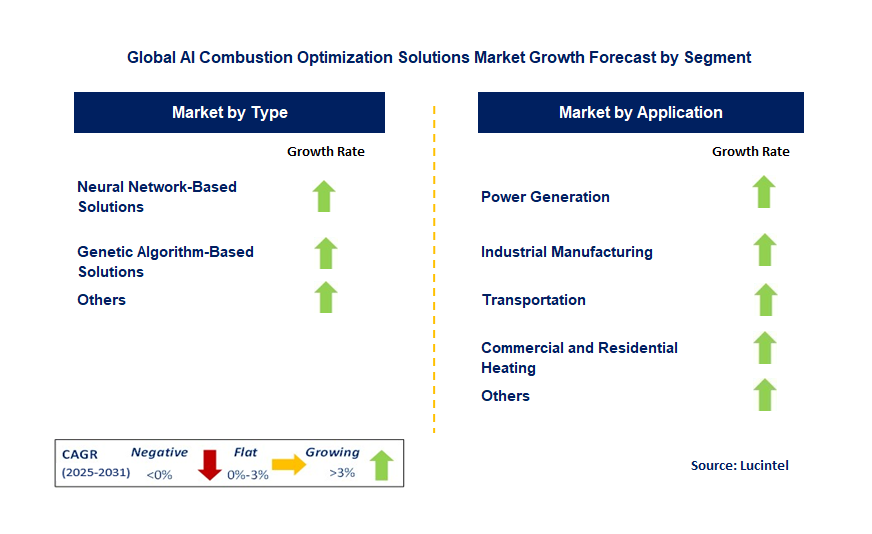
• Lucintel forecasts that, within the type category, neural network-based solutions is expected to witness higher growth over the forecast period due to their ability to adapt in real-time and effectively handle complex.
• Within the application category, power generation is expected to witness the highest growth due to its large-scale fuel consumption.
• In terms of region, North America is expected to witness the highest growth over the forecast period due to high demand for energy efficiency.
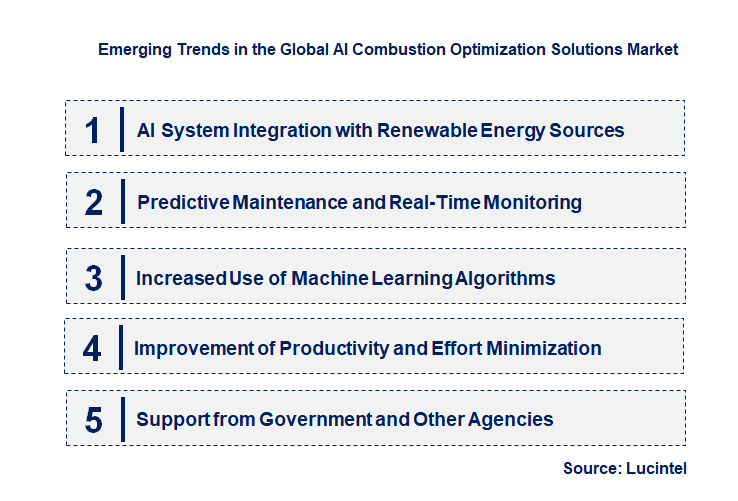
• AI System Integration with Renewable Energy Sources: AI combustion optimization is being integrated into renewable energy systems for more efficient overall functioning. An effort to meet target industry outputs while simultaneously predicting and reducing fossil fuel combustion will be aided by the integration of AI and renewable energy sources, such as wind and solar. Industries manage to smoothen the shift towards low carbon energy solutions through this. Businesses predicting energy needs and optimizing fossil fuel combustion cycles based on the availability of renewable sources will lower carbon emissions and contribute to sustainability goals.
• Predictive Maintenance and Real-Time Monitoring: One of the key trends in combustion optimization is AI predictive maintenance. AI algorithms can assess data from combustion systems to recommend timely interventions or maintenance. Combustion processes, also, can now be monitored in real-time where industries can fine tune and modify the combustion processes on the fly. This forward thinking approach minimizes breakdowns, improves equipment lifespan and reduces downtime. Breakdown in machinery is extremely expensive and this approach mitigates that problem greatly. Real time analyses ensure that the processes which consume fuel operate as efficiently as possible to make sure fuel and emissions are kept as low as possible.
• Increased Use of Machine Learning Algorithms: The use of machine learning to improve the satisfactorily put up combustion processes is on the rise. Machine learning algorithms consume a lot of operational data to find underlying patterns, inefficiencies, and even optimization opportunities. With each new set of data, these algorithms continue to learn to enhance the combustion efficiency better and tighten the leash on fuel consumption and emissions. The automation of combustion alterations is made possible with machine learning to allow for better and quicker control of energy systems. This development is important for businesses looking to be more environmentally friendly while cutting down on their expenses.
• Improvement of Productivity and Effort Minimization: The enhancement of productivity and effort minimization in the industrial sector is a key driver in the AI combustion optimization market. Industries are employing AI technologies to improve combustion efficiency by curtailing fuel usage to optimum levels while balancing the air-fuel ratio. Achieving emission free Ai-powered solutions is vital when trying to satisfy international environmental and carbon emission reduction parameters set for countries to obey. AI-powered solutions for combustion optimization contribute to sustainability efforts by reducing emissions while improving energy efficiency.
• Support from Government and Other Agencies: The policies and regulations from the government single handedly are highly affecting the growth of the market for AI combustion optimization solutions. The rest of the world, especially Europe and Asia, have been raising the bar on emissions bounds, and giving more energy efficiency stipulations alongside carbon reduction aims. These regulations compel industries to embrace Ai combustion optimization technologies to fulfill regulatory compliance. The expenditure by the government in promoting green technology is also beneficial to the growth of the market as it motivates the industries to use AI to achieve sustainable development and fulfill government policies. In conclusion, the emerging trends in the AI combustion optimization solutions market are reshaping industries by driving efficiency, sustainability, and innovation. The integration of AI with renewable energy, real-time monitoring, machine learning algorithms, predictive maintenance, and government support are transforming combustion processes across various sectors. These trends are not only helping industries reduce costs, enhance operational performance, and meet environmental goals, but they are also positioning AI as a central tool in the global shift towards cleaner, more efficient energy systems. As technology continues to evolve, these trends will likely play a pivotal role in driving the future of combustion optimization.
• AI Combustion Control Systems: AI Combustion Control Systems are one of the major achievements in this arena. These systems utilize both real time information and machine learning to optimize the set processes, reduce fuel consumption, and limit emissions AI systems enable real time precision regarding combustion parameters which facilitates energy systems to operate at maximized efficiency. The adoption of AI combustion control systems serves operational cost reductions, productivity increases, and improved environmental performance on the whole.
• Smart Sensors and IoT: Another outstanding achievement is the addition of smart sensors and IoT to AI combustion optimization systems. Smart sensors are able to capture real time information from combustion systems, while IoT facilitates remote analysis from AI algorithms. The ability to remotely monitor combustion processes along with surrounding data and adjust in real time has revolutionized combustion optimization. With these opposing features, system reliability, maintenance costs, and energy efficiency are multiply improved.
• AI in Combustion Process Modeling: AI is applied in the modern modeling of the combustion process aiming at the simulation and optimization of the combustion dynamics. AI algorithms create models that predict combustion systems’ behavior by examining parameters such as fuel composition, temperature, and pressure. The developed models assist in optimizing the combustion performance, inefficient energies, and emission control, and at the same time, the advanced control of the combustion systems. AI modeling of combustion is aiding industry in achieving more efficient operations, less fuel usage, and greater climate change mitigation measures at operational combustion systems.
• Integration with Industry 4.0: The AI market for combustion optimization is rapidly growing due to the broader Industry 4.0 trend focusing on the deployment of new technologies including AI, automation, and Data science in industrial processes. Combustion optimization tools, machine learning, and smart sensors for real-time monitoring and control of combustion systems are implemented into smart factories for AI controlled energy efficient systems. With the adoption for Industry 4.0, industries are able to increase their productivity and profitability, reduce costs and improve product standards, and do this all while abiding to tough environmental rules and regulations.
• Solutions for Carbon Capture using AI: To cope with the increasing requirements for carbon sequestration, AI-assisted carbon capture technologies are being fitted into the combustion chambers of industrial plants. Using these AI solutions, carbon dioxide emissions during industrial combustion processes are captured and stored safely. The implementation of AI-driven carbon capture solutions supports international carbon reduction endeavors and enables industries to attain targets for emission reductions. This advancement is very critical for certain industries, such as cement and steel manufacturing, where carbon emissions are a critical issue. In conclusion, the key developments in the AI combustion optimization solutions market are significantly enhancing operational performance, energy efficiency, and sustainability across industries. With advancements in AI-powered control systems, smart sensors, real-time data analysis, and integration with Industry 4.0, companies are achieving optimized combustion processes, reduced emissions, and lower operational costs. These developments, coupled with the growing demand for cleaner energy solutions and stricter regulatory standards, are driving widespread adoption of AI technologies in combustion optimization. As these innovations continue to evolve, they will play a crucial role in shaping the future of energy-intensive industries and their sustainability efforts.
• Energy Production and Power Generation: AI combustion optimization has the potential to be extremely beneficial for the global energy systems AI technologies. Combustion processes in power plants can be optimized, fuel consumption and emissions can be minimized, and efficiency can be drastically increased. These solutions are fundamental to achieving a balance between meeting the global energy needs and respecting the environmental policies. As the world moves towards renewable sources of energy, AI will be increasingly important in the integration of renewable energy sources into the existing power systems as well as in the optimization of hybrid energy systems.
• Industrial Manufacturing: AI optimization of combustion engineering is undergoing rapid implementation in industrial engineering in order to make the processes more cost-effective as well as efficient. Industries stand to gain greater energy efficiency, reduced waste, and improved products with higher quality by optimizing the combustion processes. Predictive maintenance capabilities provided by AI also enhance production by decreasing the amount of unplanned downtime. These developments allow manufacturers to achieve their sustainability targets and remain relevant in a rapidly changing world and business environment.
• Transportation and Logistics: The transportation and logistic sectors are also gaining from the AI combustion optimization. AI technologies are capable of optimizing AI combustion in internal-combustion vehicles, which helps in reducing fuel consumption and emissions. In logistics, AI-based fleet management systems can further optimize vehicle route selection, saving energy and minimizing carbon emissions. As emission regulations become strict, AI-powered solutions will assist firms in the transportation and logistics industry in achieving the sustainability goals and enhancing business efficiency at the same time.
• Oil and Gas Industry: In oil and gas businesses, AI combustion optimization is helping lower the operational cost, enhance fuel efficiency, and help operators meet their environmental obligations. AI technologies are being embedded into the combustion systems for optimization of the natural gas, oil, and other fuels burning in industrial processes. These kinds of solutions help in decreasing the greenhouse gases emissions and increasing oil and gas sustainability efforts. The implementation of the AI-powered solutions within this segment of the economy is likely to grow with the increase in environmental legislation.
• The combination of construction industry and AI is being applied throughout the segment building for combustion optimization, specifically in heating systems. The AI-powered systems are being utilized in the harvesting of biomass for combustion in boilers, furnaces, and other energy systems. These innovations help cut down energy utilization in buildings, enhance the quality of air inside, and minimize the carbon footprints. As energy effectiveness becomes a critical construction focus, the adoption of building AI powered solutions in this industry will be much more pronounced. In conclusion, the strategic growth opportunities in the AI combustion optimization solutions market are vast and diverse, spanning multiple industries and applications. From energy production and industrial manufacturing to transportation and oil and gas, AI-driven technologies are unlocking significant potential for efficiency, cost reduction, and sustainability. As industries continue to prioritize energy efficiency and emissions reductions, these AI solutions will play a pivotal role in meeting both operational and environmental goals. The growing adoption of AI, driven by regulatory pressures, technological advancements, and the demand for cleaner energy, will continue to shape the future of combustion optimization and present new avenues for market expansion.
• Mitsubishi
• Griffin
• Parabole
• Thermoai
• Taber International
• General Electric
• Energy Technology & Control
• Schneider
• Conenga Group
• Carbon Re
• Neural Network-Based Solutions
• Genetic Algorithm-Based Solutions
• Others
• Power Generation
• Industrial Manufacturing
• Transportation
• Commercial and Residential Heating
• Others
• North America
• Europe
• Asia Pacific
• The Rest of the World
• United States: AI combustion optimization solutions are fast gaining acceptance in the United States, particularly in the energy and manufacturing sectors. Most companies are now using machine learning for increasing combustion efficiency, lowering fuel usage, and decreasing emissions. Enhanced operational performance and quick troubleshooting are achievable through the use of Real time Monitoring systems. Additionally, government subsidies that support green technologies enable smoother transitions to AI optimization systems. Even higher environmental laws and changing to renewable sources continue to drive more funds towards AI Autonomous Combustion systems.
• China: During the past few years, the Chinese government has made huge efforts in the adoption of AI combustion optimization technologies. It has also started to invest heavily in the Chinese manufacturing and energy industries. There are constantly emerging investments in AI tools that help to boost efficiency and minimize carbon emissions. China’s efforts in social responsibility and hitting environmental benchmarks have further motivated the use of AI in industrial combustion processes. Other policies, including carbon neutrality and stricter emission limits, are fueling developments within the AI combustion optimization industry. Companies seek to improve predictive analytics for combustion processes, which helps to meet national environmental policies.
• Germany: Germany has been showing great foresight as far as energy conservation and technological advancements is concerned. Due to increased use of AI in the industrial domain, particularly in power and even more in the manufacturing industries, the country colonized the AI combustion optimization market first. Modern solutions for combustion AI optimization are successfully aiding enterprises in reducing energy usage and increasing productivity while also lowering pollution and adhering to environmental laws. The Industry 4.0 strategies of the German government are also directed to support AI in the propulsion industry with the target of making climate change policies work. Companies are abandoning old ways of maintaining tools and changing them for AI for maintenance and better management of combustion processes.
• India: The AI combustion optimization solutions market is witnessing growing activity in India due to the increased focus on mitigation of air pollution, energy efficiency, and sustainable development targets. AI technologies are being embraced in sectors like power generation and manufacturing for optimizing combustion processes. With the increased focus on emission mitigation, AI-based solutions are critical to improving energy waste and fuel expenditure. Environmental protection and energy efficiency incentives, as well as regulations, are increasing the adoption of AI combustion technologies in India.
• Japan: Combustion Optimization using AI technology is Japan’s forte and has always remained at the forefront in the adoption of such technology. The manufacturing and energy industries of the country has employed AI for improved combustion efficiency, increased energy saving, and reduced emissions. The effective carbon neutrality and energy transition targets of Japan are further increasing the need for such technology in the country. The use of AI-based combustion process monitoring and control enables industries to reduce system downtimes and assures that operations are kept within the required environmental legislative limits. In addition, AI solutions are used for what is termed as ‘forgetting maintenance’, which involves operations with a minimal expectation of interruptions.


• Mitsubishi
• Griffin
• Parabole
• Thermoai
• Taber International
• General Electric
• Energy Technology & Control
• Schneider
• Conenga Group
• Carbon Re Q5. Which AI combustion optimization solutions market segment will be the largest in future? Answer: Lucintel forecasts that, within the type category, neural network-based solutions is expected to witness higher growth over the forecast period due to their ability to adapt in real-time and effectively handle complex. Q6. In AI combustion optimization solutions market, which region is expected to be the largest in next 5 years? Answer: In terms of region, North America is expected to witness the highest growth over the forecast period due to high demand for energy efficiency. Q7. Do we receive customization in this report? Answer: Yes, Lucintel provides 10% customization without any additional cost.


Choose a license that fits your team. Instant PDF delivery.
Prices exclude taxes. Instant delivery. Custom licensing available on request.
Market Report · July 13, 2026
Market Report · July 13, 2026
Market Report · July 2, 2026
Trusted partner for strategic intelligence and business growth


Receive a complimentary market analysis tailored to your industry. Our analysts will identify key growth opportunities and competitive dynamics specific to your business.

Market size, growth rate, and key trend analysis for your specific sector.

Top competitor positioning and market share analysis.

Strategic recommendations backed by data-driven insights.
Get curated market intelligence and competitive moves straight to your inbox.
By subscribing, you agree to receive our monthly insights. Unsubscribe anytime.
Receive a complimentary market analysis tailored to your industry. Our analysts will identify key growth opportunities and competitive dynamics specific to your business.
Market size, growth rate, and key trend analysis for your specific sector.
Top competitor positioning and market share analysis.
Strategic recommendations backed by data-driven insights.
Get curated market intelligence, emerging trends, and competitive moves straight to your inbox each month.
By subscribing, you agree to receive our monthly insights. Unsubscribe anytime.
We'll send your sample report shortly.