
Aerospace Maintenance Chemical Market Report: Trends, Forecast and Competitive Analysis to 2035

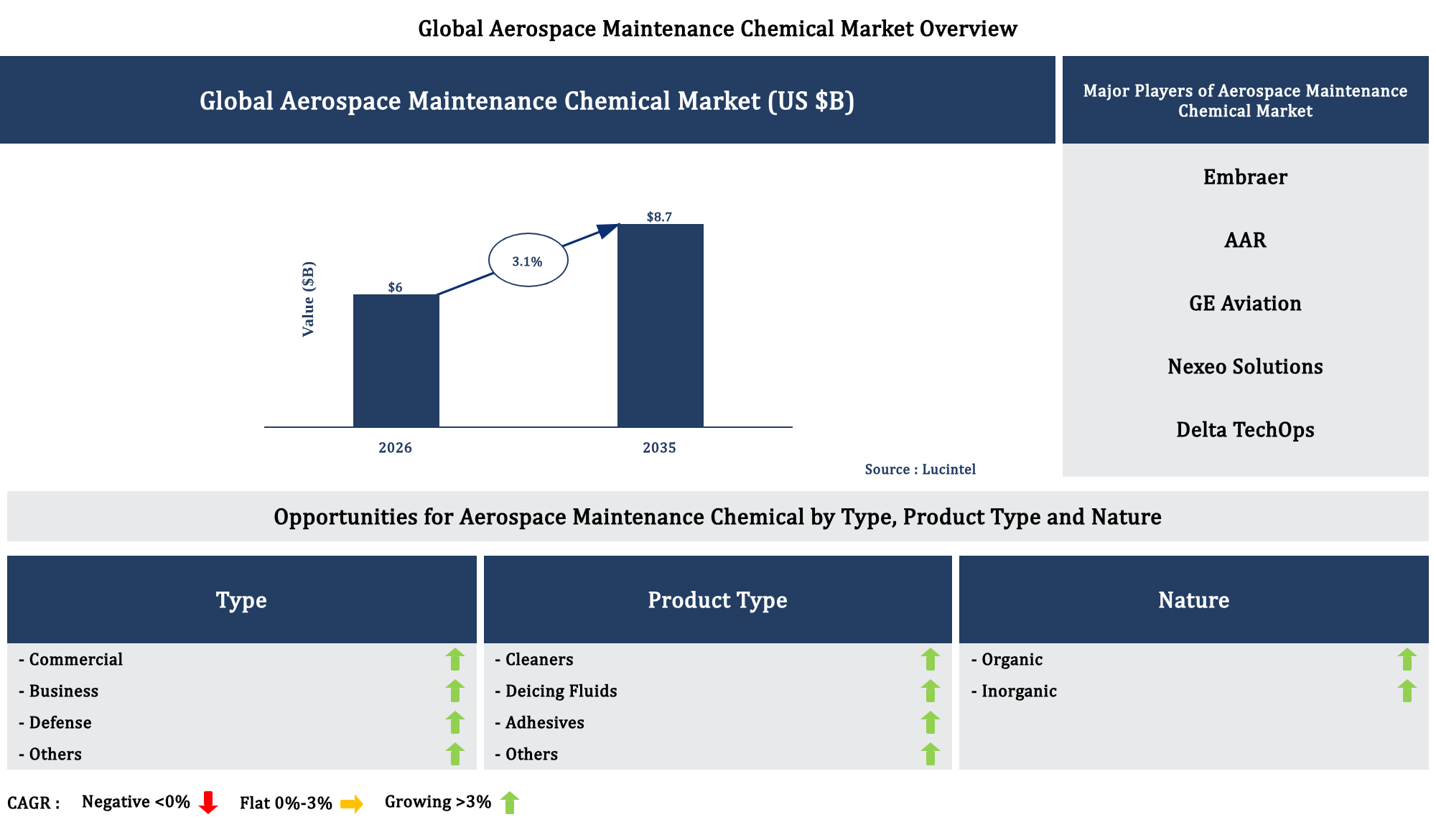
Key data points: The market size in 2035 = $8.7 billion, growth forecast = 3.1% annually for the next 9 years. Scroll below to get more insights. This market report covers trends, opportunities, and forecasts in the global aerospace maintenance chemical market to 2035 by type (commercial, business, defense and others), product type (cleaners, deicing fluids, adhesives and others), nature (organic and inorganic), and region (North America, Europe, Asia Pacific, and the Rest of the World)

Publisher: Lucintel Last Updated: July 2026
See Pricing

Download Sample Report

| ✨ New Download Sample report — Get instant insights! | ✨ New Download Sample report — Get instant insights!

Aerospace Maintenance Chemical Market Report: Trends, Forecast and Competitive Analysis to 2035

Aerospace Maintenance Chemical Market


The future of the global aerospace maintenance chemical market looks promising with opportunities in the organic and inorganic markets. The global aerospace maintenance chemical market is expected to reach an estimated $8.7 billion by 2035 with a CAGR of 3.1% from 2026 to 2035. The major drivers for this market are the increasing aircraft maintenance boosts chemical demand, the rising aviation safety standards drive adoption and the growing commercial aircraft fleet supports growth.

• Lucintel forecasts that, within the type category, commercial will remain the largest segment over the forecast period as the increasing commercial aircraft fleet expands maintenance chemical demand.

• Within the nature category, inorganic will remain the largest segment due to the the growing aerospace maintenance requirements increase inorganic chemical adoption.

• In terms of regions, North America will remain the largest region over the forecast period due to the the rising aircraft maintenance activities drive chemical consumption.

Gain valuable insights for your business decisions with our comprehensive 150+ page report.
Aerospace Maintenance Chemical Market

Emerging Trends in the Aerospace Maintenance Chemical Market

The global aerospace maintenance chemical market is evolving rapidly as airlines, MRO providers, and defense operators seek safer, more efficient, and more sustainable products. Stricter environmental regulations, higher fleet utilization, and the growing complexity of composite-rich airframes are driving demand for advanced cleaning, degreasing, and surface treatment chemistries. At the same time, digitization and predictive maintenance are reshaping how chemicals are specified, monitored, and consumed across the aircraft lifecycle. New entrants and incumbents are investing in technology, partnerships, and regional capacity to support faster turnaround times while reducing total cost of ownership and minimizing health, safety, and environmental risks.
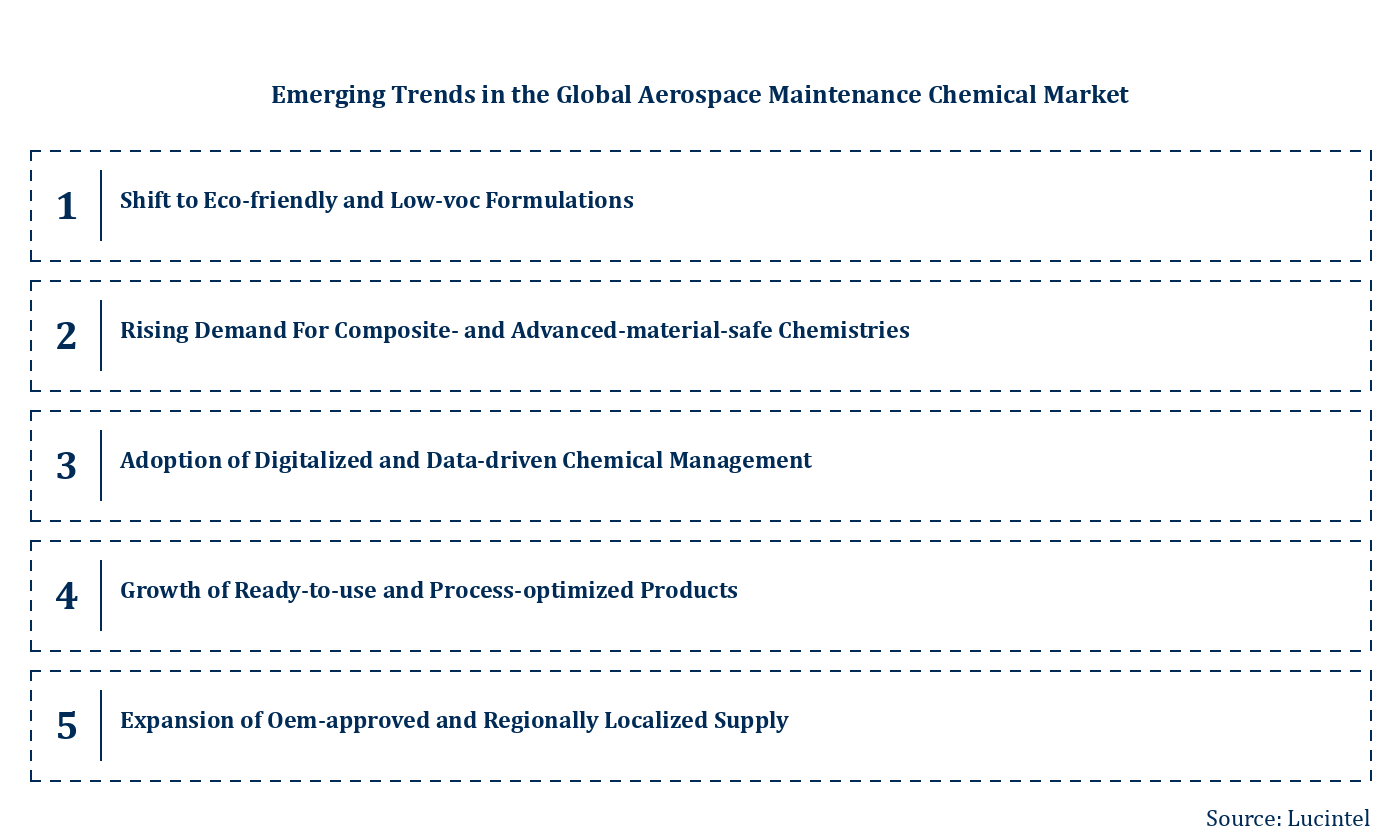
  • Shift To Eco-friendly and Low-VOC Formulations: The global aerospace maintenance chemical market is increasingly prioritizing water-based, low-VOC, and REACH-compliant products to meet tightening environmental and worker-safety regulations. Airlines and MROs are actively phasing out legacy solvents with high toxicity or ozone-depleting potential, creating strong pull for biodegradable cleaners, non-chromate conversion coatings, and chlorine-free strippers. This transition is also driven by corporate sustainability targets and ESG reporting pressures from investors. Vendors that can demonstrate robust environmental credentials, without compromising cleaning performance or corrosion protection, are gaining a competitive edge and securing preferred-supplier status with major operators.
  • Rising Demand for Composite- and Advanced-material-safe Chemistries: As modern aircraft platforms incorporate higher levels of carbon-fiber composites, titanium alloys, and advanced coatings, the global aerospace maintenance chemical market is seeing strong demand for products that clean and protect without damaging sensitive substrates. Traditional aggressive solvents and alkaline cleaners can cause micro-cracking, resin swelling, or coating delamination, pushing MROs toward more specialized formulations. Suppliers are developing tailored solutions for composite fuselages, radomes, engine nacelles, and thermal barrier coatings, validated through OEM approvals. This trend is reshaping product portfolios and expanding high-margin niches focused on material-specific maintenance chemistries.
  • Adoption of Digitalized and Data-driven Chemical Management: The global aerospace maintenance chemical market is being transformed by digital tools that monitor chemical usage, track shelf-life, and link consumption to specific aircraft, tasks, and work orders. MROs are rolling out RFID tags, QR-coded containers, and integrated inventory systems that automatically record dispensing events and trigger replenishment. These solutions enable tighter regulatory compliance, reduced waste, and better alignment of chemical usage with maintenance plans and predictive analytics. Suppliers offering connected dispensing systems, digital SDS access, and usage dashboards are strengthening customer stickiness and unlocking recurring revenue models based on service and data.
  • Growth of Ready-to-use and Process-optimized Products: The global aerospace maintenance chemical market is moving toward ready-to-use, pre-mixed, and process-optimized formulations that simplify application and reduce variability on the hangar floor. Operators are seeking products that minimize mixing, dilution errors, and dwell-time uncertainty, thereby improving consistency across shifts and locations. Concentrates are being complemented or replaced by standardized kits, wipes, and gels that are tailored to specific tasks like wheel-well cleaning, fuel tank maintenance, or sealant removal. This trend improves turnaround time, reduces training requirements, and supports lean MRO processes while enabling suppliers to differentiate through application engineering.
  • Expansion of OEM-approved and Regionally Localized Supply: The global aerospace maintenance chemical market is seeing greater emphasis on OEM approvals and geographically diversified production to support resilient supply chains. Airlines and MROs increasingly mandate chemicals listed on OEM-qualified product lists to ensure warranty compliance and performance consistency. At the same time, geopolitical risks and logistics disruptions are driving demand for localized blending, packaging, and distribution hubs closer to key aviation clusters. Suppliers investing in regional facilities, local regulatory expertise, and strong OEM relationships are better positioned to secure long-term contracts and mitigate supply risk for critical maintenance chemicals.

Aerospace Maintenance Chemical Market by country

Recent Developments in the Aerospace Maintenance Chemical Market

The aerospace maintenance chemical market is undergoing notable transformation as airlines, MRO providers, and OEMs adapt to post-pandemic recovery, stricter environmental rules, and new aircraft technologies. Operators are demanding products that extend component life, reduce downtime, and comply with evolving health, safety, and sustainability requirements. At the same time, pressure to lower operational costs and decarbonize fleets is pushing the development of high-performance, low-toxicity formulations. Digitalization of maintenance processes is further changing how chemicals are selected, monitored, and dispensed. These recent developments are redefining competitive dynamics and setting new performance benchmarks across the global aerospace maintenance chemical market.

  • Shift To Environmentally Compliant and Low-VOC Formulations: Manufacturers are rapidly reformulating aerospace maintenance chemicals to reduce volatile organic compounds, eliminate chromates and PFAS where possible, and meet tightening REACH and EPA regulations. This shift is driving adoption of waterborne cleaners, chrome-free corrosion inhibitors, and lower-toxicity paint strippers that maintain or exceed legacy performance. Airlines and MROs benefit from reduced compliance risk, easier worker safety management, and improved ESG credentials, although qualification cycles are longer and certification costs higher, favoring suppliers with strong R&D capabilities and regulatory expertise.
  • Growth of Advanced Corrosion Protection and Surface Treatment Technologies: The aerospace maintenance chemical market is seeing accelerated development of high-durability coatings, nanostructured surface treatments, and multifunctional primers that provide superior corrosion resistance while enabling lighter structures. These solutions extend inspection intervals and reduce repaint cycles, directly lowering lifecycle maintenance costs. OEM-approved systems tailored for composite-rich and next generation metallic airframes are gaining traction, particularly in harsh marine and desert environments. As fleets age and airlines defer new aircraft purchases, demand for these advanced protection solutions is intensifying across commercial, defense, and business aviation segments.
  • Expansion of Bio-based and Sustainable Chemical Solutions: Suppliers are launching bio-based solvents, detergents, and specialty fluids derived from renewable feedstocks to reduce carbon footprints and hazardous waste volumes. These sustainable aerospace maintenance chemicals are designed to be compatible with existing materials and processes while offering improved biodegradability and lower human toxicity. Airlines and lessors are increasingly specifying such products in procurement policies to align with corporate sustainability targets. While price premiums remain, total cost of ownership benefits from lower disposal costs and reduced regulatory burden are supporting adoption, especially among large global MRO networks and flag carriers.
  • Integration of Digital Monitoring and Smart Dispensing Systems: Recent developments include digitally enabled dispensing units, RFID-tagged chemical containers, and sensor-based monitoring that track usage, shelf life, and storage conditions in real time. These smart systems help MROs optimize inventory, prevent use of expired chemicals, and ensure consistent application quality. Integration with maintenance management software supports automated documentation for airworthiness and regulatory audits. The result is improved process control, reduced waste, and lower risk of non-compliance events, which is particularly valuable for high-throughput paint shops, engine overhaul facilities, and line maintenance operations.
  • Strategic Partnerships, M&A, and Portfolio Consolidation Among Key Players: The aerospace maintenance chemical market is experiencing intensified consolidation as large chemical companies acquire niche formulators and sign long-term supply agreements with OEMs and global MRO groups. These strategic moves expand regional reach, accelerate technology transfer, and secure positions on qualified product lists for major aircraft platforms. Collaborative development programs with airlines focus on tailored solutions for specific fleets, such as low-odor cabin cleaners or fast-curing exterior coatings. This consolidation is raising barriers to entry for smaller players while providing customers with more integrated, globally supported chemical portfolios.

Strategic Growth Opportunities in the Aerospace Maintenance Chemical Market

The aerospace maintenance chemical market is entering a phase of strategic expansion as airlines, defense operators, and MRO providers pursue higher asset utilization, stricter safety compliance, and lower lifecycle costs. Demand is rising for specialized chemistries that support advanced materials, faster turnaround times, and greener operations, while regulatory pressures reshape product portfolios across civil and military fleets. Growth opportunities are emerging around surface preparation, engine care, cabin hygiene, corrosion control, and environmentally compliant cleaning solutions. Players that align innovation pipelines, certification strategies, and service models to these evolving application needs can capture share and build durable differentiation in global maintenance ecosystems.

  • Airframe Surface Preparation and Cleaning: Advanced cleaning and surface preparation chemicals optimized for composite and mixed-material airframes offer a major growth avenue, as next-generation aircraft require precise, material-safe solutions that support paint adhesion, damage detection, and streamlined scheduled maintenance. Suppliers that deliver low-VOC, non-chromate, and fast-acting formulations, along with technical support for process optimization, can help airlines and MROs reduce turnaround times, extend coating life, and comply with evolving environmental regulations.
  • Engine and APU Degreasing and Overhaul: Growing global fleets and higher engine utilization rates are increasing demand for high-performance degreasers, carbon removers, and overhaul chemicals that can safely handle advanced alloys and thermal barrier coatings. Opportunities lie in products that deliver superior deposit removal at lower temperatures, reduce manual labor, and are compatible with automated cleaning systems. Vendors that demonstrate measurable reductions in engine shop cycle times, chemical consumption, and rework rates will gain strong traction with engine MRO facilities and OEM-aligned service networks.
  • Cabin Hygiene and Interior Maintenance: Heightened passenger expectations around cleanliness and health are fueling demand for interior cleaners, disinfectants, and protective coatings that are both aviation-approved and long lasting. Growth is strongest for low-toxicity, odor-neutral formulations that are compatible with lightweight interior materials, as well as antimicrobial treatments that extend cleaning intervals. Companies that couple certified chemistries with training and dosing solutions can help operators enhance passenger experience, meet strict health standards, and manage costs through standardized cabin maintenance programs.
  • Corrosion Inhibition and Structural Protection: Aging fleets, harsher operating environments, and extended asset life targets are driving expanded use of corrosion inhibitors, sealants, and protective wash chemistries. There is particular opportunity in chrome-free, environmentally compliant systems that match or surpass legacy performance on aluminum, steel, and composite interfaces. Providers that offer integrated corrosion management programs, including inspection guidance and tailored product kits by aircraft type and zone, can support operators in reducing unscheduled repairs and preserving residual asset value.
  • Eco-Friendly Cleaning and Degreasing Solutions: Regulatory tightening on hazardous substances and emissions is creating strong demand for biodegradable, low-VOC, and non-flammable cleaning and degreasing agents across hangar, line, and component maintenance. Formulations that maintain cleaning efficacy while lowering worker exposure, waste treatment costs, and environmental risk are particularly attractive. Suppliers that secure broad OEM and regulatory approvals, provide robust compatibility data, and support customers with transition planning from legacy chemistries are well positioned to lead the shift toward sustainable maintenance practices.

Aerospace Maintenance Chemical Market Drivers and Challenges

The aerospace maintenance chemical market is shaped by a dynamic mix of technological innovation, fleet expansion, cost pressures, and stringent environmental and safety regulations. Airlines, MRO providers, and OEMs depend on specialized chemicals for cleaning, degreasing, corrosion protection, paint stripping, and surface treatment to ensure aircraft reliability and compliance. At the same time, operators must manage volatile input costs, labor shortages, and evolving sustainability expectations. Understanding how these drivers and challenges interact is critical for suppliers to position product portfolios, optimize pricing, and prioritize research and development investments in this technically demanding and highly regulated market segment.

The factors responsible for driving the aerospace maintenance chemical market include:

  • Fleet Growth and Aging Aircraft: The continuous rise in global air traffic, combined with the extended service life of existing aircraft, significantly increases demand for aerospace maintenance chemicals required for scheduled and unscheduled maintenance activities.
  • Stringent Safety and Performance Standards: Aviation regulators and OEMs impose rigorous standards on corrosion control, cleanliness, and structural integrity, which drives consistent consumption of high-performance maintenance chemicals that can meet exacting specifications.
  • Technological Advancements in Chemical Formulations: Ongoing innovation in low-toxicity, non-chromate, and high-efficiency formulations enables better performance, faster turnaround times, and compatibility with advanced materials, supporting broader adoption of premium aerospace maintenance chemicals.
  • Growth of MRO Networks and Outsourcing: Airlines increasingly outsource maintenance to specialized MRO providers and expand regional maintenance hubs, which consolidates procurement and leads to higher, more predictable volumes of aerospace maintenance chemicals across global networks.
  • Environmental and Sustainability Initiatives: Pressure to reduce volatile organic compound emissions, hazardous waste, and worker exposure is accelerating demand for environmentally friendly aerospace maintenance chemicals that maintain performance while improving sustainability profiles.

The challenges in the aerospace maintenance chemical market are:

  • Stringent Environmental and Chemical Regulations: Tightening global regulations on hazardous substances, emissions, and waste handling force frequent reformulation, costly compliance testing, and potential product withdrawals, complicating long-term planning for aerospace maintenance chemical suppliers.
  • Price Volatility and Supply Chain Disruption: Dependence on specialty raw materials, geopolitical tensions, and logistics bottlenecks expose the aerospace maintenance chemical market to cost volatility and intermittent shortages that disrupt maintenance schedules and margin stability.
  • Complex Qualification and Approval Processes: Lengthy and expensive certification procedures with OEMs and aviation authorities slow the introduction of new aerospace maintenance chemicals, particularly eco-friendly alternatives, and can deter smaller innovators from entering the market.

Overall, the aerospace maintenance chemical market is propelled by expanding and aging fleets, rising safety expectations, and innovation in high-performance and sustainable formulations, yet it is tempered by regulatory complexity, supply instability, and demanding approval cycles. These forces create a landscape in which established players with strong R&D, regulatory expertise, and resilient supply chains hold clear advantages, while newer entrants must carefully target niche opportunities. Stakeholders that align their product strategies with airline cost pressures, environmental goals, and evolving material technologies are best positioned to capture long-term growth despite persistent structural challenges.

List of Aerospace Maintenance Chemical Market Companies

Companies in the market compete on the basis of product quality offered. Major players in this market focus on expanding their manufacturing facilities, R&D investments, infrastructural development, and leverage integration opportunities across the value chain. Through these strategies aerospace maintenance chemical market companies cater increasing demand, ensure competitive effectiveness, develop innovative products & technologies, reduce production costs, and expand their customer base. Some of the aerospace maintenance chemical market companies profiled in this report include-

  • Embraer
  • AAR
  • GE Aviation
  • Nexeo Solutions
  • Delta TechOps
  • Boeing Company
  • Bombardier
  • Air France Industries KLM Engineering & Maintenance
  • Henkel

Aerospace Maintenance Chemical Market by Segment

The study includes a forecast for the global aerospace maintenance chemical market by type, product type, nature, and region.

  • Aerospace Maintenance Chemical Market by Type [Value ($B) from 2019 to 2035]:
    • Commercial
    • Business
    • Defense
    • Others
  • Aerospace Maintenance Chemical Market by Product Type [Value ($B) from 2019 to 2035]:
    • Cleaners
    • Deicing Fluids
    • Adhesives
    • Others
  • Aerospace Maintenance Chemical Market by Nature [Value ($B) from 2019 to 2035]:
    • Organic
    • Inorganic
  • Aerospace Maintenance Chemical Market by Region [Value ($B) from 2019 to 2035]:
    • North America
    • Europe
    • Asia Pacific
    • The Rest of the World

Country Wise Outlook for the Aerospace Maintenance Chemical Market

The aerospace maintenance chemical market is evolving rapidly as airlines, defense forces, and MRO providers seek higher performance, lower environmental impact, and stricter compliance with safety and emissions regulations. Across major aviation hubs, demand is shifting toward eco-friendly cleaning agents, advanced corrosion inhibitors, and high-durability sealants and coatings that extend asset life while minimizing downtime. Digitalization of maintenance workflows is also influencing chemical selection through predictive maintenance, traceability, and tighter OEM specifications. In this context, the United States, China, Germany, India, and Japan are shaping market developments through regulatory changes, local manufacturing strategies, and technology-led product innovation.

  • United States: The United States aerospace maintenance chemical market is being reshaped by stringent FAA and EPA regulations that accelerate the phase-out of high-VOC, chromate, and PFAS-containing formulations and spur adoption of water-based, low-toxicity alternatives. Major domestic suppliers are intensifying R&D in advanced corrosion protection chemistries, non-chrome primers, and biodegradable cleaners suited to large commercial fleets and an aging military aircraft base. Growth in passenger traffic and fleet modernization is supporting higher demand for surface treatment and structural repair chemicals, while sustainability commitments from US airlines and MROs are driving qualification of new products that balance performance, worker safety, and environmental compliance.
  • China: In China, rapid expansion of commercial aviation capacity and the development of indigenous aircraft programs are catalyzing demand for locally produced aerospace maintenance chemicals. Government policies encouraging self-reliance in aviation supply chains are driving investments in domestic formulations for cleaners, degreasers, sealants, and anti-corrosion coatings that meet CAAC and international standards. Chinese MRO providers are adopting more automated cleaning and surface preparation processes, which increases the need for compatible, high-consistency chemicals. Environmental regulations are tightening, encouraging the shift toward low-emission, low-odor products, while collaborations with global chemical companies and joint ventures help accelerate technology transfer and international approvals.
  • Germany: Germany’s aerospace maintenance chemical market is strongly influenced by its role as a European hub for high-end engineering, sustainability, and quality-driven MRO services. German aerospace suppliers and chemical manufacturers are focusing on REACH-compliant, chromate-free corrosion protection systems and highly specialized cleaning agents that support precision components and advanced composites used by Airbus and other OEMs. The push for climate-neutral aviation is encouraging development of low-carbon-footprint production processes and recyclable packaging for maintenance chemicals. Close cooperation between airlines, MROs, research institutes, and regulatory bodies in Germany and the wider EU fosters rapid validation of innovative products that enhance safety, reduce hazardous waste, and support digital maintenance records.
  • India: India’s aerospace maintenance chemical market is growing alongside the expansion of domestic airlines, increasing air traffic, and the country’s ambition to become a regional MRO hub. Local and multinational chemical suppliers are strengthening their presence to serve new MRO facilities and defense depots, offering cost-effective cleaning, paint-stripping, and anti-corrosion solutions tailored to hot and humid operating environments. “Make in India” policies encourage localized production of aviation-grade chemicals and foster partnerships for technology transfer and certification to international standards. Regulatory attention to environmental and worker safety is progressing, prompting gradual movement away from legacy, solvent-heavy products toward more sustainable alternatives that still meet demanding performance criteria.
  • Japan: Japan’s aerospace maintenance chemical market is characterized by high standards for reliability, precision, and materials compatibility, reflecting the country’s strong presence in aerospace components and advanced manufacturing. Japanese companies are innovating in specialty coatings, sealants, adhesion promoters, and precision cleaners optimized for composites, turbine components, and avionics used in both commercial and defense fleets. Stricter environmental and occupational health regulations are driving adoption of low-odor, low-VOC, and non-chrome chemistries, while airlines and MROs emphasize long-term asset integrity to support extended aircraft service life. Collaboration between chemical manufacturers, aerospace suppliers, and government-backed R&D programs in Japan encourages incremental improvements in performance, cleanliness, and traceability across maintenance operations.

Features of the Aerospace Maintenance Chemical Market

  • Market Size Estimates: Aerospace maintenance chemical market size estimation in terms of value ($B).
  • Trend and Forecast Analysis: Market trends (2019 to 2025) and forecast (2026 to 2035) by various segments and regions.
  • Segmentation Analysis: Aerospace maintenance chemical market size by various segments, such as by type, product type, nature and region in terms of value ($B).
  • Regional Analysis: Aerospace maintenance chemical market breakdown by North America, Europe, Asia Pacific, and the Rest of the World.
  • Growth Opportunities: Analysis of growth opportunities in different type, product type, nature and regions for the aerospace maintenance chemical market.
  • Strategic Analysis: This includes M&A, new product development, and competitive landscape of the aerospace maintenance chemical market.
  • Analysis of competitive intensity of the industry based on Porter's Five Forces model.

Article

Aerospace Maintenance Chemical Market: Which Forces Are Redefining Aircraft Care and Safety?

Dallas, July 17, 2026 – The aerospace maintenance chemical market is entering a pivotal phase as airlines, defense operators, and MRO (maintenance, repair, and overhaul) providers confront tightening environmental regulations, aging fleets, and relentless pressure to cut operating costs. New chemistries, digitalized maintenance workflows, and sustainability mandates are converging to reshape how aircraft are cleaned, protected, and repaired. This shift is not only changing procurement strategies for airlines and OEMs but also opening new opportunities for technology companies, data platforms, and advanced materials innovators.

What Strategic Trends Are Recasting the aerospace maintenance chemical market?

The aerospace maintenance chemical market is moving away from commodity products toward high‑performance, data‑enabled, and environmentally aligned solutions. Several structural shifts are setting the tone for the decade ahead and will be decisive for competitive positioning among chemical suppliers, MROs, and aviation technology players.

  • A major trend is the accelerated transition to low‑VOC, REACH‑compliant, and PFAS‑free chemistries in cleaners, deicers, corrosion inhibitors, and surface treatments as regulators phase down legacy solvents and fluorinated substances.
  • Another trend is the rise of smart, sensor‑ready coatings and surface treatments that integrate with aircraft health monitoring systems to enable predictive maintenance at the structural level.
  • Digitalization of maintenance workflows is becoming central, with chemical usage, condition data, and workcard execution increasingly tracked in real time through cloud platforms and mobile tools.
  • Lightweight composite and hybrid structures in next‑generation aircraft are driving demand for specialized chemicals tailored to carbon fiber, advanced alloys, and additive‑manufactured parts.
  • Sustainability and circularity objectives across aviation are pushing adoption of water‑based formulations, recyclable packaging, and life‑cycle analysis of maintenance chemicals.

Collectively, these shifts are moving the market from a low‑differentiation, price‑sensitive space to one where regulatory compliance, sustainability credentials, and data integration capabilities are core sources of value.

How Are Sustainability and Regulations Reshaping Product Portfolios and Procurement?

Environmental regulation is now one of the most powerful drivers of change in the aerospace maintenance chemical market. Authorities are tightening limits on volatile organic compounds, hazardous air pollutants, and persistent chemicals such as certain PFAS used historically in fire‑fighting foams, corrosion inhibitors, and surface treatments.

  • Airlines and defense operators are reassessing entire chemical inventories to remove substances of very high concern and to pre‑empt future restrictions that could disrupt operations.
  • Suppliers are investing heavily in green chemistry, developing water‑based cleaners, bio‑derived solvents, and low‑toxicity corrosion protection systems that match or exceed legacy performance.
  • MRO contracts are increasingly incorporating environmental performance criteria, including emissions profiles, waste generation, and worker exposure metrics, which directly influence supplier selection.
  • Airports and ground handlers are shifting away from conventional deicing and anti‑icing fluids toward formulations with improved biodegradability and reduced environmental persistence.

This regulatory and sustainability pivot is expanding the addressable market for innovators that can deliver compliant, high‑performance alternatives while helping operators meet corporate net‑zero and ESG commitments.

Which Market Segments Will Experience the Strongest Impact from New Innovations?

Not all parts of the aerospace ecosystem will be affected equally by these innovations. The impact will be particularly strong in segments that are capital intensive, safety critical, and under scrutiny for environmental performance.

  • Commercial aviation MRO will see extensive disruption as airlines standardize on new chemistries across global fleets, driving large‑scale reformulation, retraining, and process requalification.
  • Defense and space applications will experience strong impact due to long asset lives and stringent reliability standards that require careful validation of any new coating, sealant, or cleaner.
  • Regional and low‑cost carriers will feel the shift as new chemicals and digital tools enable leaner turnarounds and reduced maintenance‑related downtime, directly influencing cost per available seat kilometer.
  • Airport operations and ground support will be reshaped by sustainable deicing, runway rubber removal chemicals, and environmentally improved cleaning agents for ground equipment.
  • OEM manufacturing and final assembly facilities will increasingly embed compatible, next‑generation chemistries upfront to simplify maintenance and repaint cycles throughout the aircraft life.

These changes will favor players that can quickly adapt their maintenance manuals, supplier qualification processes, and digital maintenance systems to integrate new formulations at scale.

Why Are Smart Coatings and Digital Maintenance Platforms Emerging as Critical Disruptors?

Beyond formulation changes, the aerospace maintenance chemical market is being disrupted by the convergence of materials science and digital technology. Smart coatings, data‑rich maintenance systems, and connectivity are redefining how and when chemicals are applied, monitored, and replaced.

  • Advanced corrosion‑sensing primers and topcoats can change electrical or optical properties in response to corrosion onset, enabling early detection by inspection drones or embedded sensors.
  • Self‑healing coatings and sealants, triggered by temperature or microcapsule rupture, can repair minor surface damage autonomously, extending inspection intervals and reducing unscheduled maintenance events.
  • Integration of chemical usage data into airline maintenance and engineering systems allows more accurate forecasting of consumption, automated reordering, and optimization of inventory and waste.
  • Predictive maintenance algorithms are starting to incorporate environmental exposure data and coating condition information to refine intervals for stripping, repainting, and corrosion checks.

These trends shift the business model from selling liters of chemicals to providing outcome‑based solutions tied to asset uptime, reduced corrosion damage, and improved safety metrics.

Which Challenges Could Slow Adoption Despite the Clear Upside?

Despite strong innovation momentum, several structural challenges could temper the pace of change in the aerospace maintenance chemical market and create regional or segment‑specific adoption gaps.

  • Certification hurdles remain significant because any new chemical or process must pass rigorous OEM, airline, and regulatory approvals that can take years and require costly testing.
  • Legacy fleet heterogeneity complicates standardization since older aircraft materials and coatings may react differently to new chemistries, requiring fleet‑by‑fleet validation.
  • Cost sensitivity in commercial aviation may slow uptake of premium products if savings in reduced downtime and longer intervals are not clearly demonstrated with robust data.
  • Supply chain vulnerabilities for specialty additives, resins, and bio‑based feedstocks could create bottlenecks or price volatility during rapid transition phases.
  • Workforce training and change management are nontrivial because technicians must learn new application procedures, safety protocols, and digital tools associated with next‑generation chemicals.

Addressing these issues will require coordinated efforts among OEMs, regulators, airlines, MRO providers, and chemical and technology suppliers to harmonize standards and accelerate validated best practices.

Where Do the Most Attractive Opportunities Emerge for Innovators and Investors?

Despite the challenges, the opportunity landscape in the aerospace maintenance chemical market is expanding across product innovation, services, and digital enablement. Companies able to combine technical performance with verifiable sustainability and data‑centric value propositions will obtain a structural advantage.

  • Breakthrough corrosion protection systems that extend inspection and repaint intervals represent a compelling value proposition for airlines and defense fleets seeking to reduce heavy maintenance checks.
  • Biodegradable deicing and anti‑icing solutions that maintain performance in severe winter conditions offer airports and ground handlers tangible regulatory and reputational benefits.
  • End‑to‑end service models that bundle chemicals, dispensing equipment, digital monitoring, and training enable suppliers to lock in long‑term contracts and predictable revenue streams.
  • Partnerships between chemical companies and technology firms can generate integrated platforms combining product performance, digital traceability, and predictive analytics.
  • Investments in closed‑loop packaging and on‑site recycling of solvents and rinsing agents can reduce waste disposal costs and help operators hit sustainability targets.

These opportunities invite new entrants from specialty chemicals, advanced materials, industrial software, and analytics to collaborate and compete in what was once a relatively narrow and conservative field.

How Is the Technology Industry Creating New Use Cases Around Aerospace Maintenance Chemicals?

Technology companies are emerging as critical enablers in the aerospace maintenance chemical market, turning traditionally physical, materials‑focused activities into data‑rich processes that can be optimized and automated.

  • IoT platforms are being deployed to monitor temperature, humidity, and exposure conditions that influence coating performance, feeding this data back into maintenance planning systems.
  • Computer vision and AI‑driven inspection tools are being trained to detect paint defects, corrosion spots, and sealant degradation, enabling more precise and targeted chemical application.
  • Augmented reality solutions are guiding technicians through complex stripping, cleaning, and recoating workflows, reducing rework and helping ensure correct use of approved chemistries.
  • Cloud‑based maintenance management software is tracking batch numbers, shelf lives, and application histories of chemicals to support compliance audits and traceability requirements.
  • Robotic and drone‑based application systems are being developed for exterior washes, inspections, and selective recoating, improving consistency and minimizing worker exposure to chemicals.

These use cases reflect a broader shift in which maintenance chemicals are no longer viewed in isolation but as integral elements in a connected ecosystem of hardware, software, and data analytics.

What Recent Developments Signal the Direction of the aerospace maintenance chemical market?

Recent initiatives and product launches across manufacturers, MROs, and technology providers provide clear signals about where the aerospace maintenance chemical market is heading and how quickly change may occur.

  • Leading chemical producers have introduced PFAS‑free corrosion inhibitors and chrome‑free surface treatments qualified for use on major commercial and military platforms, indicating regulatory‑driven reformulation is rapidly scaling.
  • Several airlines and MROs have begun pilot programs using AI‑enabled visual inspection tools for exterior paint and corrosion detection, pairing these systems with revised chemical application procedures.
  • Collaborations between aircraft OEMs and coating manufacturers have produced new topcoat systems designed to reduce drag and improve fuel efficiency, linking maintenance chemicals directly to operational performance.
  • Major airport hubs in cold weather regions have invested in upgraded deicing fluid management and recovery systems, combined with more environmentally benign formulations, to reduce impact on surrounding waterways.
  • Technology startups have launched data platforms that aggregate chemical usage, defect findings, and environment data across fleets, enabling benchmarking and continuous improvement in maintenance practices.

As these developments spread from pilot programs to standard practice, the aerospace maintenance chemical market is set to become more innovative, transparent, and outcome focused. Stakeholders that align their strategies with sustainability imperatives, digital transformation, and stringent safety and reliability demands will be best positioned to capture value in this evolving landscape.

Top 5 Companies

1. Boeing Company

  • Headquarters: Arlington, Virginia, USA
  • Website: https.www.boeing.com
  • Total Revenue (2023): $77.79 Billion (USD)
  • Establishment Year: 1916

Boeing Company is one of the world’s largest aerospace and defense manufacturers and a major consumer and specifier of aerospace maintenance chemicals across commercial, defense, and business aviation fleets. Headquartered in Arlington, Virginia and founded in 1916, Boeing employs more than 170,000 people worldwide with a broad geographic footprint spanning North America, Europe, the Middle East, and Asia-Pacific. The company’s maintenance, repair, and overhaul activities for Boeing commercial aircraft and military platforms require an extensive portfolio of aerospace maintenance chemicals, including cleaners, degreasers, corrosion inhibitors, sealants, adhesives, lubricants, surface treatment agents, and paint and coating systems qualified to stringent OEM specifications.

Through Boeing Global Services, the company offers integrated maintenance solutions and consumables management, often standardizing chemical products and approved suppliers across airlines and MRO partners. Boeing regularly updates its Qualified Products Lists for surface preparation, structural bonding, fuel tank sealants, and specialty fluids, shaping demand patterns in the aerospace maintenance chemical market. The company supports global customer fleets via regional component and heavy maintenance facilities and partnerships in the United States, Europe, the Middle East, China, and other Asian hubs, driving geographically diverse consumption of maintenance chemicals.

Boeing’s recent capacity expansions in freighter conversions, passenger-to-freighter programs, and composite repair facilities reinforce its reliance on advanced chemical systems for structural repair and protective coatings. In the context of mergers and acquisitions, Boeing has historically completed targeted deals in services and avionics that indirectly influence its maintenance infrastructure, but the company remains primarily an OEM and services integrator rather than a direct producer of maintenance chemicals, relying on strategic alliances with chemical manufacturers to meet evolving environmental, performance, and regulatory requirements.

2. Bombardier

  • Headquarters: Montreal, Quebec, Canada
  • Website: https.www.bombardier.com
  • Total Revenue (2023): $8.40 Billion (USD)
  • Establishment Year: 1942

Bombardier is a leading manufacturer of business jets, focusing on the Global and Challenger families, and is an important participant in the aerospace maintenance chemical market through its OEM maintenance standards and global service network. Headquartered in Montreal, Canada and founded in 1942, Bombardier employs tens of thousands of people across engineering, manufacturing, and service operations in North America and key aviation hubs in Europe, the Middle East, and Asia-Pacific. The company’s aircraft programs rely on specialty aerospace maintenance chemicals such as exterior and interior cleaners, anti-corrosion treatments, hydraulic fluids, fuel system chemicals, sealants, structural adhesives, and coating systems that conform to Bombardier’s technical specifications.

Bombardier operates and continues to expand its service center network in regions including the United States, Canada, Europe, the Middle East, and Asia, underpinning local demand for approved maintenance chemicals used in line, base, and heavy maintenance activities for business jet operators. Its aftermarket business, which has grown as Bombardier has streamlined to a pure-play business aviation company, encompasses parts distribution, maintenance programs, and service agreements that incorporate defined chemical usage standards and approved brands, contributing to recurring chemical consumption throughout the aircraft life cycle.

Bombardier’s geographic expansion of service facilities, including new or enlarged service centers in North America and Europe, strengthens its influence over which chemical products are qualified for use on its fleets. While Bombardier does not manufacture maintenance chemicals, it collaborates closely with chemical suppliers to qualify products for composite structures, advanced coatings, and cabin refurbishment. Historically, the company has undergone significant portfolio reshaping, divesting rail and commercial aircraft segments to focus on business aviation, but there have been no major mergers or acquisitions directly targeting the aerospace maintenance chemical segment, with its impact instead driven through standards setting, service capacity growth, and long-term maintenance program offerings.

3. GE Aviation

  • Headquarters: Cincinnati, Ohio, USA
  • Website: https.www.geaerospace.com
  • Total Revenue (2023): $32.00 Billion (USD)
  • Establishment Year: 1917

GE Aviation, now operating as GE Aerospace, is a leading global manufacturer and maintainer of aircraft engines and avionics, exerting significant influence on the aerospace maintenance chemical market through its engine overhaul, component repair, and materials engineering requirements. Headquartered in Cincinnati, Ohio and established in 1917, GE Aerospace employs more than 50,000 people worldwide with major engineering, manufacturing, and MRO operations in North America, Europe, and Asia. The company’s overhaul and repair facilities use specialized maintenance chemicals such as turbine and compressor cleaners, metal surface preparation agents, corrosion inhibitors, high-temperature coatings, lubricants, bonding agents, and non-destructive testing chemicals approved for GE engines.

GE Aviation’s global network of company-owned and partner MRO shops, including joint ventures with airlines and independent MRO providers, creates broad geographic demand for these specialized chemicals, particularly in regions with high engine shop visit volumes. Its product portfolio, focused on commercial and military jet engines, industrial gas turbines, and associated systems, requires advanced chemical solutions for inspection, cleaning, stripping, coating, and repair processes that meet rigorous performance and environmental standards.

The company has expanded its presence in strategic regions such as Asia and the Middle East through partnership-based MRO facilities, indirectly increasing regional demand for GE-qualified maintenance chemicals. While GE has pursued various mergers, divestitures, and portfolio adjustments at the corporate level, there have not been large-scale acquisitions specifically of aerospace maintenance chemical manufacturers; instead, GE works closely with chemical suppliers to qualify and certify products used in engine overhaul. Its influence in the aerospace maintenance chemical market arises from technical specifications, engine shop process standards, and global repair capacity rather than direct chemical manufacturing activities.

4. Air France Industries KLM Engineering & Maintenance

  • Headquarters: Paris, France
  • Website: https.www.afiklmem.com
  • Total Revenue (2023): -
  • Establishment Year: 2004

Air France Industries KLM Engineering & Maintenance (AFI KLM E&M) is a major multi-product MRO provider serving both the Air France-KLM Group fleets and third-party airlines worldwide, and it is a significant consumer and specifier of aerospace maintenance chemicals. Headquartered in Paris, France and formally structured as a combined maintenance organization in 2004 following the Air France and KLM merger, AFI KLM E&M employs tens of thousands of maintenance and engineering professionals across facilities in Europe, the Middle East, Africa, Asia, and the Americas. The company’s service portfolio covers airframe maintenance, engine overhaul, component repair, and cabin modifications, all of which rely on a wide range of maintenance chemicals including cleaners, degreasers, corrosion protection compounds, structural adhesives, sealants, paint strippers, coatings, lubricants, and specialty fluids.

AFI KLM E&M manages extensive hangar and shop capacities in France, the Netherlands, and other global locations, which drives substantial recurring demand for approved chemical products that comply with OEM, airline, and regulatory standards. Its component and engine shops utilize sophisticated chemical processes for stripping, cleaning, non-destructive testing, and surface treatment, often based on qualified products from major chemical suppliers. Through partnerships and joint ventures with local MRO providers in regions such as Asia and the Middle East, AFI KLM E&M has expanded its geographic footprint, increasing localized consumption of aerospace maintenance chemicals in those markets.

While AFI KLM E&M has entered collaborative ventures and line maintenance partnerships to expand its reach, it has not executed major mergers or acquisitions centered on chemical manufacturing. Instead, its role in the aerospace maintenance chemical market is as a large-scale, globally distributed user and specifier, influencing chemical selection, qualification, and adoption across its customer base and partner facilities through standardized maintenance procedures and technical documentation.

5. AAR

  • Headquarters: Wood Dale, Illinois, USA
  • Website: https.www.aarcorp.com
  • Total Revenue (2024): $2.38 Billion (USD)
  • Establishment Year: 1951

AAR is a leading independent provider of aviation services to commercial airlines, defense customers, and OEMs, and it plays an important role in the aerospace maintenance chemical market as a large-scale MRO operator and supply chain manager. Headquartered in Wood Dale, Illinois and founded in 1951, AAR employs several thousand people across facilities in North America, Europe, and Asia. The company’s business segments include aircraft MRO services, parts supply, integrated solutions, and expeditionary services, with maintenance activities that rely on a comprehensive portfolio of chemicals such as aircraft exterior and interior cleaners, stripping agents, corrosion inhibitors, sealants, adhesives, lubricants, hydraulic fluids, and protective coatings.

AAR operates heavy maintenance and component repair facilities in the United States and internationally, where it performs airframe checks, modifications, and component overhauls for a broad range of aircraft types. These operations require the continuous procurement and management of aerospace-qualified maintenance chemicals aligned with OEM, military, and regulatory requirements. Through its supply chain and parts distribution activities, AAR also supports airline and defense customers in sourcing maintenance chemicals and related consumables, giving the company additional leverage in specifying and standardizing chemical brands and product types across fleets.

The company has expanded geographically through new facilities and partnerships, including MRO operations beyond the United States that increase consumption of maintenance chemicals in emerging aviation hubs. AAR has engaged in selective acquisitions and divestitures focused on growing its MRO capacity and integrated solutions offerings; however, it has not concentrated M&A specifically on chemical manufacturers. Its influence in the aerospace maintenance chemical market stems from its role as an independent MRO and supply chain partner that aggregates demand, standardizes chemical usage across airline customers, and collaborates with chemical suppliers to ensure availability and compliance with evolving environmental and safety regulations.

Table of Contents

1. Executive Summary
14.1 Competitive Analysis

List of Figures

List of Tables

Methodology

Lucintel has been in the business of market research and management consulting since 2000 and has published over 1000 market intelligence reports in various markets / applications and served over 1,000 clients worldwide. This study is a culmination of four months of full-time effort performed by Lucintel's analyst team. The analysts used the following sources for the creation and completion of this valuable report:

  • In-depth interviews of the major players in this market
  • Detailed secondary research from competitors' financial statements and published data
  • Extensive searches of published works, market, and database information pertaining to industry news, company press releases, and customer intentions
  • A compilation of the experiences, judgments, and insights of Lucintel's professionals, who have analyzed and tracked this market over the years.

Extensive research and interviews are conducted across the supply chain of this market to estimate market share, market size, trends, drivers, challenges, and forecasts. Below is a brief summary of the primary interviews that were conducted by job function for this report.

Lucintel's methodology for market research

Thus, Lucintel compiles vast amounts of data from numerous sources, validates the integrity of that data, and performs a comprehensive analysis. Lucintel then organizes the data, its findings, and insights into a concise report designed to support the strategic decision-making process. The figure below is a graphical representation of Lucintel's research process.

Primary interviews by job function

Buy Now

Choose a license that fits your team. Instant PDF delivery.

Market Report

1 User PDF

$4,850
Buy Now

Market Report

2-5 Users PDF

$6,700
Buy Now

Market Report

Corporate PDF

$8,850
Buy Now

Market Report

Global PDF

$10,000
Buy Now

Prices exclude taxes. Instant delivery. Custom licensing available on request.

Frequently Asked Questions

What is the Aerospace Maintenance Chemical Market size?
The global Aerospace Maintenance Chemical Market is expected to reach an estimated $8.7 billion by 2035.
What is the growth forecast for Aerospace Maintenance Chemical Market?
The global Aerospace Maintenance Chemical Market is expected to grow with a CAGR of 3.1% from 2026 to 2035.
What are the major drivers influencing the growth of the Aerospace Maintenance Chemical Market?
The major drivers for this market are the increasing aircraft maintenance boosts chemical demand, the rising aviation safety standards drive adoption and the growing commercial aircraft fleet supports growth.
What are the major segments for Aerospace Maintenance Chemical Market?
The future of the Aerospace Maintenance Chemical Market looks promising with opportunities in the Organic and Inorganic markets.
Who are the key Aerospace Maintenance Chemical Market companies?
Some of the key Aerospace Maintenance Chemical Market companies are as follows: • Embraer • AAR • GE Aviation • Nexeo Solutions • Delta TechOps • Boeing Company • Bombardier • Air France Industries KLM Engineering & Maintenance • Henkel
Which Aerospace Maintenance Chemical Market segment will be the largest in future?
Lucintel forecasts that, within the Type category, Commercial will remain the largest segment over the forecast period.
In Aerospace Maintenance Chemical Market, which region is expected to be the largest in next 9 years?
In terms of region, North America is expected to witness the highest growth over the forecast period.
Do we receive customization in this report?
Yes, Lucintel provides 10% customization without any additional cost.

Key Questions

  • What are some of the most promising, high-growth opportunities for the Aerospace Maintenance Chemical Market by Type (Commercial, Business, Defense, and Others), Product Type (Cleaners, Deicing Fluids, Adhesives, and Others), Nature (Organic and Inorganic), and region (North America, Europe, Asia Pacific, and the Rest of the World)?
  • Which segments will grow at a faster pace and why?
  • Which region will grow at a faster pace and why?
  • What are the key factors affecting market dynamics? What are the key challenges and business risks in this market?
  • What are the business risks and competitive threats in this market?
  • What are the emerging trends in this market and the reasons behind them?
  • What are some of the changing demands of customers in the market?
  • What are the new developments in the market? Which companies are leading these developments?
  • Who are the major players in this market? What strategic initiatives are key players pursuing for business growth?
  • What are some of the competing products in this market and how big of a threat do they pose for loss of market share by material or product substitution?
  • What M&A activity has occurred in the last 9 years, and what has its impact been on the industry?
Why Choose Us

The Lucintel Advantage

Trusted partner for strategic intelligence and business growth

25+ Years Excellence

25+ Years Excellence

Quarter century of proven expertise in management consulting and market research across global markets.
Game-Changer Ideas

Game-Changer Ideas

Innovative strategies and actionable insights that help clients become the smartest in their industry.
Global Reach

Global Reach

Extensive coverage across 50+ industries and markets worldwide with localized expertise.
Start Your Growth Journey

Get Your Free
Market Intelligence
Briefing

Receive a complimentary market analysis tailored to your industry. Our analysts will identify key growth opportunities and competitive dynamics specific to your business.

Custom Market Snapshot

Market size, growth rate, and key trend analysis for your specific sector.

Competitive Landscape Overview

Top competitor positioning and market share analysis.

Growth Opportunity Identification

Strategic recommendations backed by data-driven insights.

Subscribe

Subscribe to our Newsletter

Get curated market intelligence and competitive moves straight to your inbox.

By subscribing, you agree to receive our monthly insights. Unsubscribe anytime.

Industry Trends Market Signals Opportunities Competitor Moves
