
Market Report · July 31, 2026

Key data points: The market growth forecast = 5% annually next 7 years. Scroll below to get more insights. This market report covers trends, opportunities, and forecast in the global aerospace electrical de-icing market to 2030 by aircraft type (civil aircraft, helicopter, and military aircraft), application type (wings, engine, and other), and region (North America, Europe, Asia Pacific, and the Rest of the World)
We'll send your sample report shortly.
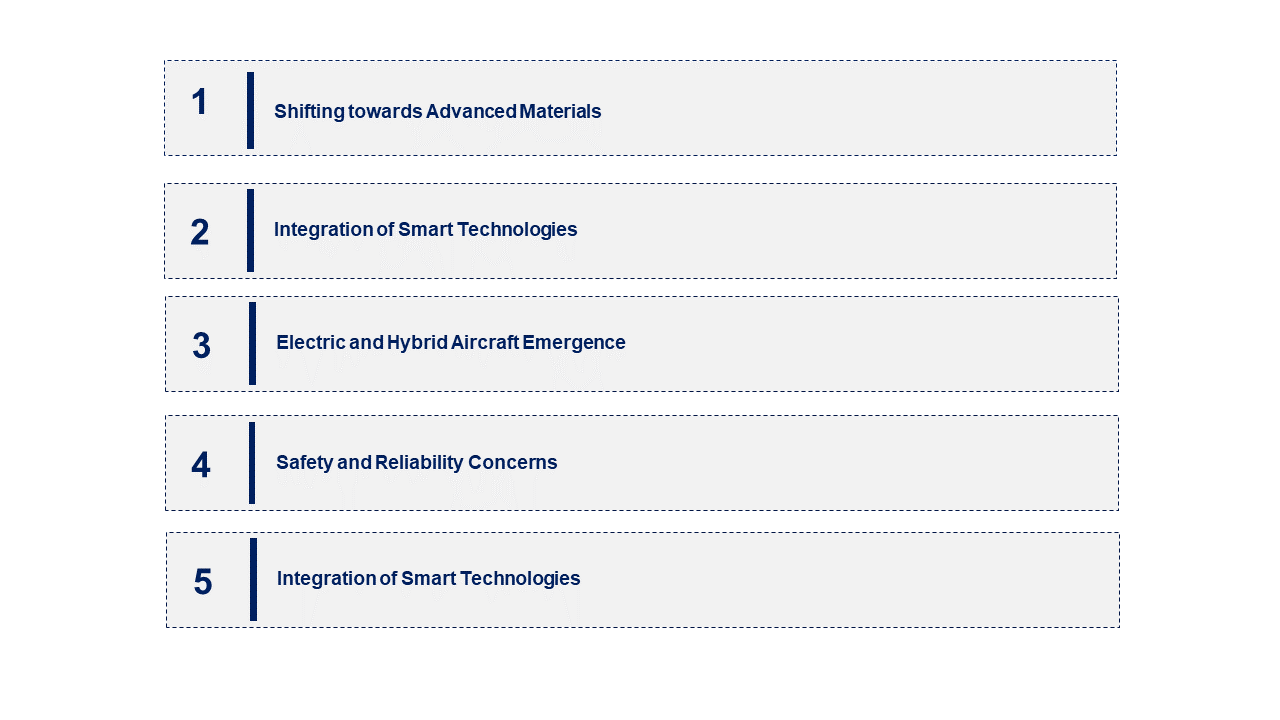
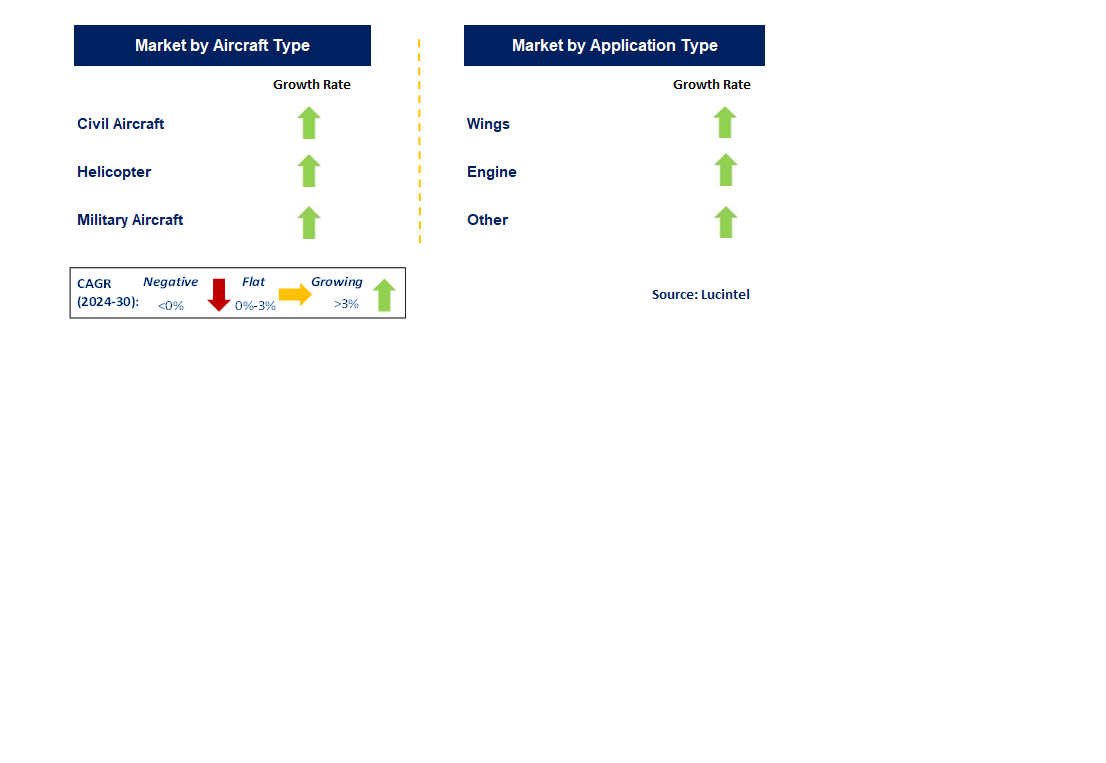
• Lucintel forecasts that civil will remain the largest segment over the forecast period due to increasing aircraft deliveries and the launch of new aircraft models that have more electrical systems..
• Within this market, wings will remain the larger segment due to most vulnerable to icing problems during flight.
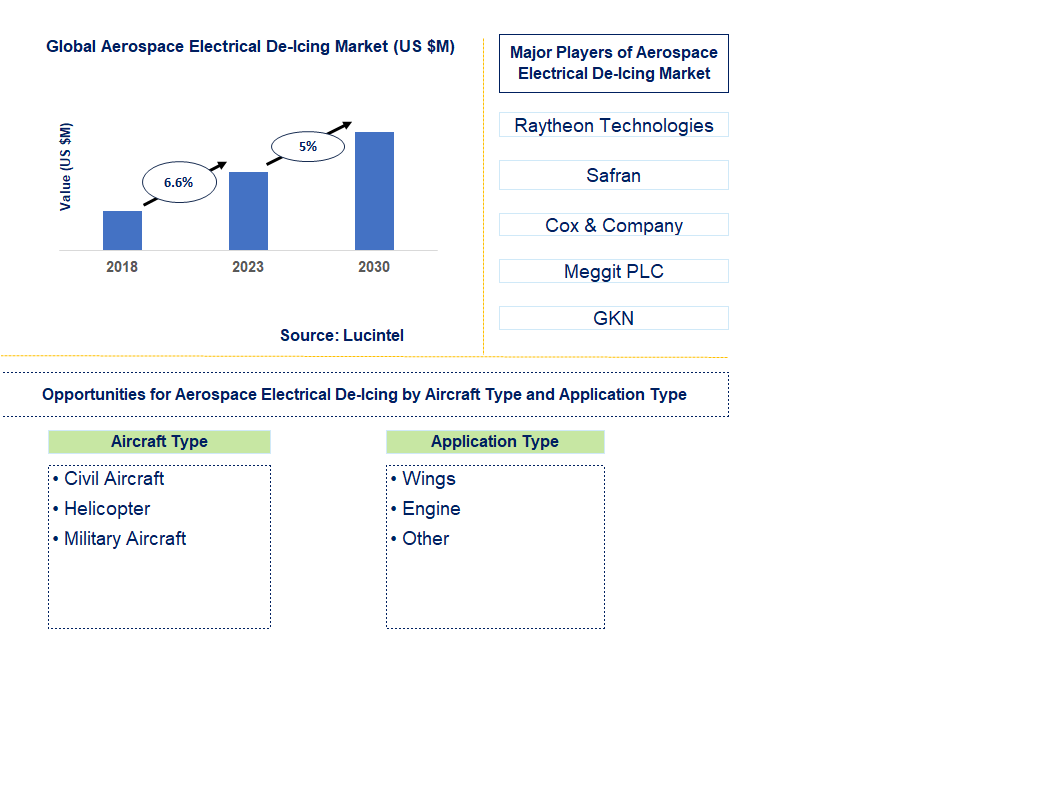
• The aerospace electrical de-icing system market is witnessing substantial growth globally, driven by increased demand from various industries such as aerospace, automotive, wind energy, and construction. Major players in the market are expanding their operations and forming strategic partnerships to strengthen their positions. Below image highlights recent developments by major aerospace electrical de-icing producers in key regions: the USA, EU, China, India, Japan, and Brazil.
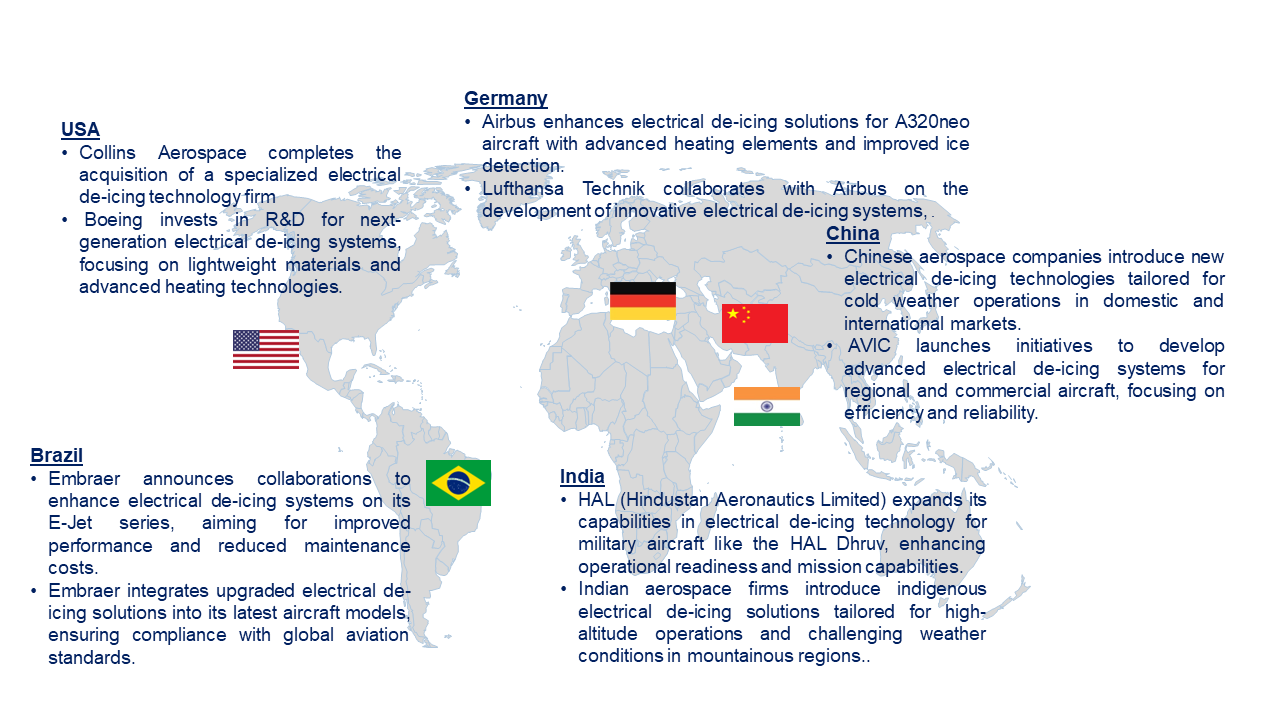
• Shifting towards Advanced Materials: There is a shift towards using advanced materials such as lightweight composites and high-performance alloys in electrical de-icing systems, improving durability and efficiency.
• Integration of Smart Technologies: Increasing integration of sensors, actuators, and artificial intelligence enables real-time monitoring and adaptive control of de-icing processes, enhancing effectiveness and reducing energy consumption.
• Electric and Hybrid Aircraft Emergence: Demand for electrically powered and hybrid aircraft has increased thereby necessitating efficient electrical ice protection systems that saves energy and weight optimally.
• Integration of Smart Technologies: Today it is common to find the integration of real-time monitoring as well as adaptive de-icing functions using sensors and actuators..
• Safety and Reliability Concerns: Therefore, the concern with safety standards in relation with airworthiness directives has led to an increase in research activities that aim at improving the efficiency of icing removal technologies available.
• Hybrid and Electric APUs Advancements: Manufacturers are making great strides in the development of hybrid and electric APUs to meet the increasing demands of green aviation.
• Digitalization and IoT Integration: More digital monitoring systems are set up with APU to help increase diagnostics, predictive maintenance and operational effectiveness through IoT capabilities.
• Fuel Efficiency and Emissions Reduction Focus: Stringent environmental regulations and the need for operational cost efficiencies necessitate improved APU fuel efficiency as well as emission reductions.
• Innovations in Lightweight Materials: The use of materials such as carbon fiber composites which are constantly being developed further have enabled development of more efficient and lighter APUs thus contributing to overall aircraft weight reduction and performance enhancement.
• Investment in Research and Development: The resources towards R&D should be put into developing new materials, technologies, and processes that make the de-icing systems perform better in efficiency.
• Expansion into Electric Aircraft Segment: Design de-icing solutions for electric and hybrid aircraft that would be able to address the unique operational challenges inherent in them and meet the regulatory requirements.
• Enhanced Maintenance and Aftermarket Services: Increase aftermarket services such as maintenance, repair, overhaul (MRO) capabilities for electrical de-icingsystems to ensure reliability andoperational readiness.
• Global Market Penetration: Strengthen market presence through strategic partnerships and alliances, leveraging local expertise and distribution networks to expand into new geographical regions.
• Regulatory Compliance and Standards: Maintain alignment with evolving aviation regulations and industry standards to ensure product reliability, safety, compliance.
• Safety and Reliability: The growing importance of managing ice accumulation during flight for the purpose of enhancing aircraft safety and reliability.
• Efficiency Improvement: There is a need for de-icing systems that minimize ice-related disturbances leading to operational down time, and thus improve the overall performance of the aircraft.
• Advancements in Aircraft Technology: Electrical de-icing systems are being incorporated into modern airplane designs to save power and optimize weight distribution.
• Environmental Regulations: Strict environmental regulations have seen the adoption of eco-friendly icing solution which has less impact on environment.
• Market Demand: This means there is a need reliable and efficient de-icing system to help support increase in number of planes operating in global aviation industry.
Challenges in aerospace electrical de-icing market:• Technological Complexity: Sophisticated electrical de-icing systems ought to be built such as those eliminating ice effectively while not affecting weight or performance of an aircraft substantially.
• Cost Considerations: Traditional pneumatic systems cost less when they are installed and maintained compared with electrical ones which prove expensive at initial stages
• Operational Integration: However, integration between existing systems within an airplane’s structure with those that are based on electricity should not compromise either integrity or safety.
• Environmental Impact: It should be effective but also energy saving so as to reduce emissions in order to meet its sustainability targets at the end of day
• Regulatory Compliance: Hence, all de-icers must conform strict airworthiness standards for aviation safety purposes.
Summing up, it is important to note that aerospace electrical de-icing market ensures safe and efficient air travel especially in locations that are usually faced with harsh winter conditions. These primary propulsion forces, technological advancements, increasing flight frequencies and high safety standards foster the growing need for advanced de-icing solutions within the aviation industry. On the contrary, this industry has a lot of challenges such as exorbitant costs of new technologies, integration complexities and various regulatory requirements that must be adhered to. Consequently, it will be necessary for aerospace electrical de-icing market to overcome these obstacles if its full potential is to be realized so as to allow all aircrafts operate safely and efficiently under any weather situation. Such steps will demand ongoing improvements and smart answers as well as strategy-based approaches aimed at surmounting these barriers and fostering the further growth of aerospace de-icing technology.• Raytheon Technologies
• Safran
• Cox & Company
• Meggit PLC
• GKN
• Ultra Electronics
• ITT Inc
• Civil Aircraft
• Helicopter
• Military Aircraft
• Wings
• Engine
• Other
• North America
• Europe
• Asia Pacific
• Raytheon Technologies
• Safran
• Cox & Company
• Meggit PLC
• GKN
• Ultra Electronics
• ITT Inc
Q5. Which aerospace electrical de-icing market segment will be the largest in future?

Choose a license that fits your team. Instant PDF delivery.
Prices exclude taxes. Instant delivery. Custom licensing available on request.
Market Report · July 31, 2026
Market Report · July 31, 2026
Market Report · July 31, 2026
Trusted partner for strategic intelligence and business growth


Receive a complimentary market analysis tailored to your industry. Our analysts will identify key growth opportunities and competitive dynamics specific to your business.

Market size, growth rate, and key trend analysis for your specific sector.

Top competitor positioning and market share analysis.

Strategic recommendations backed by data-driven insights.
Get curated market intelligence and competitive moves straight to your inbox.
By subscribing, you agree to receive our monthly insights. Unsubscribe anytime.
Receive a complimentary market analysis tailored to your industry. Our analysts will identify key growth opportunities and competitive dynamics specific to your business.
Market size, growth rate, and key trend analysis for your specific sector.
Top competitor positioning and market share analysis.
Strategic recommendations backed by data-driven insights.
Get curated market intelligence, emerging trends, and competitive moves straight to your inbox each month.
By subscribing, you agree to receive our monthly insights. Unsubscribe anytime.
We'll send your sample report shortly.