
Aerospace And Defense Biometric Market
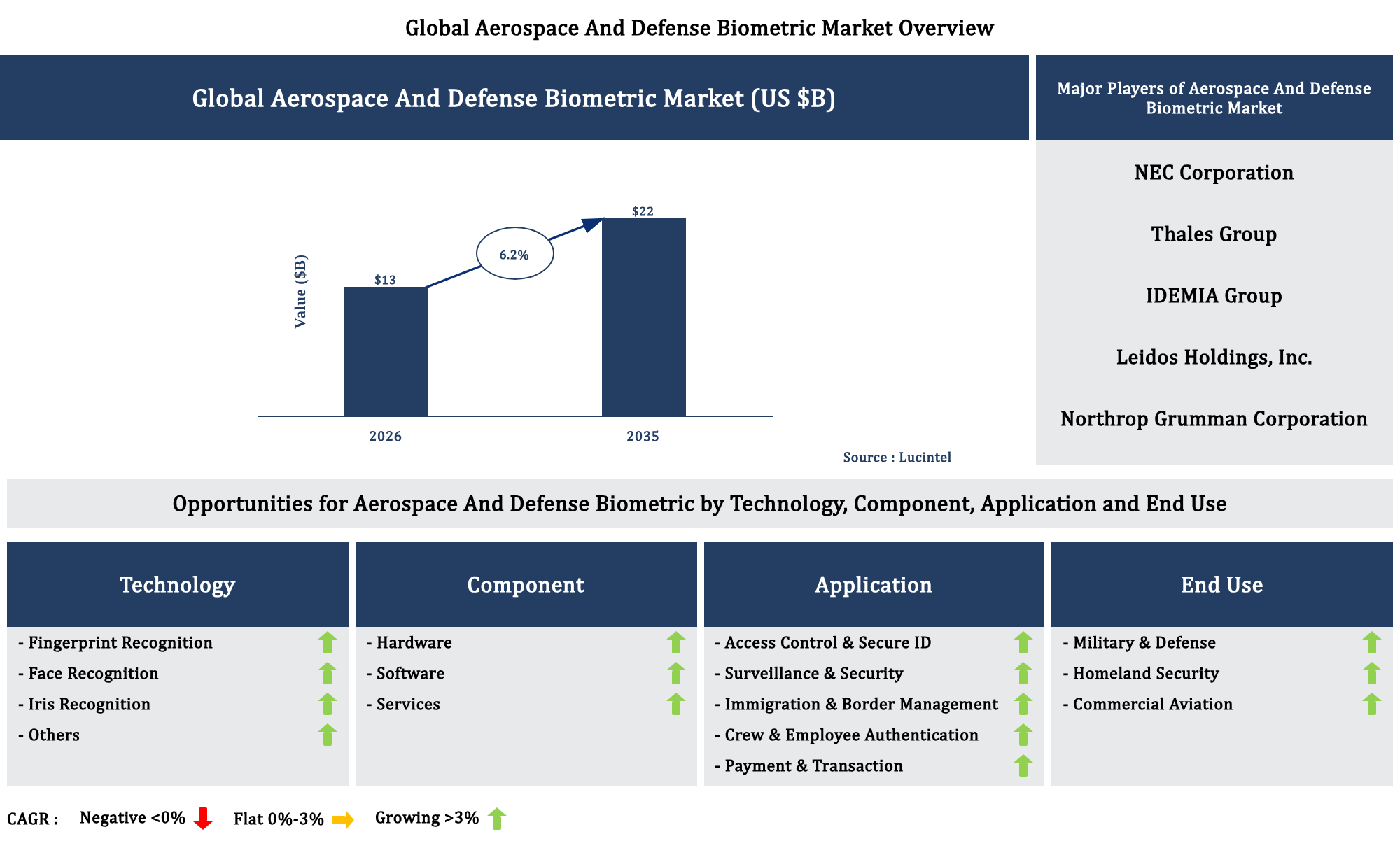
The future of the global aerospace and defense biometric market looks promising with opportunities in the military & defense, homeland security, and commercial aviation markets. The global aerospace and defense biometric market is expected to reach an estimated $22 billion by 2035 with a CAGR of 6.2% from 2026 to 2035. The major drivers for this market are the increasing adoption of automated border control, the rising need for secure identity verification, and the growing threat of sophisticated identity fraud.
Gain valuable insights for your business decisions with our comprehensive 150+ page report. Sample figures with some insights are shown below.
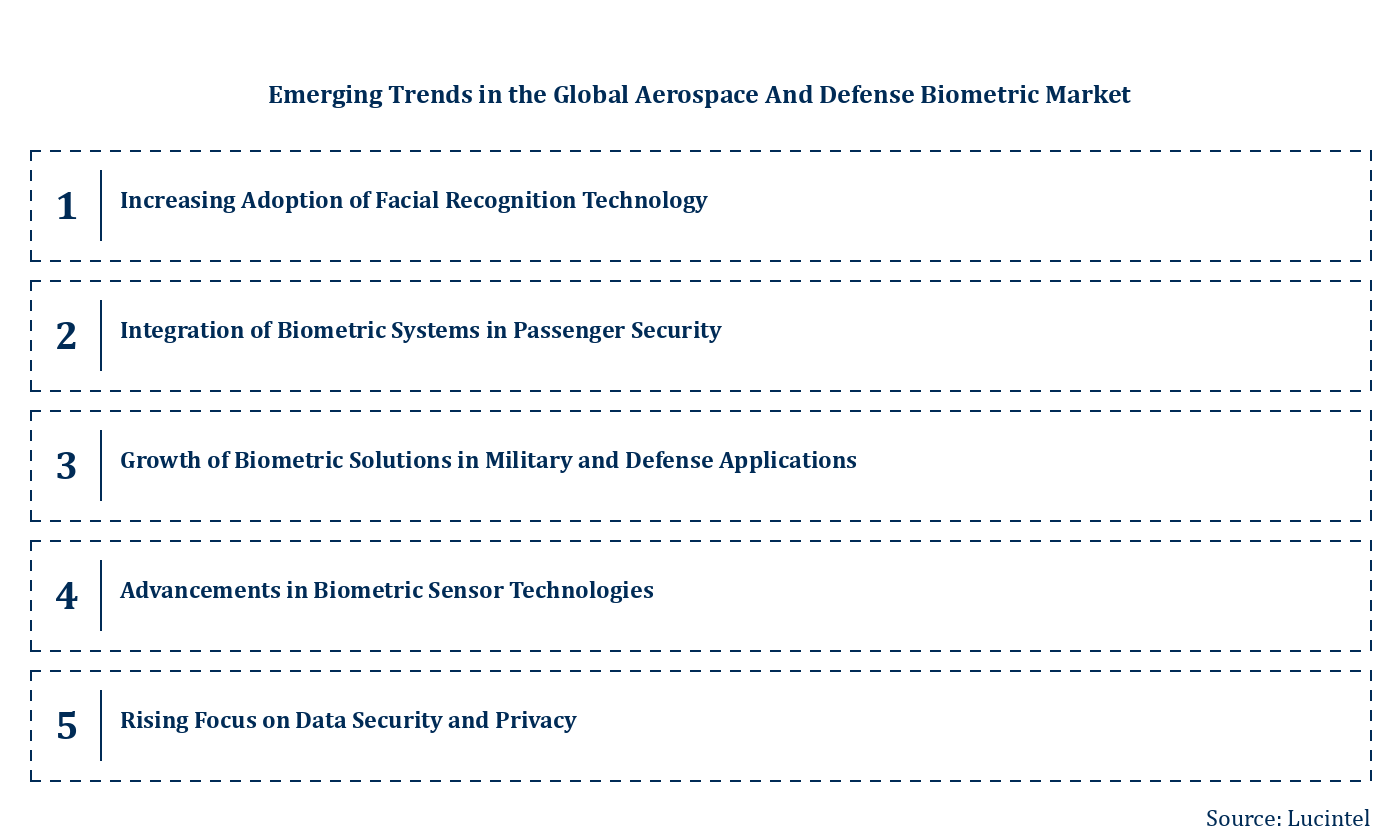
Emerging Trends in the Aerospace And Defense Biometric Market
The aerospace and defense biometric market is experiencing rapid evolution driven by technological advancements, increasing security concerns, and the need for enhanced safety measures. As governments and private sectors seek more efficient and secure identification methods, biometric solutions are becoming integral to operations ranging from passenger verification to military applications. These developments are not only improving security protocols but also streamlining processes, reducing fraud, and enhancing user experience. The market's growth is further fueled by innovations in biometric technologies such as facial recognition, fingerprint scanning, and iris recognition, which are increasingly being adopted across various sub-segments. This dynamic landscape is reshaping how security and identification are managed in aerospace and defense sectors worldwide.
These emerging trends are significantly transforming the aerospace and defense biometric market by enhancing security, improving operational efficiency, and fostering technological innovation. The integration of advanced biometric systems is creating safer, faster, and more reliable identification processes, which are essential in today’s security-conscious environment. As these trends continue to evolve, they will further redefine industry standards and operational practices, ensuring a more secure and efficient future for aerospace and defense sectors worldwide.
Recent Developments in the Aerospace And Defense Biometric Market
The aerospace and defense biometric market is experiencing rapid growth driven by technological advancements and increasing security concerns. Governments and private sectors are investing heavily in biometric solutions to enhance security, streamline operations, and improve passenger and personnel identification. These developments are transforming the industry landscape, creating new opportunities for innovation and collaboration. As the market evolves, stakeholders are focusing on integrating advanced biometric systems into various aerospace and defense applications to meet rising security demands and operational efficiencies.
These developments are significantly impacting the aerospace and defense biometric market by enhancing security, operational efficiency, and technological innovation. They are driving market expansion, fostering new collaborations, and setting higher standards for privacy and data management. As these trends continue, the industry is poised for sustained growth, with increased adoption of sophisticated biometric solutions across global aerospace and defense applications.
Strategic Growth Opportunities in the Aerospace And Defense Biometric Market
The aerospace and defense biometric market is experiencing rapid growth driven by technological advancements, increasing security concerns, and the need for efficient identification systems. Governments and private sectors are investing heavily in biometric solutions to enhance security protocols, streamline operations, and improve passenger and personnel safety. The integration of biometric technologies such as fingerprint, facial recognition, and iris scanning is transforming security measures across airports, military bases, and defense facilities. This evolving landscape presents numerous opportunities for innovation, strategic partnerships, and market expansion.
These growth opportunities are set to significantly influence the aerospace and defense biometric market by driving technological innovation, expanding application areas, and increasing adoption across sectors. Enhanced security, improved operational efficiency, and seamless user experiences will be key drivers. As governments and private organizations prioritize safety and security, strategic investments and technological advancements will shape a dynamic, expanding market landscape, offering substantial potential for industry stakeholders.
Aerospace And Defense Biometric Market Drivers and Challenges
The aerospace and defense biometric market is influenced by a complex interplay of technological advancements, economic conditions, and regulatory frameworks. Rapid innovations in biometric technologies such as facial recognition, fingerprint scanning, and iris recognition are transforming security protocols within aerospace and defense sectors. Economic factors, including government defense budgets and international trade dynamics, significantly impact market growth. Additionally, evolving regulatory standards and privacy concerns shape the deployment and acceptance of biometric solutions. These drivers and challenges collectively determine the pace and direction of market development, requiring stakeholders to adapt swiftly to technological changes, economic shifts, and regulatory requirements to maintain competitiveness and ensure security.
The factors responsible for driving the aerospace and defense biometric market include:
The challenges facing the aerospace and defense biometric market include:
The aerospace and defense biometric market is driven by rapid technological innovations, increasing security needs, supportive regulatory policies, expanding defense budgets, and strategic collaborations. However, challenges such as privacy concerns, high implementation costs, and regulatory complexities pose significant hurdles. These factors collectively influence the market's growth trajectory, requiring stakeholders to balance innovation with ethical and regulatory considerations. Overall, the market's future depends on addressing these challenges while leveraging technological advancements to enhance security and operational efficiency.
List of Aerospace And Defense Biometric Market Companies
Companies in the market compete on the basis of product quality offered. Major players in this market focus on expanding their manufacturing facilities, R&D investments, infrastructural development, and leverage integration opportunities across the value chain. Through these strategies aerospace and defense biometric market companies cater increasing demand, ensure competitive effectiveness, develop innovative products & technologies, reduce production costs, and expand their customer base. Some of the aerospace and defense biometric market companies profiled in this report include-
Aerospace And Defense Biometric Market by Segment
The study includes a forecast for the global aerospace and defense biometric market by technology, component, application, end use, and region.
Country Wise Outlook for the Aerospace And Defense Biometric Market
The aerospace and defense biometric market is experiencing rapid growth driven by technological advancements, increasing security concerns, and the need for enhanced identification systems worldwide. Governments and private sectors are investing heavily in biometric solutions to improve security, streamline operations, and facilitate seamless access control. The market's evolution is marked by innovations in facial recognition, fingerprint scanning, iris recognition, and voice authentication, with a focus on integrating these technologies into existing defense and aerospace infrastructure. As countries seek to bolster national security and improve operational efficiency, the market is poised for significant expansion across the globe, including major players like the United States, China, Germany, India, and Japan.
Features of the Aerospace And Defense Biometric Market
Top 5 Companies
Table of Contents
List of Figures
List of Tables
Methodology
Lucintel has been in the business of market research and management consulting since 2000 and has published over 1000 market intelligence reports in various markets / applications and served over 1,000 clients worldwide. This study is a culmination of four months of full-time effort performed by Lucintel's analyst team. The analysts used the following sources for the creation and completion of this valuable report:
- In-depth interviews of the major players in this market
- Detailed secondary research from competitors' financial statements and published data
- Extensive searches of published works, market, and database information pertaining to industry news, company press releases, and customer intentions
- A compilation of the experiences, judgments, and insights of Lucintel's professionals, who have analyzed and tracked this market over the years.
Extensive research and interviews are conducted across the supply chain of this market to estimate market share, market size, trends, drivers, challenges, and forecasts. Below is a brief summary of the primary interviews that were conducted by job function for this report.

Thus, Lucintel compiles vast amounts of data from numerous sources, validates the integrity of that data, and performs a comprehensive analysis. Lucintel then organizes the data, its findings, and insights into a concise report designed to support the strategic decision-making process. The figure below is a graphical representation of Lucintel's research process.

Buy Now
Choose a license that fits your team. Instant PDF delivery.
Prices exclude taxes. Instant delivery. Custom licensing available on request.
Frequently Asked Questions
What is the aerospace and defense biometric market size?
What is the growth forecast for aerospace and defense biometric market?
What are the major drivers influencing the growth of the aerospace and defense biometric market?
What are the major segments for aerospace and defense biometric market?
Who are the key aerospace and defense biometric market companies?
Some of the key aerospace and defense biometric companies are as follows:
- NEC Corporation
- Thales Group
- IDEMIA Group
- Leidos Holdings, Inc.
- Northrop Grumman Corporation
- RTX Corporation
- Aware, Inc.
- Iris ID, Inc.
- FaceTec, Inc.
- HID Global Corporation
Which aerospace and defense biometric market segment will be the largest in future?
In aerospace and defense biometric market, which region is expected to be the largest in next 9 years?
Do we receive customization in this report?
Key Questions
- • What are some of the most promising, high-growth opportunities for the aerospace and defense biometric market by technology (fingerprint recognition, face recognition, iris recognition, and others), component (hardware, software, and services), application (access control & secure id, surveillance & security, immigration & border management, crew & employee authentication, and payment & transaction), end use (military & defense, homeland security, and commercial aviation), and region (North America, Europe, Asia Pacific, and the Rest of the World)?
- • Which segments will grow at a faster pace and why?
- • Which region will grow at a faster pace and why?
- • What are the key factors affecting market dynamics? What are the key challenges and business risks in this market?
- • What are the business risks and competitive threats in this market?
- • What are the emerging trends in this market and the reasons behind them?
- • What are some of the changing demands of customers in the market?
- • What are the new developments in the market? Which companies are leading these developments?
- • Who are the major players in this market? What strategic initiatives are key players pursuing for business growth?
- • What are some of the competing products in this market and how big of a threat do they pose for loss of market share by material or product substitution?
- • What M&A activity has occurred in the last 6 years and what has its impact been on the industry?


