
Market Report · May 18, 2026

This market report covers trends, opportunities, and forecasts in the global advanced threat protection hardware market to 2031 by technology (network security appliance, endpoint detection and response device, intrusion prevention system, secure email gateway, and sandboxing appliance), end use industry (bfsi, healthcare, government, it and telecommunications, retail, and others), and region (North America, Europe, Asia Pacific, and the Rest of the World)
We'll send your sample report shortly.
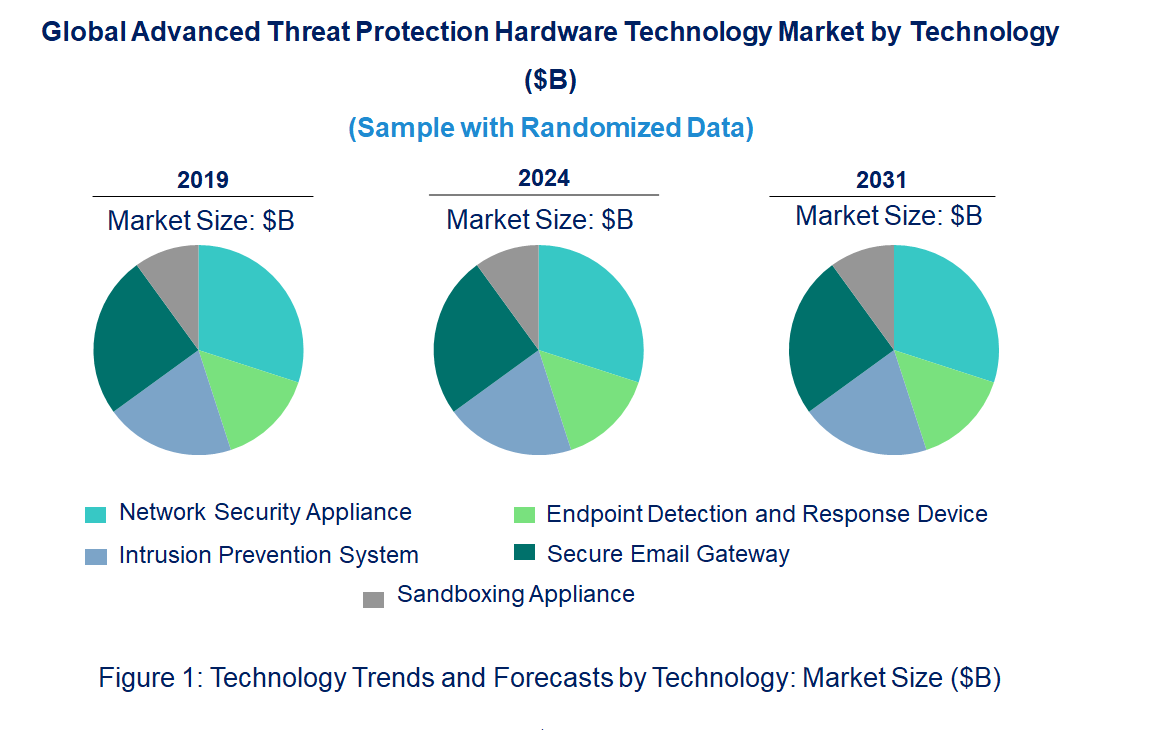
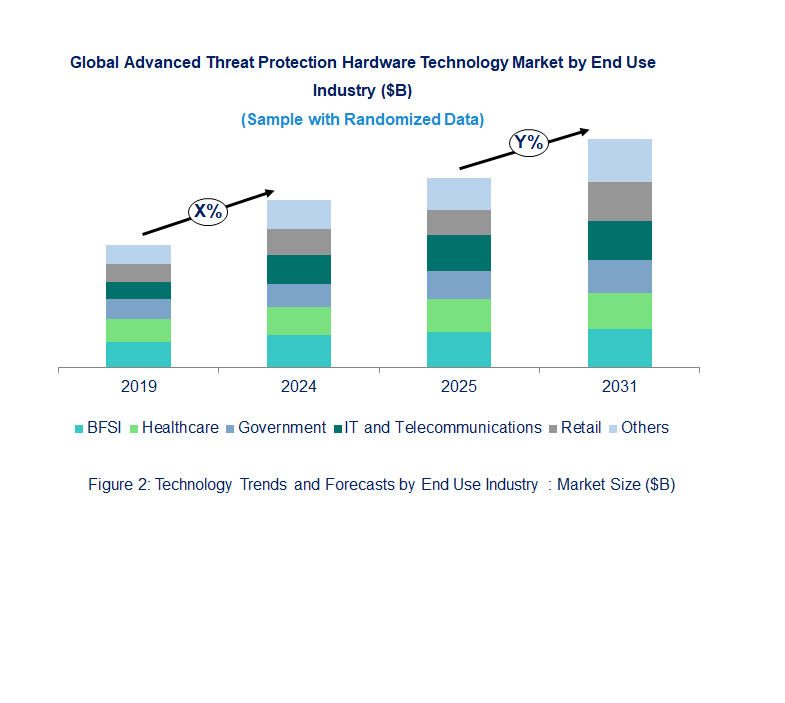
• Integration of AI and Machine Learning: Advanced threat protection hardware is embedding AI and machine learning to detect anomalies, automate threat responses, and learn from new threats. This allows faster identification of malicious activity and reduces response time, improving security posture across enterprise networks.
• Cloud-Native Security Solutions: With businesses increasingly operating in hybrid and multi-cloud environments, cloud-native security hardware provides scalable, flexible, and location-independent protection. These solutions are tailored to handle dynamic workloads while maintaining high levels of data security and performance.
• Zero Trust Architecture Implementation: Zero Trust models, now supported by ATP hardware, enforce strict access controls and continuous authentication. Every user and device is verified regardless of network location, minimizing insider threats and securing data at every access point.
• Convergence of Security Functions: To simplify infrastructure and reduce management overhead, manufacturers are integrating firewall, intrusion detection, and endpoint security into single unified devices. This convergence streamlines operations and improves efficiency without compromising on protection.
• Focus on Endpoint Security: As remote work expands the attack surface, ATP hardware is adapting to secure a broader array of endpoints—from laptops and mobile devices to IoT equipment. This focus helps prevent breaches originating from unsecured remote connections. These trends are redefining the advanced threat protection hardware market by fostering smarter, more responsive, and efficient security ecosystems. With AI, cloud, and Zero Trust models becoming integral to ATP strategies, organizations can better defend against evolving threats while simplifying their security infrastructure.
• Cisco Systems: Introduced the Secure Firewall 4200 Series featuring AI-driven threat defense capabilities, providing enhanced detection and automated response to sophisticated cyber threats. This empowers enterprises to secure complex network environments more effectively.
• Palo Alto Networks: Launched Cloud NGFW for Microsoft Azure, integrating machine learning-powered security services that protect cloud workloads with adaptive, intelligent threat prevention, ensuring seamless cloud security.
• Fortinet: Released the FortiGate 1000F series, delivering high performance and energy efficiency. Its advanced hardware acceleration supports large-scale, low-latency threat protection across diverse network infrastructures.
• Check Point Software Technologies: Developed comprehensive threat prevention solutions using a unified security architecture that consolidates multiple defense layers, simplifying management while enhancing protection against complex attacks.
• FireEye: Enhanced its threat intelligence capabilities by incorporating advanced analytics, enabling faster identification and mitigation of emerging threats through better visibility and actionable insights.
• Sophos Group: Integrated AI into endpoint protection platforms to enable proactive threat detection and rapid incident response, minimizing potential damage from cyberattacks.
• McAfee: Strengthened cloud-native security offerings with advanced threat protection features designed to secure hybrid and multi-cloud environments, supporting modern enterprise digital transformation initiatives. These advancements highlight the market’s transition toward AI-driven, cloud-integrated security solutions that provide smarter, faster, and more comprehensive protection against evolving cyber threats.
• Increasing Sophistication of Cyber Threats: The escalation of advanced, multi-vector cyberattacks drives demand for robust ATP hardware that can detect and mitigate threats in real-time, thereby ensuring organizational security and resilience.
• Growth of IoT and Connected Devices: The proliferation of IoT devices expands the attack surface, prompting enterprises to invest in ATP hardware designed to protect distributed networks and endpoints against emerging threats.
• Regulatory Compliance and Data Protection Laws: Stringent regulations like GDPR and CCPA push organizations to adopt advanced security solutions, including ATP hardware, to safeguard sensitive data and avoid hefty penalties.
• Cloud Integration and Hybrid IT Environments: As enterprises adopt hybrid and multi-cloud architectures, ATP hardware is increasingly deployed to secure data and applications across diverse environments, offering enhanced visibility and control.
• Rising Awareness and Adoption of AI-Driven Security Solutions: Integration of AI and machine learning in ATP hardware improves threat detection accuracy and reduces response times, making these solutions more attractive to security-conscious organizations. Challenges
• High Cost of Implementation and Maintenance: ATP hardware can be expensive to procure and manage, limiting accessibility for small and medium-sized enterprises.
• Complexity in Integration and Management: Deploying ATP hardware alongside existing infrastructure requires specialized skills, often creating operational challenges and hindering seamless adoption.
• Talent Shortage in Cybersecurity: A shortage of skilled cybersecurity professionals complicates the effective utilization and management of ATP solutions. The advanced threat protection hardware market is being shaped by the need for enhanced security in an increasingly complex cyber landscape. Growth opportunities—driven by sophisticated threats, IoT expansion, regulatory pressures, cloud adoption, and AI integration—are catalyzing innovation and adoption. Despite cost and complexity challenges, these factors collectively fuel market expansion, pushing vendors to deliver more efficient, intelligent, and scalable ATP hardware solutions.
• Cisco Systems
• Palo Alto Networks
• Fortinet
• Check Point Software Technologies
• FireEye
• Sophos Group
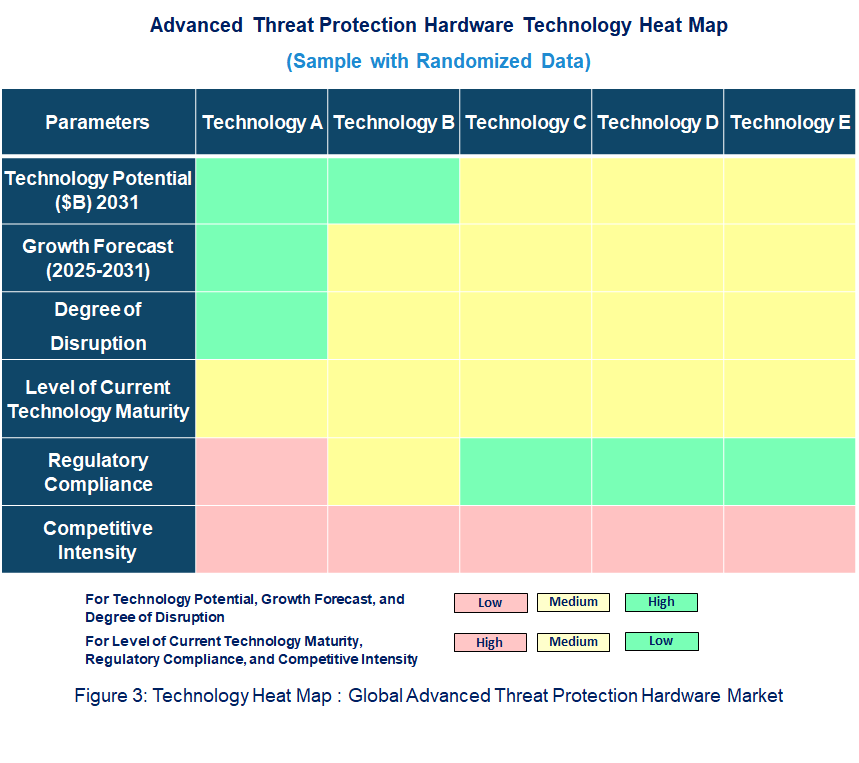
• Technology Readiness by Technology Type: Network security appliances are highly mature, widely deployed in enterprise environments, and continuously enhanced with AI-driven threat intelligence. Endpoint detection and response devices are rapidly maturing, with growing adoption due to their effectiveness in endpoint visibility and automated remediation. Intrusion prevention systems are mature and integral to network defense, benefiting from decades of refinement in detection signatures and behavioral analysis. Secure email gateways are mature and critical for email security, with ongoing enhancements in encryption and anti-phishing capabilities. Sandboxing appliances are moderately mature, increasingly adopted as part of multi-layered security strategies, though they require constant updates to handle emerging malware variants. Competitive intensity is highest in EDR and network appliances due to rapid innovation and critical market demand. Regulatory compliance is a priority across all technologies, especially in sectors handling sensitive or regulated data. Key applications include threat detection and mitigation (network appliances and IPS), endpoint protection (EDR), secure communications (email gateways), and malware analysis (sandboxing), collectively fortifying organizational cybersecurity defenses.
• Competitive Intensity and Regulatory Compliance: The competitive intensity in the advanced threat protection hardware market is fierce, with numerous vendors vying to provide comprehensive, integrated solutions. Network security appliance manufacturers compete on throughput, scalability, and threat intelligence capabilities. EDR providers differentiate through advanced analytics, AI integration, and ease of deployment across diverse endpoints. IPS vendors focus on signature accuracy and low false-positive rates, while secure email gateway players compete on spam filtering effectiveness and encryption features. Sandboxing appliance developers innovate with faster analysis speeds and broader malware coverage. Regulatory compliance is stringent across all technologies, influenced by standards such as GDPR, HIPAA, and industry-specific cybersecurity mandates requiring data protection and breach notification. Compliance also mandates regular security updates, vulnerability management, and audit trails, particularly for email gateways handling sensitive communications. Vendors must ensure their hardware meets international certifications (e.g., Common Criteria) and privacy laws, pushing innovation in secure design and transparent operation. These factors intensify competition and drive continuous product improvement.
• Disruption Potential by Technology Type: The advanced threat protection hardware market is being revolutionized by technologies like network security appliances, endpoint detection and response (EDR) devices, intrusion prevention systems (IPS), secure email gateways, and sandboxing appliances. Network security appliances disrupt traditional perimeter defenses by integrating advanced threat intelligence and deep packet inspection to detect sophisticated cyberattacks in real time. EDR devices enhance endpoint security through continuous monitoring, behavioral analysis, and rapid incident response, shifting the security model from reactive to proactive. Intrusion prevention systems add a critical layer by actively blocking malicious traffic before it reaches critical assets. Secure email gateways disrupt phishing and malware delivery channels by filtering harmful content and enforcing policy compliance. Sandboxing appliances provide safe environments to analyze suspicious files and malware without risking network integrity. Together, these technologies create a layered defense model that improves detection accuracy and response times, fundamentally changing how organizations defend against evolving cyber threats. This disruption strengthens cybersecurity postures and reduces the risk and impact of attacks.
• Network Security Appliance
• Endpoint Detection and Response Device
• Intrusion Prevention System
• Secure Email Gateway
• Sandboxing Appliance
• BFSI
• Healthcare
• Government
• IT and Telecommunications
• Retail
• Others
• North America
• Europe
• Asia Pacific
• The Rest of the World
• Latest Developments and Innovations in the Advanced Threat Protection Hardware Technologies
• Companies / Ecosystems
• Strategic Opportunities by Technology Type


Choose a license that fits your team. Instant PDF delivery.
Prices exclude taxes. Instant delivery. Custom licensing available on request.
Market Report · May 18, 2026
Market Report · May 18, 2026
Market Report · May 18, 2026
Trusted partner for strategic intelligence and business growth


Receive a complimentary market analysis tailored to your industry. Our analysts will identify key growth opportunities and competitive dynamics specific to your business.

Market size, growth rate, and key trend analysis for your specific sector.

Top competitor positioning and market share analysis.

Strategic recommendations backed by data-driven insights.
Get curated market intelligence and competitive moves straight to your inbox.
By subscribing, you agree to receive our monthly insights. Unsubscribe anytime.
Receive a complimentary market analysis tailored to your industry. Our analysts will identify key growth opportunities and competitive dynamics specific to your business.
Market size, growth rate, and key trend analysis for your specific sector.
Top competitor positioning and market share analysis.
Strategic recommendations backed by data-driven insights.
Get curated market intelligence, emerging trends, and competitive moves straight to your inbox each month.
By subscribing, you agree to receive our monthly insights. Unsubscribe anytime.
We'll send your sample report shortly.