
Market Report · July 29, 2026

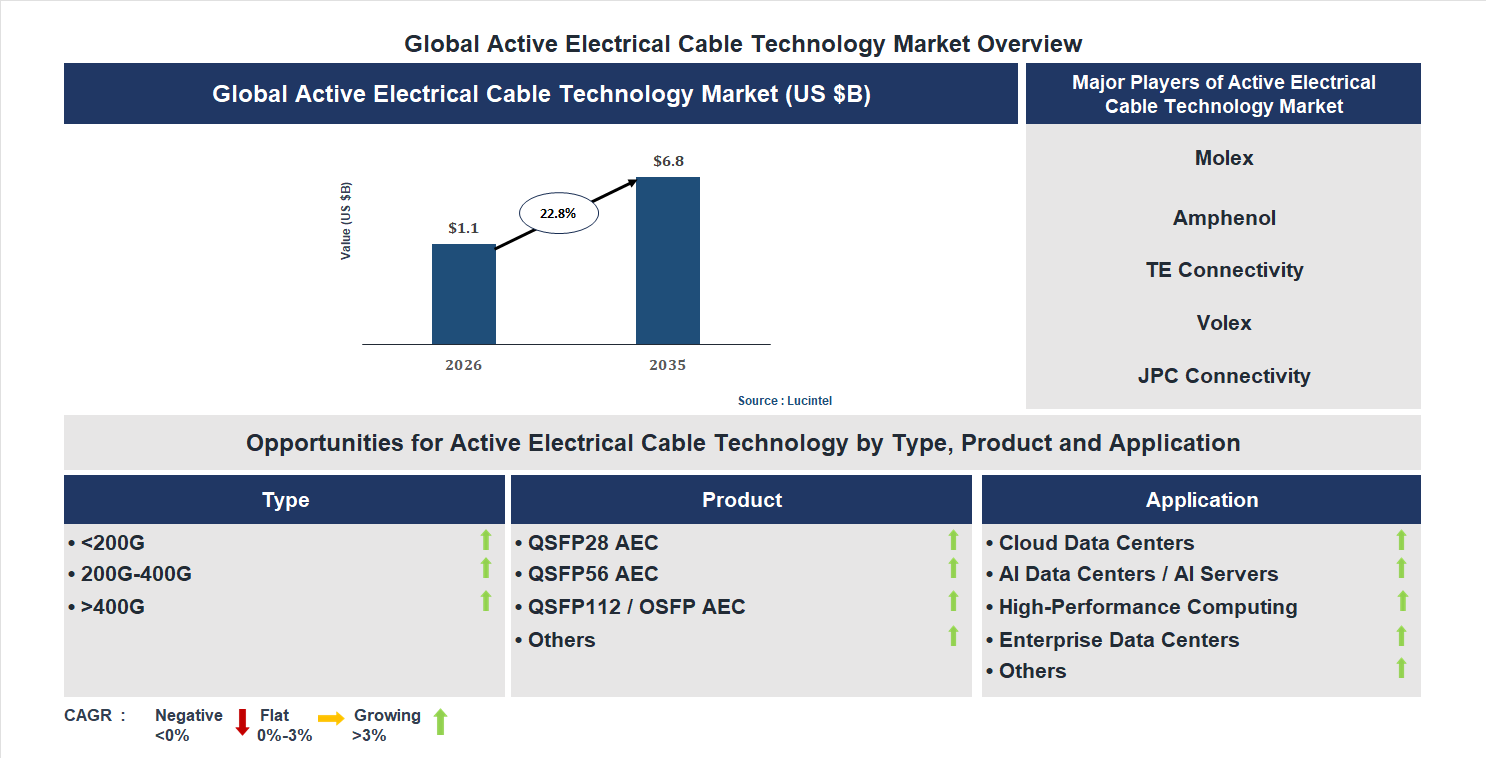
Key data points: The market size in 2035 = $6.8 billion, growth forecast = 22.8% annually for the next 8 years. Scroll below to get more insights. This market report covers trends, opportunities and forecasts in active electrical cable technology market to 2035 by type (<200G, 200G-400G, and >400G), product (QSFP28 AEC, QSFP56 AEC, QSFP112 / OSFP AEC, and others), application (cloud data centers, AI data centers / AI servers, high-performance computing, enterprise data centers, and others), and region (North America, Europe, Asia Pacific, and the Rest of the World)
We'll send your sample report shortly.
• Lucintel forecasts that, within the type category, >400G is expected to witness the highest growth over the forecast period.
• Within the application category, AI data center / AI server is expected to witness the highest growth.
• In terms of region, APAC is expected to witness the highest growth over the forecast period. Gain valuable insights for your business decisions with our comprehensive 150+ page report. Sample figures with some insights are shown below.
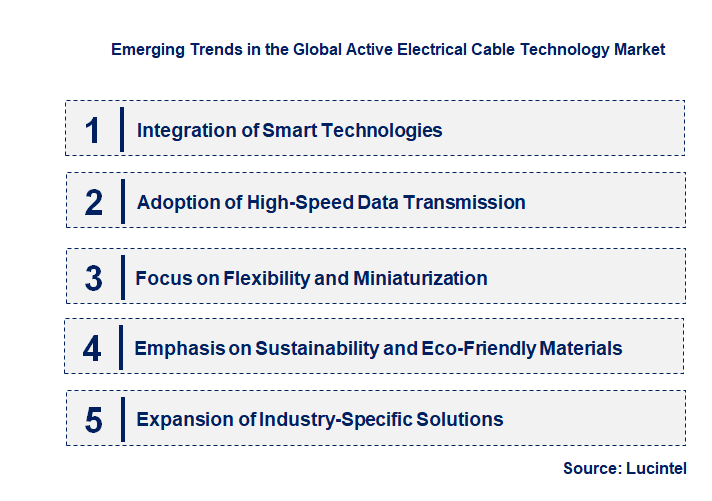
• Integration of Smart Technologies: The incorporation of smart features into electrical cables is enhancing performance and monitoring capabilities. These cables can now include sensors that track temperature, voltage, and current in real-time, enabling predictive maintenance and reducing downtime. This trend improves reliability and safety, especially in critical infrastructure and data centers. The integration of IoT-enabled features allows for better management of electrical systems, leading to increased efficiency and reduced operational costs.
• Adoption of High-Speed Data Transmission: As data demands grow exponentially, there is a significant shift toward cables capable of supporting ultra-high-speed data transfer. Active electrical cables now feature advanced materials and design innovations that enable faster, more reliable connections for applications such as 5G, cloud computing, and AI. This trend is crucial for industries requiring real-time data processing and low latency, thereby boosting overall system performance and user experience.
• Focus on Flexibility and Miniaturization: The market is witnessing a move toward more flexible and compact cable designs to accommodate space constraints and complex installations. These cables are engineered with lightweight materials and enhanced bendability, making them suitable for use in tight spaces and portable devices. This trend supports the miniaturization of electronic devices and the development of wearable technology, expanding the application scope of active electrical cables across various sectors.
• Emphasis on Sustainability and Eco-Friendly Materials: Environmental concerns are prompting manufacturers to develop cables using sustainable, recyclable, and low-impact materials. This shift aims to reduce the carbon footprint of production processes and promote eco-friendly practices. Additionally, energy-efficient designs are being prioritized to minimize power consumption during operation. This trend aligns with global sustainability goals and appeals to environmentally conscious consumers and businesses.
• Expansion of Industry-Specific Solutions: Customization of active electrical cables for specific industry needs is gaining traction. Tailored solutions are being developed for sectors such as healthcare, aerospace, automotive, and renewable energy, addressing unique performance and safety requirements. This trend enhances the efficiency and reliability of electrical systems in specialized applications, fostering innovation and opening new market opportunities. In summary, these trends are collectively reshaping the active electrical cable technology market by making cables smarter, faster, more adaptable, sustainable, and industry-specific. They are driving innovation, improving performance, and enabling new applications, ultimately transforming how electrical connectivity is integrated into modern technological ecosystems.
• Growing Demand for High-Speed Data Transmission: The increasing need for faster internet and data transfer speeds is propelling the adoption of active electrical cables. These cables support higher bandwidths and lower latency, essential for data centers, 5G networks, and cloud computing. As digital infrastructure expands, the market benefits from the demand for reliable, high-performance cables, leading to increased investments and technological innovations. This trend is expected to continue, driving market growth significantly.
• Advancements in Cable Materials and Design: Innovations in materials such as improved insulation, shielding, and conductor technology are enhancing cable durability and performance. New designs focus on flexibility, heat resistance, and environmental sustainability, making cables suitable for diverse applications. These improvements reduce signal loss and interference, ensuring better connectivity. The adoption of eco-friendly materials also aligns with global sustainability goals, attracting environmentally conscious consumers and industries, thereby expanding market opportunities.
• Integration of IoT and Smart Devices: The proliferation of IoT devices and smart technology is creating a surge in demand for reliable, compact, and efficient electrical cables. These cables facilitate seamless connectivity between devices, supporting smart homes, industrial automation, and wearable technology. The market is witnessing the development of specialized cables tailored for IoT applications, which enhance device performance and energy efficiency. This integration is expected to open new avenues for market expansion and technological innovation.
• Increasing Adoption in Data Centers and Cloud Infrastructure: Data centers require high-capacity, reliable cables to manage vast amounts of data efficiently. Active electrical cables are crucial for supporting the high-speed, low-latency requirements of modern data infrastructure. As cloud computing continues to grow, so does the need for advanced cabling solutions that ensure stability and scalability. This trend is driving manufacturers to develop specialized cables, boosting market growth and technological progress in data connectivity solutions.
• Rising Focus on Eco-Friendly and Sustainable Cables: Environmental concerns are prompting manufacturers to develop sustainable cables with reduced carbon footprints and recyclable materials. These eco-friendly cables meet regulatory standards and appeal to environmentally conscious clients. The focus on sustainability is also leading to innovations in energy-efficient manufacturing processes. This shift not only benefits the environment but also enhances brand reputation and market competitiveness, fostering long-term growth in the active electrical cable industry. The overall impact of these developments is a dynamic, innovative market characterized by increased demand, technological advancements, and a sustainability focus. These factors are driving growth, expanding application areas, and fostering competitive innovation, ultimately shaping a more efficient and environmentally responsible electrical connectivity landscape.
• Expansion into Data Center Infrastructure: The growing need for high-capacity, low-latency data transmission in data centers is fueling demand for advanced AEC solutions. These cables offer superior performance, reduced energy consumption, and simplified installation, making them ideal for supporting cloud computing, AI, and big data applications. As data centers expand globally, the adoption of innovative AECs will be crucial for maintaining efficient, scalable, and reliable infrastructure.
• Integration with 5G and Next-Generation Networks: The rollout of 5G networks requires high-speed, flexible, and durable cabling solutions. AECs are well-suited to meet these demands due to their enhanced bandwidth capabilities and adaptability to complex network architectures. This integration opens new avenues for telecommunications providers and equipment manufacturers to deliver faster, more reliable connectivity, supporting the proliferation of IoT devices, smart cities, and autonomous systems.
• Adoption in Industrial Automation and Smart Manufacturing: The industrial sector is increasingly adopting automation and IoT technologies, demanding robust, high-performance cabling solutions. AECs provide the necessary durability, electromagnetic interference shielding, and high data transfer rates essential for industrial robotics, sensors, and control systems. This trend enhances operational efficiency, safety, and real-time data processing, positioning AECs as critical components in modern smart factories and industrial environments.
• Development of Eco-Friendly and Energy-Efficient Cables: Sustainability is a key focus across industries, prompting the development of environmentally friendly AECs. Innovations include the use of recyclable materials, reduced hazardous substances, and energy-efficient manufacturing processes. These eco-conscious cables appeal to organizations aiming to reduce carbon footprints and comply with environmental regulations, thereby expanding market opportunities for manufacturers committed to sustainable practices.
• Growth in Consumer Electronics and Wearable Devices: The proliferation of smart gadgets, wearable technology, and home automation systems is driving demand for compact, high-performance electrical cables. AECs offer advantages such as lightweight design, flexibility, and high-speed data transfer, making them suitable for consumer applications. As consumer electronics become more integrated into daily life, the need for reliable, efficient cabling solutions will continue to rise, fueling market growth in this segment. The overall market outlook indicates that these strategic growth opportunities will significantly influence the evolution of Active Electrical Cable technology, fostering innovation, expanding application domains, and enhancing competitive positioning for industry players. Embracing these trends will be essential for capturing emerging market share and driving long-term success.
• Technological Innovation: The continuous development of advanced materials and manufacturing processes enhances cable performance, durability, and efficiency. Innovations such as flexible, lightweight, and high-speed cables meet the increasing demand from data centers, industrial automation, and consumer electronics sectors. These technological advancements enable the market to offer solutions that support higher data transfer rates, lower power consumption, and improved safety standards, thereby expanding application scope and market size.
• Growing Data Center and Cloud Infrastructure: The surge in data generation driven by cloud computing, IoT, and AI applications necessitates robust, high-capacity cabling solutions. Data centers require reliable, high-speed active electrical cables to ensure seamless data transmission and operational efficiency. This demand fuels market growth as organizations invest heavily in upgrading their infrastructure to support digital transformation initiatives, thereby creating a significant opportunity for active electrical cable manufacturers.
• Increasing Adoption of 5G Technology: The rollout of 5G networks demands advanced cabling solutions capable of supporting higher frequencies and faster data rates. Active electrical cables are essential for connecting 5G infrastructure components, including base stations and network equipment. The need for high-performance, low-latency cables to facilitate 5G deployment accelerates market growth, especially in telecommunications and urban infrastructure sectors, fostering innovation and product development.
• Regulatory and Environmental Standards: Stringent safety, environmental, and energy efficiency regulations influence product design and manufacturing processes. Compliance with standards such as RoHS, REACH, and UL certifications ensures market access and consumer trust. These regulations drive manufacturers to innovate in eco-friendly materials and energy-efficient designs, which can increase costs but also open opportunities for premium, compliant products in global markets.
• Rising Demand for Electric Vehicles (EVs): The increasing adoption of EVs necessitates specialized electrical cabling solutions for battery management, charging stations, and vehicle electronics. Active electrical cables are critical for ensuring safety, reliability, and high performance in EV applications. This trend opens new avenues for market expansion, as automotive manufacturers seek advanced cabling systems to meet the evolving demands of electric mobility. The challenges facing this active electrical cable technology market include:
• High Manufacturing and Material Costs: Developing advanced active electrical cables involves sophisticated materials and manufacturing processes, which can be costly. These expenses impact profit margins and may hinder market penetration, especially in price-sensitive regions. Additionally, fluctuations in raw material prices, such as copper and specialized polymers, further exacerbate cost challenges, potentially limiting the adoption of cutting-edge cable solutions.
• Rapid Technological Obsolescence: The fast-paced nature of technological innovation can render existing cable solutions obsolete quickly. Manufacturers face the challenge of continuously investing in R&D to keep up with evolving standards and customer requirements. This constant innovation cycle increases operational costs and can lead to inventory obsolescence, impacting profitability and market stability.
• Complex Regulatory Environment: Navigating diverse and evolving regulatory standards across different regions poses significant challenges. Compliance requires substantial resources for testing, certification, and documentation, which can delay product launches and increase costs. Non-compliance risks include legal penalties, market restrictions, and damage to brand reputation, making regulatory adherence a critical yet challenging aspect of market operations. In summary, the active electrical cable technology market is driven by technological advancements, infrastructure expansion, and emerging applications like 5G and EVs. However, high costs, rapid technological changes, and complex regulations present notable hurdles. These factors collectively influence market dynamics, requiring stakeholders to innovate continuously and adapt strategically. While opportunities abound in high-growth sectors, addressing challenges effectively is essential for sustained growth and competitive advantage in this evolving landscape.
• Molex
• Amphenol
• TE Connectivity
• Volex
• JPC Connectivity
• Credo
• Infraeo
• Approved Networks
• Luxshare Precision
• Zhaolong Interconnect
• <200G
• 200G-400G
• >400G
• QSFP28 AEC
• QSFP56 AEC
• QSFP112 / OSFP AEC
• Others
• Cloud Data Centers
• AI Data Centers / AI Servers
• High-Performance Computing
• Enterprise Data Centers
• Others
• North America
• Europe
• Asia Pacific
• The Rest of the World
• United States: The U.S. market for AEC technology has seen rapid adoption driven by the expansion of data centers and cloud service providers. Major tech companies are investing in advanced cable solutions to support 5G infrastructure and high-performance computing. Innovations include the development of lightweight, flexible cables with higher bandwidth capacities and increased integration with AI and IoT applications. Regulatory support and substantial R&D funding have further accelerated growth, positioning the U.S. as a leader in AEC technology development and deployment.
• China: China has emerged as a key player in the AEC market, fueled by government initiatives to boost digital infrastructure and smart city projects. Domestic manufacturers are focusing on cost-effective, high-performance cables to meet the rising demand from telecom, industrial, and consumer electronics sectors. The country’s emphasis on 5G rollout and industrial automation has led to significant advancements in cable design, including improved shielding and durability. Strategic investments and collaborations with global firms are enhancing China’s competitive edge in this sector.
• Germany: Germany’s AEC market is characterized by a focus on high-quality, reliable cables for industrial automation, automotive, and renewable energy applications. The country’s emphasis on engineering excellence and sustainability has driven innovations in eco-friendly materials and energy-efficient designs. German companies are also investing in smart manufacturing and Industry 4.0 initiatives, integrating AEC solutions to improve connectivity and operational efficiency. The market benefits from strong R&D capabilities and a robust industrial base, fostering continuous technological advancements.
• India: India’s AEC market is rapidly expanding due to increasing demand for digital infrastructure, telecom expansion, and smart city projects. Local manufacturers are adopting innovative manufacturing techniques to produce cost-effective, high-performance cables suitable for diverse applications. The government’s push for digital India and Make in India initiatives has spurred investments in R&D and infrastructure development. The focus is on developing scalable, reliable cables to support the country’s growing data and connectivity needs, with a rising emphasis on local supply chains and technological innovation.
• Japan: Japan’s market for AEC technology is driven by its advanced electronics and automotive industries. The country is focusing on miniaturization, high-speed data transfer, and durability to meet the demands of autonomous vehicles, robotics, and high-speed communication networks. Japanese firms are pioneering in the development of highly reliable, environmentally friendly cables with enhanced shielding and thermal management. The market benefits from Japan’s strong emphasis on innovation, quality standards, and integration of AEC solutions into smart manufacturing and transportation systems.


• Molex
• Amphenol
• TE Connectivity
• Volex
• JPC Connectivity
• Credo
• Infraeo
• Approved Networks
• Luxshare Precision
• Zhaolong Interconnect Q5. Which active electrical cable technology market segment will be the largest in future? Answer: Lucintel forecasts that, within the type category, >400G is expected to witness the highest growth over the forecast period. Q6. In active electrical cable technology market, which region is expected to be the largest in next 5 years? Answer: In terms of region, APAC is expected to witness the highest growth over the forecast period. Q7. Do we receive customization in this report? Answer: Yes, Lucintel provides 10% customization without any additional cost.


Choose a license that fits your team. Instant PDF delivery.
Prices exclude taxes. Instant delivery. Custom licensing available on request.
Market Report · July 29, 2026
Market Report · July 20, 2026
Market Report · July 20, 2026
Trusted partner for strategic intelligence and business growth


Receive a complimentary market analysis tailored to your industry. Our analysts will identify key growth opportunities and competitive dynamics specific to your business.

Market size, growth rate, and key trend analysis for your specific sector.

Top competitor positioning and market share analysis.

Strategic recommendations backed by data-driven insights.
Get curated market intelligence and competitive moves straight to your inbox.
By subscribing, you agree to receive our monthly insights. Unsubscribe anytime.
Receive a complimentary market analysis tailored to your industry. Our analysts will identify key growth opportunities and competitive dynamics specific to your business.
Market size, growth rate, and key trend analysis for your specific sector.
Top competitor positioning and market share analysis.
Strategic recommendations backed by data-driven insights.
Get curated market intelligence, emerging trends, and competitive moves straight to your inbox each month.
By subscribing, you agree to receive our monthly insights. Unsubscribe anytime.
We'll send your sample report shortly.