
Market Report · May 18, 2026

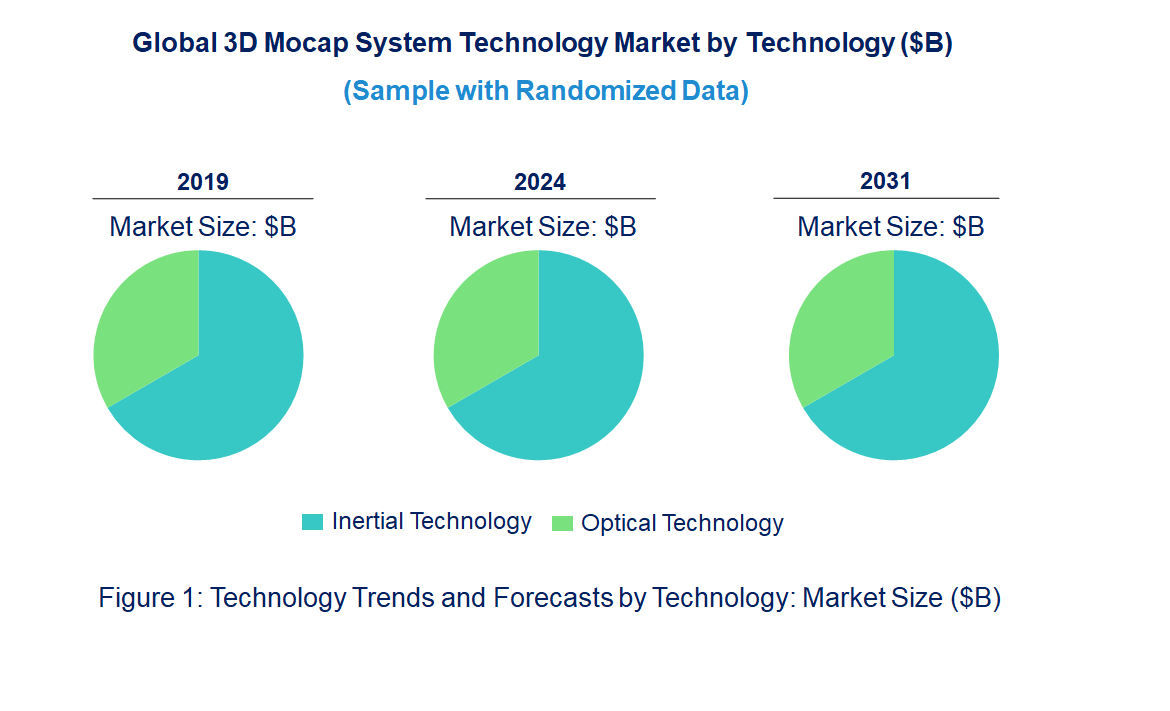
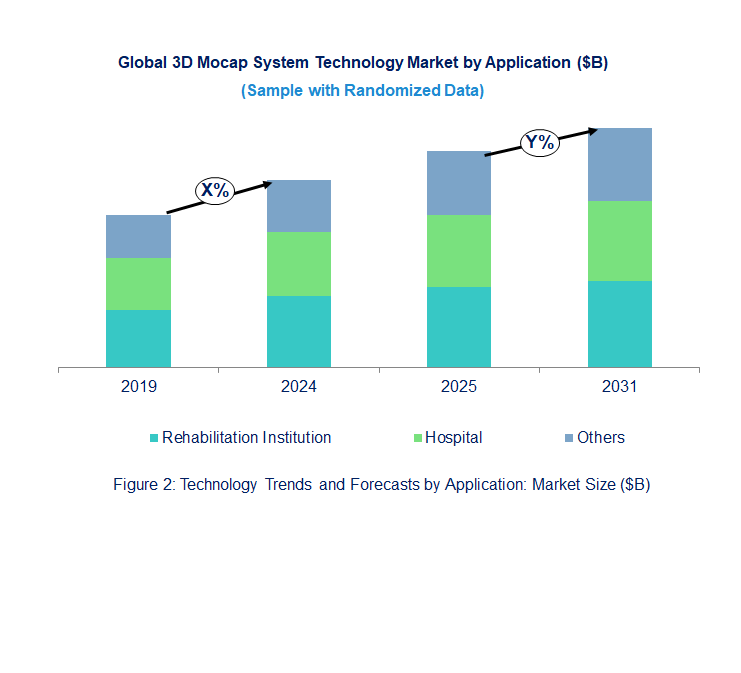
This market report covers trends, opportunities, and forecasts in the global 3d mocap system market to 2031 by technology (inertial technology and optical technology), application (rehabilitation institution, hospital, and others), and region (North America, Europe, Asia Pacific, and the Rest of the World)
We'll send your sample report shortly.
• Markerless Motion Capture Technology: Markerless systems are gaining popularity because they eliminate the need for physical markers, making them less intrusive and more flexible. This advancement is supported by progress in AI and computer vision, enabling real-time tracking of human movement with high accuracy. Ease of use and natural tracking are especially impactful in applications like rehabilitation and sports analysis.
• Artificial Intelligence IntegrationL: AI is transforming motion capture by automating the processing and analysis of motion data. Predictive algorithms enable AI to fill gaps in captured motion, making systems more robust and reliable. This trend has significantly improved the efficiency of motion capture systems in animation and biomechanics, where fast and precise data analysis is crucial.
• Portable and Wireless Systems: The growing demand for mobility, portability, and easy setup has driven the development of motion capture devices that are mobile and wirelessly operated using miniature inertial sensors and Bluetooth interfaces. These systems offer convenience for mixed outdoor sports applications, live performances, and field-based clinical research.
• Cloud Data Processing and Sharing: Cloud integration is revolutionizing how motion capture data is stored, processed, and shared. With cloud computing, users can access and analyze motion data from anywhere, enabling collaborative workflows across different locations. This trend benefits global film productions, distributed game development teams, and remote medical consultations.
• Expansion into Emerging Applications: Motion capture technology is finding applications beyond traditional domains. It is increasingly used for ergonomic workplace assessments to enhance safety, virtual reality-based training simulations, and personalized fitness programs. These emerging uses are creating new revenue streams for motion capture system users and redefining system capabilities. The 3D motion capture system market is undergoing a transformative phase, with technological advancements and emerging trends redefining its potential. The adoption of markerless systems, AI integration, wireless portability, cloud-based processing, and expansion into new applications is driving the market forward. Collectively, these advancements are making motion capture systems more accessible, accurate, and scalable, ensuring their continued relevance across various industries.
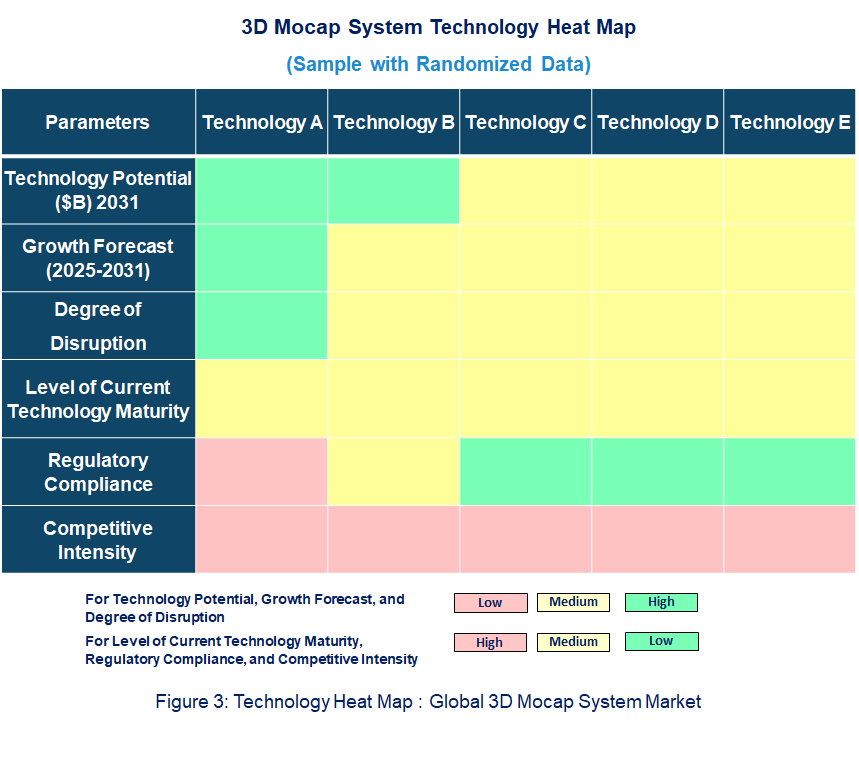
• Technology Potential: The technology behind 3D motion capture (Mocap) systems offers significant potential in precision, scalability, and usability across various industries. Markerless systems, AI-driven data analysis, and wireless solutions are poised to transform workflows in healthcare, entertainment, sports, and industrial training. These advancements enable real-time, high-fidelity motion analysis with minimal setup, making the technology more accessible and adaptable to diverse applications.
• Degree of Disruption: The replacement of traditional marker-based systems with advanced markerless and AI-enhanced technologies is driving substantial disruption. In addition to improving efficiency, this shift broadens the technology’s usability into areas such as ergonomic assessment and personal fitness. Portable and cloud-enabled systems further amplify this impact by enabling global and real-time collaboration.
• Level of Current Technology Maturity: The maturity of current technologies varies. While marker-based systems are well-established, markerless technologies and AI integration are in a high-growth phase, with continuous advancements in accuracy and processing capabilities. Wireless and cloud solutions are relatively mature but are still evolving to support larger-scale implementations.
• Regulatory Compliance: Regulatory compliance is becoming a critical concern, particularly in healthcare and industrial applications. Adherence to standards for data privacy, security, and accuracy is essential, as these systems often handle sensitive patient and user information. The development of emerging regulations will play a crucial role in shaping the deployment of this technology in regulated sectors.
• ProtoKinetics: The company has introduced advanced wearable motion capture systems that enhance real-time data collection for gait analysis and rehabilitation. Their focus on mobile, markerless motion capture is making the technology more accessible to healthcare providers, researchers, and physical therapists, expanding its use beyond traditional labs.
• Tekscan: The company has expanded its line of mocap offerings by integrating pressure-sensing technologies within motion capture platforms. The combination of pressure mapping with motion tracking enables a more comprehensive analysis in clinical and sports use cases, helping to develop better injury prevention and rehabilitation strategies.
• H/P/Cosmos: It has significantly upgraded its treadmill-based motion capture systems by introducing state-of-the-art sensors, improving the accuracy of biomechanics analysis. Its products are commonly applied in sports science and physical therapy for monitoring running patterns and assessing injury risk.
• ACE Running: The Company has collaborated with medical centers to incorporate their high-tech motion capture technology in rehabilitation settings. Their solution focuses on real-time gait analysis, helping clinicians create recovery programs for patients with leg and joint injuries.
• Running Injury Clinic: It has integrated motion capture technology to enhance its diagnostic capabilities. By using 3D mocap systems to analyze running form, they offer personalized treatment plans for runners with biomechanical issues, improving recovery outcomes and performance.
• Mar Systems: Mar Systems recently unveiled an advanced mocap system with improved accuracy in motion analysis for sports and rehabilitation. This technology is now compatible with many software platforms, enhancing the efficiency of performance analysis for athletes and rehabilitation therapists.
• Zebris Medical: Zebris Medical has integrated pressure distribution measurement systems with motion capture technology, allowing for detailed gait and posture assessments. Their developments primarily cater to healthcare professionals for diagnosing and treating musculoskeletal disorders. These developments reflect a broader trend of making 3D mocap systems more versatile, accessible, and integrated with other technologies, thereby increasing their value in fields like healthcare, sports science, and rehabilitation.
• Technological Advancements: Advances in hardware and software have increasingly allowed for more accurate, economical 3D mocap systems to be used in a myriad of applications, including gaming, movies, and biomechanics. The development of AI and machine learning has further elevated the accuracy and scope of applicability of these systems.
• Rising demand in entertainment and gaming: The entertainment industry, particularly films and video games, is one of the main drivers. As 3D mocap systems enhance the creation of virtual characters, animations, and simulations, so does the demand for this technology in movies and games.
• Healthcare Applications: 3D mocap technology is being applied in healthcare for rehabilitation and physical therapy. It helps monitor a patient’s movements and ensure that tailored treatment plans are followed. With the rise of health and wellness trends, demand for these systems is increasing.
• Sports and Fitness: Mocap technology is becoming increasingly popular among sports teams and fitness professionals for performance analysis, injury prevention, and biomechanics research. The demand is driven by the need for detailed motion tracking to improve athletic performance and reduce injury risk. Challenges in the 3D motion capture (Mocap) system market are:
• High Costs: The high initial investment and maintenance costs of 3D mocap systems remain a significant barrier, making them inaccessible for small businesses and start-ups. Although costs are dropping, the upfront costs are still prohibitive for many potential users.
• Complexity in Setup and Operation: Integrating 3D mocap systems into existing workflows can be difficult and requires specialized knowledge and training. The setup process is time-consuming, which may deter potential adopters from implementing these systems.
• Data Storage and Processing Requirements: 3D mocap systems generate large amounts of data, requiring powerful storage and high processing capabilities. Managing and analyzing this data without compromising performance is a major challenge. Technological advancements and increased demand in the entertainment, healthcare, and sports industries have fueled significant growth in the 3D mocap system market. Opportunities like VR/AR adoption, AI integration, wearable devices, and healthcare applications are set to further enhance the market’s future potential. These trends will broaden the application scope of 3D mocap systems, further boosting market growth.
• Protokinetics
• Tekscan
• H/P/Cosmos
• Ace Running
• Running Injury Clinic
• Mar Systems
• Technology Readiness by Technology Type: Optical technology, particularly marker-based systems, is highly mature and well-suited for detailed motion analysis in animation and biomechanics. Markerless optical systems, while still in development, are quickly becoming ready with advancements in AI. Inertial systems are moderately mature and are ideal for applications requiring portability and real-time analysis, such as sports and field-based studies. The competitive landscape remains intense for both technologies, with companies focusing on innovation to cater to a wide range of applications. Regulatory compliance remains a primary consideration, especially for optical systems dealing with classified data. In contrast, inertial systems benefit from relatively simpler regulatory pathways due to local processing. Overall, the trends highlight a competitive market shaped by technology readiness, competition, and regulatory compliance.
• Competitive Intensity and Regulatory Compliance: The competitive intensity in the 3D mocap system market is high, with players differentiating their offerings through optical and inertial technologies. Optical systems face competition from emerging markerless technologies, while inertial systems compete due to their cost-effectiveness and versatility. In healthcare applications, regulatory compliance becomes crucial to ensure data privacy, with laws such as GDPR and HIPAA requiring stringent safeguards. Inertial systems, being portable and less invasive, often face fewer regulatory hurdles than optical systems, which handle larger data sets requiring higher security. This regulatory landscape influences adoption and innovation, as companies prioritize technologies that meet ethical standards and industry regulations.
• Disruption Potential by Technology Type: There is significant disruption potential in the market for 3D mocap systems, driven by both inertial and optical technologies. Optical systems are widely preferred for their higher accuracy in marker-based setups. However, the evolution of markerless systems, powered by AI and computer vision, is shifting workflows towards cost and efficiency advantages. Inertial technology, on the other hand, is being developed based on its portability, accessibility, and ease of installation. While optical systems excel in applications requiring high spatial accuracy, such as animation and virtual reality, inertial systems perform well in outdoor and sports applications where mobility and real-time feedback are critical. Hybrid systems, combining both optical and inertial technologies, are further amplifying the disruptive potential by leveraging the strengths of each approach.
• Inertial Technology
• Optical Technology
• Rehabilitation Institution
• Hospital
• Others
• North America
• Europe
• Asia Pacific
• The Rest of the World
• Latest Developments and Innovations in the 3D Mocap System Technologies
• Companies / Ecosystems
• Strategic Opportunities by Technology Type


Choose a license that fits your team. Instant PDF delivery.
Prices exclude taxes. Instant delivery. Custom licensing available on request.
Market Report · May 18, 2026
Market Report · May 18, 2026
Market Report · May 18, 2026
Trusted partner for strategic intelligence and business growth


Receive a complimentary market analysis tailored to your industry. Our analysts will identify key growth opportunities and competitive dynamics specific to your business.

Market size, growth rate, and key trend analysis for your specific sector.

Top competitor positioning and market share analysis.

Strategic recommendations backed by data-driven insights.
Get curated market intelligence and competitive moves straight to your inbox.
By subscribing, you agree to receive our monthly insights. Unsubscribe anytime.
Receive a complimentary market analysis tailored to your industry. Our analysts will identify key growth opportunities and competitive dynamics specific to your business.
Market size, growth rate, and key trend analysis for your specific sector.
Top competitor positioning and market share analysis.
Strategic recommendations backed by data-driven insights.
Get curated market intelligence, emerging trends, and competitive moves straight to your inbox each month.
By subscribing, you agree to receive our monthly insights. Unsubscribe anytime.
We'll send your sample report shortly.